











Sponsored
5 things every woman should know about heart health
Sponsored By
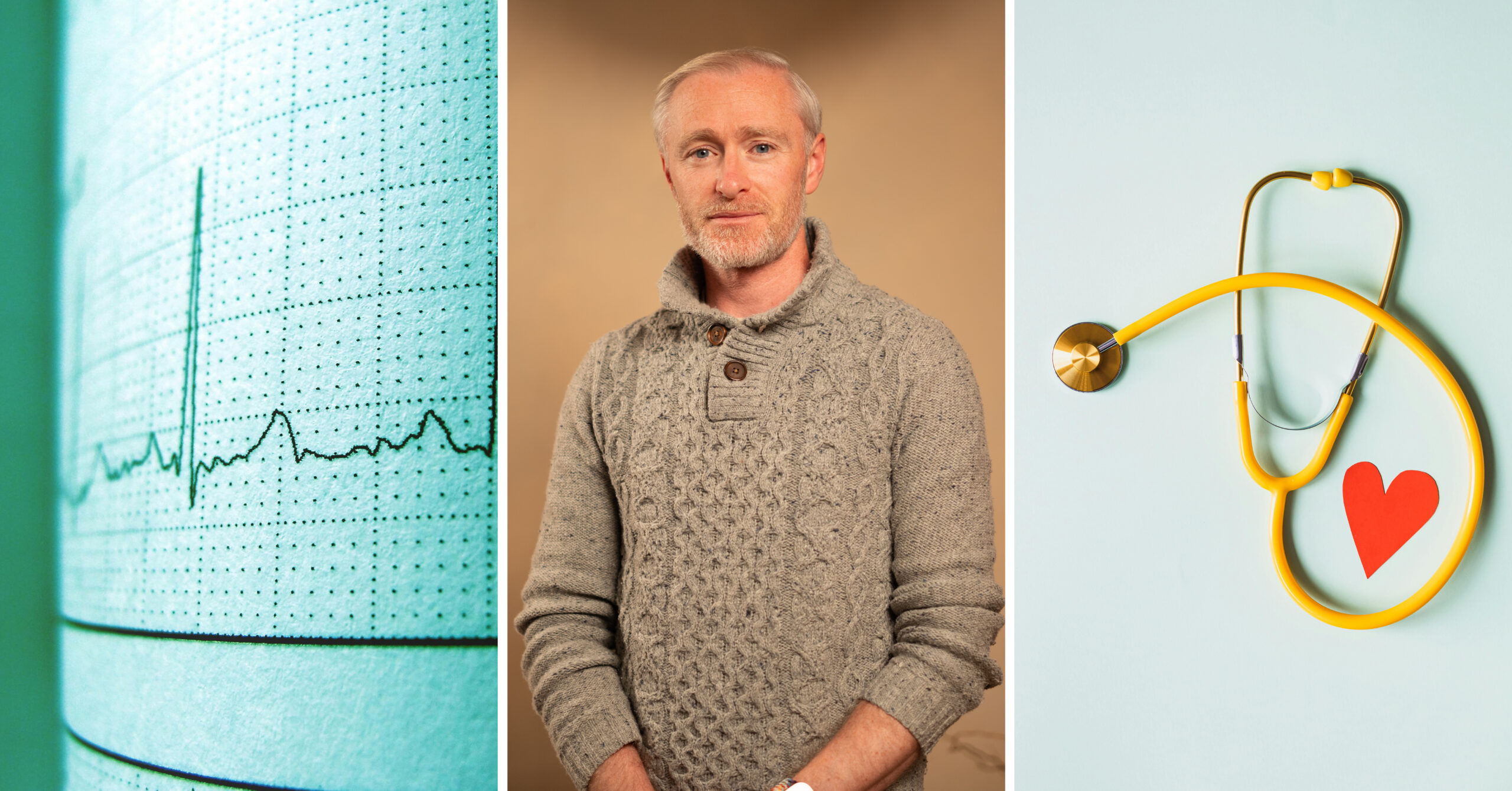
Ellie Balfe sat down with preventive cardiologist Dr Paddy Barrett on IMAGE The Check-in podcast to uncover what every woman needs to know about heart health.
On The Check-in, the IMAGE podcast lifting the lid on women’s health, one honest conversation at a time, host Ellie Balfe sits down with leading medical minds to explore the realities of our health across every decade. She was joined by Dr Paddy Barrett, a preventative cardiologist, to talk about women’s heart health and what really matters to living longer, better. Here are some key takeaways from their conversation.
We are all at risk of heart disease
Although we may think that people with a family history of heart conditions, or people who have certain lifestyle risk factors, are the only ones who need to think about their heart health, Paddy explains that “if you live long enough, you almost certainly will get heart disease – the biggest risk factor for heart disease is time”.

The key question, he explains, is understanding what your current risk level is. “Heart disease is an umbrella term. It can mean lots of different things. It can mean plaque buildup in the coronary arteries. It can mean damage to a heart valve. It can mean an electrical disturbance. But when people say heart disease, more than 90% of the time, we’re talking about the deposition of plaque in the major arteries, mostly your heart arteries. That fundamentally happens when a cholesterol particle crosses over the artery wall, becomes retained, sets off an inflammatory process, and then cholesterol plaque is left in its place. And that is what we call plaque.
“It’s crucial to make the distinction between the risk factors for heart disease (blood pressure, cholesterol, diabetes, the disease that is heart disease, plaque in the coronary arteries) and the event that is the heart attack or the stroke. And our objective is to minimise the risk factors to delay the onset of the disease to ultimately never have an event like a heart attack or a stroke so that you live a long and healthy life and die with coronary artery disease rather than from coronary artery disease.”
When asked when people should start getting their heart health evaluated, Paddy’s unequivocal answer is 'today'
Menopause can be a trigger for heart disease
Paddy explains that in women, the onset of menopause can often be a point where our heart health shifts. “Females will have often spent much of their life with pretty low cholesterol levels; they’re fit and healthy,” he explains. “They’re doing everything right, and then all of a sudden menopause hits, and everything starts to change. We see increases in blood pressure. We see increases in visceral fat. We see increases in cholesterol levels and all these different parameters.” He notes that it’s important to remember that if your levels have been healthy for most of your life, the impact of this is less; however, it’s always good to monitor your heart health to be aware of any issues.
The reason for this increase in risk is because of the sudden drop in oestrogen. “We see increases in visceral fat. That is the fat that drives excess risk in terms of insulin resistance. You see changes in terms of how blood pressure is managed in terms of nitric oxide production. So the vessels constrict more, blood pressure goes up, and we see cholesterol levels rise precipitously. So you’ve got this whole constellation of risk factors that historically were not present but have now suddenly appeared.”
He notes that while treatments such as HRT help with a variety of menopause symptoms, they don’t offer the same proportional reduction in cardiovascular risk factors, “So we have to use other strategies to tackle that.”
Women are equally at risk for heart disease as men
There is a myth that men are more vulnerable to heart disease than women, but Paddy explains that this simply isn’t true. “Males and females will die with equal frequency in terms of heart disease. The key distinction for most females is that they will get it about 10 years later than males. So they get a 10-year health span advantage, but they will die at the same rate. The key difference, however, is that this 10-year advantage is eliminated if the female has a genetic cholesterol disorder or goes through very early menopause.

It’s always a good time to get tested
When asked when people should start getting their heart health evaluated, Paddy’s unequivocal answer is “today”. He explains that studies done on people in their twenties, a huge percentage of them show early signs of plaque accumulation.
“Remember, the biggest risk factor for heart disease is time,” he notes. “We can’t change the direction of time, but we can change the risk factors and their magnitude as they’re exposed to your arteries over time. The earlier you start, the less of an extreme magnitude change that you need to make to ultimately accrue the benefit. So again, it’s about time. If you start earlier, you get time on your side, and that is the biggest risk factor for heart disease.
Looking after your heart health is simpler than you think
If you want to take better care of your heart, Paddy explains that it’s really simple steps that are the most important. “The four pillars are exercise, nutrition, sleep, and stress. From an exercise point of view, am I active enough? From a weight point of view, a simple calculation of your BMI will work for the absolute majority of people. Are you getting between seven and eight hours of sleep a night? And then stress in terms of a self-reflection exercise, in terms of, do I have a lot of things going on in my life that are impacting my quality of life or my ability to do those other three things? They’re all things that you can do yourself at home without ever speaking to a clinician.”
The other thing he recommends is knowing your blood pressure and monitoring this yourself at home, which is much more accurate than a one-off reading in a doctor’s office. “Get your own blood pressure monitor that goes over your upper arm and not over their wrist. Over a 10-day period, measure your blood pressure first thing in the morning and do three readings. Average the second and the third, and do that for 10 days in a row. The average of those over that 10-day period. That is your blood pressure.”
To listen to our full episode with Dr Paddy Barrett, click HERE.
We’re lifting the lid on women’s health: the real, the raw, the rarely spoken aloud. Our new podcast ‘IMAGE The Check-in’, hosted by Ellie Balfe, gets straight to the heart of what’s truly on women’s minds right now. We dive into monthly health themes with expert guests and honest voices.
Listen to IMAGE The Check-in HERE or wherever you get your podcasts.

Also Read