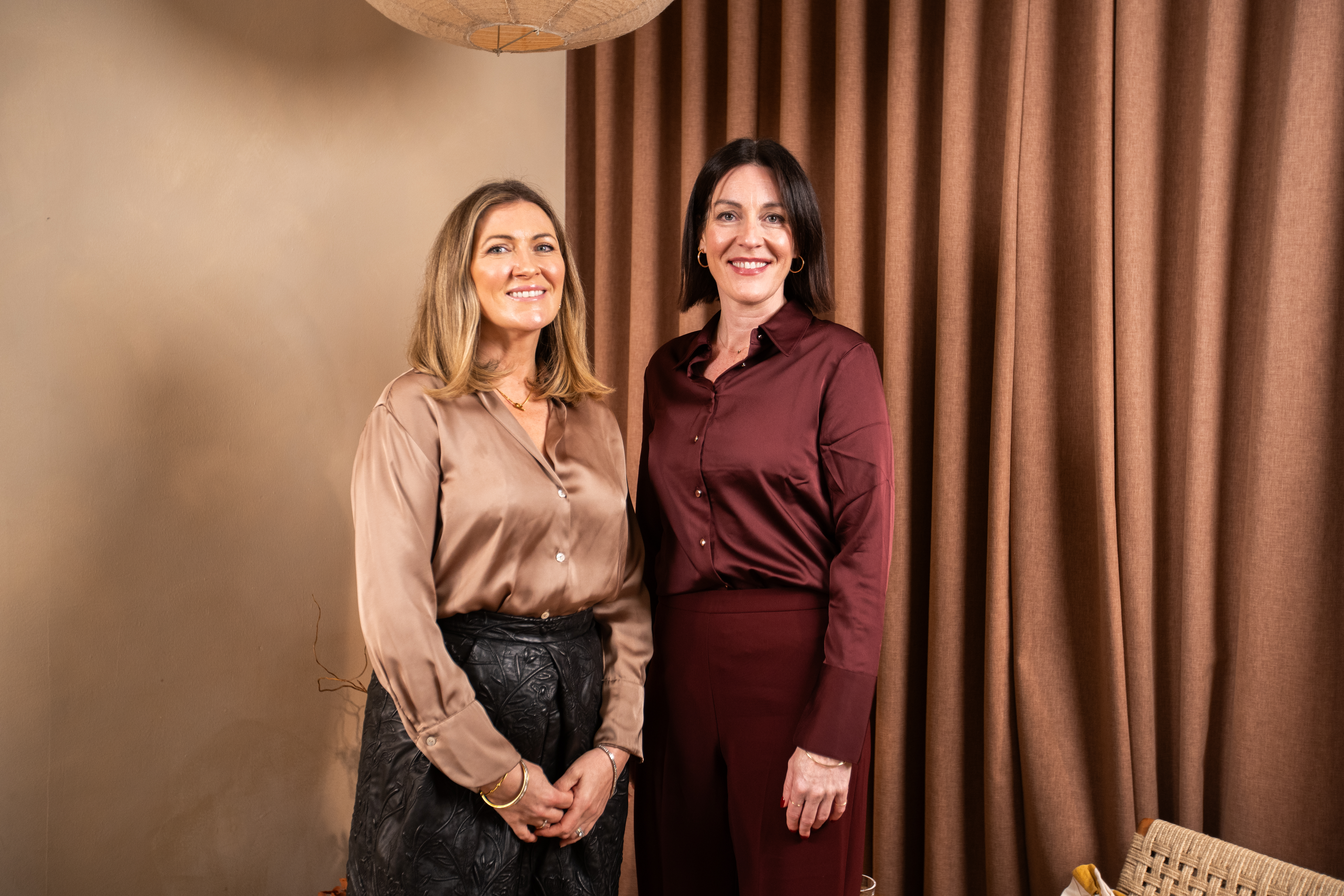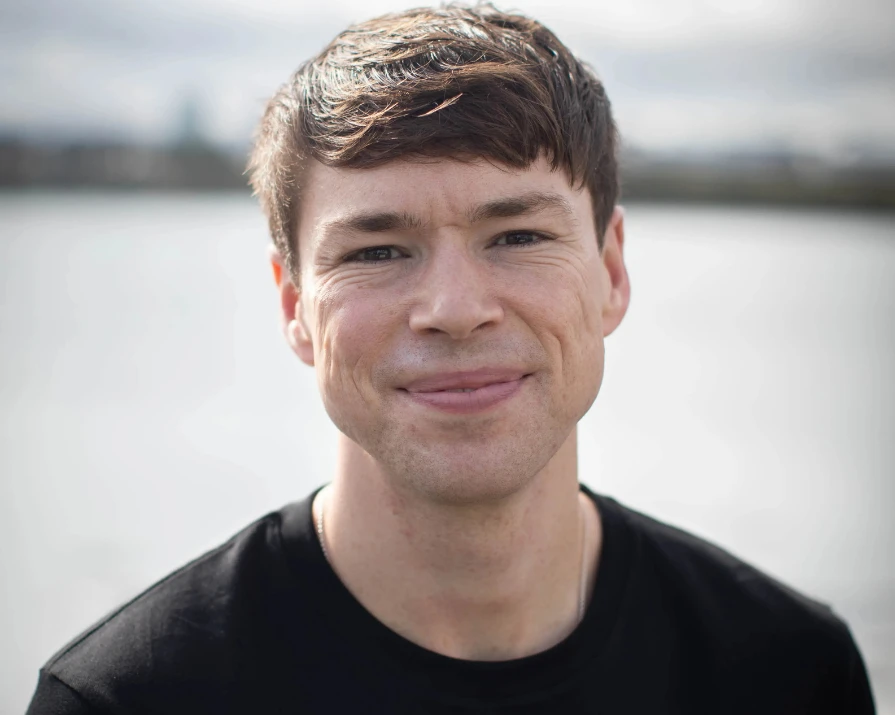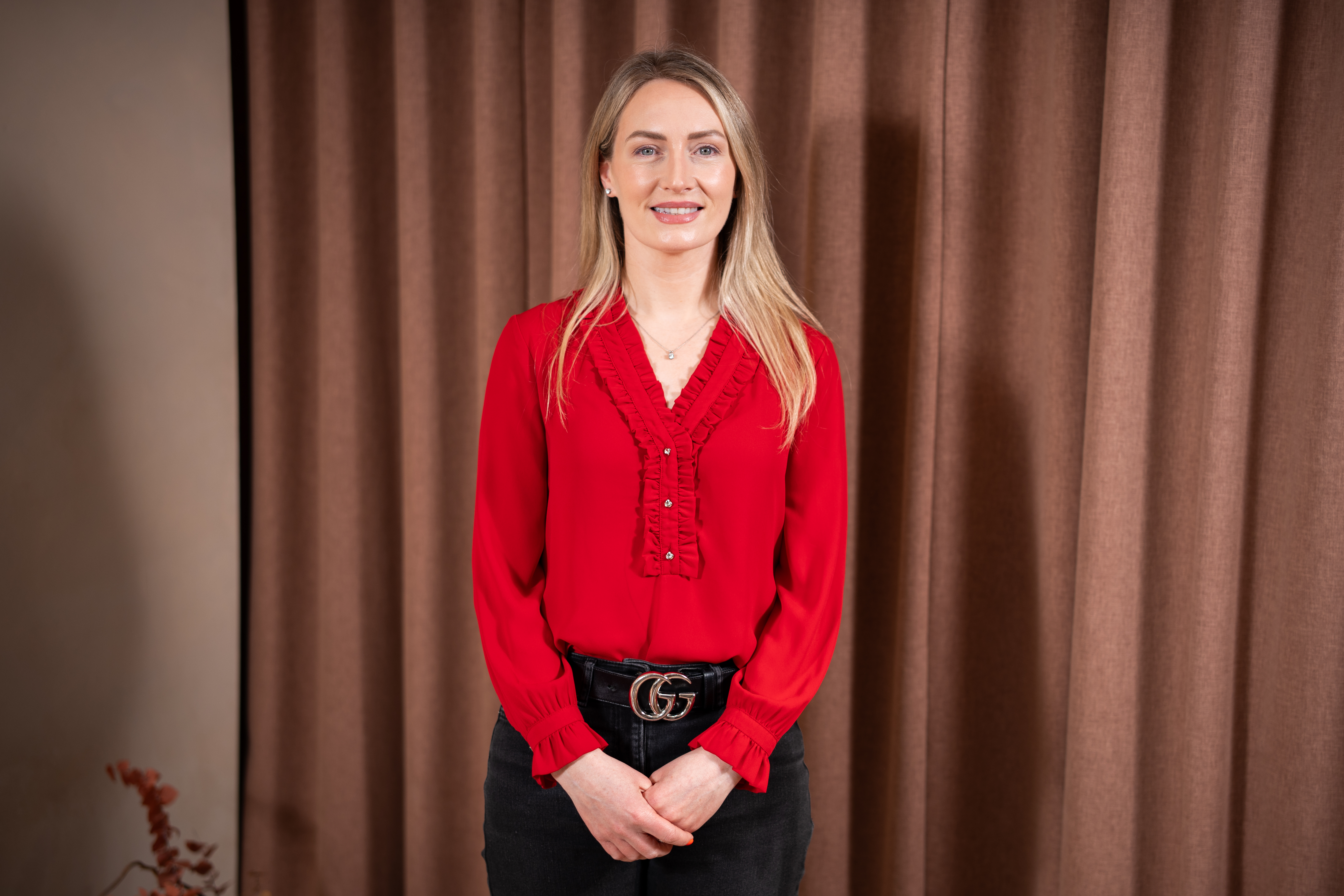



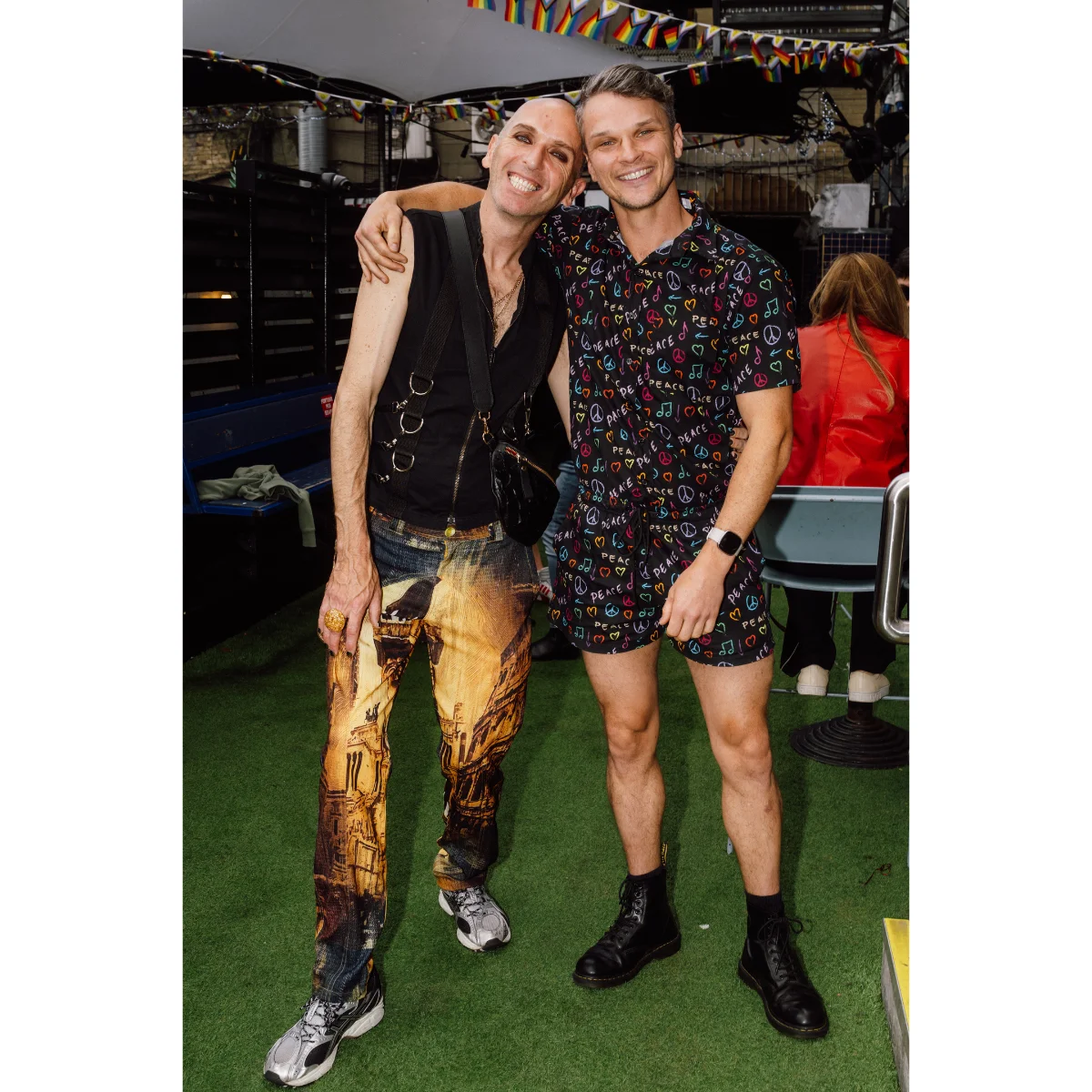
Poz Vibe began as a HIV education podcast in 2021, but has turned into something much bigger. In their newly established headquarters, Laylah Beattie meets the hosts; Robbie Lawlor, former Mr Gay Ireland and long time HIV activist, and Veda Lady, a drag performer and queer icon, to speak about their movement that is changing the country’s outlook on HIV.
Robbie first became aware of HIV when he was diagnosed in 2012. “I was 21 years of age and I felt like I was living in a deafening silence because I didn’t know HIV existed in Ireland. I didn’t know anyone living with HIV, and I didn’t hear anyone speak about it. The silence, shame and stigma I felt were just piled on me and I didn’t really understand. I felt a lack of community or understanding, especially not having someone to reach out to or even to represent my story.”
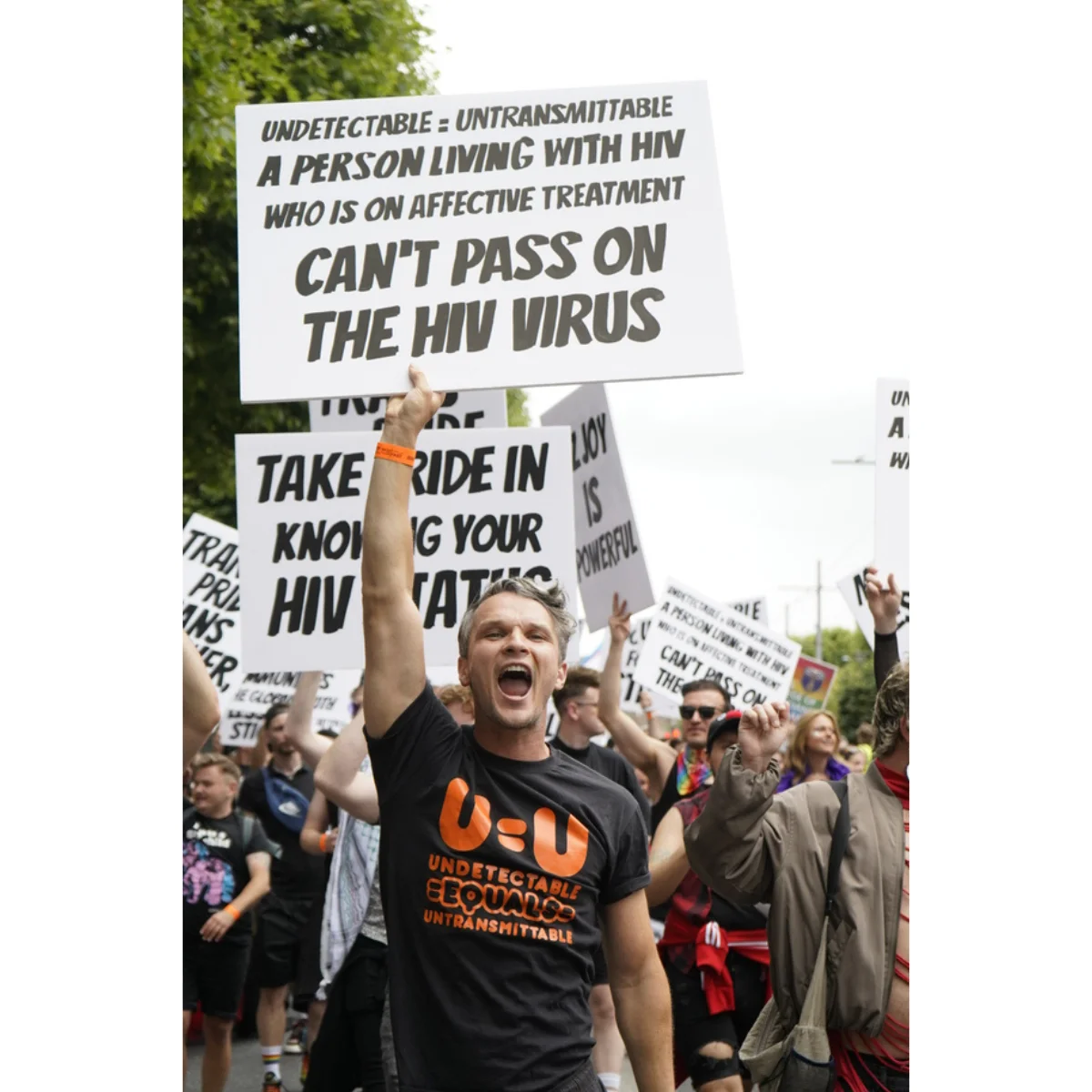
Despite having supportive family and friends, Robbie struggled not to feel alone in what he went through. He speaks of his desire to have seen someone talking about living with HIV. Slowly, Robbie began to become that person, advocating for understanding about HIV and educating on U=U, undetectable=untransmittable, the slogan that made the public aware that a person on effective HIV medication cannot transmit the virus. “I thought I was screaming into a void because you’re just trying to speak up for so long and you don’t know who’s listening. You don’t know if anything’s happening.”
While living with HIV in this period, Veda felt similarly. “As Robbie said, there was a void. There was nothing really there before. There were some wonderful people living with HIV who’d done some activism, absolutely. A handful. But beyond that handful of people, there wasn’t any representation.”
“A wonderful person living with HIV said to me, ‘nobody wants to be the HIV guy.’ And I thought for a second, and I said, ‘I’ll be the HIV guy. If that’s what this is about, well then I’ll be the HIV guy because f*ck it.’ And then there [will be] another one and another one and we’ll become a HIV tribe and you don’t end up being a HIV guy on your own.
“I think it was 2019, and I woke up hungover one morning. It was World Aids Day. And I remember Veda coming out about their HIV status. I didn’t know Veda lived with HIV. And I remember getting emotional about it. I was like “finally.” I just knew once Veda started talking about their HIV, there was momentum there. Because they’re a queer icon and the queer community listens to queer icons like Veda. And I just knew something magical was going to happen.”
During the Covid lockdown, when reflecting on their former shame, Veda began to think about the community as a whole. “[I realised] how negatively it had impacted my life to live in the HIV closet. And it just made me so eager to share that message so that other people wouldn’t waste their time doing it absolutely needlessly. And I think that people could resonate with that message, whether they’re living with HIV or not.”
“Veda got in touch with me and they were like, ‘Robbie, I have an idea for a ‘poz’cast’ and I already loved it because I love reclaiming ‘Poz’, which can sometimes be seen as a negative in our community,” says Robbie. “I wrote back straight away saying, ‘yes, let’s do it.’”
“It turned out it was a much better idea than I had realised,” says Veda. “When we kicked the tyres, you know, it was the first podcast of its kind in the world. And it really has, I think, inspired a lot of other people to do the kind of work that we’ve been doing. It opened something magical for us within our own community, which was a connection with other people living with HIV, which just didn’t exist before. And I think for that reason, the community and certainly queer community got behind us from the start. What I thought would be really difficult, actually, initially was quite easy.”
“And since then, we’ve worked on various documentaries, like How to Tell a Secret, Pregnant with a Drag Queen and more recently, a documentary about migrants living with HIV called Out of Shadows, which has brought unprecedented representation for people of colour and for migrants living with HIV in this country and I can say unprecedented confidently. That’s how lucky we are to be here doing this.”
Although education around HIV has improved a huge amount, there’s still a very prevalent stigma. When asked about people who still have a fear of HIV, Robbie weighed in. “They don’t know what it is like to live with HIV today. They often dehumanise people living with HIV. They see us as vectors of disease. I like humanising it through storytelling just by going in front of people and saying, ‘I take one pill a day. I’m fine. I can’t pass it on. Why the hell would you stigmatise my community?”
“The percentage of people who are out about their status is incredibly small. Living in deafening silence is still people’s reality, unfortunately, in and out of the queer community. Poz Vibe is a different take on HIV. We’re always trying to change the narrative.”
“We know people living with HIV generally have low self-esteem, higher levels of depression and anxiety, general feelings of uncleanliness, of being second-class citizens, feeling too much guilt to have good sex or that they’re never gonna have intimacy again. It kind of exacerbates issues that we’ve already had before HIV. We know this is a reality. That’s what the research says and anecdotally, Veda and I can say that it’s true. So learning to self-love is, I guess, the most radical thing we can do as people living with HIV.”
“The thing that people need to understand is that the level of stigma is unbelievable and the level of shame attached to this particular health condition has been horrific and unimaginable and totally unjust,” says Veda. “But the reason that people stay in the closet is because of that stigma, and carrying the weight of a lot of those negative feelings and perceptions is just so unnecessary. It’s rooted in an experience that I lived through, where the most shameful and the most horrible label that you could possibly put on someone was to say that they had Aids. Your parents’ biggest fear, like their cold sweat nightmare, was that you would get Aids. Not just because you would get sick and die, but because of this massive social stigma and religious judgement and moral judgment. All this horrible, toxic mix of homophobia.”
I take one pill a day. I'm fine. I can’t pass it on. Why the hell would you stigmatise my community?
“Back in the 80s and 90s, HIV stigma was very much related to homophobia,” says Robbie. “Now we’re seeing it related to transphobia, to racism to other minorities. The world is trying to do everything it can to dehumanise people in general, but if you have HIV, then you have a double or triple stigma. Our goal is to make sure that everyone feels empowered to come out if they choose to. Not everyone has to come out with their status; everyone has a right to privacy. We just don’t want secrecy forced upon them. That’s what we’re trying to change. Because we’ve all felt that we’re thrown in a closet. You know, if you grow up queer, we all know what a closet is like and we know how damaging closets are for your mental health. The viral closet is the exact same thing. Society says ‘this is bad, shut up,’ or you tell your parents, who say, ‘don’t talk about this because I don’t want to hear what John and Mary down the road have to say.’ That’s still a huge reality for people.”
“Thinking yourself out of that closet, imagining yourself out of that closet, when there’s no one outside of it yet, is really hard,” says Veda. “What’s been amazing for me is that Robbie is one of the people that I could see outside of the closet and that made me want to do it, too and do it as big as I could. So for me to connect with Robbie on that journey and make a documentary together and make a podcast together is such a gift to me. It’s the hand that reaches back to help the person who’s coming next. That really makes the chain, and we’ve seen this small chain of people just grow and grow, steadily, organically, one link at a time. We have the ability now to show each person all of the love and care that we can.
“In 2021, I was the first person living with HIV to be in a HSE campaign about HIV. You wouldn’t think it would take that long. And to be smiling and showing my face and all of these things that never happened before. Then last year in 2025, Luis Noguera became the first Latina, the first person of colour to be in a HSE campaign living with HIV. That’s such a privilege, an amazing thing to see in our lifetime, in our community.”
What started with Veda and Robbie quickly became about something much bigger. Far from a vanity project for either of them, Poz Vibe became about a community. A self-declared Poz Tribe was formed, consisting of people living with HIV in Dublin. Veda tells me “we have always said that being a community group is the core of Poz Vibe and we never want to lose our finger on the pulse of the community. We are the community.
“Our tribe and our organisation is a place where we can really have fun with it. We are experimental, and the emphasis is on the mental. The friendships and the connections within the tribe, the beauty of how they impact people’s lives in a very real and positive way, whether it’s helping to find you a flat, find you a job, find you a fiancé, or just the organic care that everybody shows to each other seems to uplift everybody in the tribe in a very natural way.”
“Sometimes disclosure of HIV status gets a bad rap,” says Robbie. “We’re more inclined to talk about the negative times we tell people we live with HIV and the kind of negative things that may happen from that. But some of the best things that ever happened in my life is when I shared with people that I live with HIV.”
I’m eager to know what Veda and Robbie would like women to understand about HIV. Robbie tells me, “HIV is not a gay disease. I know that that’s what women have been taught. A few women that I know who were diagnosed with HIV have said, ‘Robbie, no disrespect, but I thought that was a gay thing.’ There’s no disrespect taken at all because that’s all we’ve seen on TV or radio and as humans we think ‘oh that’s for other people, that’s not for me.
“Women used to account for around one-fifth of new HIV diagnoses in Ireland. That’s gone up last year to one in four. So women are increasingly getting diagnosed and there’s more transmission among heterosexual women. Also, it’s heterosexual women and men that are more likely to get an Aids defining illness because they’re not getting tested so HIV is affecting their immune system longer. The queer community has a culture of getting tested. We pick it up more quickly, we go on medicines, and we stop the chain of transmission. Heterosexuals don’t and GPs don’t even think about giving people a HIV test if they’re heterosexual.”
“We really just need people to realise, just like Covid, HIV is a virus and it just needs a host. It could be anyone. It doesn’t matter who you are, what you are, where you come from. Unprotected sex is one of the main ways in which that happens. So just get tested. Know your status. There’s a phenomenal service; SH24.ie. You can get a free STI test delivered to your house. You can do it all in the comfort of your home and you put it back through free post and you get your results back in 5 days. If anything pops up, you’ll get the message and every STI is treatable or curable. So, ignorance isn’t bliss when it comes to STIs. Don’t think that STIs are for other people. Take responsibility for your own sexual health. Whether it’s once a year or whenever, depending on your sexual activity.
“One other thing we need to tell women is if you’re put on HIV treatment, then you can have kids without fear of passing on HIV. You take one pill a day and your HIV only impacts or affects you. There are many women living with HIV in this country. Don’t do it alone. There’s a great women’s WhatsApp group to link into. If you’re a woman living with HIV, you’re generally decentralised out of the big cities. You’re not always based in Dublin or Galway. Reach out, don’t do it alone. If you want to, get in contact with us and we can link you up with other women.
“And continue to have great sex, because that is another thing that we see for women and for everyone living with HIV. They almost feel like you just have to kind of settle for whatever sex is happening. You’re the safest person to have sex with and not pass on HIV. There’s nothing wrong with you. There’s nothing unclean about you. You deserve that.”
Not everyone has to come out with their status; everyone has a right to privacy. We just don't want secrecy forced upon them. That's what we're trying to change.
We’re sitting amongst the posters for the You, Me and HIV campaign. The campaign features a diverse range of individuals living with HIV and their loved ones; people smiling, looking amazing and thriving, showing that HIV is not something to fear. The posters serve as a physical embodiment of the work of Poz Vibe. After walking around the room to have a good look, I want to know what’s next for Poz Vibe. Robbie tells me, “it’s an ongoing fight. You know, it is a battle. A battle against the increased far-right rhetoric. Against racism, transphobia, homophobia, all these different things. But we’re gearing up to fight and now we have an army of activists behind us. I always think if I could go back to Robbie in 2012 and say, ‘this is gonna be the reality in Ireland,’ I wouldn’t have believed it.
“We have goals set out for 2030, also set by the UN, to reach zero new HIV infections, zero Aids related deaths and zero discrimination by 2030. I think Ireland, with political will, with the community at the forefront, can make that a reality. I think because we’ve had such a great relationship with the government and the HSE and the community has our back, we’re seeing this change in real time. We really think that we can be one of the first countries, if not the first country in the world, to hit that target.”
“Last year, we achieved an awful lot,” says Veda. It was a sea change year for us, for the community and for the country, really. The level of knowledge around U=U and the fact that a person on effective medication living with HIV can’t pass on the virus went from 29% to 48% just in a few short months of our campaign. So we’re hoping to keep that needle moving; that’s the plan. We’re going to be working with the HSE some more on some new elements for our campaign and also supporting and promoting the existing campaign. We’re also going to repeat our World Aids Day Festival, which we did for the first time this year. Pride for us just gets bigger and bigger every year as well.”
“We’re going to continue on with the podcast,” says Robbie. We’re going to have more fabulous guests coming on. We’re going to focus on many different topics, mostly related to HIV, but some not. Some that we feel are just important topics to discuss within the community at large. So, please, if you haven’t, and you want to learn more about HIV, give it a listen. They’re fantastic stories, fantastic people, and you’re going to fall in love with them just like we did.”
Also Read