









Sponsored
Ask the Pharmacist: Mole scanning and everything you need to know
Sponsored By

In the fourth edition of our Ask the Pharmacist series, we dive into mole scanning. We look at early detection, the impact of pregnancy and menopause, why sunscreen does not impact vitamin D and we debunk the popular belief around men’s health that “ah sure, it’ll be alright” (spoiler: it won’t).
As the brighter days return to Ireland, our focus naturally shifts toward skin health. While we often associate sun safety with foreign holidays, the unique Irish climate and our predominant skin types require a more year-round vigilance. Early detection remains the most powerful tool in our arsenal against skin cancer, yet many of us remain unsure of what to look for or when to seek professional advice.
In this month’s column, we talk to Caoimhe McAuley, director of pharmacy and superintendent pharmacist at Boots, to address the common misconceptions surrounding mole safety and scanning. From the impact of hormonal changes during menopause and the hidden spots we often miss with SPF to the reality of a mole scanning consultation and the stark statistics every man should know, let’s dive in.

Can you explain exactly what happens during a Mole Scanning consultation at Boots? Is it invasive or painful?
The Mole Scanning service could not be more convenient or comfortable. It is in no way invasive or painful and simply comprises a quick chat and scans of your chosen moles or lesions. A member of our team will talk you through the process in a private consultation room; there you’ll complete a short questionnaire, which will help us to assess your risk factors.
You’ll be asked then which mole or pigmented lesion you would like to be scanned (up to a maximum of four per session). We’ll use a special imaging device to take a scan of those chosen moles or lesions, which will be sent to our partners at ScreenCancer. A ScreenCancer dermatology specialist analyses your scans, looking for anything that may be suspicious and needs more investigation. If any of the moles or lesions are identified as potentially harmful, a ScreenCancer Dermatology Healthcare Advisor will get in touch with you to discuss what to do next.
At what age should one start scanning?
You can access the Mole Scanning service at Boots from the age of 18. However, skin cancer is a risk at any age, and I would suggest keeping an eye on your moles and skin for any concerning changes or signs. Making sure you have them looked at, regardless of how old you are, is essential.
For anyone doing a self-check at home, what specific changes in a mole should trigger an immediate visit to the pharmacist?
We use the “ABCDE” rule:
- Asymmetry: Irregular shapes where two halves don’t match.
- Borders: Unclear, ragged or blurred boundaries.
- Colour: Changes in shade, especially black, blue or uneven tones.
- Diameter: Anything over 5-6mm or noticeable growth.
- Evolving: Any change in size, shape or symptoms like itching or bleeding.
We often think we’re safe if it’s “just a bit cloudy” in Ireland. Why is our specific skin type at higher risk even when it’s overcast?
The Irish climate can be somewhat deceiving, given we’re so used to dark grey cloudy days. You’d hardly think we’d be at risk at all, but that isn’t the case. A person’s natural skin tone can influence their sensitivity to UV and skin cancer risk. This relationship is classified on the Fitzpatrick scale, where one means high risk and six is low risk. Most people in Ireland would be classed as type one or two, meaning we have fair skin which burns easily and tans poorly, and so are rather vulnerable to UV damage and skin cancer.
Additionally, what catches people off guard is that the UV index is a moderate three in Ireland from April to September, even on overcast days. The clouds do not block the UV rays and yet we can very easily let our guard down.
Where are the most common places women forget to check or apply SPF?
There are a number of areas often forgotten:
- Scalp and hair parting: Especially vulnerable when you wear your hair up. A hat or UV hair mist is a must.
- Ears: A really common site for skin cancer and often overlooked.
- Eyelids and eyes: The skin here is really thin and gets damaged easily.
- Neck and chest: Take care of your décolletage. Your face is an obvious one, but I often see this area left unprotected.
- Tops of feet: So easy to forget and end up with an outline of your sandals burnt into your foot.
- Lips: I always carry an SPF lip balm handy, especially because your lips have minimal pigmentation and protection.
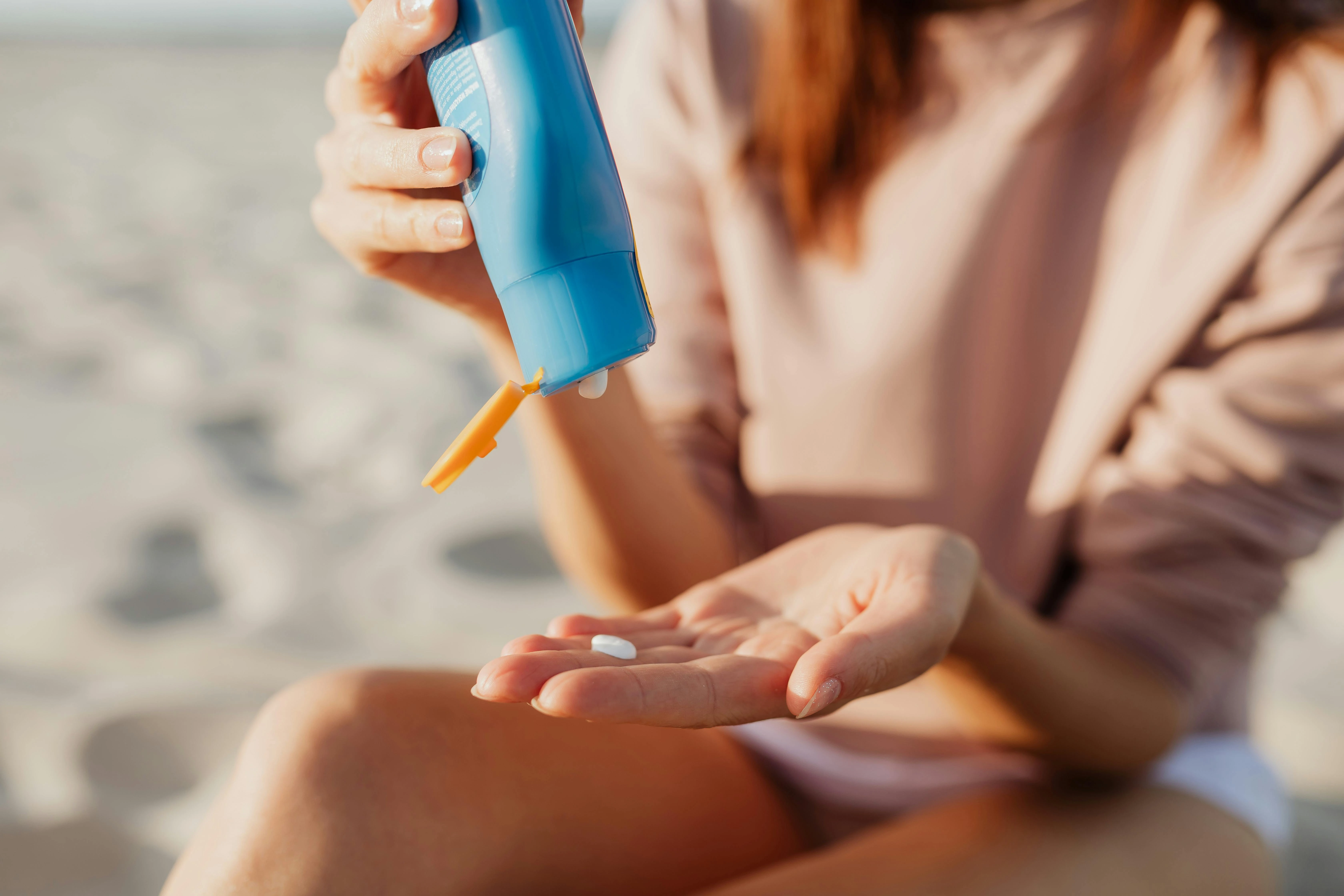
Does the SPF30 in my moisturiser or foundation offer enough protection for a day in the Irish sun or is that a dangerous assumption?
SPF30 is the bare minimum and the standard advised to everyone. However, if you are especially fair (ie: Fitzpatrick scale one or two like many Irish women), then you’ll want to have a factor 50 on given your susceptibility and risk of developing skin cancer. Foundation is rarely applied thickly enough to provide the full stated protection, so a dedicated sunscreen is always safer.
How do life stages, such as pregnancy or menopause, affect our skin’s sensitivity to the sun and the appearance of new moles?
As a woman, the different life stages we go through can have a profound and broad impact on every facet of our lives. However, you may not have known that the hormonal changes and shifts we experience during pregnancy and menopause can also impact our sensitivity to the sun.
During menopause, our levels of oestrogen will start to decline, which can cause the skin to start to thin, reducing its natural repair capacity and affecting mole appearance and pigmentation. Given this increased sensitivity, extra prudence and vigilance around your moles is paramount to safeguarding your health. I would advise that you have any new moles looked at during this stage of your life.
How do we balance the need for vitamin D with the necessity of total sun protection?
This is one of the most common questions I hear in pharmacy and the reassuring clinical answer is this: daily broadband sunscreen use does not compromise vitamin D synthesis in healthy individuals. Research published in the British Journal of Dermatology confirmed that even under optimal sunscreen application conditions, meaningful UV penetration still occurs. The “all or nothing” framing is a myth that leads people to go unprotected. Those who are concerned, particularly post-menopausal women, those on long-term corticosteroids or individuals with very limited outdoor time, should discuss vitamin D supplementation with their pharmacist or GP rather than abandoning sun protection.
If the damage is already done and someone has a burn, what are the “must-have” clinical ingredients to look for in a recovery cream?
If the damage is done, the priority is to calm inflammation, restore the skin barrier and support cellular repair:
- Aloe vera: Can be anti-inflammatory, helps reduce redness and is the usual go-to first-line ingredient
- Ceramides: These lipid molecules work to rebuild the damaged skin barrier
- Hyaluronic acid: Draws moisture into the dehydrated, heat-damaged skin
- Niacinamide (vitamin B3): Reduces blotchiness, supports barrier function, and acts as an antioxidant to limit oxidative damage from UV
Skincare is still quite a gendered subject. How important is it to encourage the men in our lives to map their moles?
This is where I’d argue pharmacists and healthcare professionals have a genuine public health responsibility to speak up. The statistics speak for themselves: more men than women are diagnosed with skin cancer in Ireland, and almost one in four skin cancer deaths in Ireland comes from the construction, outdoor, and farming industries.
Unfortunately, the “ah sure, it’ll be grand” attitude is rife in men’s health in Ireland, and skin cancer is a perfect example of a condition where early detection is the difference between a minor procedure and a life-changing diagnosis. If you have a man in your life, especially one who works outdoors on a regular basis, make that appointment with them. Better still, normalise SPF as a part of their own daily routine.
To learn more about how your local pharmacist can help you this winter and beyond, visit your local Boots pharmacy or explore the new Common Conditions Service here.
Also Read