





Want to write your own wedding vows but don't know where to start? We asked Cork celebrant Alison Driscoll of Bespoke Words to share her top tips in the handy step-by-step guide.
Most of us who are well used to church weddings have seldom seen heartfelt personal vows declared at a wedding until the recent rise in celebrant-led ceremonies – and even now, I would say it’s only in the last two or so years that personal vows are becoming the norm.
So, if you want to write your own vows, where do you even start? For some couples, there is a lot of warranted anxiety and fear – it can feel completely out of your comfort zone – but there are a few ways to help rectify that. Whether you’re struggling with the writing bit or the reciting bit, there are a few crucial steps to take first that will help the task seem less daunting.
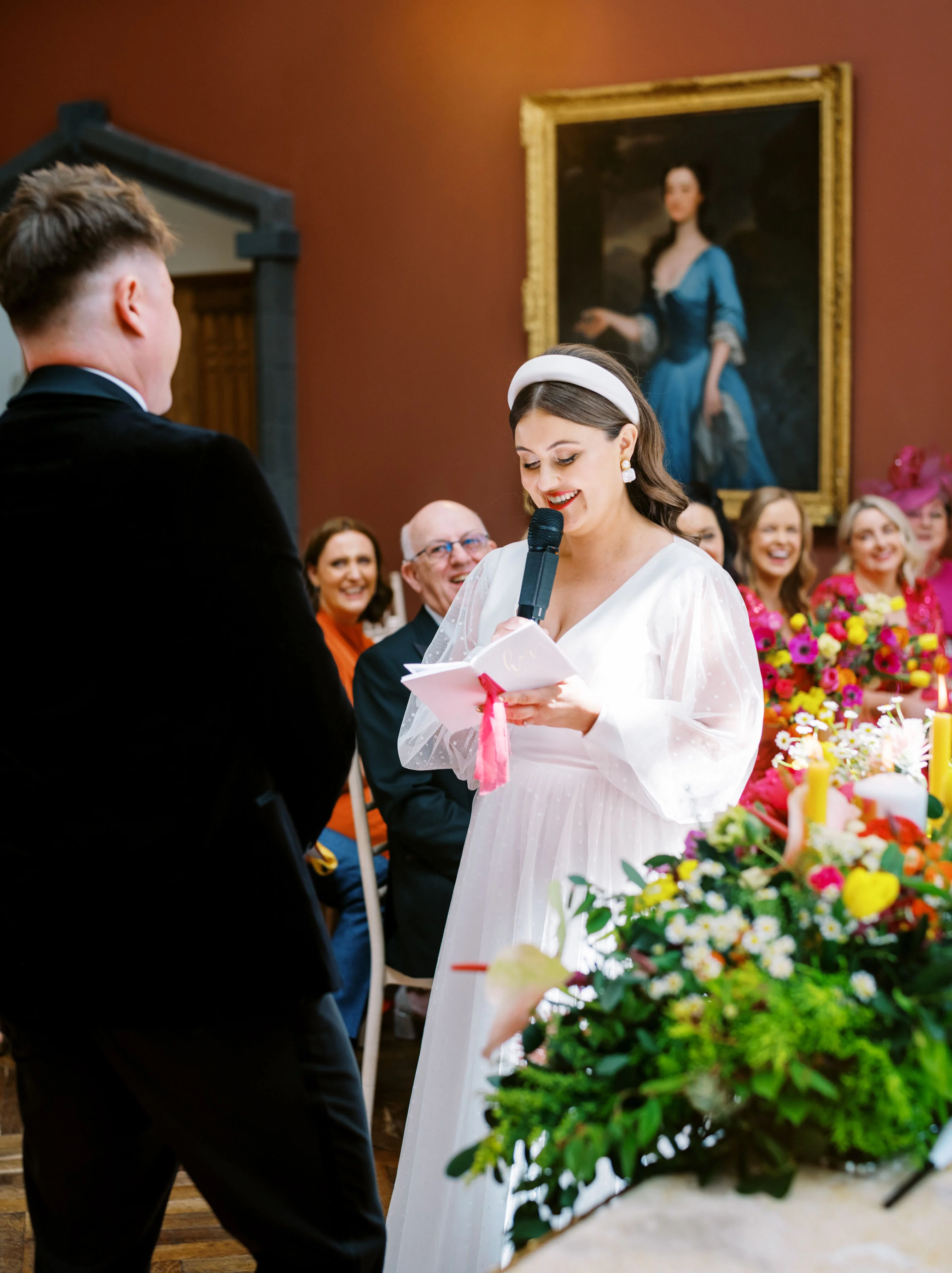
Step 1: Get on the same page
So, where to start? Firstly, I would suggest you talk as a couple and discuss each of your anxieties. The one thing that comes up a lot is “I’m afraid I’ll cry”, and that shouldn’t be feared – emotion is so welcome on your wedding day; it is an absolutely meaningful moment.
There is no preparing yourself for the emotion of the day, but what you can do is start practising aloud regularly, work over all the stumbling blocks in your own writing and work in spots to remind yourself to breathe. I also find a squeeze of the pulse point in your wrist a very good way to regulate or combat building emotion.
Step 2: Get into the same rhythm
If you agree you will write your own vows, the next fear is “what will I say”, or usually, “what will they say?!” I always offer my couples a little workshop session when they are keeping vows a surprise for the day. I don’t do this to rewrite them or criticise in any way, simply to sense-check you both and ensure there is a balance in tone and duration. There is nothing worse than one person opting for the funny route and the other pouring their heart out. If your celebrant doesn’t offer this expertise, then I think it is best to agree in advance on a rough length and definitely agree on a tone. Most people strike a balance of humour and heart, which is what I always encourage, as it helps with the emotion of it all and it’s likely the most honest reflection of you as a couple.
Step 3: Reflect on the meaningful moments, then look forward
In terms of the content, only you really know what to say about the love of your life, but to try to put it into words, it’s this: you are trying to capture the feelings of all you’ve already journeyed together, preparing you for all that you will experience together in the future. It’s about why you love them – the obvious bits, the pieces only you see, and maybe something they don’t even know about themselves. It’s about how you feel with them and how you feel when you’re away from them.
Tell us how they show you they love you – be that a nightly cup of tea, defrosting your car or just always being there with a listening ear. Use concrete adjectives and examples, and try to steer away from “inside jokes” and anecdotes best left for round the table at the pubs.
Then, of course, it’s the actual vows bit – where you write down the promises you want to make to your partner as you enter into a lifetime of happiness together. Just a few lines are usually perfect, but again, this is up to what you and your significant other agree on beforehand.
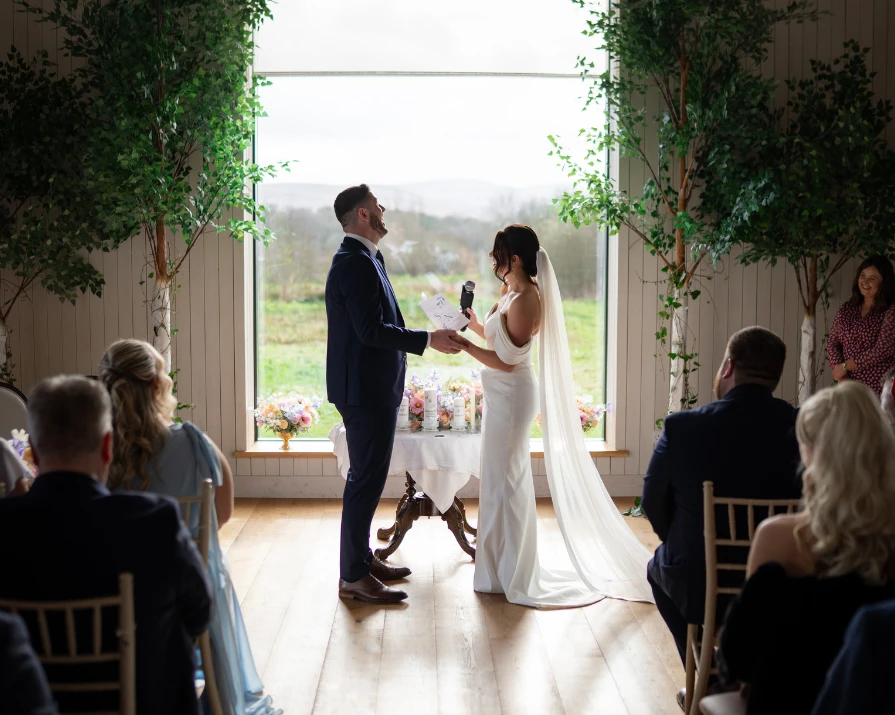
Step 4: Agree on the length and don’t forget to practice
And the age-old question I get time and time again – how long should they be? This isn’t an English assignment with a word count, so it’s hard to quantify. But bear in mind that the more you write, the more you have to say aloud, so it’s better to have something shorter executed very well than something long and rambling that people are tuning out of. Please agree with one another on some parameters, like we won’t go over an A4 page – that’s only 400-500 words, depending on your spacing.
I really think that two or three minutes of talking each is more than enough. We want to keep everyone’s attention and it also takes a lot of words to read for more than two minutes. Maybe start by timing yourself reading an extract of something to put this in perspective. And when you’re refining your work and saying it aloud, I suggest highlighting anywhere you’re stumbling or tripping over words – often the way we write isn’t how we speak, so it’s likely you need to edit it to work more for your speaking voice. Easier said than done, but speaking them aloud repeatedly will help you identify all the little quirks.
Step 5: Write it all down
Finally, when you are happy with them and they are ready to rock, please type them. There is nothing worse than not being able to read your own handwriting in the moment! I would strongly encourage you to use a vow booklet for the aesthetics but also for its functionality and ease for you. Whether these are DIY or bespoke from stationery or somewhere in between, just have something nicer than a crumpled-up bit of paper or your phone in hand.
It might seem like a daunting task at the start, but with a little guidance, a bit of courage and a few tips and tricks, making personal vows to each other is often remarked on as a top highlight from the day. Definitely add it to the list to chat about on your next ‘wedmin’ day and have an open mind as you approach it.
Also Read