











What does stability look like in friendship? How can we heal ourselves while supporting others? Are all friendships built to survive the chaos of your 30s? Does Rupert Everett look good in fur? These are the weighty questions Big Mood season two is endeavouring to answer.
This time two years ago, Big Mood arrived on our screens, making us sob and giggle in equal measure across all six 25-minute episodes. For the uninitiated, the series follows Maggie and Eddie, two best pals who’ve spent the best part of a decade living in one another’s pocket, enjoying the debauchery of their 20s and taking the first cautious missteps into their 30s together. They’re chaotic and trying not to be, lonely and confused in their own unique ways, and as Maggie attempts to deal with her bipolar disorder and resultant lithium poisoning, Eddie is straining under the pressure of her role in the seemingly one-sided support system. The finale of the first season leaves us well and truly up in the air, unsure of whether the duo can come back together again.
The second series arrives on Channel 4 on Thursday, April 16, and creator Camilla Whitehill opts to pick things up a year on, during which time there has been radio silence between Maggie and Eddie. The show is skilled in the art of packing a punch, somehow cramming great depths of meaning into short episodes. The six episodes scrutinise the value of hard-earned friendship and the difficult conversations required to make them last, examine what exactly ‘healing’ looks like in contrast to the cheat code versions capitalism makes look so damn appealing, and luxuriate in the grey area between humour and tragedy.
Carefully avoiding any and all plot details that may spoil your viewing experience, I will say that the series reaches a crescendo when Eddie and Maggie sit down, at last, to have a conversation that could either make or break their friendship, opening up old wounds and airing their grievances. “My sad looks very different to your sad but it’s still very real and it still f*cking hurts,” Lydia West’s Eddie says during this heart-to-heart, a truth that’s been a long time waiting to get vocalised.

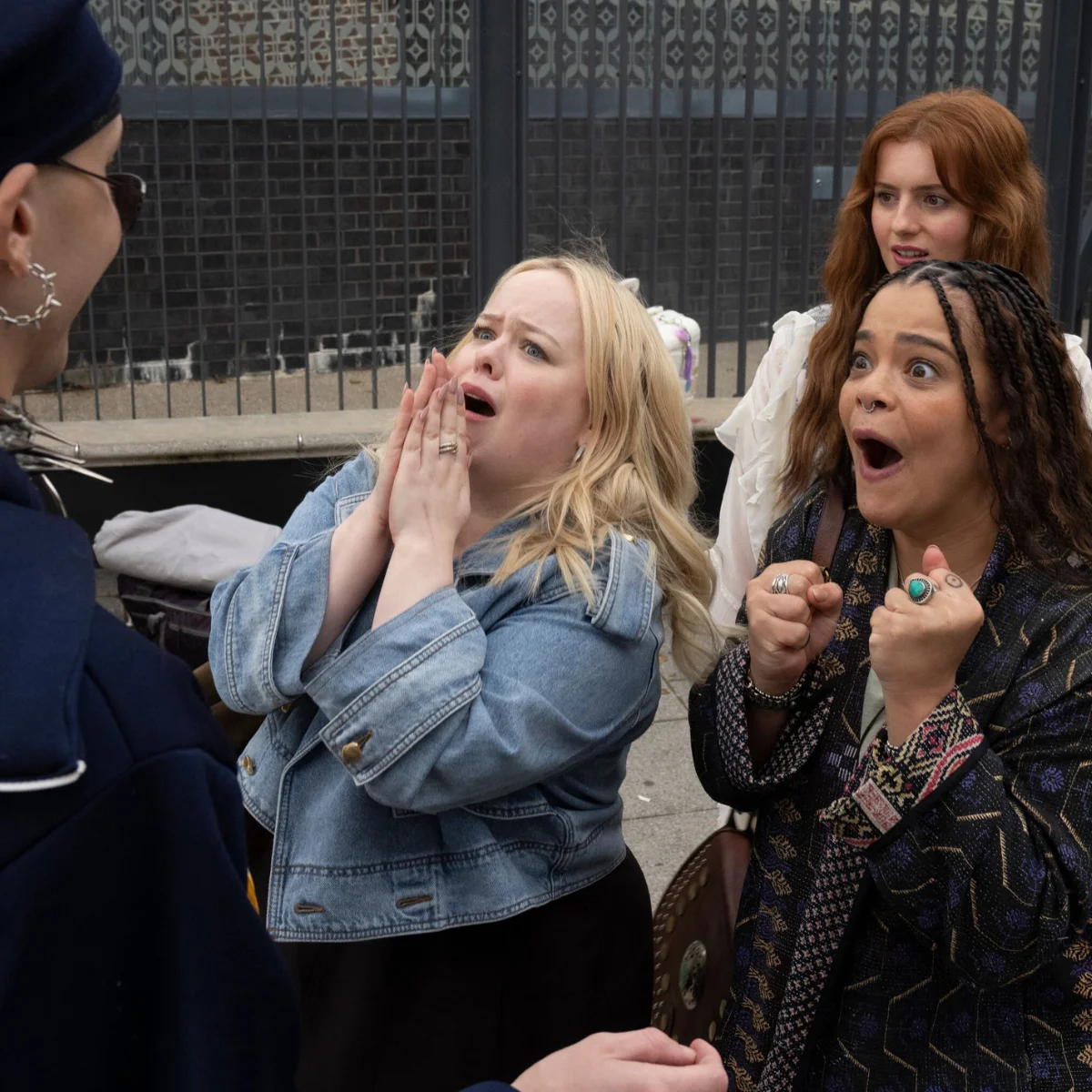
“It takes getting to that point of no return for both of them to have this no-holds-barred discussion where they can say all the things they’ve been wanting to say to one another, especially for Eddie. It was sad and it was hard and it was very, very intense,” Lydia tells me over Zoom. Nicola chimes in: “It’s a really difficult thing because as you get into your 30s, there’s this imaginary mindset that you’re a grown-up now, so you shouldn’t say to your friend, ‘you really hurt my feelings’. It can feel immature, but it’s not; it’s far better to be honest. Those conversations are incredibly difficult. It’s the challenge within the show; Maggie is someone who has serious issues with her mental health but that doesn’t negate Eddie’s character. They don’t know how to give each other enough grace in various senses.”
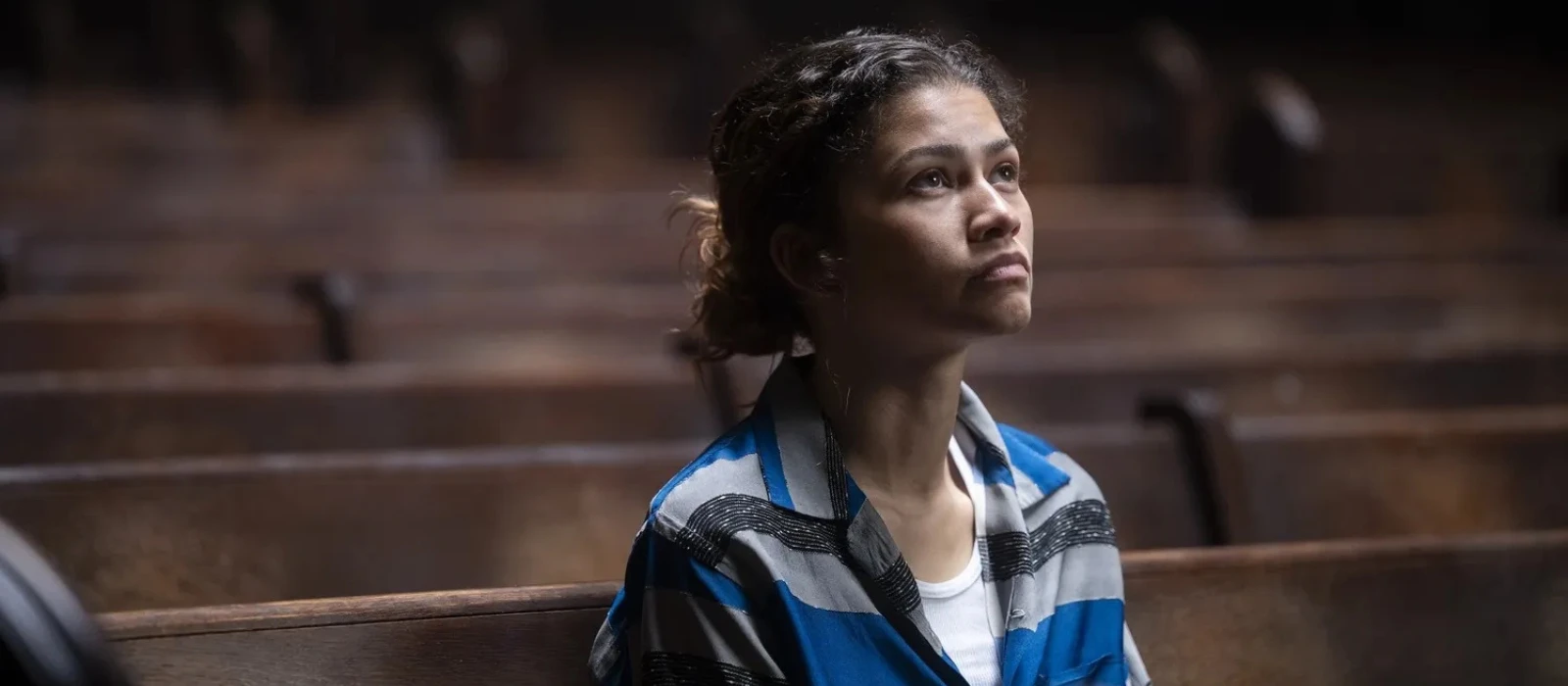
Eddie returns from California in episode one with a brand new bestie: Whitney, a boho chic wellness influencer who epitomises all the things that we’re sold as tools towards self-growth and self-actualisation. With her perfect hair and insanely white teeth and willow Goddess-ness, her transcendence is immediately at odds with Eddie’s baseline self. During their yearlong friendship sabbatical, Maggie has been doing the work. She’s taking her vitamins, doing the exhausting rituals that keep her grounded, and is making strides towards her best self, which she knows is and will maybe always be a work in progress. But Eddie’s drank the kombucha Kool-Aid, and their dynamic has shifted: it’s no longer Maggie that needs saving.
“Eddie is just very vulnerable,” Lydia says of her character’s arc this season. “She goes to LA and is genuinely looking to heal some sort of grief inside her: grief within their friendship, grief for the passing of her dad, grief in family relationships. There’s a lot to process, but instead she finds someone that she thinks can make it better and chooses to believe her, because that’s way more comfortable than the real work that it takes to heal.”

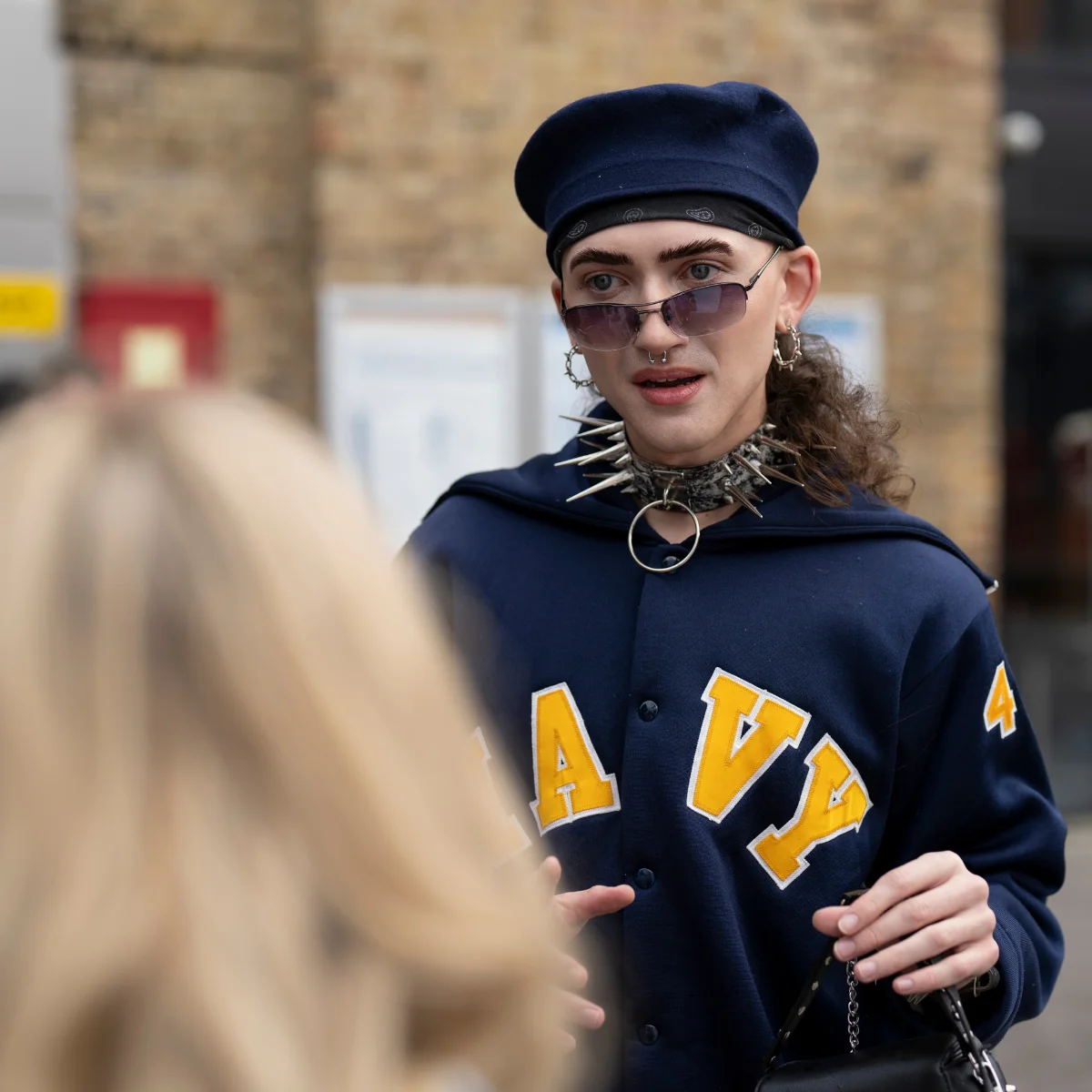


“Exploring that really resonated a lot, because especially while I was in my 20s, there’s a real selling of the belief that you can be cured, you can be healed, you can move past things if you just do your daily meditation or practice yoga five times a week, all these things that aren’t actually addressing the point,” Lydia continues. “I see Eddie doing that, not addressing anything that happened in the friendship with Maggie but instead just avoiding it and switching off and putting up these boundaries. That doesn’t work, and it’s also not fair to Maggie. It’s not honest within Eddie either. It felt very real to me, and important and current. Whitney’s character represents so many things in our society at the moment, this fake hippie spiritual guru and TikTok influencer.”
“It’s an interesting challenge this time around because in lots of ways, Maggie’s not being Maggie,” Nicola says. “She feels that in order for her to heal, she needs to be this person who does yoga and Peloton and has her vitamins seven days a week, and get rid of everything that she is. We all know that that’s never going to work. She’s really trying her best to be a caretaker for Eddie, but Eddie has someone in that position already, and that’s uncomfortable for Maggie. She’s trying to be a better person, but she’s also really pissed off by Whitney. It challenges her, but they really have to confront their roles within the friendship and how one of them having a feeling doesn’t make the other’s feelings any less legitimate. The way that they care for each other might not be in the same exact way, but it doesn’t mean they don’t care.”
This time around, flashbacks fill in some gaps of their shared history, letting the viewer in on the chronicles of their companionship over the years. We see and understand the way in which levity and gravity have been oscillating since their very first meeting, which just so happened to have been Maggie accidentally crashing Eddie’s father’s wake. They share an appreciation for dark humour, they provide the giggle at the funeral when the other needs it.
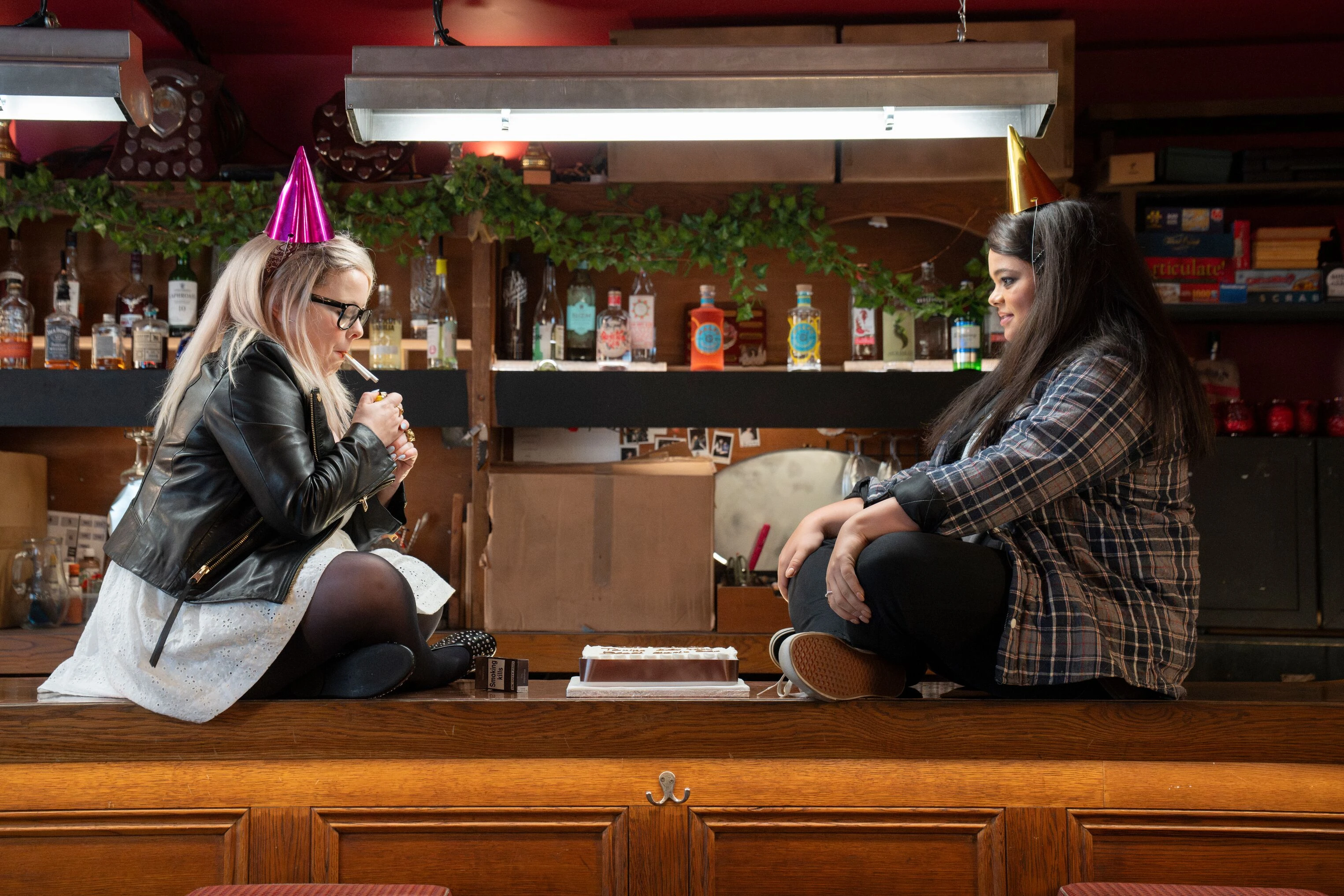
“It all felt very real, the way it was written,” Nicola says. “Camilla has such a good sense of not over-egging the sad moments, and she’s aware that there’s always humour to be found in any situation. That is such an Irish trait, and it’s also right there in the script. Rebecca Asher, the director, she’s brilliant at knowing how to balance things and letting us play and find it all.”
“Their friendship isn’t just these stages of either Eddie or Maggie going through a crisis; it’s filled with a lot of laughs and late nights and taking drugs and all the things that they did in their 20s, and to get a snapshot into that is really important in helping the viewer understand them more,” Lydia says. “Camilla really knows these characters, and she’s so insightful on who they are and what they’ve been through. It is a comedy at the end of the day, so it needs to have that element of light, of laughs and funniness because that makes the drama and the darkness and the deep emotions hit harder.”
That buoyancy is present in abundance in episode two, which Nicola Coughlan describes as “a proper love letter to the queer community of East London.” Rupert Everett plays himself, but an utterly sleazified version that is genuinely addictive to watch. Kyran Thrax, winner of Drag Race UK season six, also makes an appearance. “I’ve known Camilla for 17 years and we used to go out to the clubs and watch the queens all the time,” Nicola recalls. “It felt really nice that that episode was a real celebration of that, and Rupert Everett is a true star. He came in with such great ideas, such a great physical comedy. Someone at his level doesn’t have to come in and try, but he was just brilliant and elevated the whole thing so much.”
Big Mood season is available to watch now on Channel 4.
Also Read