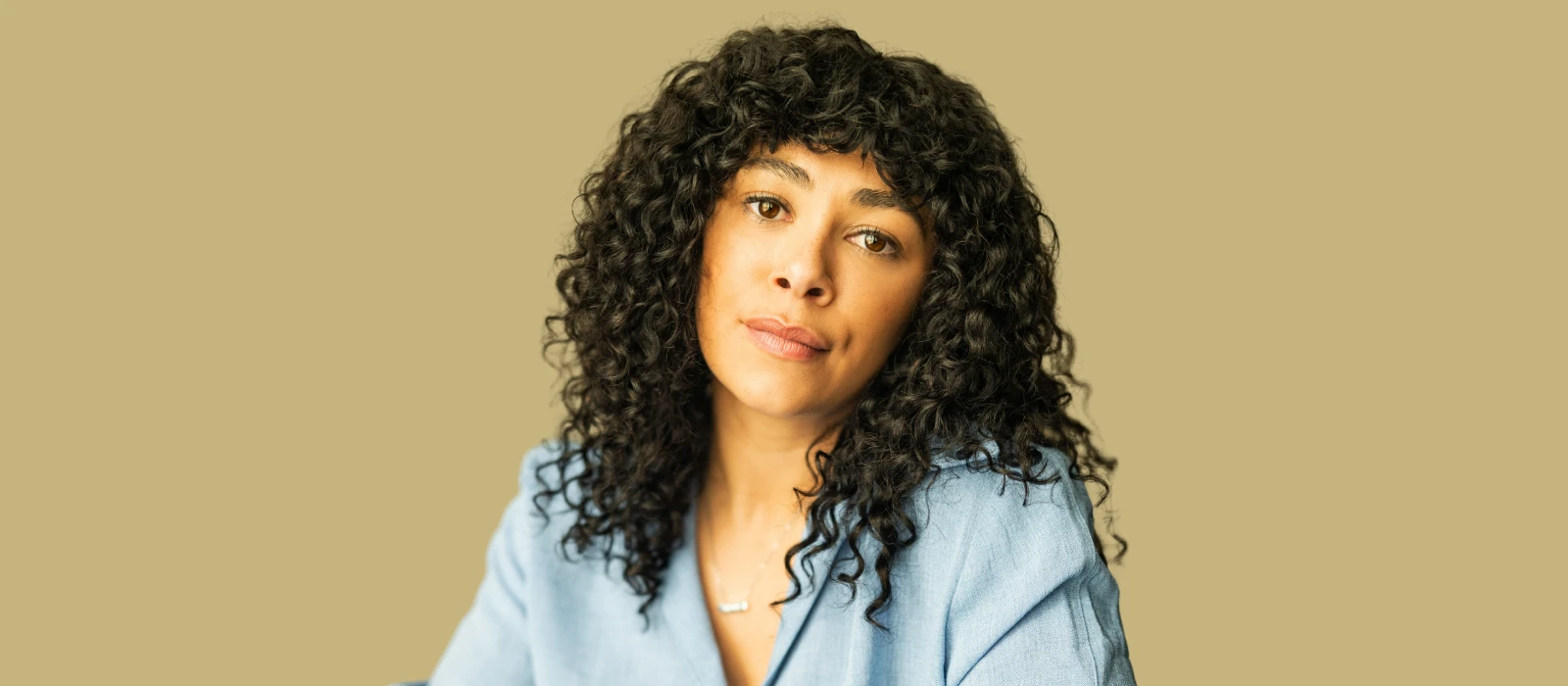




Lucy Caldwell is treating short stories like spells and finding the magic
Ahead of the publication of her fourth collection of short stories, Devotions, Sarah Gill sat down with Lucy Caldwell to discuss the art of the short story, digging into the granular of huge big existential questions, and Ireland’s efforts to reimagine itself again and again.
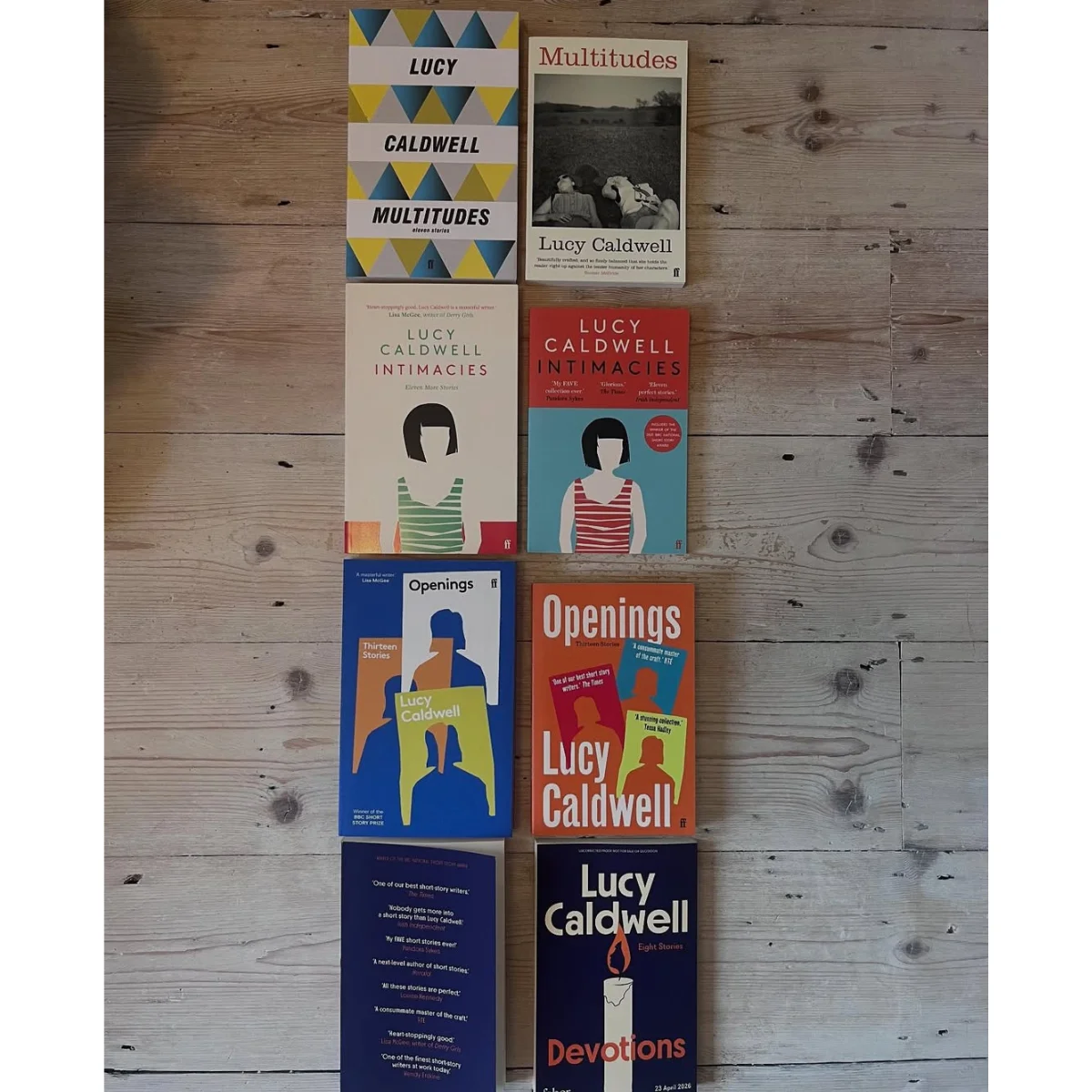
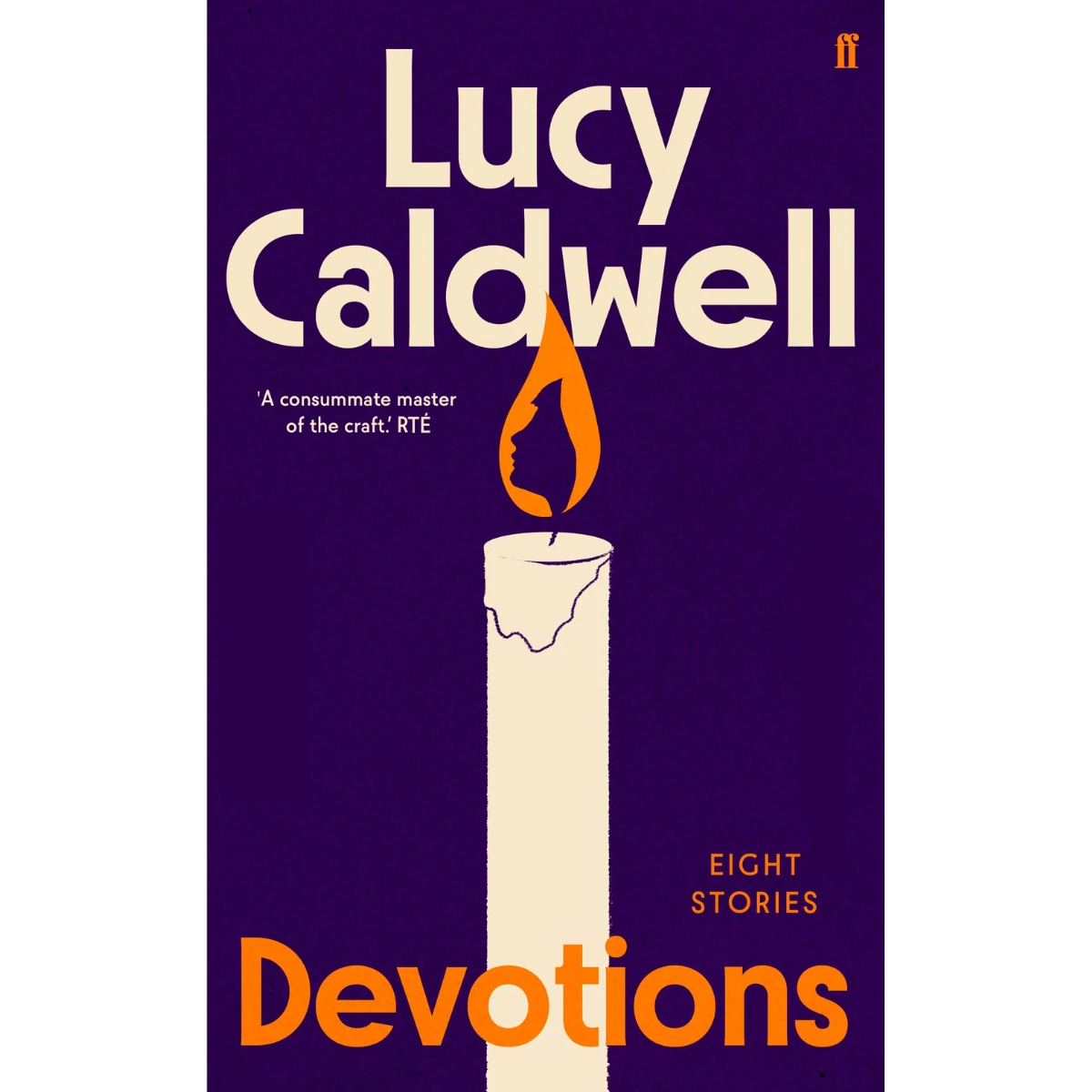
Lucy Caldwell’s writing has a way of burrowing deep down into your subconscious; her characters stay with you long after you’ve turned the final page and the themes stay unfurling in your mind. Her short story collections take a central theme and look at it from all angles, through varied lenses and perspectives. Multitudes was Belfast, childhood and teenage years. Intimacies was new motherhood and young motherhood. Openings was about how you go through life not becoming closed, how you grow and allow people to change. Now, her fourth collection Devotions, looks at love and belonging and what we hold sacred.
The eight stories that make up Devotions are deeply existential, pulling at those threads of thought that could unspool into infinity given half the chance. It explores yearning for distant pasts and unknowable futures, deals with love and loss and longing, and has this beautiful current connecting the stories at their root. From the young Belfast theatre troupe taking their experimental production of Hamlet to New York to the professional violin player slipping through time aboard a long-haul flight, there’s a sense of divinity at play throughout, a search for a higher power.
“Devotions is about love, with this mystical element going through it,” Lucy tells me. “We get to choose what it is in our lives that’s sacred, and we have to honour that. When we’re young, it’s so easy to want to be the same as everyone else, and we outsource things to parents or to systems like school or religion. There comes a point in life where each of us gets to choose the thing that matters to us, and no one else can make that decision for us.”
“I wanted these stories to speak to one another at a deeper level. It took me about ten years to write any short story that worked. By the time my short stories started working, I’d published three novels, several stage plays, radio dramas and I couldn’t get short stories to work in the way that I wanted them to. I started thinking of them as spells. Words and rhythms in a particular order to conjure an emotion. When I started writing the stories as spells, it worked, because I was writing such intensity of feeling, so it didn’t matter if the stories had a lot of plot or almost no plot at all. It was about the intensity of feeling.”
There’s a story, Little Lands, wherein the narrator is showing her daughter The Sound of Music for the first time, and she feels simultaneously connected to and colossally distanced from her own mother, her own younger self who experienced this moment from the other side all those years ago. It brings up a feeling deeper than nostalgia and brighter than sadness. The Irish word uaigneas feels like the best fit. It’s a lonesomeness married to an acceptance that we can’t turn back time.
“What I was doing with Devotions, with Little Lands, is taking an emotion, a feeling and translating it into words, so that when the reader reads the story, the same feeling is evoked,” Lucy explains when I tell her how much her stories resonated. “Philip Larkin has this beautiful definition of poetry that I love. He thinks of his poems as a little machine that, if the reader goes through the machine, they get the result that he intends them to get. With the stories, for me, it’s all about allowing the reader to experience the emotion.”
In many ways, Devotions also serves as an ode to art across myriad forms. Classical violin, cinema, theatre, multiple references to Hamlet, even in the epigraph. “I was asking these big questions about what matters most to us in life and why we live,” Lucy says. “All those big, big questions that are so obvious that they’re kind of impossible to look at head-on. Why we live and why we make art and what is death. I found myself turning to Shakespeare and Joyce and Beethoven. Turning to see how other people had answered these questions.”
When you start out as a young writer, you fear that there are limited resources and that there’s only room for very few. The best thing I’ve learned in my career as a writer is that that’s not true.
“Art is the closest thing that we have to immortality, to time travel. Your soul touches another soul when you engage and connect with art. Those pieces of art that have stood the test of time, the earliest stories and myths that tell us what it might mean to descend into the darkness and be reborn. It’s a miracle that we can still access and respond to these stories, feel them touch something within us. We create art because it’s a form of immortality, because it’s the closest technology we have to time travel, because it connects us across all the millennia of human experience. In an era of really ugly global nationalisms and all the things that make us feel different and fragmented, it’s so important to remember that there are deeper things that we have in common. Art is one of those things.”
Lucy’s characters walk off the page and down the corridors of your mind, taking on a very real significance that makes you think maybe you actually met them before at a wedding or passed them on a street. In one story, a character’s grandad tells her about the time he met Jesus, except Jesus was actually a traffic warden giving him a parking ticket. The writer imagines what it might be like to be the kind of person who can see God in a stranger, or at least to be the kind of person who tries to. I see them all so clearly in my head, I see the high-vis vest.
“I always used to think that I was a complete fraud as a writer because I never knew what my characters looked like, but I’ve realised that the reason is that I’m experiencing them so intensely from the inside,” Lucy tells me. “It’s only important to know what someone looks like if that affects the way they move through the world. What I want the reader to feel is that they’re so inside the character and their soul and their experience, that that’s what makes them feel real. That’s how you’re experiencing them, which is much deeper and enduring than being able to have a picture of a character in your head.”
Unsurprisingly, the world of literature is a realm Lucy frequently found herself getting lost in growing up. From fortnightly issues of Storyteller magazine with its read-along cassette tape that essentially taught her how to read, to Irish myths like Deirdre of the Sorrows (“that was my favourite, because it was so tragic”), to How Many Miles to Babylon? by Jennifer Johnston, living in a world of fantasy was well-trodden territory for a young Lucy Caldwell. From making mini books with her sisters to having Wendy Erskine as her A-Level English teacher, her fate was sealed as a writer early on.
Lucy wrote her first novel while in university, just after the Good Friday Agreement, and as she says, there was a feeling at the time that no one wanted anything to do with the North of Ireland: not reading about it, not talking about it, nothing. “There was a mindset that ‘The Troubles are finally over, let’s move on, let’s not talk about it at all.’” There’s been, to put it lightly, quite the sea change.
Music, film, television, literature, and visual art — there’s a real appetite for stories and art coming out of the North. “When I was on discussion panels at the start of my career as a writer, it was only ever with male writers; there was no sense of community and that changed with Sinéad Gleeson’s anthology, The Long Gaze Back.” Lucy says, “It was such a landmark. There was the Waking the Feminists movement, Anne Enright was named the inaugural Laureate for Irish Fiction, and things started to change. Milkman by Anna Burns could not be written in the immediacy of lived experience; it needs to go through the crucible of 20 years before a masterpiece like that could be written. A book like that lifts us all.”
“When you start out as a young writer, you fear that there are limited resources and that there’s only room for very few. The best thing I’ve learned in my career as a writer is that that’s not true. The more of you there are, the better you all get and the more there is to go around. I am sharpened by reading the work of women like Wendy Erskine and Jan Carson, and the conversations I have with them.”
“In Ireland, so many big stories are being questioned. The equal marriage referendum, the bodily autonomy referendum, the mother and baby homes. For the first time ever, Ireland has always regarded itself as a place from which people leave, and now it’s having to come to terms with itself as a place to which people come. These stories are being upended and that makes it such an interesting time for writers, because you’re asking what stories we’ve told ourselves on a personal level but also as families and as nations. Ireland as a whole will have to continue to reimagine itself as unification comes close, and I think it will do. We will need a radical new imagining of what it means to be a one island Ireland.”
Generous on the page and even more so in conversation, Lucy Caldwell’s mind is a deep well of thought that you could hop in and swim around in. It’s not often I wish a book were infinitely longer, but Devotions will be one you’ll read and reread time and again, gleaning something new with every sitting.
Devotions by Lucy Caldwell (Faber & Faber) is on sale now.
Photography by Neil Hainsworth.
Also Read