




So you have a great idea for a book, now what? Sarah Macken enlists the experts to help you finally pen the novel you know is in you
It’s a statement that’s often thrown around: everybody thinks they have a book in them. But do they actually? Arguably, with Instagram pulling back the curtain on the publishing industry, and authors bringing readers on every aspect of the writing journey, being an author has never seemed so exciting. Or more attainable.
If you do find yourself with a great idea for a book, what happens next? Should you enlist in an MA in creative writing? Should you join a writing group? Or simply lock yourself in a darkened room for 12 months until your manuscript is perfected? The answer isn’t one-size-fits-all, although the most agreed upon one, according to the experts, is simply to write, write, write. Even if being an author isn’t your day job.
As literary lore goes, Bonnie Garmus – then an unknown tech copywriter – wrote the first chapter of the mega hit Lessons In Chemistry in a post-meeting rage after being dismissed by her male colleagues. “You don’t need to have contacts. Agents are looking for a great voice, a great story. A lot of our writers come from different backgrounds. One of my authors was a butcher,” says Sallyanne Sweeney, a literary agent at Mulcahy Sweeney Associates, of those doing a career switch.
“You don’t have to have an MA, you don’t have to go to a writing group… though they can be helpful,” says Niamh Mulvey, an author, writing teacher and coach, on staying accountable for your writing goals. Mulvey offers a caveat about writing groups, which “can be fantastic, but often can be about the ego jostling of the people in the class If you do join one and it doesn’t work out for you, don’t be disheartened. With any kind of artistic work, ultimately you have to take responsibility and keep at it to the point where you think, ‘this is good enough,’” she says. Find a trusted ally to read your manuscript.
They needn’t be a writer, just someone who loves reading, and the feedback doesn’t have to be formal. “Simply asking them: ‘Where were you bored?’ and ‘where were you confused?’ will be helpful,” says An Post Irish Book Award-winning author Edel Coffey.
Most writers agree that a daily practice is essential. The writer William Boyd says that he writes solely for three hours every day, between lunch and cocktail hour (!). The idea of this might elicit an eyeroll for those juggling a fledgling writing career with a full time job, kids and a jam-packed schedule. Equally, the nature of a creative personality can be of the all-or-nothing persuasion. “When I try to write in fits and starts, I’d write something and then go back to it two months later, and the thing is dead in the water. By doing ten to 15 minutes writing every day, the story or the idea stays alive. So, when you’re washing the dishes later that day, you are thinking about it. The next day, when you go back to it, you think of something else. It becomes this magic, symbiotic relationship: almost like you give to it, and then it gives you ideas back. Think of it as like feeding a plant,” Coffey says, who you can follow @edelcoffey for reviews and expert advice.
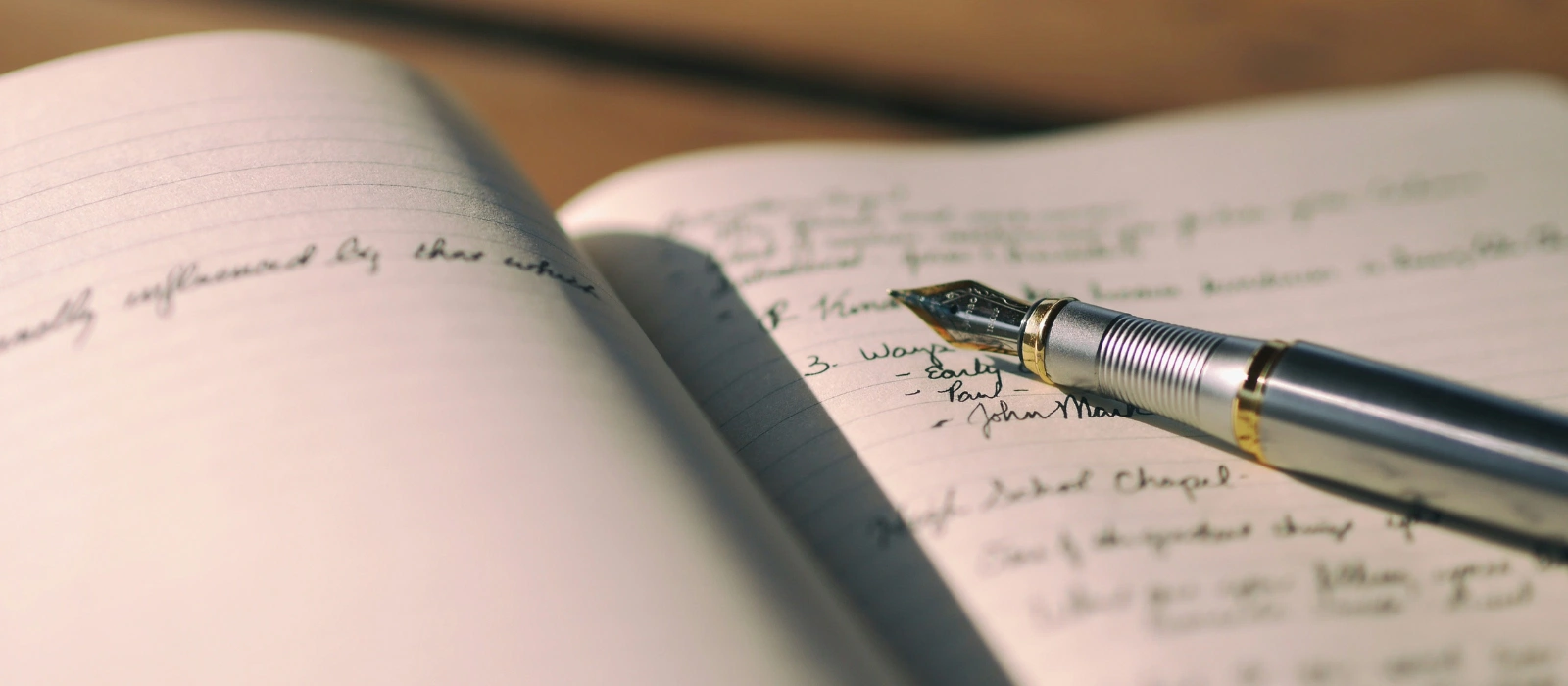
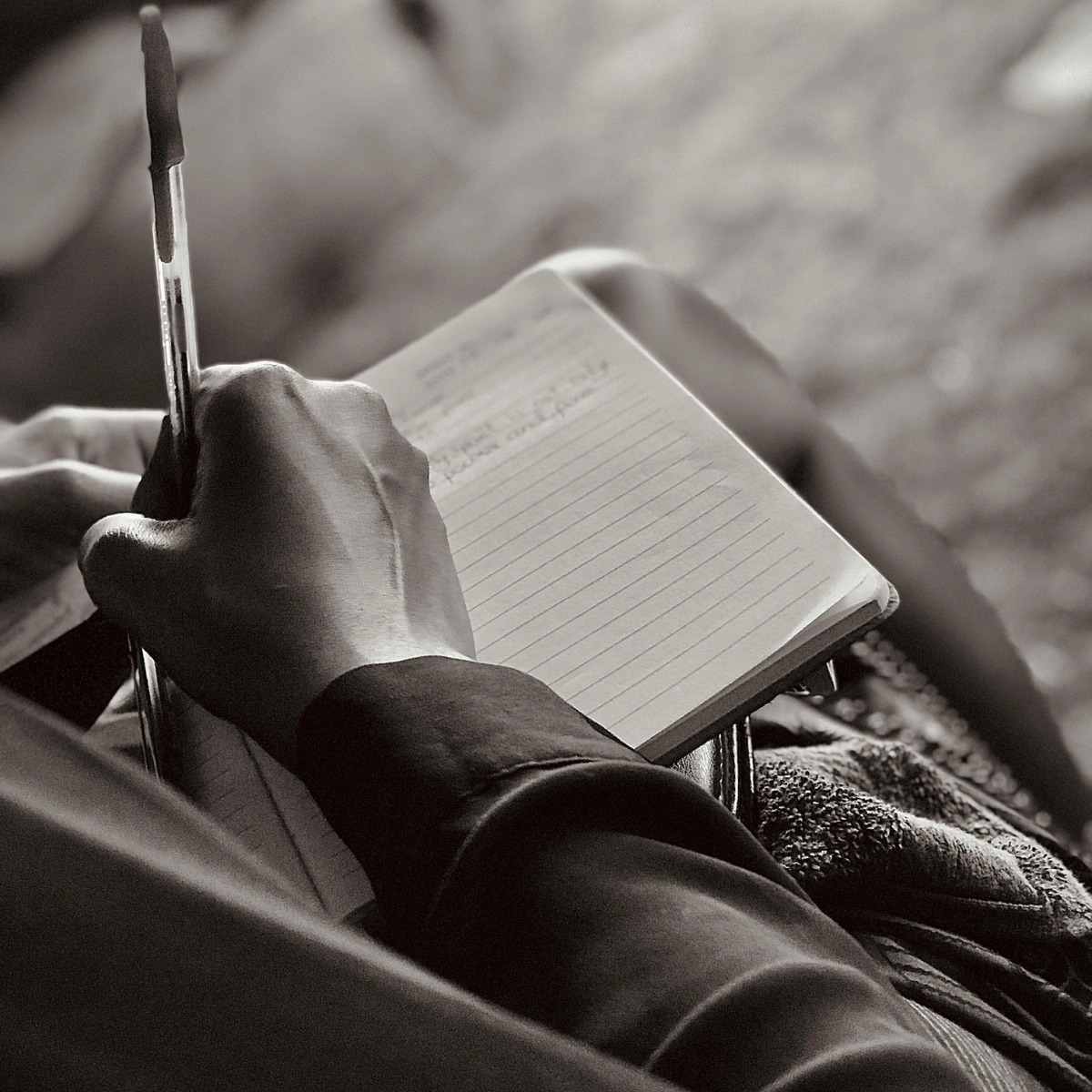
Remember that a harsh inner critic is, sadly, a natural part of the process. What happens if you hit a wall? Whether you’re struggling to make a character come to life or you can’t seem to get around a stickler of a plot-point, step away from the laptop and take out a pen and paper. A 2014 study entitled “The Pen Is Mightier Than The Keyboard”, published by Daniel Oppenheimer and Pam Mueller, found that the brain uses a different neural pathway when a person is handwriting than when they type.
If you do manage (against all odds) to quell the imposter syndrome, try to enjoy the process. Oftentimes, it’s a case of having your writing antennae turned on: you never know when inspiration might hit. Carry a writing notebook with you. “Seamus Heaney referred to it as the channels being open. If you are awake at night thinking about something, if you’re worried about something, if you read something in a newspaper and you’re thinking about it two days later, they are your ideas. If they are interesting to you, they will be interesting to other people,” Coffey says.
As for pitching to prospective agents? Ensure you follow their submission guidelines (each agency outlines these on their website). The most common mistake Sweeney notes is writers submitting a book before it is ready. Also: know your product. “Put as much care into your pitch as you do your book,” Sweeney advises. Make it sound unique, interesting and sellable. If you’re not clear on what your book is, nobody else is going to be,” she says.

Lastly, a word of advice from the experts: it’s not going to be easy. Writing a book is a tremendous task and, even if it does get published, how it is received – i.e. whether you pen a wildly successful bestseller or not – is, sadly, out of your control. In the UK, a survey by The Authors’ Licensing and Collecting Society (ALCS) carried out in 2022 found the median author’s annual earning was just £7,000.
“Oftentimes, the big book deals that you hear about are quite unusual,” Sweeney says. As one famous Irish author put it to me: “Consider if you’d won the lotto, would you still want to do this?” That’s not to be pessimistic, but rather the journey to getting published is arduous and undulating. The passion to simply create, to have your stories in the world, must outweigh any desire for fame or notoriety, if you are to persist.
It’s not as easy as Irish people are innate storytellers, therefore half the battle is won, but it doesn’t hurt to remember it, either. “We’ve been telling stories since we were cavemen. Even in our dreams we tell stories. So of course [we’d want to do it], it’s a part of our humanity,” Coffey says. Such a romantic sentiment might tickle any burgeoning writer’s spirit: that the very act of creating is something not only nourishes the soul, but is implicit for us to function – hell, to flourish – as human beings in this uncertain world. Now: unplug your internet connection and write.
The Writer’s Guide
Events, resources and inspiration to help you on your writing journey…
The Festival
Ireland is blessed with a wealth of literary festivals, and a true highlight is The Festival of Writing and Ideas at Borris House. It has quietly become the most buzzed about event on Ireland’s summer festival circuit, attracting a cross-section of heavy-hitting names in literature for its headliners.
The Must-Read
“John Yorke is actually a screenwriter, but his book Into The Woods is extremely useful for novelists,” Mulvey says. “I wish I had read more books on structure sooner, I think that would have been helpful to me.” A Swim In The Pond In The Rain by Man Booker Prize-winning author George Saunders is equally celebrated.
The Podcast
Listen to How to Write a Book, the podcast series from Elizabeth Day of How to Fail fame. Each episode tackles a different area, from honing your voice to getting your manuscript ready for publication.
The Online Resources
Take part in online initiatives such as NaNoWriMo, or‘1,000 words of summer, where participants write 1,000 words a day for a set amount of time. Equally, Irish author Sophie White offers a Magic Hour on her Substack, that’s a virtual creative meet-up where members work silently, but together, on a chosen project. The magic sauce being that sense of community and accountability. Lastly, writing.ie is chock full of info on courses, competitions and news for aspiring Irish writers.
The Competition
Flex your writing muscle by entering writing competitions like the annual Write By The Sea one. Categories include short story, flash fiction, poetry and memoir. Anthology also run a Personal Memoir Competition, so keep an eye out.
The Helpful Tech
Mulvey recommends Freedom, an app that blocks specific websites and apps on your devices so that you’ve got the head space to do the deep work.
This article originally appeared in the Summer 2025 issue of IMAGE.

IMAGE Autumn 2025
The Autumn issue of IMAGE is here, and we’re taking inspiration from the seasonal shift to reset, renew and refresh. Plus: * Shop your wardrobe * Stable of Ireland’s studio * Autumn staples * Your brain on burnout * The business of coffee * nostalgic beauty * Get your best hair * Exploring breathwork * At home with Helen Cody * Pop-up dining * Off-season Ibiza * and so much more…
Have you thought about becoming an IMAGE subscriber? Our Print & Digital Magazine subscribers receive all four issues of IMAGE Magazine and two issues of IMAGE Interiors directly to their door along with digital access to all digital magazines and our full digital archive plus a gorgeous welcome gift worth €75 from Max Benjamin. Visit here to find out more about our IMAGE subscription packages.
Also Read