









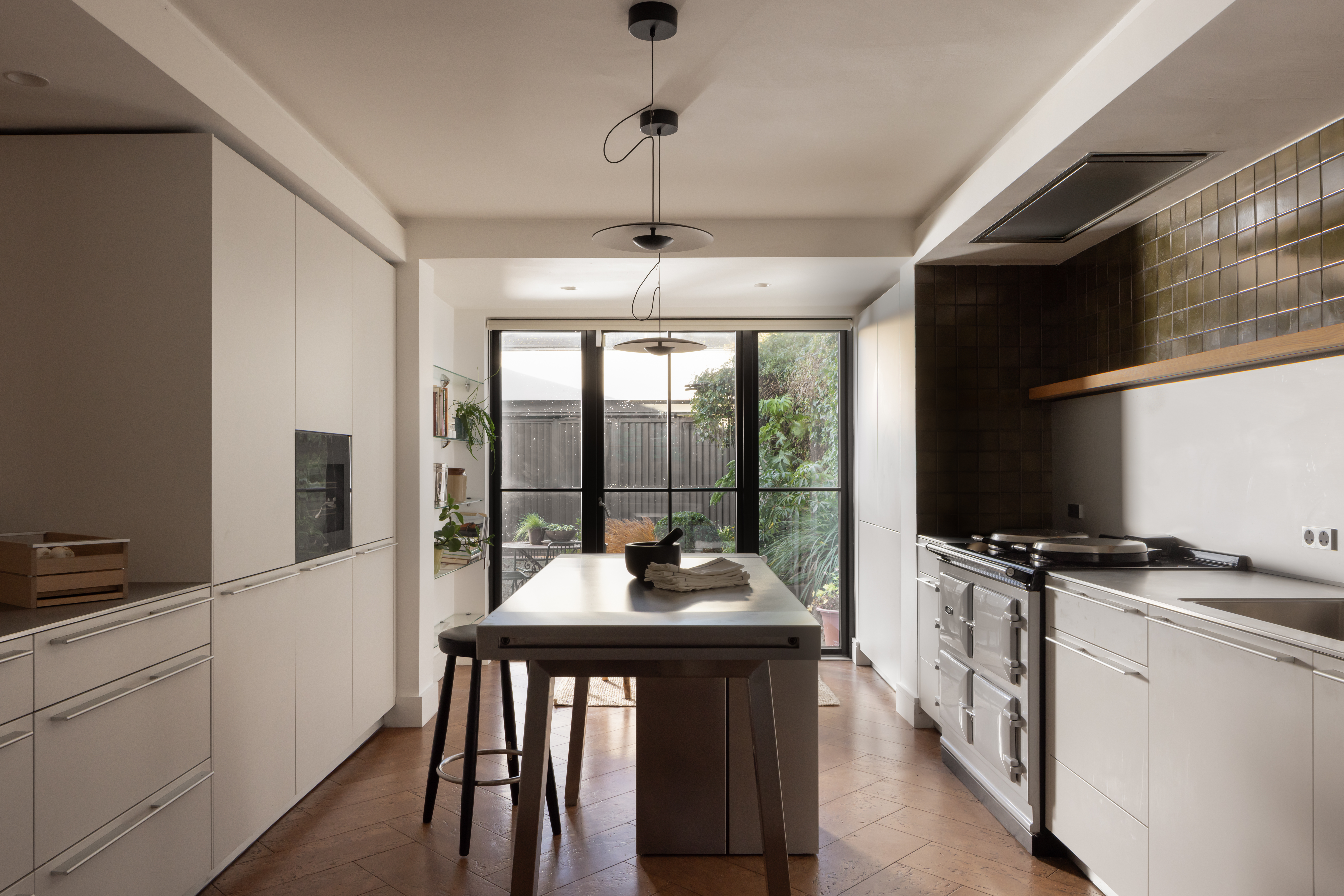
This Dublin 4 mews has been transformed into a serene, streamlined space
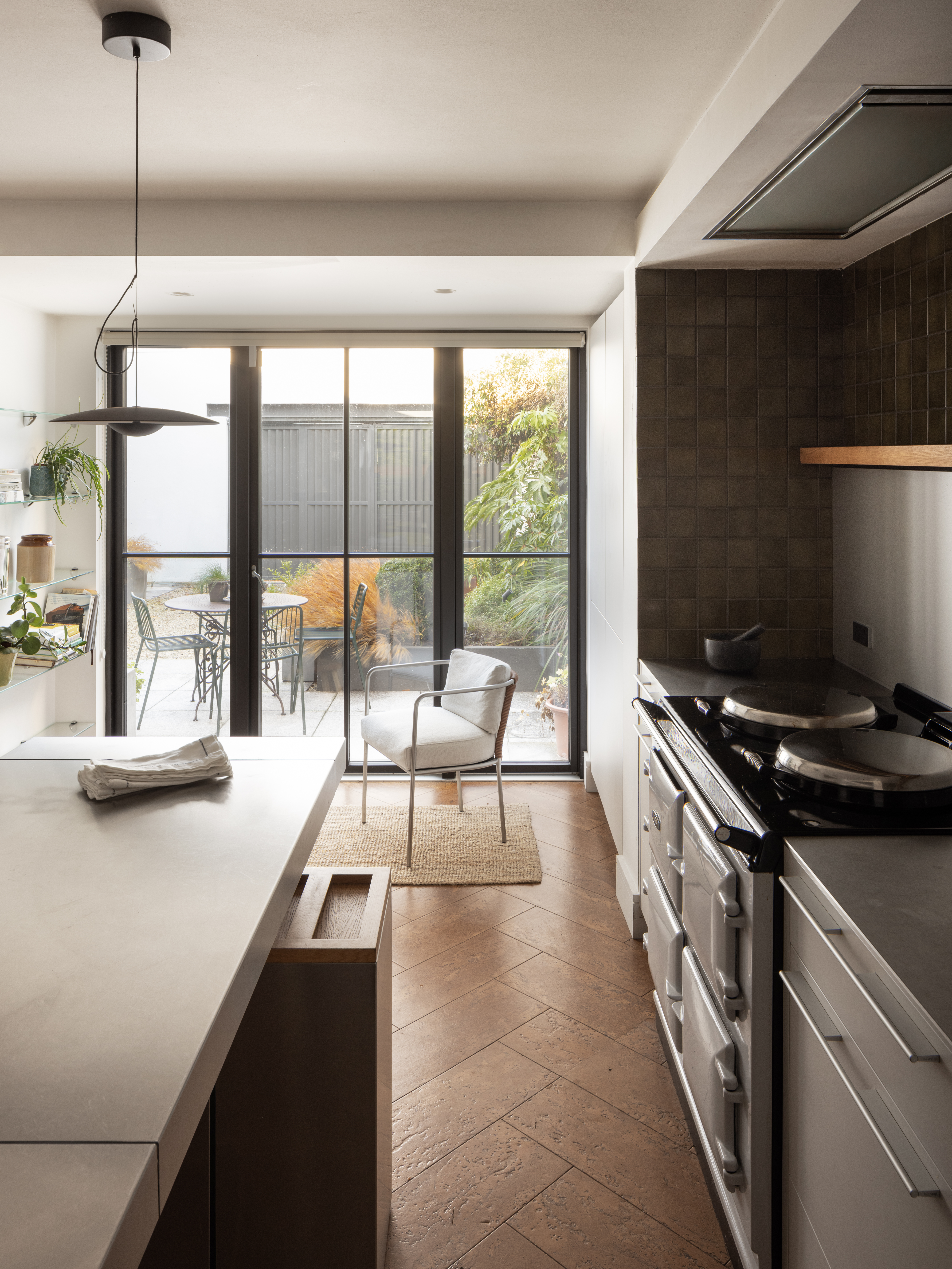
A once disjointed layout now flows, while the connection to the garden has been maximised.
This Dublin 4 mews home was built around the 1960s, and its design and layout didn’t work for its current owners. A team of architect Garbhan McCaffrey on design, Realm Concepts on interiors and furniture, and Fionnuala Fallon on garden design and planting worked closely to create a space with both function and flow.
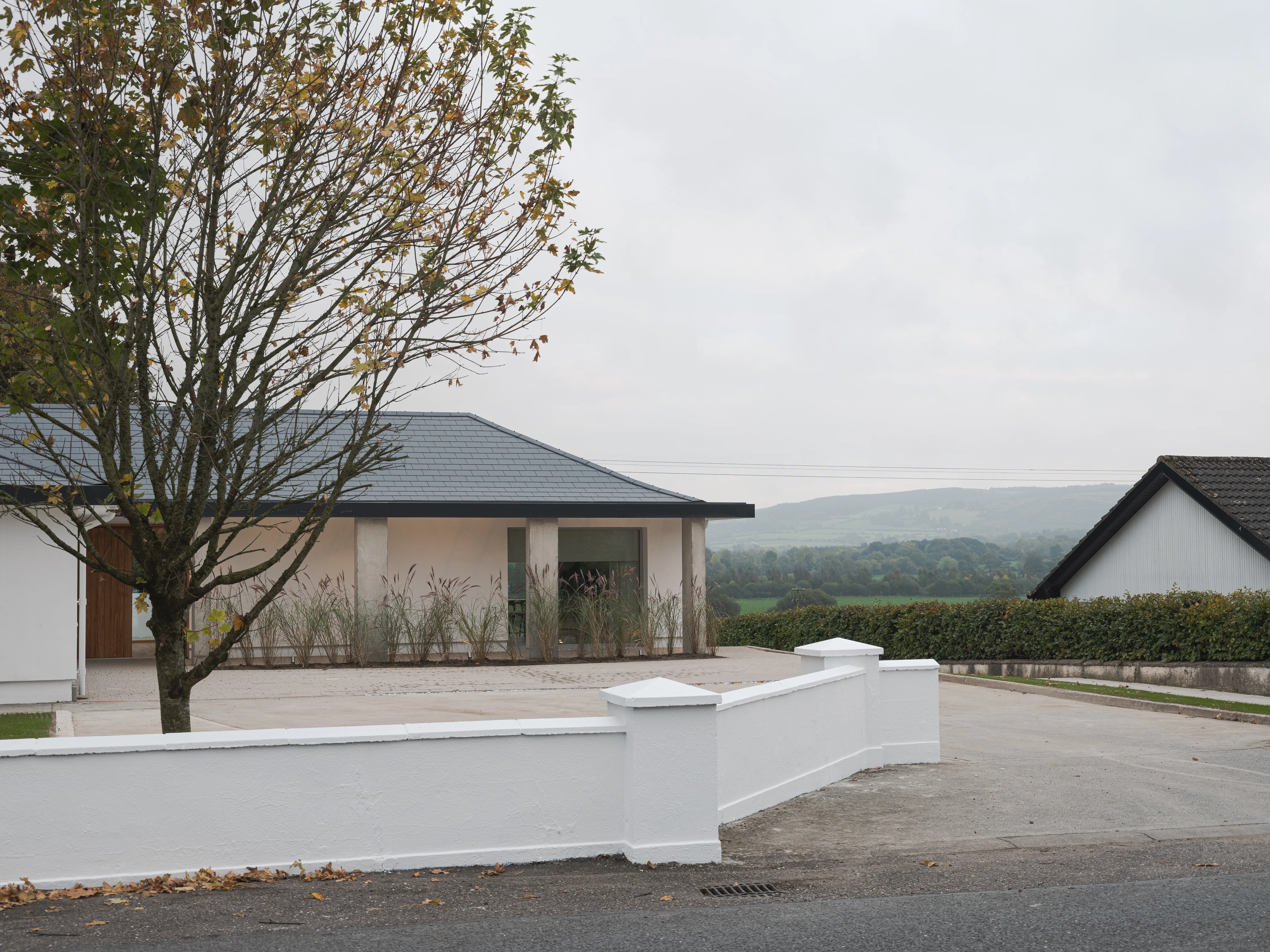
Internally, the layout of the house was disjointed, a series of enclosed rooms that limited flow, natural light, and spatial continuity. Externally, the building felt disconnected from both its entrance and garden aspects, and the courtyard setting was underutilised and lacked definition.
The homeowners were downsizing, and keen cooks who entertained frequently. As a result they wanted a calm, contemporary home with a sense of order, light and cohesion. A key aspect of the brief was that the internal layout felt more like a connected sequence of spaces.
Creating a connection to the courtyard and garden was also important. In terms of style, they were interested in a restrained, early modernist aesthetic.
In order to achieve this, the design removed internal walls to create a more fluid and interconnected ground floor. This formed a sequence of kitchen, dining, and living spaces that read as a continuous whole while retaining subtle definition between each zone.
Rather than a fully open-plan approach, the spaces are zoned through shifts in ceiling height and proportion. A lowered ceiling over the dining area conceals structural elements while introducing a sense of compression, reinforcing a progression through the space.
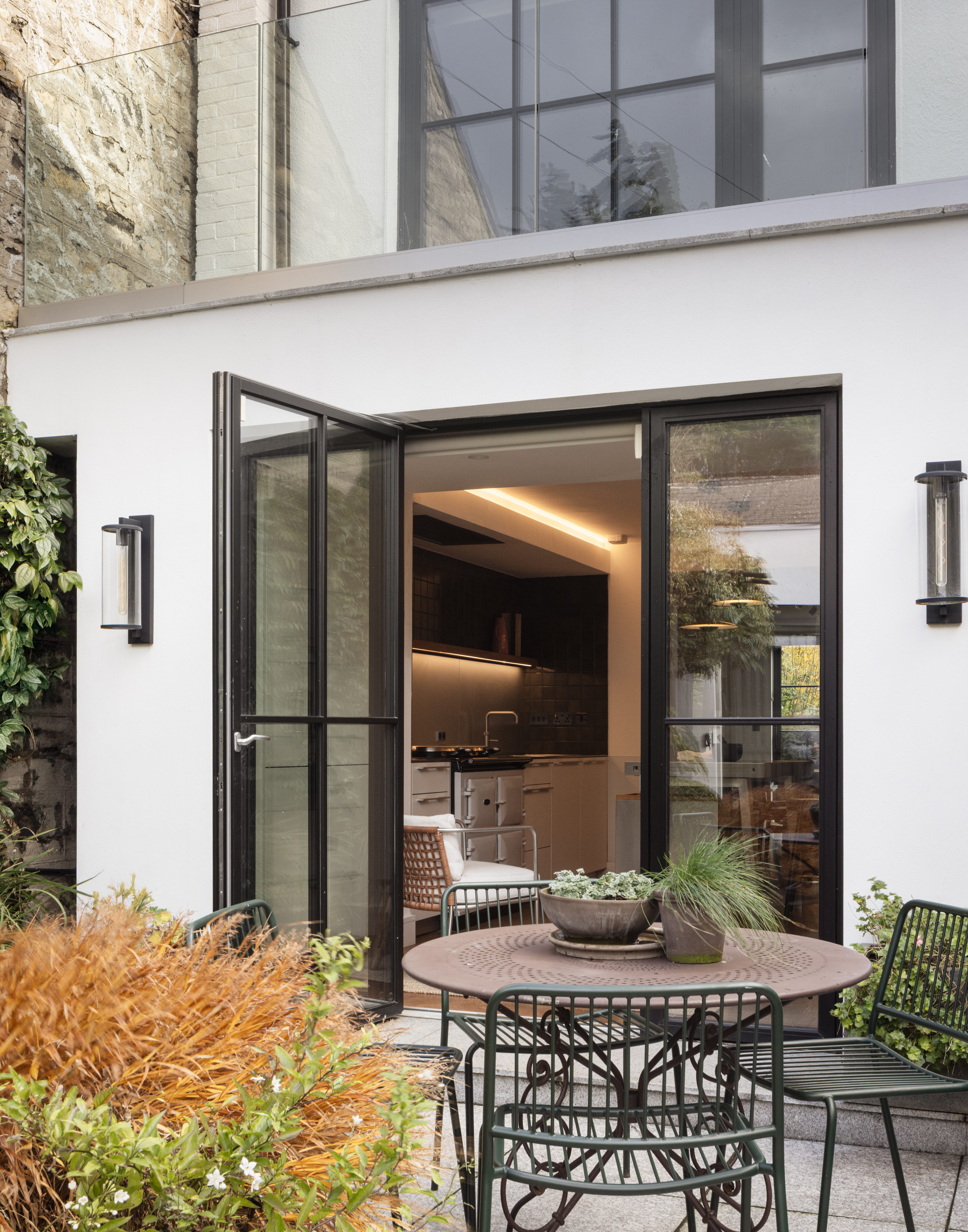
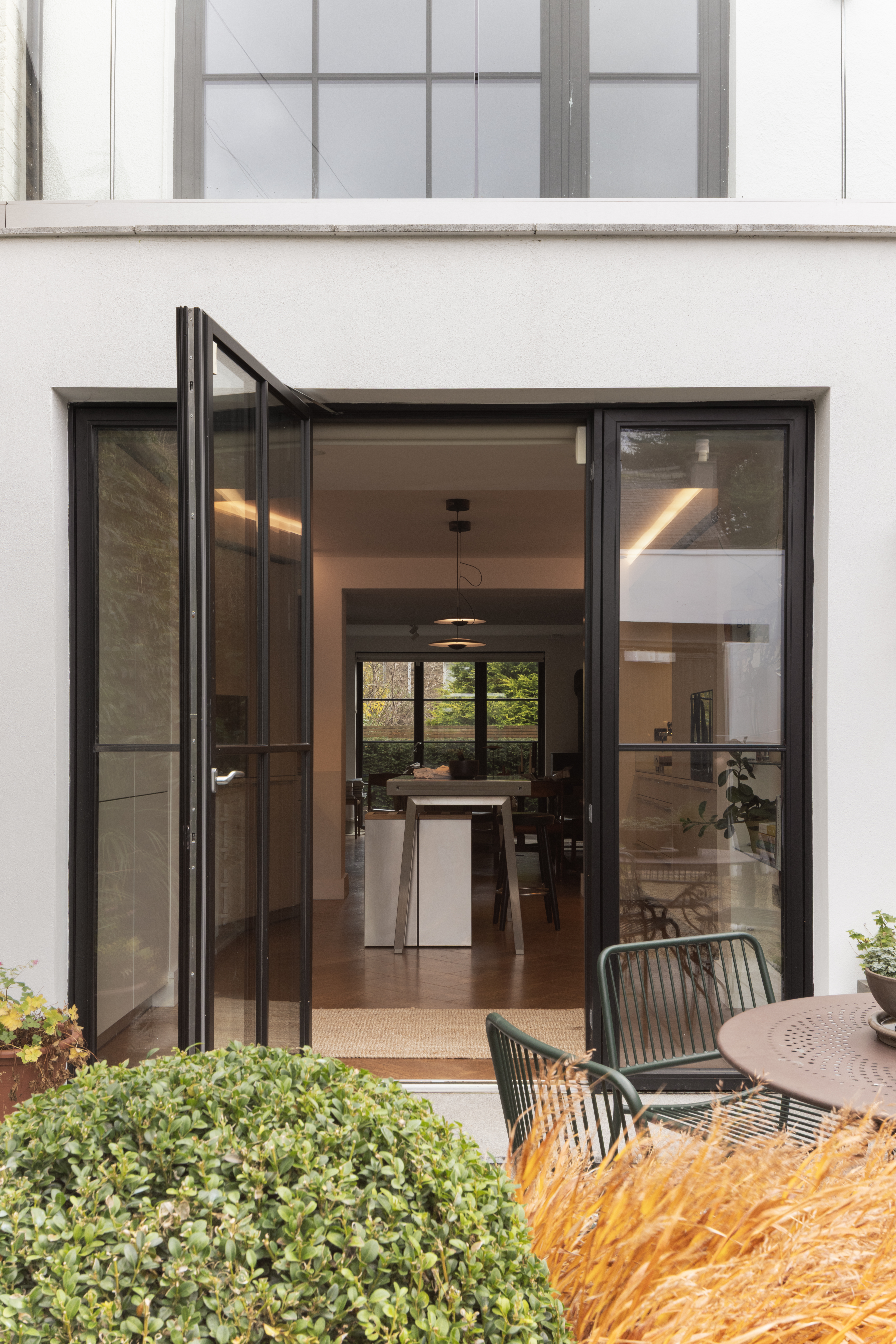
A front extension reconfigures the entrance, enlarges the kitchen, and recomposes the front elevation, establishing a clearer architectural presence within the courtyard. To the rear, carefully proportioned glazing strengthens the connection to the garden, allowing light to penetrate deeper into the plan. This relationship between inside and out is brought fully to life by garden designer Fionnuala Fallon, whose planting design and selection give the external spaces the same sense of intention and calm that defines the interior.
At first floor level, the layout was reconfigured from three bedrooms into two larger rooms, each with a dedicated shower space, a compact utility area, and rooflights bringing additional daylight. A glazed balcony formed over the new extension extends the master bedroom outward, providing a private external space.
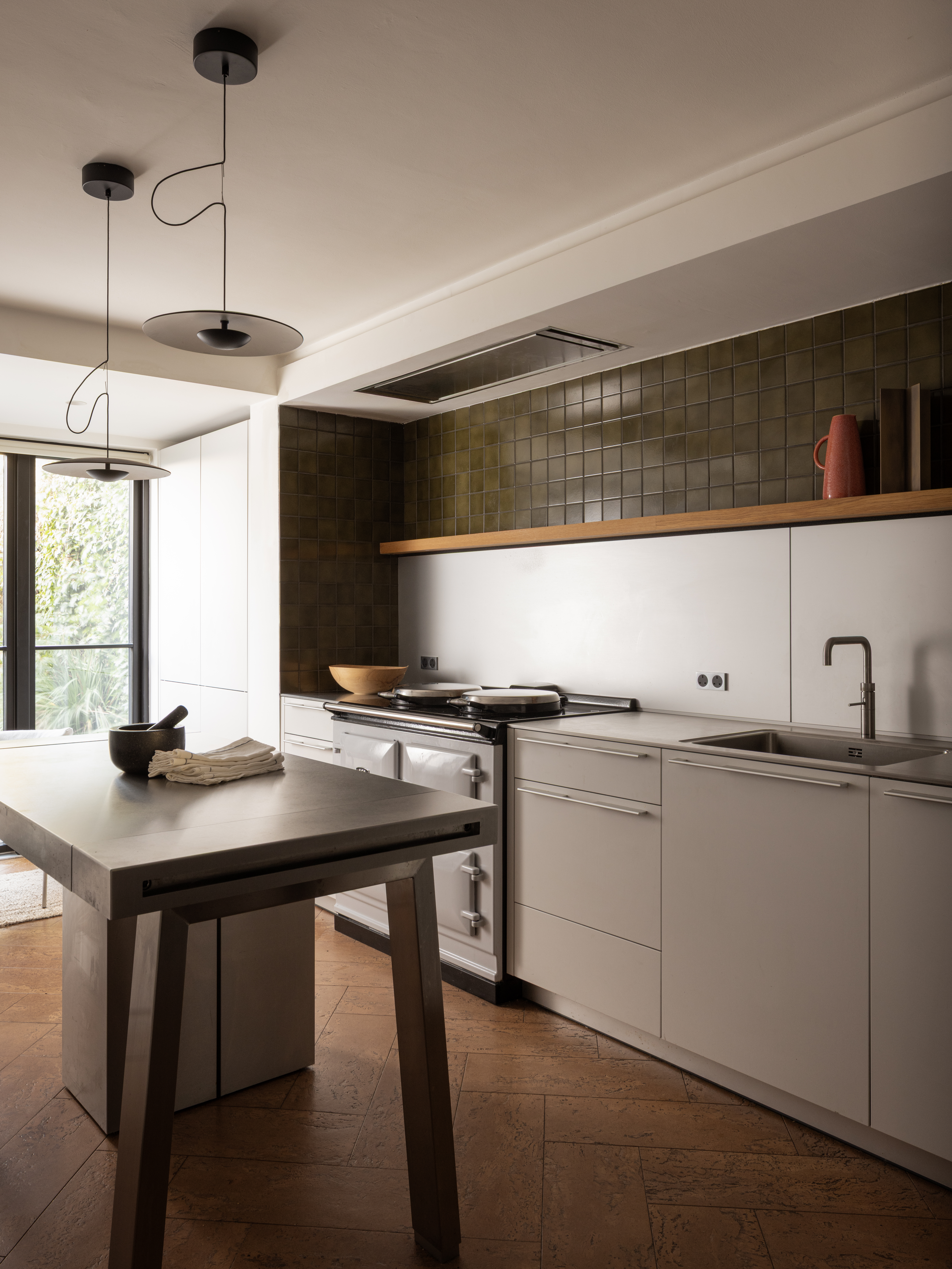
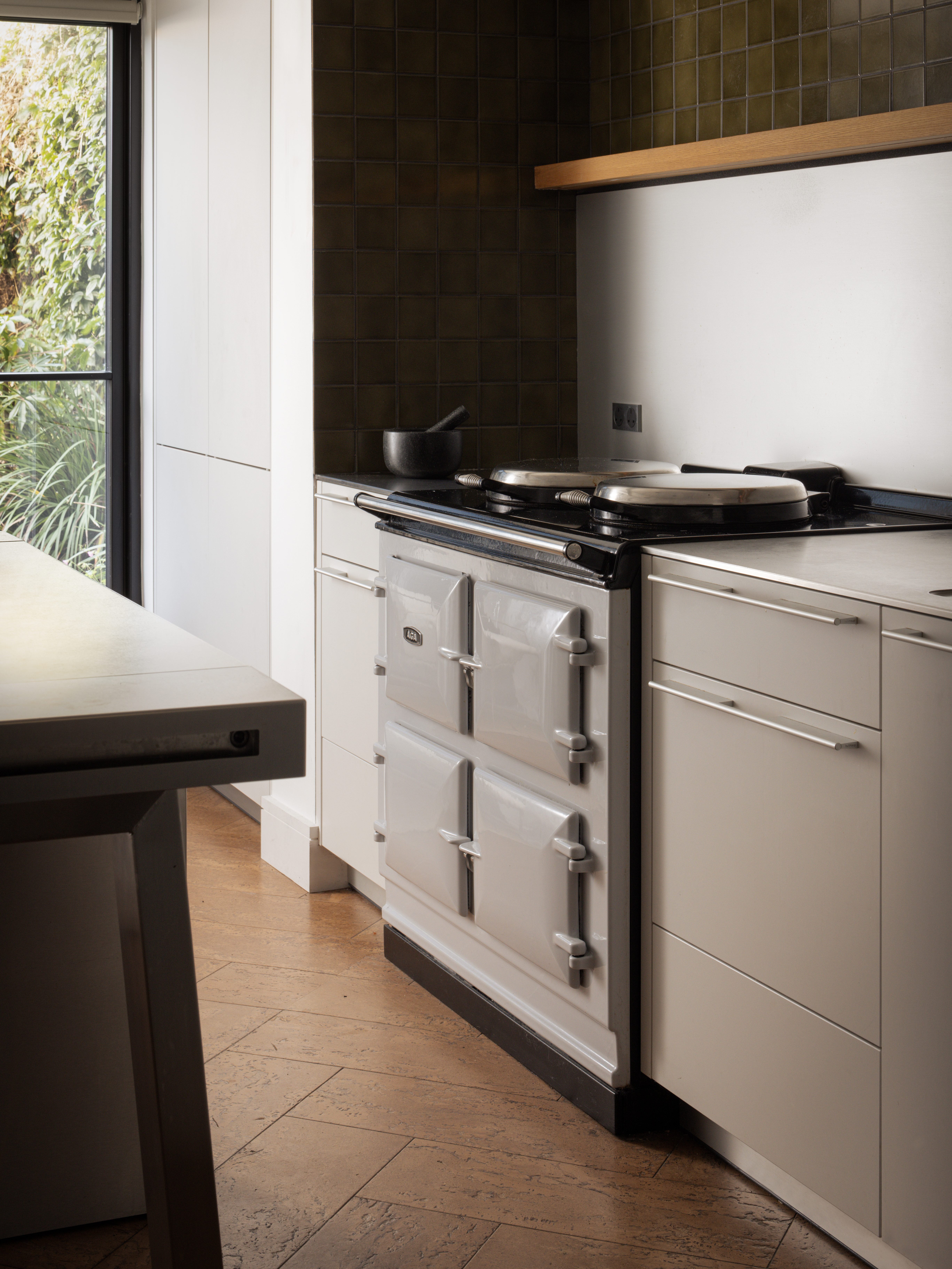
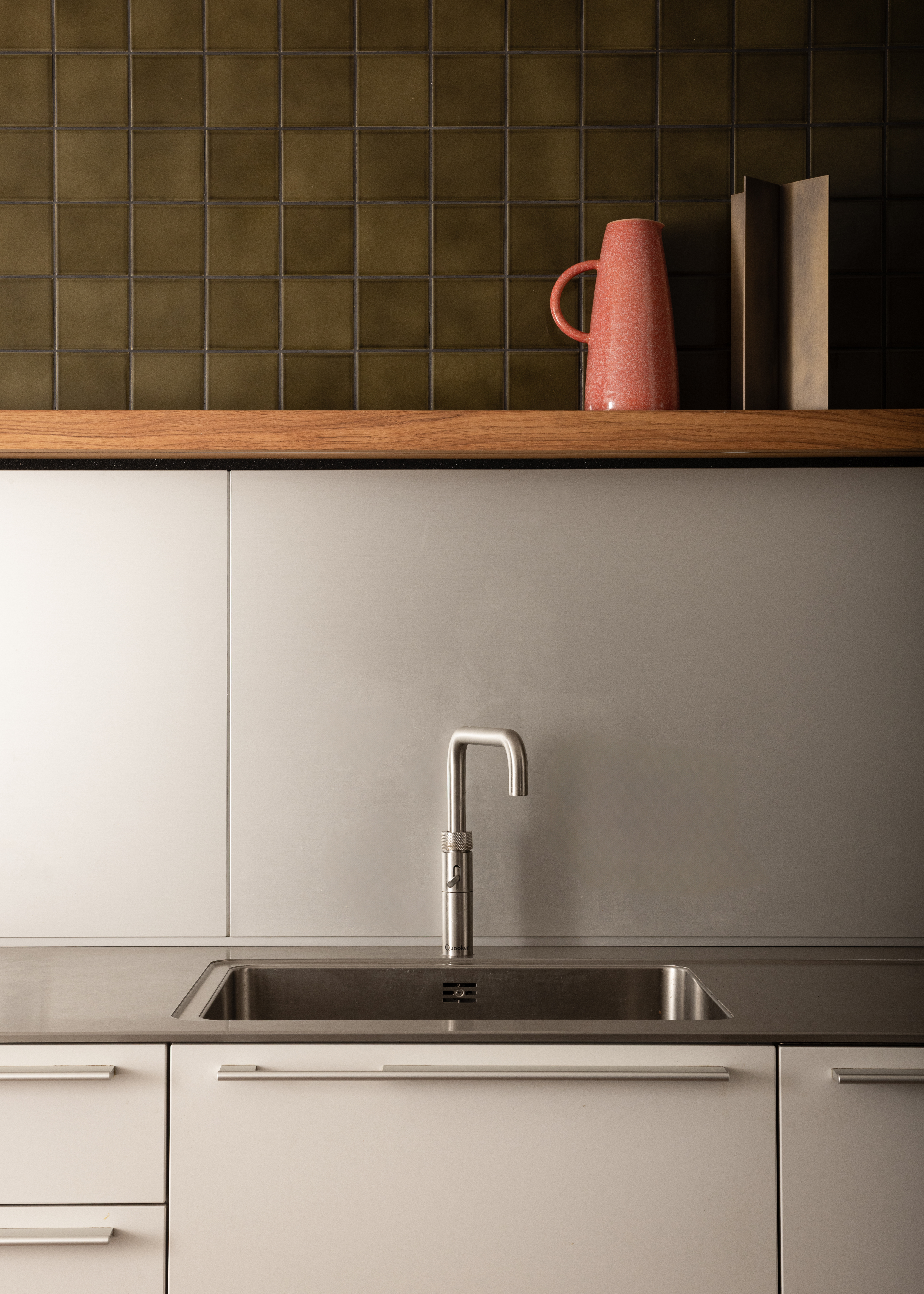
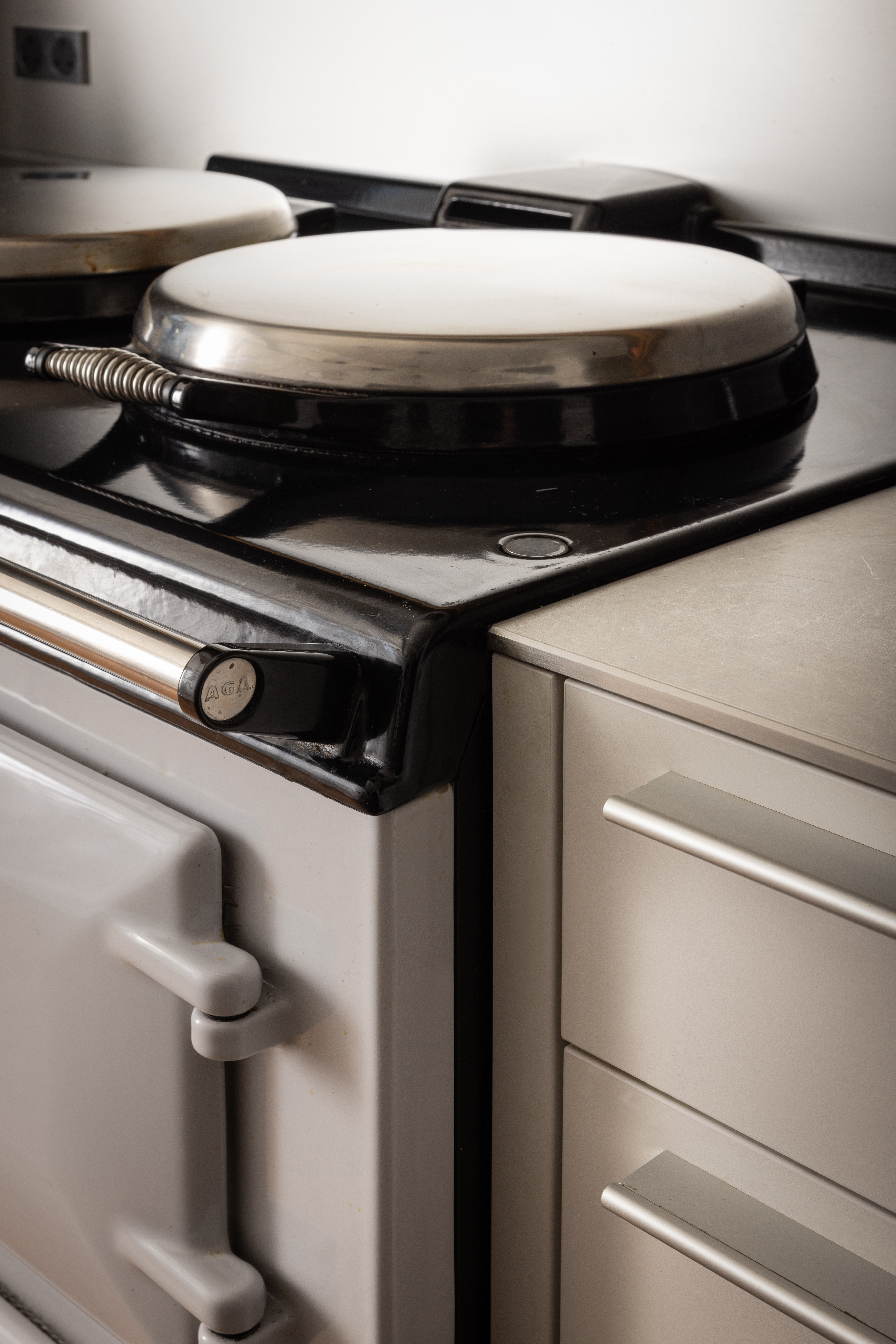
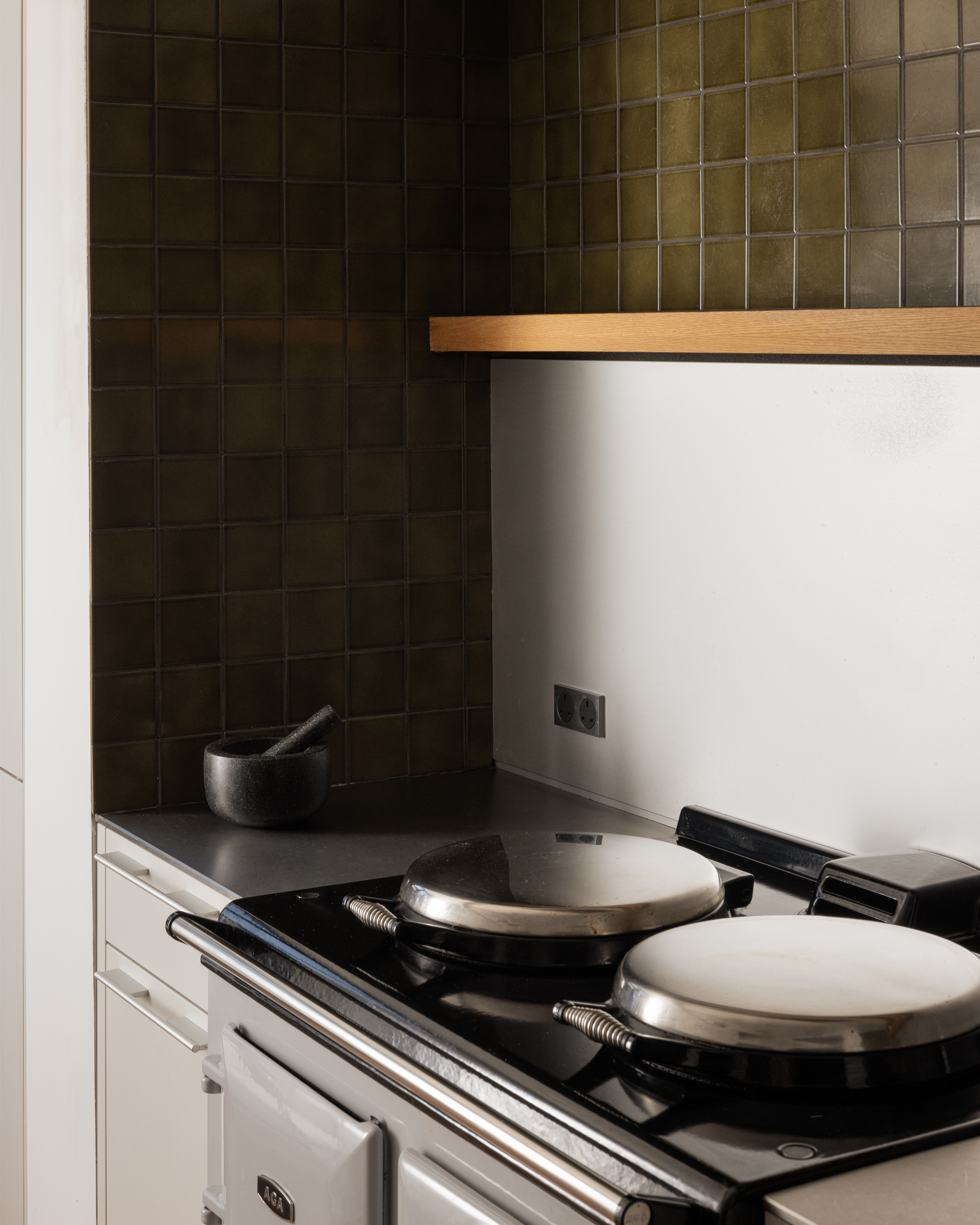
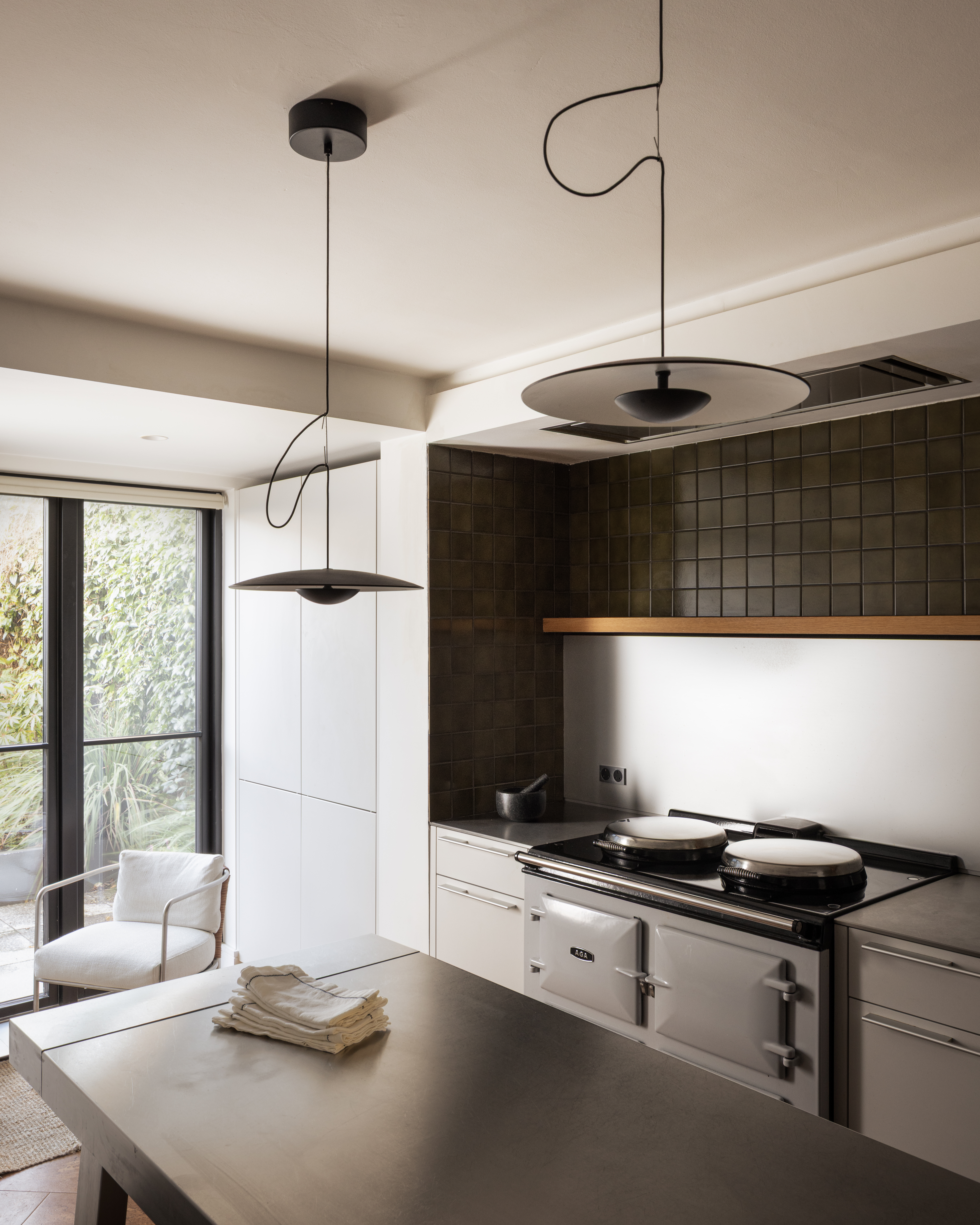
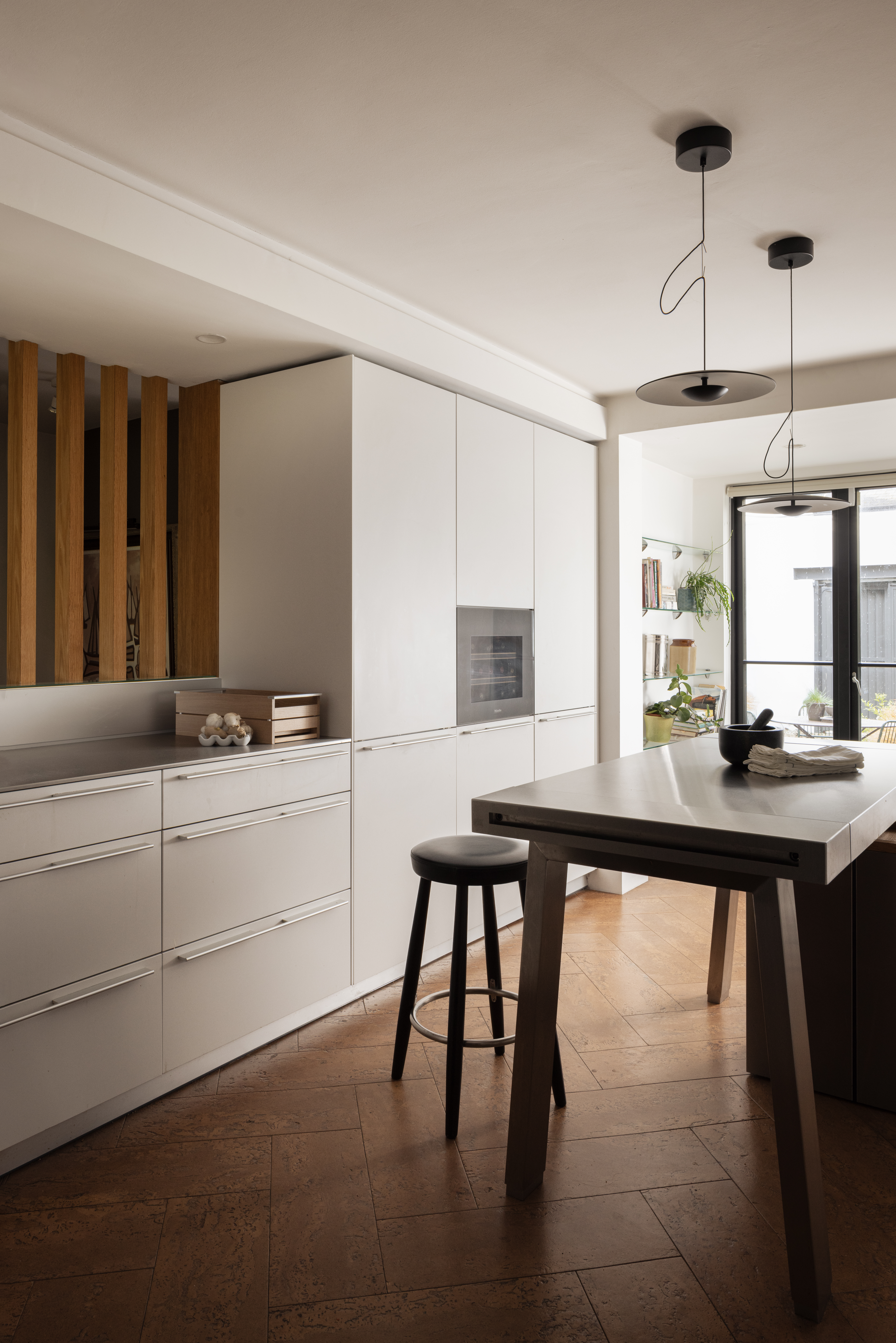
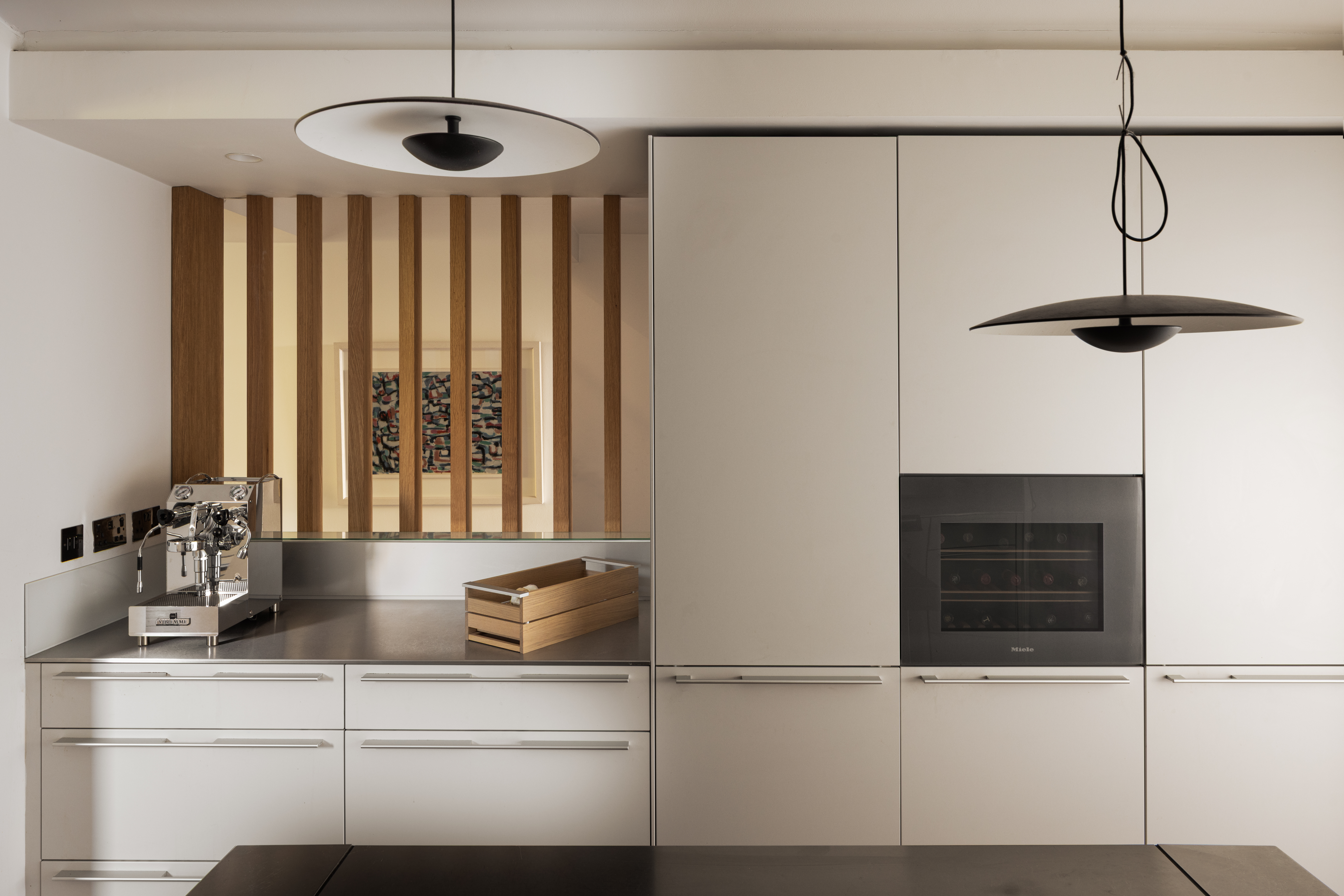

For the interior, Realm Concepts worked closely with the architectural vision to furnish and specify each space with the same discipline and restraint that defines the build. The kitchen, the heart of the home for the owners, is a bespoke bulthaup design in a Kaolin finish, paired with a new electric AGA and stainless steel detailing. “The Bauhaus lineage of bulthaup made it the natural, almost inevitable choice for a project rooted in those same principles of honesty, functionality, and quiet beauty,” explains Richard Fagan of Realm. Marset lighting and Carl Hansen stools complete the space.
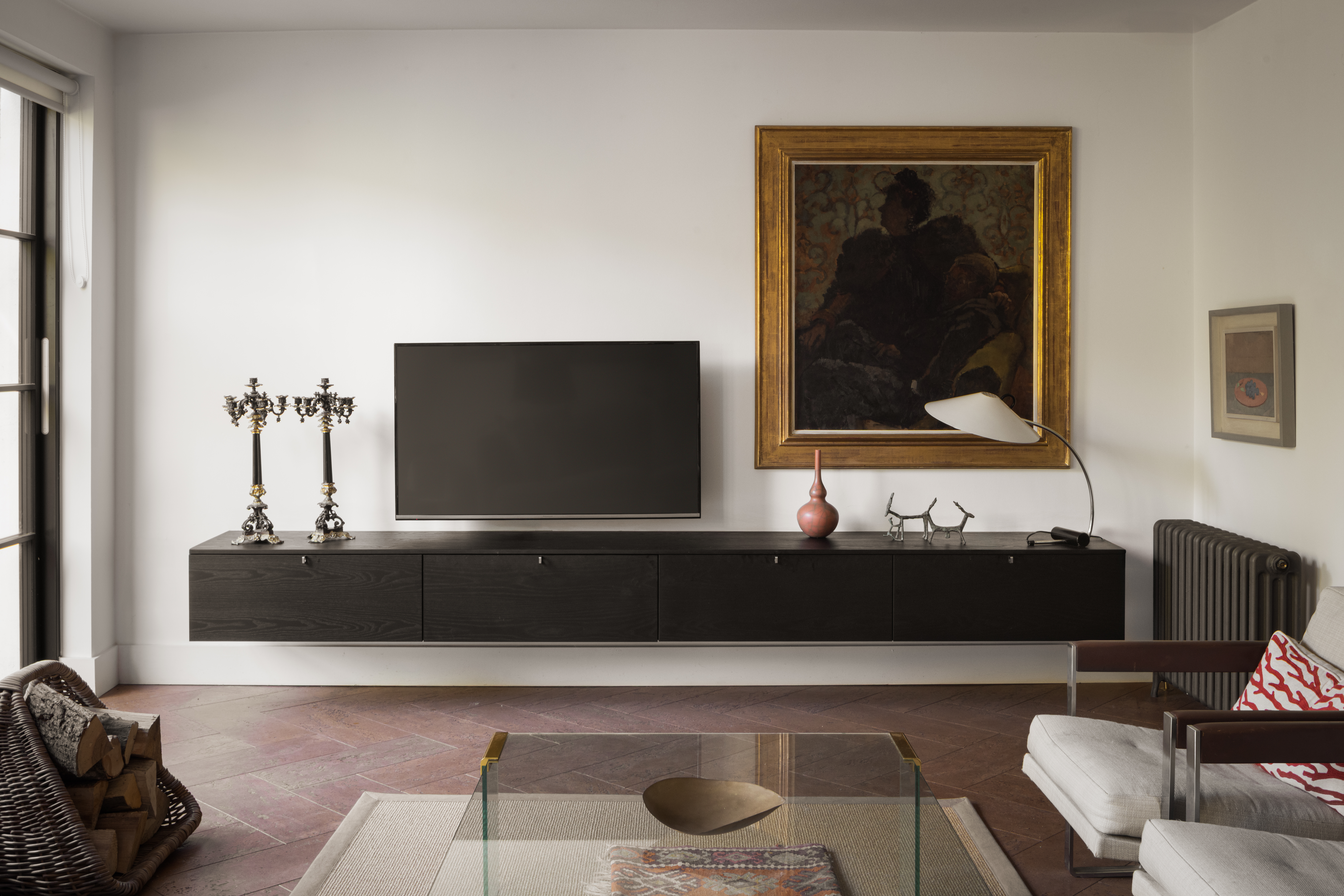
The living room features a Porro media unit, surrounded by an electric mix of antique pieces and art that brings warmth, character, and personality to the modernist framework.
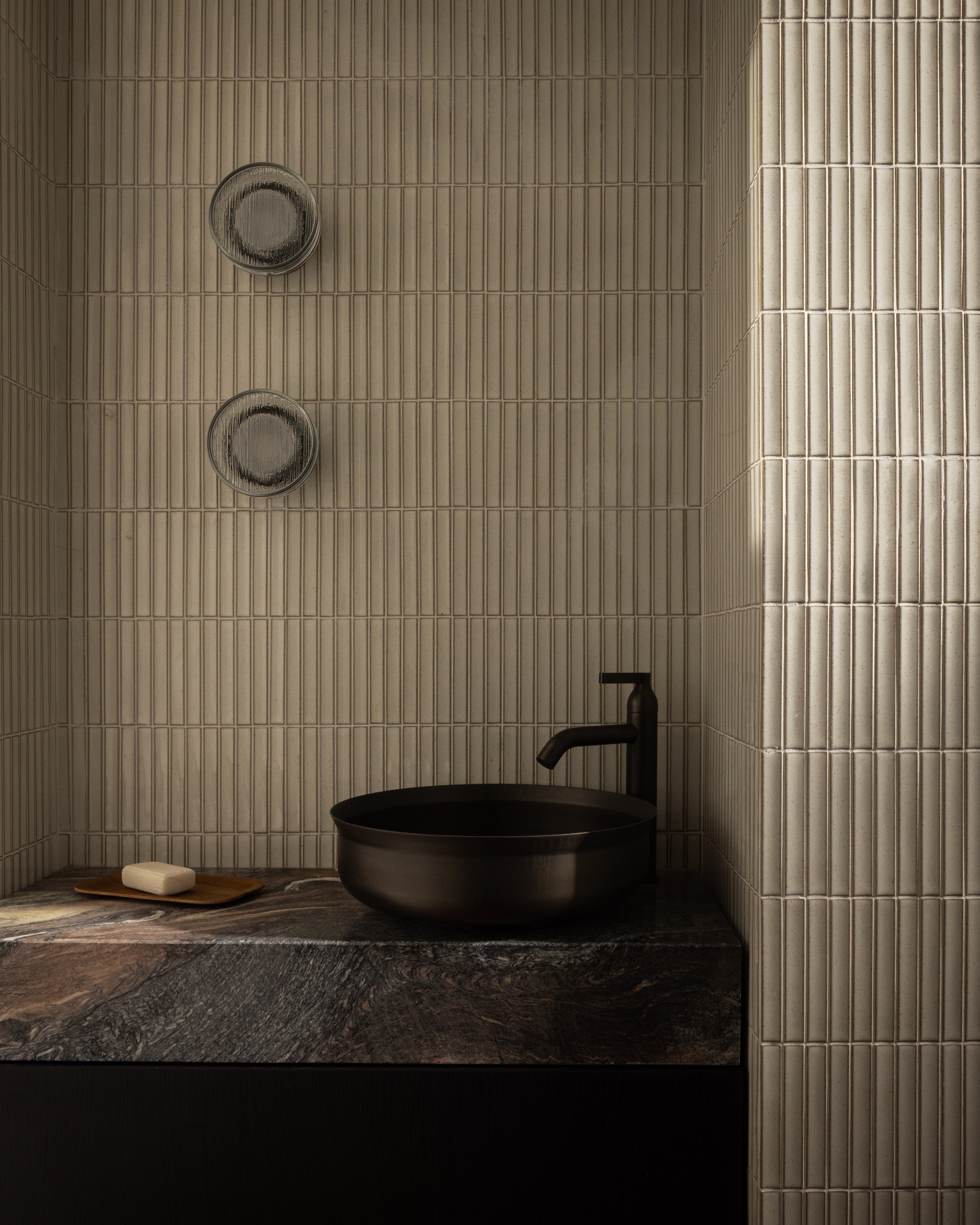
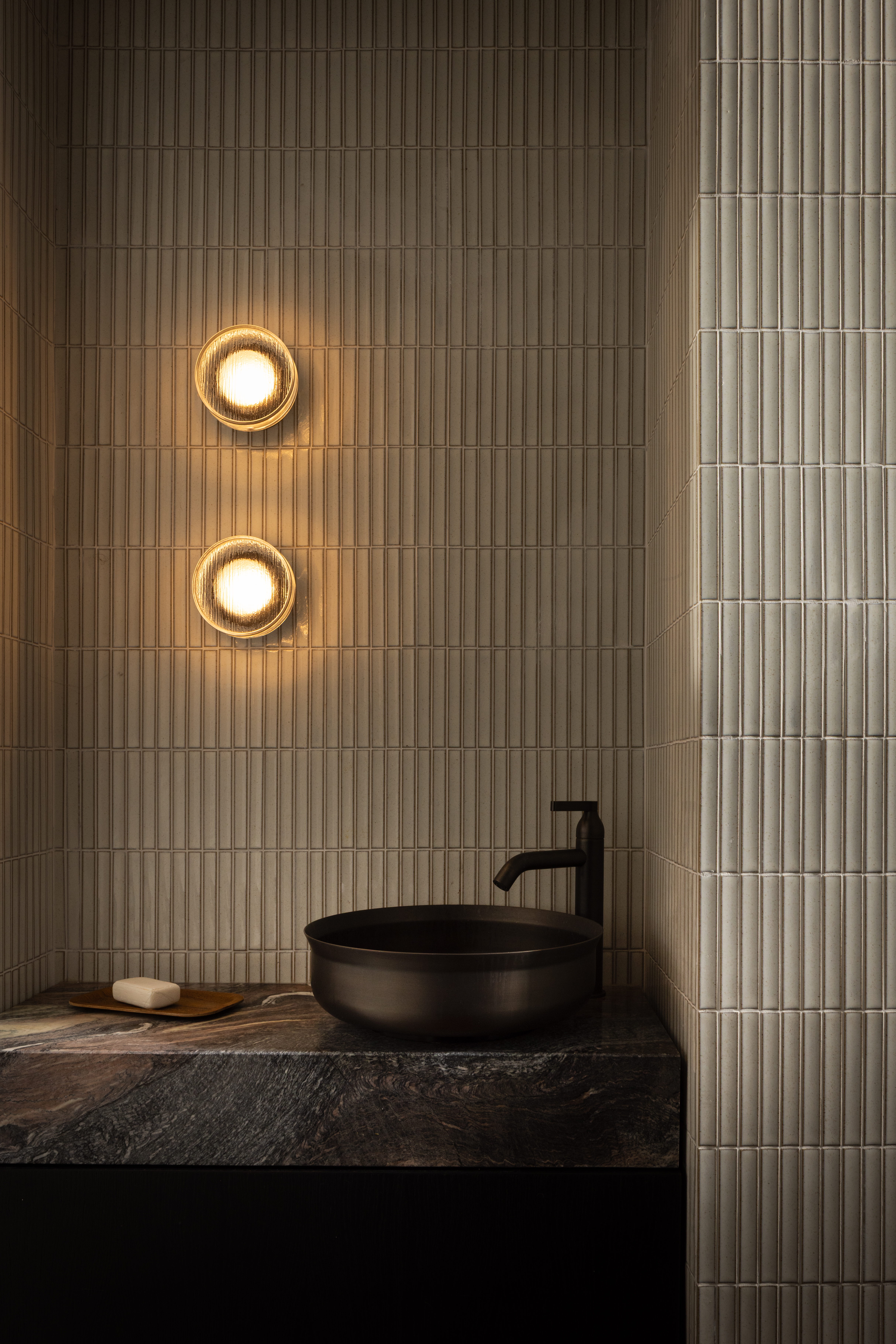
The powder room is a jewel-box moment: an Agape sink and tap in burnished brass, Marset lighting, Japanese Inax tiles, and Cipollino Ondulato stone, understated luxury expressed through material, craft, and restraint.
Notable details in this home include how the structural changes feel natural to the space. “The lowered ceiling plane in the dining area is a quiet but precise piece of problem-solving, concealing what needs to be hidden while shaping the experience of the room,” notes Garbhan.
“Within the interior fit-out, the Bulthaup kitchen’s Kaolin finish speaks quietly but confidently, holding its own beside the drama of the Aga without competing with it,” Richard explains. “Equally the burnished brass of the Agape tapware in the powder room is a standout moment, warm and tactile against the cool precision of the Inax tiles and stone. The success of the detailing lies in its collective discipline. Nothing is overstated. Every choice, architectural and interior, earns its place.”
For Garbhan, the success of this project lies in “the way it unlocks the latent potential of the original building and its setting. What was once fragmented and underperforming has been transformed into a coherent, light-filled home with a clear architectural identity.”
Whilst Richard notes, “By establishing a stronger relationship with the courtyard and garden, the design achieves a sense of calm and completeness that feels both intentional and effortless.”
Photography Jamie Hackett
Also Read