










Rising rents, house sharing and design culture have quietly transformed the meaning of the home, writes Roe McDermott. For many women, inviting friends over now feels less like a casual gesture and more like a test of adulthood. As hosting becomes tangled up with class, aesthetics and gendered expectations, the simple act of gathering in one another’s homes is disappearing, and our friendships may be thinner for it.
Remember as a kid how often you’d spend an entire day, a sleepover, a weekend in your friends’ house, knowing their bedroom as if it were your own, knowing where the biscuits were kept, spending time splayed on each other’s floors and beds and couches, sometimes laughing hysterically, sometimes whispering secrets in the dark, sometimes in silence, each immersed in a book or magazine or video game or intense sticker session? Where have the days of luxuriating in the presence and homes of our friends gone?
Admittedly, those long hours together were easier when none of us had jobs, responsibilities, bills to be paid, or, for some, children to feed. But Ireland’s housing crisis and cost-of-living crisis have also reshaped how we gather in subtler ways, and our friendships are quietly thinner for it.
Ireland has long been a kitchen-table-hospitality sort of place. Neighbours dropped in. The kettle was always on. Guests were offered biscuits or ham sandwiches with a Mrs Doyle level of insistence: you will have a cuppa, of course you will, go on, go on, go on. That kind of everyday hosting was not just a pleasant cultural habit but a foundational part of relationships. Research suggests it takes roughly eighty hours of contact for an acquaintance to become a friend, and for generations, those hours were often accumulated in one another’s homes, through the ordinary ritual of cups of tea, after school visits and long conversations that unfolded around kitchen tables.
But Ireland’s social and economic landscape has shifted, and along with it, the emotional landscape of connection has shifted too. When you cannot afford your own home, when you rent or house share, when rising costs push you further away from the friends you once lived near, or when your space is so small or temporary that it never quite feels like yours, the home stops feeling like a place where social life naturally unfolds. If you cannot paint the walls, hang pictures, or furnish a space in ways that reflect your personality, the home may begin to feel less like an expression of your inner world and more like a provisional holding space.
For people who grew up in homes that functioned as shared social spaces, the contrast can carry a quiet embarrassment. Even when housing precarity is widely understood, many still feel a private sense of failure about the spaces they inhabit. Increasingly, inviting someone into your home can feel as though it requires a level of domestic legitimacy that many people feel they have not quite achieved.
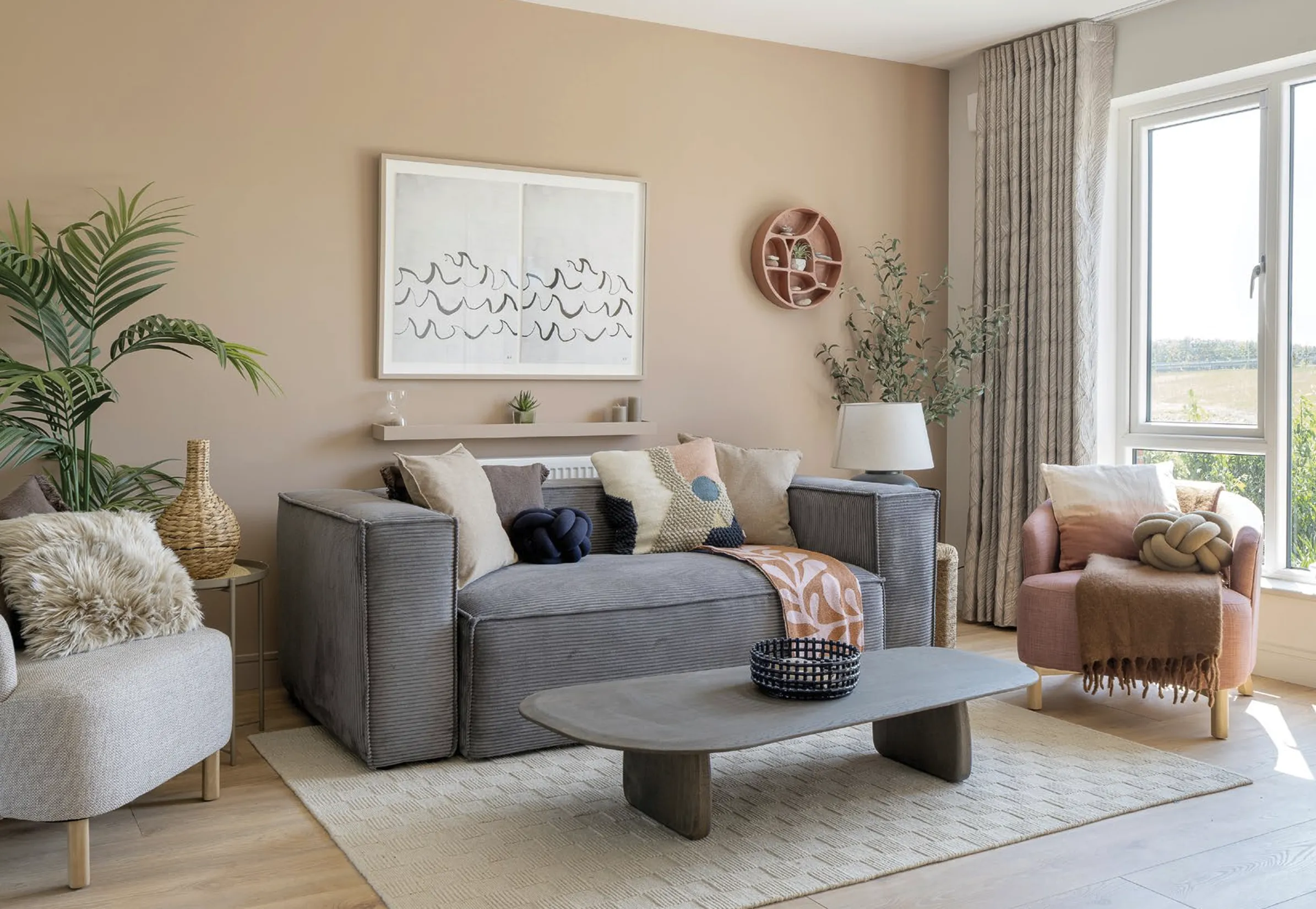
For women in particular, the home has long been a place where identity and judgement meet, where the labour of care, organisation and presentation becomes visible in ways that are harder to disavow than in other areas of life. What feels newly intensified now is the threshold of what counts as a home that is also socially shareable. Renting, house sharing, temporary tenancies, cramped spaces, landlord magnolia walls and restrictions on altering one’s environment collide with the visual saturation of design culture to produce a sense that many homes are unfinished, under-designed or somehow insufficiently adult.
Hosting has always carried symbolic weight as a marker of adulthood, but in an era when stable housing is financially inaccessible to many, that symbolism has taken on sharper class implications. It is no longer enough simply to live in a home. Increasingly, it must appear curated, coherent and ready to be photographed. For women, who already carry disproportionate expectations around cleanliness, order and taste, this can leave rented or shared homes feeling not merely temporary but somehow inadequate as places in which friendship can unfold.
Psychological research on domestic perception shows that women are judged far more harshly than men for the condition of their living environments. Untidiness, clutter or stylistic inconsistency are more readily interpreted as character flaws when the occupant is female, while similar conditions in men’s homes are more likely to be explained as circumstance or personality. Popular culture reflects this asymmetry. We laugh at the stereotype of the single man with a mattress on the floor and only one pillow, while women are surrounded by images of immaculate interiors in magazines, on Instagram and across lifestyle media. Think of the expansive kitchens in Nancy Meyers films or the carefully styled backdrops that frame Vogue’s 73 Questions interviews, where the home functions as an extension of the celebrity’s public identity.
Conversations are shaped by closing times, reservations and commuting schedules. What disappears almost without anyone noticing are the loose, meandering hours that used to accumulate when people spent time in one another’s homes.
Alongside these aesthetic expectations runs a quieter but equally powerful moral one: cleanliness. Studies repeatedly show that observers judge messy homes more harshly when they believe the occupant is a woman rather than a man, attributing disorder to laziness or personal failure in women while excusing it as circumstance in men. Even when people consciously reject these assumptions, they often operate beneath awareness. The anxiety about hosting, therefore, rarely rests only on décor or style. It is also about the fear that a cluttered counter, a laundry rack in the corner or an unfinished room will be read as evidence of failing at the gendered project of keeping a home.
Under these conditions, inviting someone over begins to feel less like an ordinary social gesture and more like a small act of exposure. The home reveals things about us that public spaces do not: how we live when nobody is watching, what we prioritise, what we have not quite managed to finish. If those details risk being interpreted as evidence of competence or failure, the threshold for hospitality quietly rises. A friend dropping by begins to feel less like a casual pleasure and more like a test one has not prepared for.
Homes, by contrast, allow a different kind of intimacy. You see the half-finished book beside your friend’s bed, the plants they are trying to keep alive, the mug they reach for automatically when they make tea. You witness the rhythms of their everyday life rather than the version of themselves that appears in public. That slow familiarity, the sense of knowing how someone inhabits their world, is part of what deepens friendship over time.
When homes feel unshareable, those small layers of knowledge accumulate more slowly. Friendships become organised rather than ambient, arranged rather than drifting naturally into being. Social life drifts outward into places where the environment is professionally maintained and judgment feels less personal. We meet for brunch, for drinks, or for a quick coffee between commitments. These encounters can be joyful, but they are structured by time limits, by noise levels and by the subtle expectation that occupying the space requires buying something in return. Conversations are shaped by closing times, reservations and commuting schedules. What disappears almost without anyone noticing are the loose, meandering hours that used to accumulate when people spent time in one another’s homes.
For women in particular, this retreat from home-based gathering carries a strange irony. The domestic sphere has historically been the place where women were expected to cultivate hospitality and maintain social bonds, yet the contemporary standards attached to the home make that role harder to inhabit. Instead of facilitating connection, the home can begin to feel like a stage on which competence must be performed. If the performance seems impossible, the safest option is simply not to host at all.
Yet the strange thing about these anxieties is that they exist alongside a deep longing for exactly the kind of ordinary sociability they discourage. What many women say they actually want is precisely the kind of low-stakes sociability that these expectations make harder to arrange: a friend perched on the counter while pasta boils, an evening that begins with tea and turns into wine, the ability to say “come over” without first mentally scanning every surface in the room. The tragedy is that most of the homes women worry about revealing are remarkably similar to those of the friends they are hesitating to invite.
Housing precarity is real, and cramped or temporary spaces do shape how people live, but the additional layer of perfectionism that has grown around the idea of the home is not inevitable. It is cultural, aesthetic and deeply gendered. If friendship is to remain something that unfolds inside the textures of everyday life rather than only in commercial spaces, that pressure may be one of the first things that needs to be quietly dismantled.
What friendships need is not perfection but time, proximity and the kind of unstructured presence that allows people to drift through each other’s lives. A rented kitchen with mismatched chairs can still hold a long conversation. A small living room can still hold laughter, gossip, grief and the comfort of being known. In a moment when housing insecurity and comparison culture make the idea of the perfect home feel increasingly out of reach, it may be worth remembering that the real purpose of a home has never been to impress anyone. It has always been simply to hold the people we care about for a while.
Photography by NBC.
Also Read