





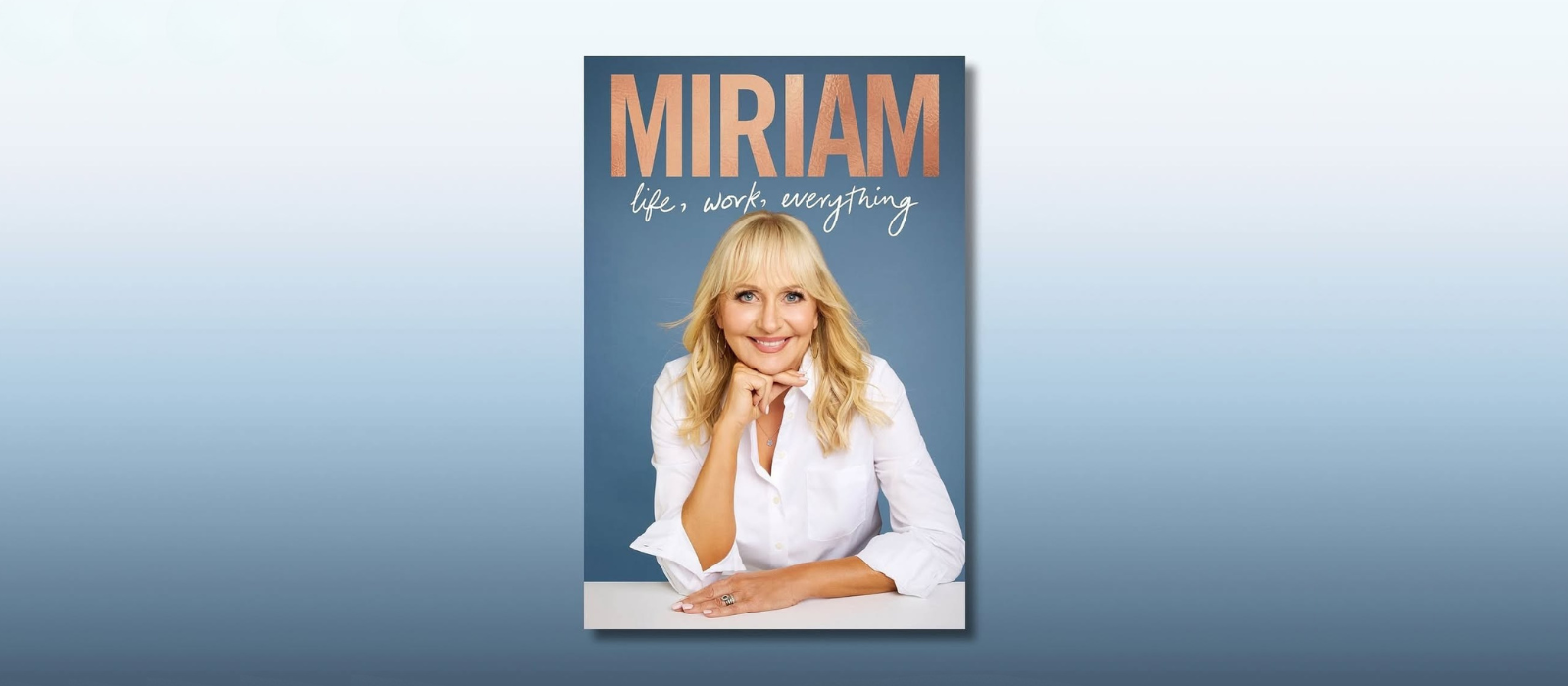
Read an extract from Miriam O’Callaghan’s newly-released memoir
The iconic broadcaster’s absorbing memoir, Miriam: Life, Work, Everything, has just hit shelves, and it’s full of touching stories from her personal life and fascinating insights into a career that has given her a ringside seat to a changing Ireland. Read on for an exclusive extract…
It was Monday morning, 4 November. The previous night, over dinner in our Washington hotel, I’d noticed that I was a little hoarse. We had headed off to bed early enough to build up our energy, conscious of the marathon facing us on the Tuesday, when the election results came in. The battle between Kamala Harris and Donald Trump seemed like it might go to the wire in a couple of swing states.
My phone rang. Tara Peterman, my producer, checking in. When I opened my mouth to answer her, nothing came out, not a sound. I don’t mean that I was hoarse, I mean I had zero voice. Total silence. How could this have happened when I was in America to cover the biggest story in the world? I often get hoarse; it’s a hazard of overusing my voice, especially at public events. Hoarse isn’t great, but it’s a hell of a lot better than no voice. However, on this beautiful autumnal morning, I was dealing with a nada voice scenario, something I had never experienced before. I didn’t panic; there was no point, but I was worried.
The following day at 3 p.m. Irish time, I was going live on air, so I needed my voice ASAP. I texted Tara my plight. She didn’t panic either. She headed straight to the nearest pharmacy and bought everything for sore throats – Strepsils, paracetamol, lozenges, manuka honey, throat-coating tea bags, Nurofen, vitamins–you name it, she got it. Everybody kept telling me to rest: rest your voice, they would say, and don’t talk, and especially don’t whisper as – who knew? – apparently whispering is the worst thing you can do for a lost or hoarse voice. Instead of spending the day exploring Washington, I would lie on my bed and rest for the day. I tried everything Tara had bought, but sadly, all to no avail. Every hour, I would try talking to myself, hoping against hope that some sound would emerge, but there was nothing. Apart from having no voice, I didn’t feel sick at all. After hours of consulting Dr Google, I diagnosed myself with viral laryngitis, which you can often pick up from a long-haul flight.
Mid-afternoon, my daughters Georgia and Alannah arrived. Georgia lives in New York, and Alannah was visiting her for a few days, and they took the train south to spend two days with me. Even they were taken aback by their mother’s complete lack of a voice – a first for them. I indicated all the pills and potions, and that nothing was working. Suddenly, Georgia piped up, ‘You need Celine Dion’s steroid injection!’
‘Celine Dion’s what?’
‘I watched a documentary on Celine’s life, and one night before a concert, she completely lost her voice and a doctor gave her a steroid injection and, lo and behold, she woke up the next day and, miraculously, her voice was back.’
It sounded mad, but Tara and Alannah were thrilled by this idea. Tara had tried everything and saw nothing to lose. Alannah was totally on board with her sister’s brilliant suggestion, encouraging me to go for it. Since my options were fast running out, I figured it was worth a go.
Next problem, where to find a doctor in Washington late on a Monday afternoon? Tara contacted the Irish ambassador to DC, Geraldine Byrne Nason, whom she knew from covering stories in the past, to see if the embassy might know a local doctor they could recommend. Meanwhile, I texted the former Irish ambassador to Washington, Dan Mulhall. I knew Dan well from when he was a senior official in the Department of Foreign Affairs in the 1990s, and I was covering the peace process. He always remained accessible. I explained my predicament and wondered if he had had a GP when he lived here.
He came straight back with a name, but said the doctor might be retired. In a heartbeat, Georgia was on her cell phone, calling the surgery. It was answered immediately. Alleluia! Georgia launched into rambling explanation about how I was a TV anchor in Ireland, over to do this high-profile election results show, that I had ended up with no voice, and she then – hilariously, I thought – launched into the Celine Dion story by way of explaining that I needed Celine’s steroid injection as I had to have my voice back by 3 p.m. tomorrow Irish time, 10 a.m. in DC.
The call was on speaker, and when Georgia finished her monologue, the woman at the other end said, ‘We are unfortunately not taking on any new patients right now.’ Good try, I thought, thinking that was it. But Georgia wasn’t put off. She took a breath and said, ‘Can I appeal to your human nature, please – this is a crisis and it would mean so much to us if you might just make an exception on this one occasion.’
There was a pause at the other end, and the woman said, ‘Can you please wait while I speak to the doctor?’
The wait seemed interminable; it felt like hours but was probably about five minutes. In that time, I had decided the answer would still be a no because America’s healthcare system is just so different from ours on every level. But the woman came back and said, ‘The doctor says okay. Come now, and she will see you and give you a steroid injection.’
Dan’s doctor had indeed retired, but a new doctor had taken over the practice. Georgia clicked off the phone, and we all yahooed – well, they yahooed – and jumped around the bedroom. We called an Uber, and Georgia and I set off on the forty-minute ride to the surgery. As we drove along, I kept thinking how much I loved my daughter and how much I loved this doctor I was about to meet. There is a God, as my mum always likes to say when good things happen.
It was clear when we got into the surgery that they were all amused and intrigued by us and our story. The Irish angle had helped, as it turned out that the doctor had strong family roots in Ballyvaughan, County Clare. Serendipity, I thought to myself. She put a steroid injection into the muscle at the top of my right arm and gave me a prescription for five days of oral steroids. It cost less than $100 and we all ended up the best of friends. Before leaving, we did a ton of photos and selfies, there was a lot of hugging, and the doctor promised to come and look us up the next time she was in Ireland. I really hope she does.
I returned to my hotel room and stayed there all evening, not attempting to use my voice; there was no way I could risk having a bit of fun and going out to dinner with the others. I prayed a lot before I went to sleep. I always say a prayer before I go to bed, but I stormed Heaven that night. I woke in the middle of the night and tried talking to myself, but there was still little or no voice. However, there was a faint sound, so I didn’t write off the steroid experiment. I woke again as dawn was breaking and got up to watch TV. I adore the morning shows on American TV; they are fabulously glamorous and interesting, and fun, and I knew they would be all about the election as the polls had closed the night before.
This was D-Day. It sounds ridiculous, but I sat on the bed watching TV for ages, too nervous to test my voice. I postponed it even longer by having my shower, as I thought the steam might help. When I got out of the shower, it was around 9 a.m., and I decided that I could not put it off any longer. Apart from anything else, it would have been unfair to Tara, our ace reporter Louise Byrne, and camerawoman Shirley Bradshaw – yes, we were a female power quartet – as well as the team back home.
They would need to come up with a plan B if I could not present the show. I sat on the end of the bed in my dressing gown, I blessed myself, took a deep breath and started talking, slowly and quietly at first. To my astonishment, I seemed to have a voice. But I wasn’t sure. I started to talk out loud. My voice was almost perfect! I could not believe it, it was miraculous – Celine’s injection had worked.
Also Read