











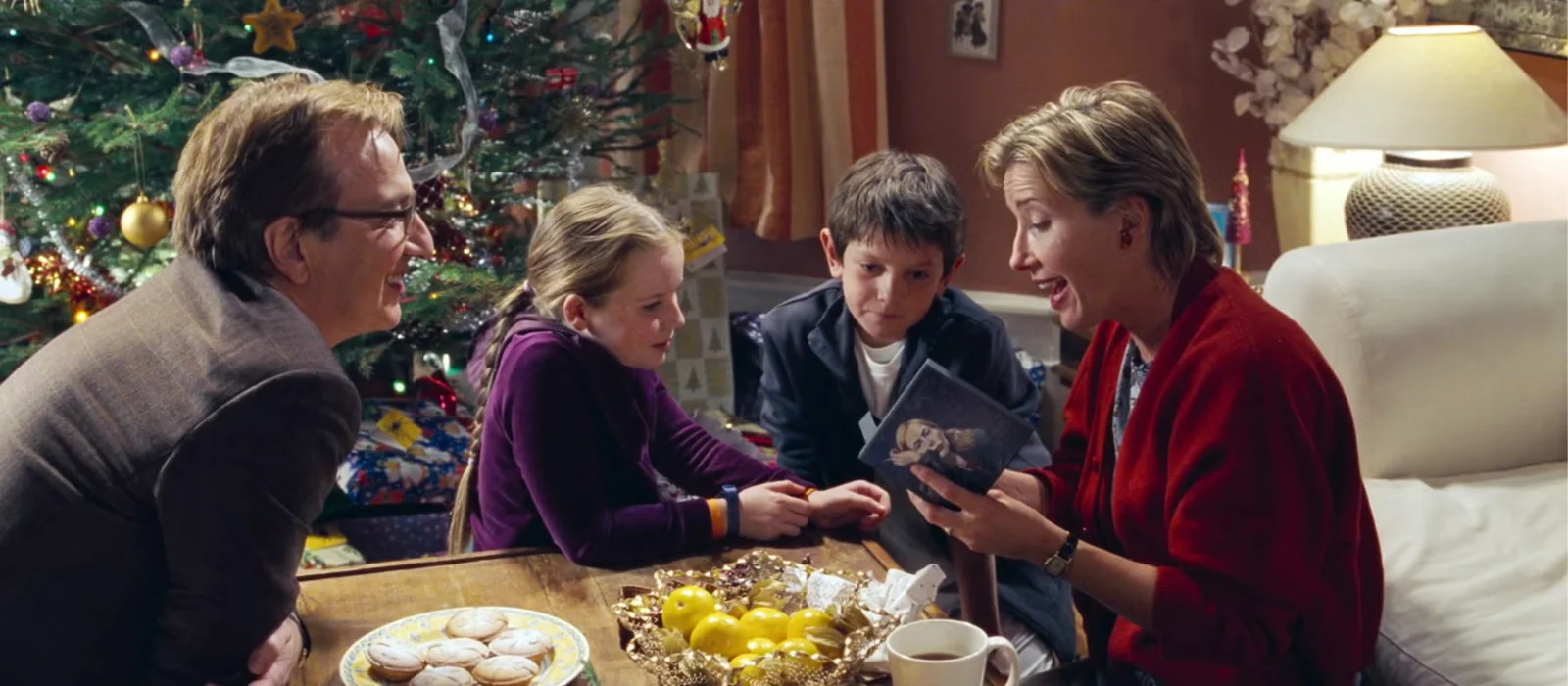
Christmas “magic” is produced through women’s unpaid emotional, domestic, and relational labour and this work remains stubbornly invisible, writes Roe McDermott.
Every December, as if by seasonal law, Christmas appears. The tree is up. The presents are wrapped. The fridge is full. The children are photographed in coordinating outfits. Cards arrive in the post, addressed in careful handwriting. Somehow, despite the chaos of modern life, Christmas magic has materialised.
The question rarely asked is not how this happens, but who makes it happen.
For many families, the answer is women. Not only in the visible ways – cooking the meals, hosting the gatherings, but in the quieter, more diffuse labour that holds the season together. This is work that sociologists call kin work: the planning, organising, remembering, anticipating, and emotional attunement that sustains family life. At Christmas, kin work expands until it fills the calendar.
Someone has to remember to send the cards and not just to immediate family, but to the elderly aunt, the former neighbour, the friend who had a hard year. Someone has to notice when the children have outgrown last year’s festive clothes, manage Santa lists, ensure gifts are bought, wrapped, hidden, and later photographed. Someone has to decide what traditions will be upheld, adapted, or gently retired. Someone has to hold the emotional weather of the season: the joy, the exhaustion, the grief, the complicated reunions. That someone is, more often than not, a woman.
There is, of course, a curious irony at the heart of this labour. Christmas centres on a benevolent male figure – Santa Claus – who famously “makes a list and checks it twice,” yet somehow never appears to shop, wrap, organise, or clean. Santa is perhaps history’s most successful rebrand: a man who receives near-total credit for work overwhelmingly performed by women. Even the mythology colludes: he delivers the gifts; women manage the logistics.
This pattern extends well beyond the stocking. Women often do the bulk of the cooking, yes, but also the less cinematic labour that follows. The washing up. The packing away. The scraping of leftovers into containers. The familiar post-lunch scene plays out year after year: men reclining in front of the television, women clearing plates, moving between kitchen and dining table with practiced efficiency. It is so normalised it barely registers as inequality, just “how Christmas goes.”
This labour is rarely named as such because it masquerades as love. And of course, it is love – but love does not make it weightless. Feminist scholars have long pointed out that when care work is framed as natural or instinctive, it becomes easier to overlook its costs. Christmas magnifies this effect. The labour is seasonal, intense, and emotionally charged, which makes it both deeply meaningful and deeply exhausting. But because it is assumed to be natural, and equated with love, women who opt out of this work are often viewed harshly, deemed to be incompetent, uncaring, irresponsible or all three.
There is also a performance element. Christmas magic is not just done; it is staged. Decorations appear as if by enchantment; gifts are wrapped beautifully, not merely functionally; children’s Christmas outfits are carefully selected, keeping changing sizes in mind. Photos are taken and shared, producing an archive of family happiness that suggests effortlessness. The work is successful precisely when it is invisible. Ironically, invisibility is often the goal. To acknowledge the labour is to risk “spoiling” the magic. The woman who points out how tired she is, how much she’s done, can be made to feel joyless, transactional, or ungrateful – better to smile, pour another drink, and keep things running.
Santa is perhaps history’s most successful rebrand: a man who receives near-total credit for work overwhelmingly performed by women.
In recent years, a particularly bleak social media trend has surfaced each December: women filming their Christmas morning to reveal an empty stocking. Their children’s stockings are full. Their male partner’s is thoughtfully stuffed. But theirs hangs limp and untouched – a quiet testament to the assumption that women are not recipients of care but its infrastructure. The comments sections fill with variations of the same refrain: “This happened to me too.”
These moments are not outliers; they are symptoms. Even in ostensibly modern, egalitarian heterosexual relationships, Christmas has a way of pulling couples back into deeply traditional roles. Women take on the mental load because someone has to – and because they’ve learned, often over a lifetime, that if they don’t, it simply won’t get done. Men may describe themselves as “not good at this stuff,” as though kin work were a personality trait rather than a skill honed through repetition and expectation.
What is striking is how asymmetric this labour remains. Women tend to take the photos. Women remember birthdays, organise gatherings, maintain relationships across generations, women often end up buying gifts supposedly “from” their male partners, given to the men’s parents, siblings, relatives, friends. Men often opt out of this work yet due to the labour of women, benefit from it. Yet we continue to talk about a “male loneliness crisis” as though it exists in isolation from this dynamic. Much of the research underpinning that narrative has since shown that women are experiencing comparable levels of loneliness – but with one key difference: women are far more likely to be doing the work of connection anyway.
Christmas lays this bare. Many men’s social and familial ties are quietly maintained by women who send the cards, buy the gifts, schedule the visits, remember the names, smooth the tensions. When those women stop, whether through burnout, separation, or death, the connections often dissolve. The loneliness that follows is real, but it is not accidental. It is the result of a system that outsources relational labour to women and then treats its absence as a mystery.
Yet many women know this work intimately, even if they’ve never named it. They feel it in December’s mental load, the creeping resentment when appreciation is absent, the quiet satisfaction when everything comes together anyway. And increasingly, they feel it in its absence.
For those whose family structures have changed, through separation, estrangement, or death, Christmas can become a moment of sudden recognition. Adult children notice, often for the first time, how much their mother did to make the season feel whole. Partners stepping into organising roles discover that Christmas does not “just happen”; it is built, piece by piece, list by list. Grief sharpens awareness – so does necessity. This recognition matters. Not because women need medals for festive martyrdom, but because naming labour is the first step toward redistributing it. When Christmas magic is understood as work, it becomes something that can be shared, simplified, or even declined. Traditions can be negotiated rather than inherited wholesale, and care can be collective rather than gendered by default.
There is also room here for reimagining what Christmas magic looks like. Does it require perfectly coordinated outfits, or simply presence? Does it live in elaborate meals, or in rest? Feminism does not demand the abolition of Christmas joy – but it does invite us to ask who is paying for it, and whether the cost is fair.
A feminist Christmas, then, might begin with visibility. With noticing who is doing what, who is remembering whom, who is carrying the emotional weight of togetherness. It might involve gratitude that is specific rather than generic, help that is proactive rather than requested, and traditions that feel sustaining rather than obligatory. Magic, after all, is only magical because someone is doing the work. And once we see that work clearly, we might finally be able to share it – or choose something gentler in its place.
Also Read