







‘When you’ve recovered from an eating disorder, beginning to exercise can be terrifying’
After leaving an eating disorder programme, Laylah Beattie didn’t know how to exercise in a way that wasn’t damaging or focused on weight loss. One yoga class helped to confront a fear of exercise and learning to move her body without self-punishment or comparison became a powerful act of healing, self-compassion, and growth outside her comfort zone.
As humans, we have a constant battle with ourselves between comfort and stagnation. All of us have the desire to build a comfortable life for ourselves and to hide from anything that may hurt or upset us. I generally roll my eyes at any wellness or self-improvement advice. I’ve been in therapy for years, I’ve been in psychiatric hospitals, and I learned a long time ago what I need to be happy, or at least I think I do, after working very hard towards my recovery. So when a friend reached out to invite me to an exercise class, my first instinct was to refuse.
In my late teens and early 20s, I went through a rigorous eating disorder programme. Through group therapy and many other interventions, I was taught about nutrition and how to have a healthy relationship with my body for the first time. It changed my life beyond recognition and helped me to break out of a lot of toxic thought patterns. However, exiting that cycle also left me terrified of relapsing, of moving into a space where I once again viewed my body as a burden rather than an asset.
When I left the programme, I didn’t know how to exercise in a way that wasn’t damaging and how to focus on something other than weight loss. Over the next few years, I’d try to attend the odd exercise class without success. There was a yoga class where I ran out, crying tears of frustration at my lack of strength. There was a dance class where I convinced myself that the others were looking down at my attempts to achieve the poses and vowed never to return. There was a spin class where I competed too hard with the other attendees and ended up vomiting on the floor of the studio.
During these years, I was distressed by the effects of oestrogen on my body. Of course, it brought great changes for me, but one of the main effects of the hormones can be muscle loss and decreased strength. I didn’t like this change, but I wrote these feelings off as old, toxic ones, another way that I was being hard on my body. “You work in administration, you don’t need to be strong,” I told myself, but because I was too afraid to develop an exercise regimen, my muscles atrophied and I began to feel lethargic in new ways.
When I realised the need to be active to gain some control over all this, I made a vow to myself: anything I do will be on my own and I will not attend an exercise class. I started with at-home Zumba, something I still enjoy a lot. It’s so easy to stick a class on YouTube and get your body moving. Once I started to feel the benefits of that, I began to walk and count my steps. This involved me becoming one of these insufferable people who constantly checks her Fitbit, but needs must. A few months into walking, I got a CityBike subscription and added occasional cycling to my repertoire (full disclosure: this cycling usually only occurs when I’ve slept in for work).
Then I began to get serious. I began lifting tiny weights to strengthen my arms, following along with YouTube videos to motivate me. I started a spreadsheet to track my steps (I’m aware this sounds like a toxic or extreme measure to take but I adore spreadsheets and value any excuse to make one). I got a walking pad to get me through the winter, which worked for those lazy, cosy evenings. All of these things made me feel so much better. They were all solitary ventures, but I was always happy I’d embarked on them.
Which brings me up to the day I received the text. My friend, who’s an avid yoga class attendee, asked me to tag along that evening. He knew I’d been feeling low and also knew about my efforts to be more active. I immediately felt intimidated. This was one of the fittest people I knew, who exercised multiple times a week. Therapeutically, I immediately identified the feeling and questioned it. Two things were valid counter-arguments to my intimidation. Number one: This is a really good friend of mine who has no interest in judging me and would simply like me to join him for yoga. Not out of pity, or because he’s trying to teach me anything, but because we’re friends. Number two: I’m not a person who generally lets fear stop me from doing things, so why was I letting exercise be the exception to that rule?
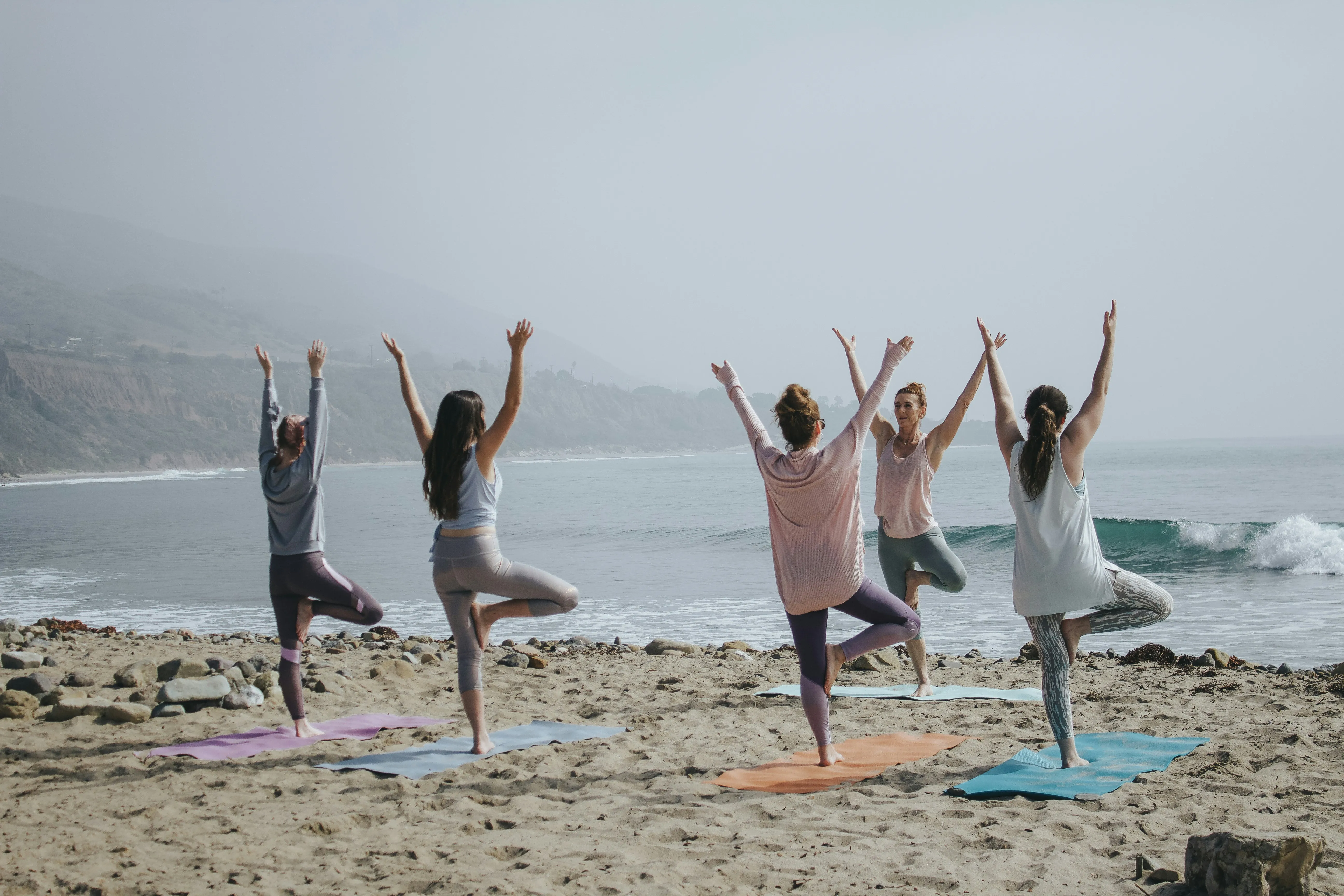
A few hours later, I found myself in active wear, primed for a hot yoga class. I was preparing myself to be challenged, trying to soothe my anxieties, trying to tell myself that I might be the worst person in the class and that’s okay. We began and I was immediately struggling. I could not keep up and I was feeling twinges in muscles I didn’t even know existed. I struggled on for a while but halfway through the class, I got up to leave. There was a voice in my head screaming at me to return right this second, telling me that I could not give up halfway yet again.
As I stood in the hallway and drank a glass of water, I assessed everything happening to me. My body was in a complete panic mode, and my mind was full of noise designed to guilt me into returning to the class. I could not think while I was like this. I closed my eyes, took deep breaths and tried to decipher what I really wanted. The answer became clear: I wanted to go back in and do some yoga, but I did not want to hate myself while doing it. I returned to the room and took my seat on the mat.
When I did, the people around me were in an extreme flow, including my friend. They were moving their bodies in ways I never could. I immediately started quietly crying. The thought arose from a deep part of me: “I’m useless.” I lay down on the mat and began to sob. I haven’t dealt with a thought this critical in a very long time, let alone at a time when I’ve felt so vulnerable but instead of letting the thought overwhelm me or push me into competing, I decided to get back up. I paid no attention to what the instructor or the other attendees were doing and instead, I did some yoga. I did the poses I could do, at the pace I wanted to do them at, and I occasionally lay down on the mat and let the tears stream.
By the time the cooldown for the class began, I was back following along with the instructor. When I lay on the mat, squeezing my knees to my chest, I began to feel a lightness. My friend reached out and squeezed my arm and the tears began to dry up. When the class finished, I could not believe it. I did it! I conquered a fear and a mountain of negative thoughts. I was overjoyed! After the class, my friend told me I was crying because repressed emotions are stored in the hips and I told him that’s not a normal sentence to say out loud.
Determined to continue my progress, I started to book more classes. I did Pilates and Zumba. I did a boxing class where I found out I have a lot of pent-up aggression (this wasn’t surprising to me). I finally conquered my fear of the spin class, completing one without puking on the floor. I’ve discovered I can get a lot out of a class without being the best person in there. In fact, I can get a lot out of it without even particularly being good or listening to the instructor. This has been life-changing for me!
It is a huge source of annoyance for me that purely from moving my body, I can feel good. I’ve always felt that I’m much too sophisticated to have a body that functions so basically. But exercising has made a huge difference to my mental health and more importantly, conquering a fear and doing it healthily and overcoming negative thoughts and toxic habits all feel fabulous. I’ll never be one of those people who think that exercise or wellness practices are a one-size-fits-all but for me, stepping out of my comfort zone has been very rewarding.
Visit Bodywhys or call 01 2107906 for information and support relating to Eating Disorders, psychologicalsociety.ie or iahip.org to find a psychologist or psychotherapist or indi.ie to browse registered dietitians.
Also Read