











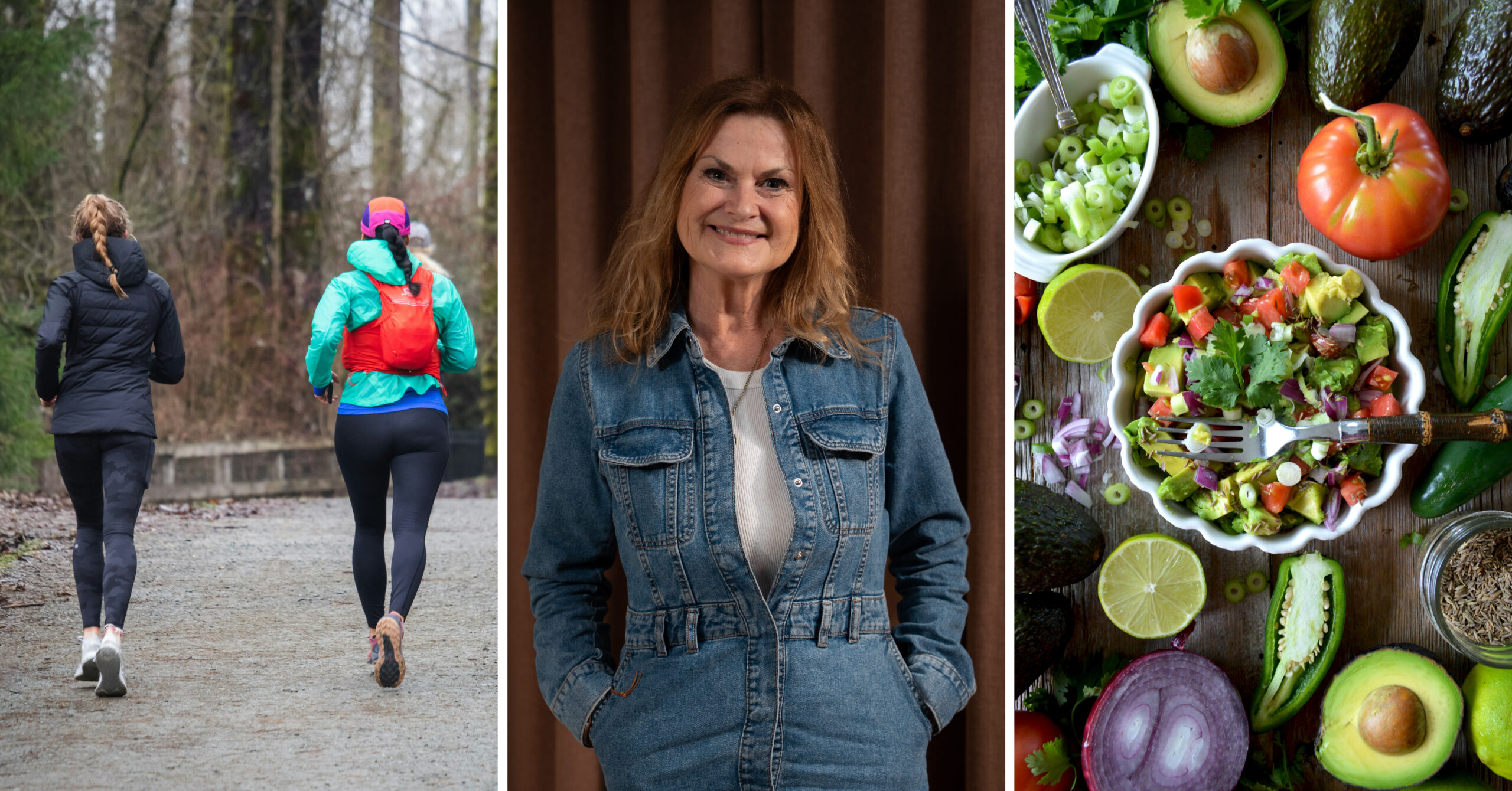
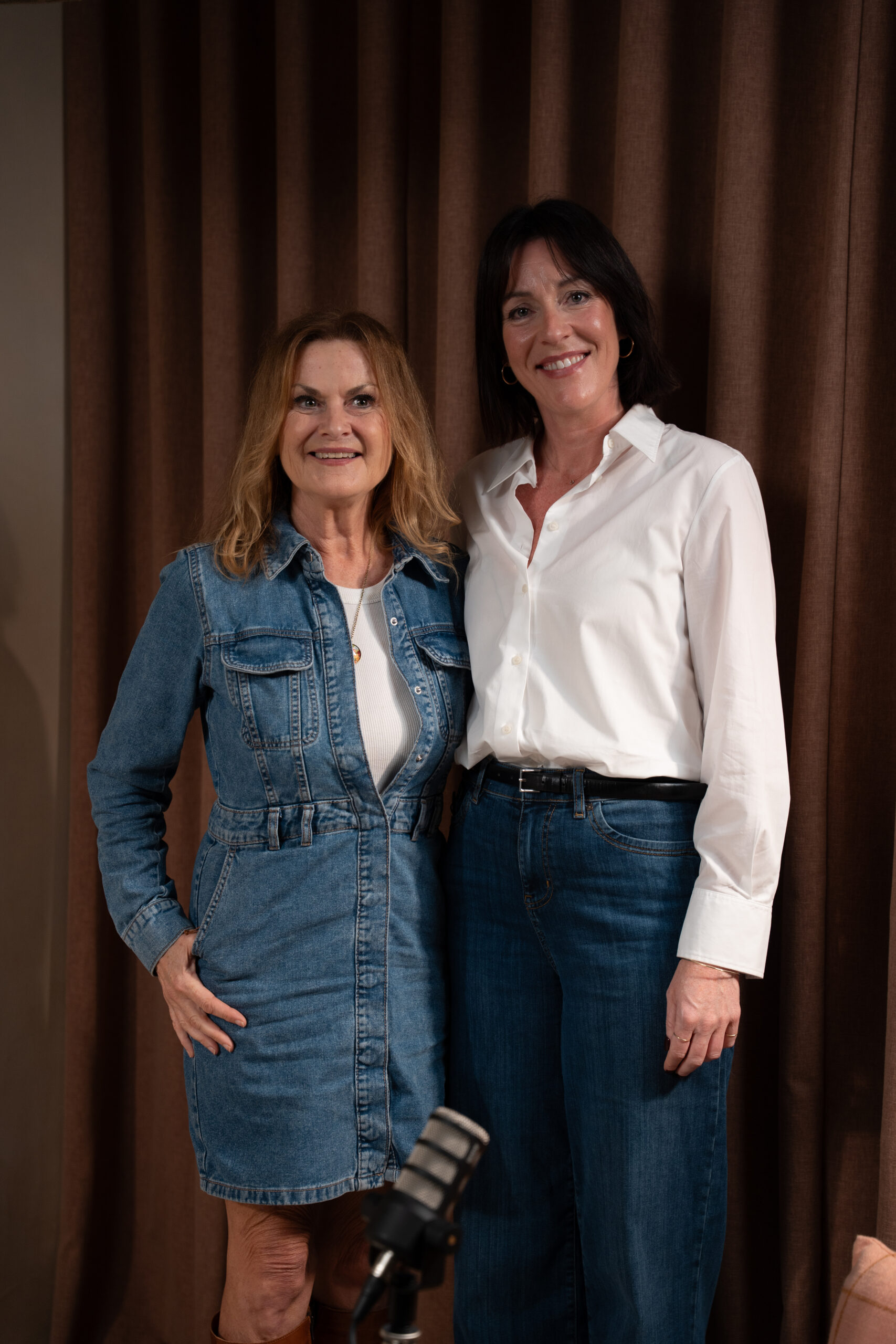
Ellie Balfe sat down with neuroscientist and psychologist, Dr Sabina Brennan on IMAGE The Check-in podcast to explore what really happens to the female brain throughout our lives, from hormonal changes in menopause to the impact of stress, loneliness, and lifestyle on long-term cognitive health.
On IMAGE The Check-in, the IMAGE podcast lifting the lid on women’s health, one honest conversation at a time, host Ellie Balfe sits down with leading medical minds to explore the realities of our health across every decade. She was joined by Dr Sabina Brennan, a neuroscientist and psychologist, to talk about women’s brain health, including why women are more at risk of dementia, how oestrogen loss affects memory and focus, and the small, powerful daily habits that can protect your brain as you age. Sabina also shares why daydreaming is not a waste of time but one of the best things you can do for your mental clarity and creativity. Here are some key takeaways from their conversation.
There are differences between male and female brains
Although Sabina notes that “primarily we are human so our brains are more alike than they are different,” she does point out two key differences in the brains of men and women. One is environmental. “A female’s brain will develop in an entirely different context and environment than a male, because she will be treated differently than a male,” she explains. “She’ll be told things like I was told, you should be seen and not heard, and you go play with the dollies, and you can be a princess. The key to brain health is understanding that our behaviour, our experiences and the life choices that we make shape our brains on an ongoing basis all throughout our lives. We can change our behaviour to improve our brain health. But it’s also important to understand that that’s actually shaped female brains, in how we’ve learned to behave.”
The second difference is our hormones. “Our oestrogen and progesterone fluctuate across our lifespan in ways that influence who we are,” Sabina says. “Your hormones influence every aspect of who you are. And so when they change and when they fluctuate, it will influence your personality because your personality is just the sum of your predictable behaviours.”
She explains that our brain communicates through neurotransmitters, but also via hormones. “So, neurotransmitters are the immediate messengers. So, they are firing here, helping me to talk, move my hands. Hormones are longer acting, more diffuse around your entire system. In fact, their role really is to try and ensure that every part of your body is on the same page about what’s going on. So, they really do influence how we behave, but also how well our brain functions or how our brain functions and so the big hormonal peaks and troughs of a woman’s life are more taxing on our brains.”
Brain fog can be scary, but it’s different to dementia
One of the most common symptoms of perimenopause and menopause, Sabina explains, is brain fog, which is often one of the most debilitating. She points out that women going through these symptoms are particularly attuned to the idea of dementia, as they’re often looking after ageing parents.
“They can catastrophise that what they’re experiencing is early signs of dementia and, unfortunately, getting stressed about it, losing sleep over it, all of which impair their cognitive functioning and make it worse. Dementia and brain fog are entirely different things. Dementia is a neurodegenerative disease that gets progressively worse. Brain fog is a temporary thing. It’s not a disease. It’s not a disorder. It’s not a diagnosis in and of itself, but it is very real. It can be measured. You can measure people’s performance on tasks. The way I kind of like to describe it is that it’s a symptom or a sign that something is amiss. What they need to do is do some investigation to find out what’s bringing it about.”
Laughter is nature's natural stress buster. It actually lowers cortisol levels.
Sleep is vital for brain health
Sabina emphasises how important sleep is to the health of our brains. “We know that in terms of cognitive function and memory creation, sleep is absolutely critical. When you go to sleep at night, your brain has loads of work to do.” She explains that various stages of sleep perform different functions for our brain.
“There’s a switch that happens as we come towards the later part of the night when you’re dreaming, and that new information is being integrated with your existing memories, your existing knowledge, your existing experiences. And that’s why you have those strange dreams where it’s something that happened today mixed in with something mad from the past, your brain loves connections. And I mean, that’s where insight and creativity and problem-solving come from. We give too much credit to our conscious part of the brain. We think we have to actively be awake and solve problems. Actually, no. We have to do the work and give our brains the information, and actually have a really good night’s sleep. And your brain will do a huge amount of the work for you. So you’ve got to give more credit to the unconscious part of your brain and you’ve got to respect it by actually giving it sleep so that it can do that.”

Nutrition affects our brain health
Sabina explains that what we eat has an impact on our brain, with certain nutritional deficiencies bringing about brain fog, such as a deficiency of vitamin B12. She also cites omega 3s from oily fish, flaxseed and walnuts as being key for brain health.
“Your brain will only perform as well as the nutrients you’re giving it. The Mediterranean diet has the best evidence for supporting brain health. Brightly coloured fruit and vegetables, fresh fish, fresh chicken, lots of pulses, nuts, seeds. It’s actually a gorgeous diet.”
Novelty is incredibly good for our brains
Our brains have an amazing capacity to change with learning, called neuroplasticity, Sabina explains. “That means it can grow new connections, new neurons all through our lives. It is at the core of brain health. You need to be harnessing neuroplasticity to build a healthy brain.
“You want to be building more brain connections and doing everything which is learning and staying engaged. It’s learning, challenging yourself, pushing yourself beyond your comfort zone. People often say to me, ‘Oh, I do crosswords every day to look after my brain.’ And I kind of go, ‘Well, when you were learning how to do your crossword, it was harnessing neuroplasticity. Now it’s not doing anything unless you switch up from a simplex to a complex or a harder one.’ See, the benefit comes in the learning. So basically, it’s anything new, trying new food, listening to a genre of music you’ve never listened to before, because that’s like your brain learning a whole new language. So, don’t stay stuck in a rut. Do new things.”
Fun is the antidote to stress
Chronic stress can actually change the structure of your brain, Sabina explains, but making time for fun is one of the best ways to counteract this. “You schedule so many things into your life,” she says. “I have to pick the kids up from school. I have to drop them. I have to do the shopping. When is the last time you scheduled half an hour of fun for yourself? Just half an hour every day. And whether that is just looking at, you know, videos of cats doing stupid things or people falling. Laughter is nature’s natural stress buster. It actually lowers cortisol levels.”
Women are more susceptible to dementia than men
There is a higher prevalence of dementia in women than men, Sabina explains, and this is likely due to a combination of factors. “Age is the biggest risk factor for dementia. Women live longer than men. So we are more likely to live long enough to have dementia.”
She points to emerging research that suggests our hormones may also have an influence, but also notes some specific factors that influenced the current older generation of women. “Particularly with our current cohort of women in Ireland, I don’t know about your mum, but my mum left school relatively early, and when she got married, she had to give up work. So low levels of education and lack of mental stimulation are a big risk factor for dementia. A lot of our women who are currently in their 70s and 80s were stay-at-home women. Now, there’s nothing wrong with that, but it rarely has the mental stimulation unless you actively go out and seek that mental stimulation. It’s not challenging your brain. And also, you’re doing the same thing every day. I don’t think that the current cohort also necessarily had great diets; they weren’t as health literate.”
Most of the risk factors for dementia are in our control
“There is a genetic element,” Sabina explains, “but the risk associated with that is small compared to the risk associated with what we call modifiable risk factors.”

Many of these are linked to cardiovascular health, she points out. “People are surprised that physical exercise is one of the best things you can do for your brain. You also have factors like midlife obesity and smoking, or low levels of mental stimulation. “Hearing loss is a huge factor, so get your hearing checked regularly, and if you need hearing aids, wear them; it’s shown that that can mitigate the risk.”
She also points out that social connection is so key. “Social connection is one of the most challenging things you can do for your brain. Not only are you processing what someone says, but you’re interpreting it. You’re deciding what your response should be. You’re applying social rules and cultural norms; there’s so much going on in your brain.”
To listen to our full episode with Dr Sabina Brennan, click HERE.
We’re lifting the lid on women’s health: the real, the raw, the rarely spoken aloud. Our new podcast ‘IMAGE The Check-in’, hosted by Ellie Balfe, gets straight to the heart of what’s truly on women’s minds right now. We dive into monthly health themes with expert guests and honest voices.
Listen to IMAGE The Check-in HERE or wherever you get your podcasts.

Also Read