





Sponsored
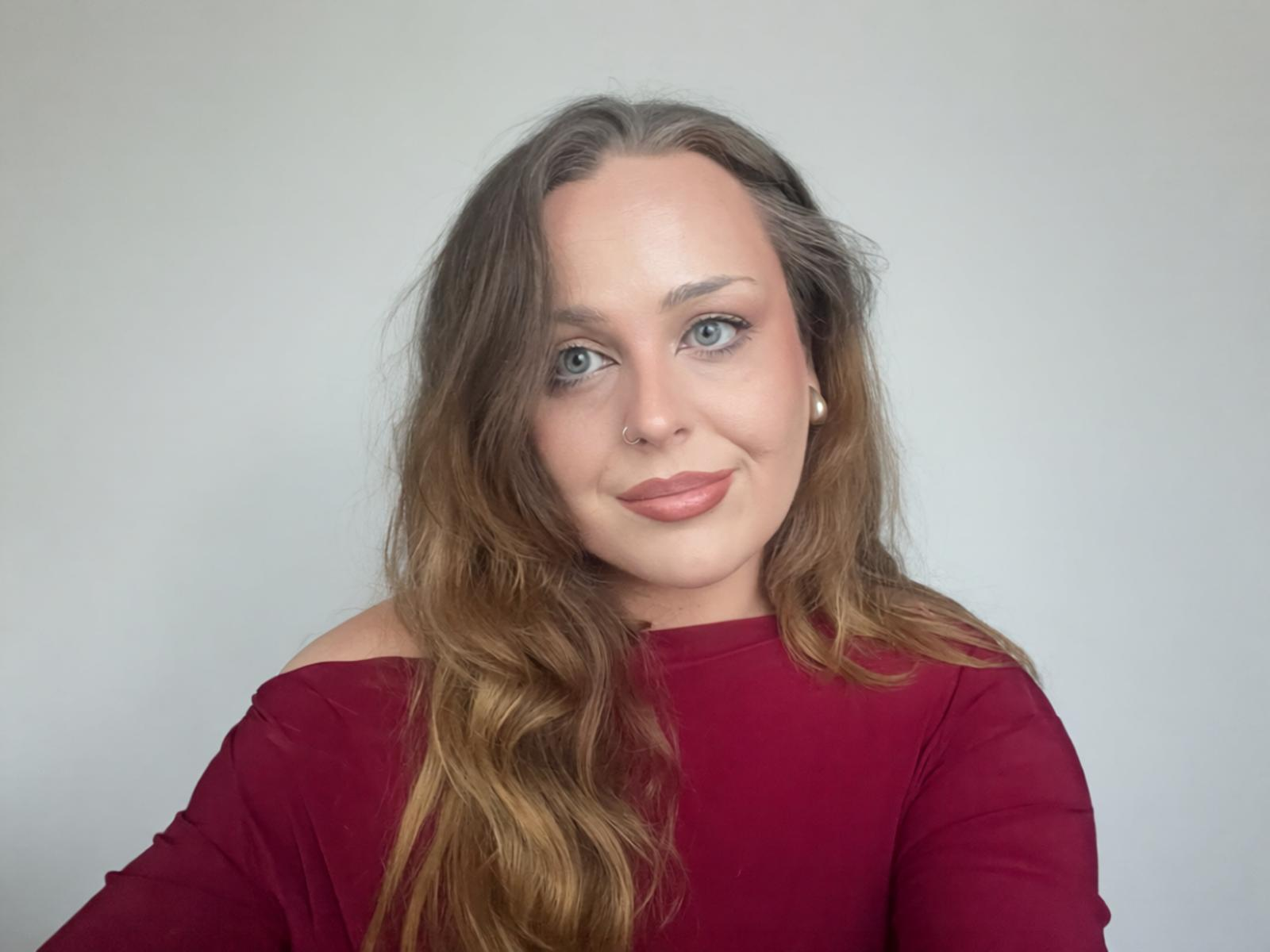
‘I was told it could be psychological’: Cliodhna Buckley on years of living with undiagnosed MCAS
Sponsored By
Chronic fatigue, insomnia, bloating and long, painful periods are often dismissed as stress, hormones or something to simply push through. For Cliodhna Buckley, it would take years of appointments, tests, referrals and being told her symptoms might be psychological before she was diagnosed with Mast Cell Activation Syndrome, or MCAS.
“I was always a really tired child, I always had very dark circles under my eyes,” Cliodhna Buckley says.
She explains that puberty started early when she was nine. So did the symptoms she would later come to understand as Mast Cell Activation Syndrome, or MCAS. As Cliodhna describes it, MCAS is a condition where the body’s protective response misfires. “My body falsely thinks that it’s being under attack,” she says, “and so it overactivates all the cells that it starts attacking itself.” At the time, however, there was no name for what was happening.
Between the ages of nine and 16, Cliodhna says she was constantly exhausted, often unwell and regularly in and out of the GP. “It wasn’t until I kind of hit puberty… the symptoms started ramping up,” she says. She remembers chronic fatigue, aches, tingling, insomnia, paleness, dark circles and bloating. “It was just like, all of a sudden, I went from a relatively healthy child to within kind of six months, everything just flipped.”
At 17, she got the contraceptive bar to help with her periods and PMS symptoms. Cliodhna says routine blood tests were carried out, but she felt the wider picture was missed. “My mother had an instinct that something was wrong,” she says.
But her GP at the time did not believe anything more serious was going on. “His answer was just like, oh, let’s just put you on the bar, then it will go away.”
“I was told it could be psychological”
Naturally, things did not magically just go away. “My periods were affected too, some would last for say, 18 days.
“I was told when I was 19 that it could be psychological,” she says, explaining her GP’s response, who recommended an assessment at St John of God’s, which, despite being terrified, she agreed to.
“I did the stint in St John of God to be monitored for five days. And I was absolutely terrified, because you hear people going into these places [and not coming out]. But I was desperate. I remember a girl I was rooming with asked ‘how long are you in for,’ and I said ‘Oh, I’m out on Friday,’ and she just started laughing.”
The assessment determined her symptoms were physical, not psychological. Still, answers did not come quickly. At this stage, Cliodhna’s tiredness had become impossible to manage. Stress, she would later learn, was a major trigger for her MCAS. After the Leaving Cert, her symptoms became overwhelming and she deferred college more than once due to her symptoms.
At 20, she had sleep assessments, kept sleep diaries and underwent more detailed blood testing. Again, nothing explained what was happening.
“I just kind of accepted that this was it. Like, there was no other way of life.”
Finding MCAS
It’s a testament to her strength that, despite obstacles, both Cliodhna and her family – her mother works in the pharmaceutical industry – continued to push for answers. “It’s very, very hard to get diagnosed in Ireland,” Cliodhna explains.
MCAS involves mast cells, immune cells that help protect the body. In people with MCAS, those cells can become overactive, triggering symptoms across different systems. For Cliodhna, it helped explain years of fatigue, insomnia, bloating, inflammation and hormone-linked flares. She also discovered she is hypermobile, “basically your skin and your joints are like, extra stretchy”, and that her estrogen levels during her period cycle can trigger symptoms also.
“What happens to me is that my body falsely thinks that it’s being under attack about something, and so it overactivates all the cells and it starts attacking itself,” she says of her body’s constant cycle of exhaustion.
Then, at 20, during Covid, Cliodhna and her mother had more time to research, and it was her mother who came across MCAS but it would be another few years before an official diagnosis.
“At 25, I found a rheumatologist who finally connected the dots. He confirmed my diagnosis, discovered insulin resistance, and told me that a severe flare could cause anaphylaxis, something my GP never mentioned. It was terrifying, but at last I had the full picture, she continued, adding that he confirmed the diagnosis through, “I’m talking 1000s of tests done, and at this point, I think I was on up to maybe 25 tablets a day.”
The tests also showed she had polycystic ovary syndrome, or PCOS, which can overlap with MCAS and aggravate symptoms.
“He saw everything as kind of a whole,” she says. “And I was diagnosed with PCOS as well, which is another link in the chain.”
Medication helped, along with a protein-rich diet and targeted weight training.
“I feel the best that I’ve probably ever felt. I am still constantly tired.”
“I feel the best that I’ve probably ever felt, but often I am still constantly tired,” she says of life now at 27 years old.
Flares still affect her sleep, energy and ability to live normally. “Last night, for example, I slept for one hour as I’m going through a flare at the moment.”
She has not leaned heavily on support groups yet, partly because illness has already taken up so much space in her life. “I had many years to kind of dwell on it and it’s not that I’m forgetting about it,” she says.
Instead, much of her focus is on what helps: the gym, a protein-heavy diet, sauna, ice baths and anything that calms her nervous system. “I’ve only started doing that in the last five months, and it’s significantly changed, like, everything,” she says.
It took six years for Cliodhna to get back to college properly. She worked full-time in retail while studying, graduated last September and now works in PR.
For years, she says, life felt more like survival than living, a cycle she was happy to break through. “For years, for about good four or five years, I was just kind of going through the motions and not really living because I was like, ‘What’s the point?’.”
Now, she is trying to reclaim some of what she missed. She has joined tag rugby, something she says she could not have done as a child or teenager because of her health.
“I suppose as a child and a teenager, I couldn’t do hobbies, yeah, and now… I’m finding myself trying new hobbies to kind of see what I missed out on.”
One doctor even told me I didn’t have MCAS and that I had brought my symptoms on myself by taking the Covid vaccine. It was crushing and made me feel blamed for my own illness.
The cost of not being heard
Cliodhna says awareness of MCAS in Ireland remains limited. Because symptoms vary so widely, many people end up researching or self-diagnosing before they find medical support.
“There are a good few people who have it,” she says. Though trying to access support, she says, can still feel impossible. “In terms of like, trying to get support from a healthcare point of view, it’s impossible.”
Even now, with a GP she trusts, Cliodhna feels she still has to direct too much of her own care.
“I am lucky that I have a good GP in the sense that she trusts me, yes, and I tell her, ‘Oh, I think I need a blood test’. She goes ahead and does it, but that also shows that she’s probably not particularly interested. She’s supposed to be telling me what to do, not the other way around.”
And even though her energy is much improved, she stresses how tiring self-advocacy is. The hardest part was not just being unwell, she adds, but also having to convince people to keep helping her search and look for answers.
“[That’s] more exhausting than actually experiencing your illness and it is also why so many people give up. Because you’re paying €500 for someone to tell you that they’re not interested in going further. One doctor even told me I didn’t have MCAS and that I had brought my symptoms on myself by taking the Covid vaccine. It was crushing and made me feel blamed for my own illness.”
Taking part in IMAGE’s Health Clinic series, she says, reassures her she isn’t fighting on her own and that many are trying as she is to find answers and get support.
“It’s true that you’re not alone.”
We’re lifting the lid on women’s health: the real, the raw, the rarely spoken aloud. Our new podcast ‘IMAGE The Check-in’, hosted by Ellie Balfe, gets straight to the heart of what’s truly on women’s minds right now. We dive into monthly health themes with expert guests and honest voices.
To learn more about brain health, listen to our episode with neuroscientist Dr Sabina Brennan.
Listen to IMAGE The Check-in HERE or wherever you get your podcasts.

To stay up to date on our latest expert-led articles, insights, podcast episodes and more, visit the IMAGE Women’s Health Clinic Hub.
Also Read