





Caoineadh: The documentary on ancient keening rituals in modern Ireland
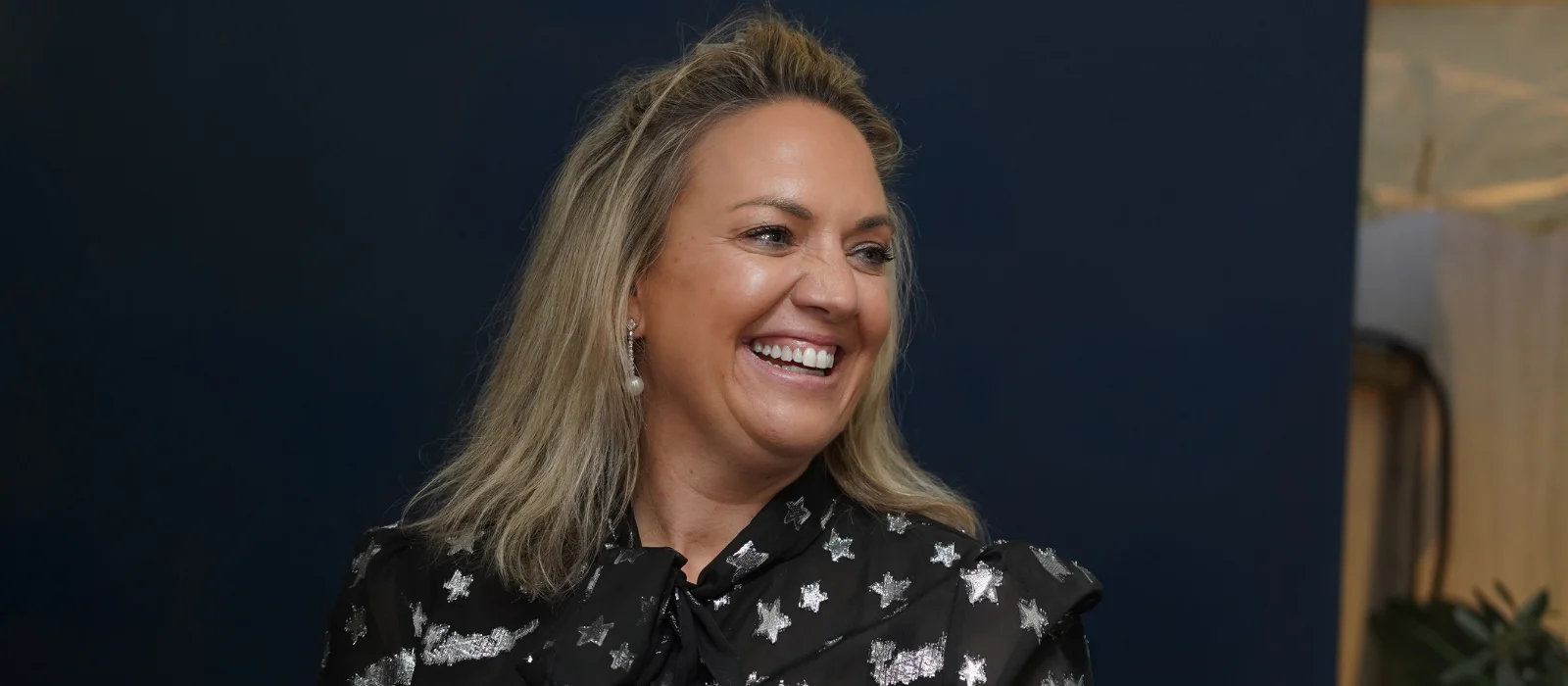
Ahead of its premiere at Galway Film Fleadh last week, Molly Furey sat down with director Kimberly Gray Ennis to talk about her lyrical exploration of grief in her new documentary, Caoineadh.
In May this year, I stood in a packed Workman’s Club to watch Fermanagh artist RÓIS. I was amazed at the distinct sense of release that took over the room as the multi-instrumentalist performed her 2024 album Mo Léan, a reimagining of Ireland’s vanishing keening tradition. Most striking was the fact that this audience of mostly twenty-somethings was finding resonance in these old keening sounds, dancing and yeow-ing to a kind of singing that dates back to pre-Christian Ireland.
Dublin-born film director Kimberly Gray Ennis was also in the crowd that night. “I think it says a lot about where we’re at with our traditions,” she says of the packed venue dancing to the reworked recordings. Much noise has been made of the so-called Gaelic revival that has swept across Irish culture in the last few years. Between Claddagh scarves and pint claw clips, what was once dubbed twee or out-of-date is now being reclaimed as a source of creative inspiration. And if RÓIS’s rising star is anything to go by, the ancient Irish tradition of keening is no exception.
After receiving Ardán’s Ceantar Short Doc Bursary in 2024, Ennis set out to explore what was left of the keening tradition in Connemara. “I think it’s important to capture these stories while there is a revival and a reclamation happening,” she says.

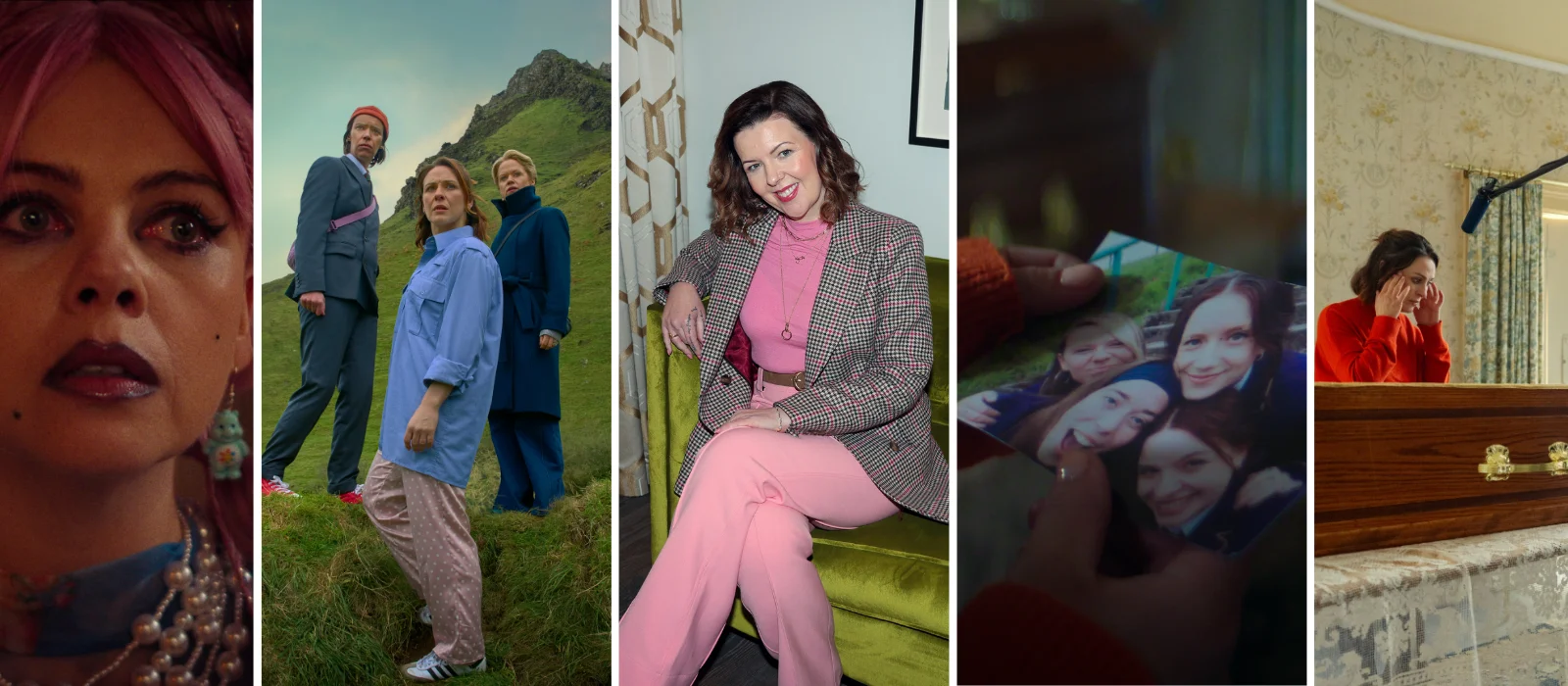
The documentary features the keener Phyllida Anam-Áire, as well as Deirdre Wadding, a Pagan Priestess. In the film, Wadding leads a keening ceremony with a group of women, some local to Connemara, and others who attended specifically for the ceremony. Clad in all black with her face covered in a black lace veil, Wadding keens for the women, inviting them to express the sound of their own grief.
“Keening women basically create a sound that then helps to evoke the family’s grief,” Wadding explains to me, reflecting on the ceremony she filmed with Ennis. “The idea is to help them move through the emotions that accompany the bereavement.” Ideas of the keening woman, or an bhean chaointe, have become confused in Irish culture with an bhean sí (or the banshee), misrepresenting their role in Irish society as harbingers of death rather than as the women who guided communities through loss.
In Caoineadh, Ennis captures the effect of Wadding’s mournful expressions on those in the room who, one by one, can be heard crying and, in some cases, wailing. “You find that participants begin to find resonance a bit like how a musical note resonates,” Wadding says. “Whatever grief they’re holding begins to surface and some will vocalise it.”
One of those heard in Caoineadh is Sophia Malaika. “When you haven’t heard anything like that, it wakes something up in you,” she says of her experience filming the ceremony. “It’s a little bit frightening, but it reminds you that maybe that’s a colour within you as well and it gives you permission to explore that feeling and that sound.”

The devastating sound of Malaika and her fellow participants at the ceremony, however, belies the relief that came with the release for her. “It’s funny because I think there’s almost an element of enjoyment when you’re expressing something fully, even if it’s a really dark emotion,” she explains. “There’s something almost pleasurable about that letting go, even though it looks and sounds really painful.”
Caoineadh’s portrayal of this old ritual is visually beautiful. Eerie shots of three keening women dressed in all black, their faces covered in lace veils, punctuate footage of Ennis’ interview with Phyllida Anam-Áire and the keening ceremony with Wadding and Malaika. Set in Connemara, the ancient quality of the landscape evokes a palpable sense of the tradition and history and time that is central to the story.
Ireland is renowned around the world for its openness and comfort with death and mourning, but Ennis’ film serves as a reminder that there was once an even deeper level of vulnerability to our rituals.
“I think compared to some other cultures we are much more closely related to grief,” reflects Wadding, “but I think there has been a shift and it has maybe become less intimate than it used to be.” Ennis’ film forces audiences to reflect on what it means to drift away from traditions and, more than that, what is possible when we reclaim them for ourselves.
“Traditions can adapt and evolve. We’re not living back in prehistoric times or early Gaelic society, running around with swords – otherwise I’d be an archaeologist or a historian,” says Wadding, who founded Coire Sois, the Irish School of Spirituality, in 2019. “We have to ask how this can work for us now and how we can harness it to make our lives more effective in these times that we live in?”

It was this question that powered Caoineadh on. For Ennis, the making of the film was bookended by personal experiences of loss that showed her just “how incredibly civilised we have become in how we express grief.” While wakes are part and parcel of Irish culture, the actual processing of loss seemed to her to be a process of “bottling it up, quieting the rage, keeping the sadness contained and putting on a brave face.”
Caoineadh depicts keening as a disappearing ritual that is as relevant as ever in its ability to drag the messiness of grief out into the light and bear witness to our primal need to express it. Malaika admits that after overcoming her initial weariness of letting go and making noise at the ceremony, she quickly gave over to it and came away understanding the power of “taking up more space with your feelings.”
“I hope this film makes people question why we don’t take up that space anymore,” she says. “Sometimes we think that what is normal is natural, but it’s not – it’s just normalised.”
This broader moment of return in Irish culture seems like a marker of some kind of healing. Irish history is filled with loss and oppression, and to reach a point at which the triskele is trendy and the cúpla focal are no longer sufficient is no small thing. But latent in this documentary is a deeper reflection on what is at stake in recognising the relevance of heritage in the present day.
“Seeing ourselves in this long ancestral line, it gives us a sense of legacy – not only of the one we inherit but the one we leave behind,” Wadding tells me. “It makes us more conscious of the fact that our life isn’t just about this finite space between birth and death in the physical, but also how we alter the world around us just by being in it.”
Ennis’ documentary is a poignant reminder that how we grieve and remember is tied up in our ability to love and imagine. It asks us to think about the impact of how we lose on how we live. Keening, as it is captured in this film, offers a path for releasing one’s grief in a way that is all about remembering, rather than forgetting. There is no suppressing emotions or keeping a stiff upper lip here. In this sense, Caoineadh is a remarkable testament to the revival made possible by loss.
Caoineadh premiered at the Galway Film Fleadh on Thursday, July 10 in the Town Hall Theatre as part of the Irish Documentaries showcase.
Photography by cinematographer Jaro Waldeck and Kimberly Gray Ennis headshot by Martha Ryan.
Also Read