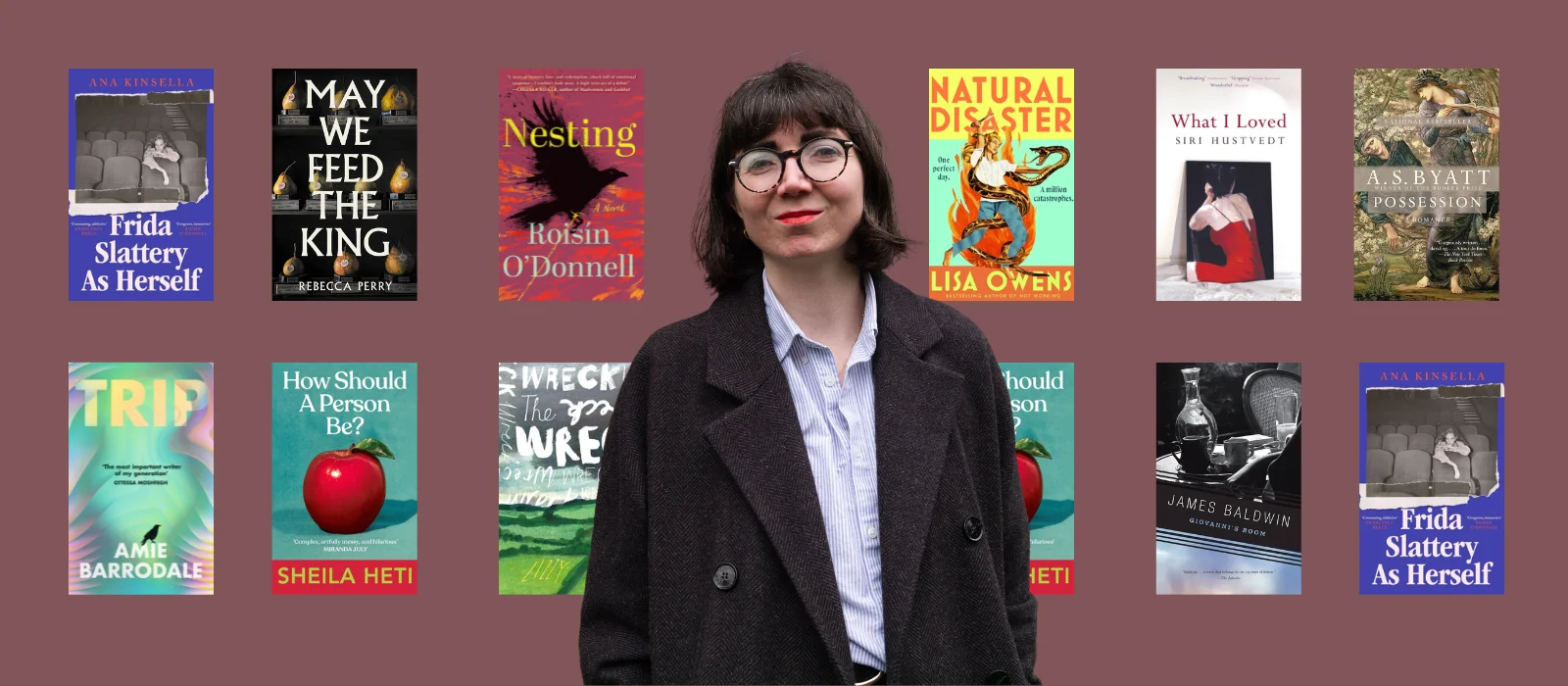





Lisa McGee: ‘When you have people laughing, you can sneak the truth in’
Four years on from the Derry Girls finale, Lisa McGee returns with How to Get to Heaven from Belfast, and it is equal parts chaotic, hilarious, intriguing and deeply human. Sarah Gill caught up with the creator to chat about the endless allure of the mystery thriller, the mythology of female friendship, and the power of an absolute banger.
When someone perfects the shorthand vernacular and casual intimacy of teenage friendship to the extent Lisa McGee did with Erin, Clare, Orla and Michelle (and the wee English lad) in Derry Girls, it becomes something of a sacred text. One must not cross that consecrated land lightly, and to attempt to recreate its ineffable magic would be futile. And so, when word of Lisa McGee’s new show—How to Get to Heaven from Belfast—dropped, my shoulders tensed and a feeling of angsty anticipation settled in. Would it live up to its predecessor? Could anything?
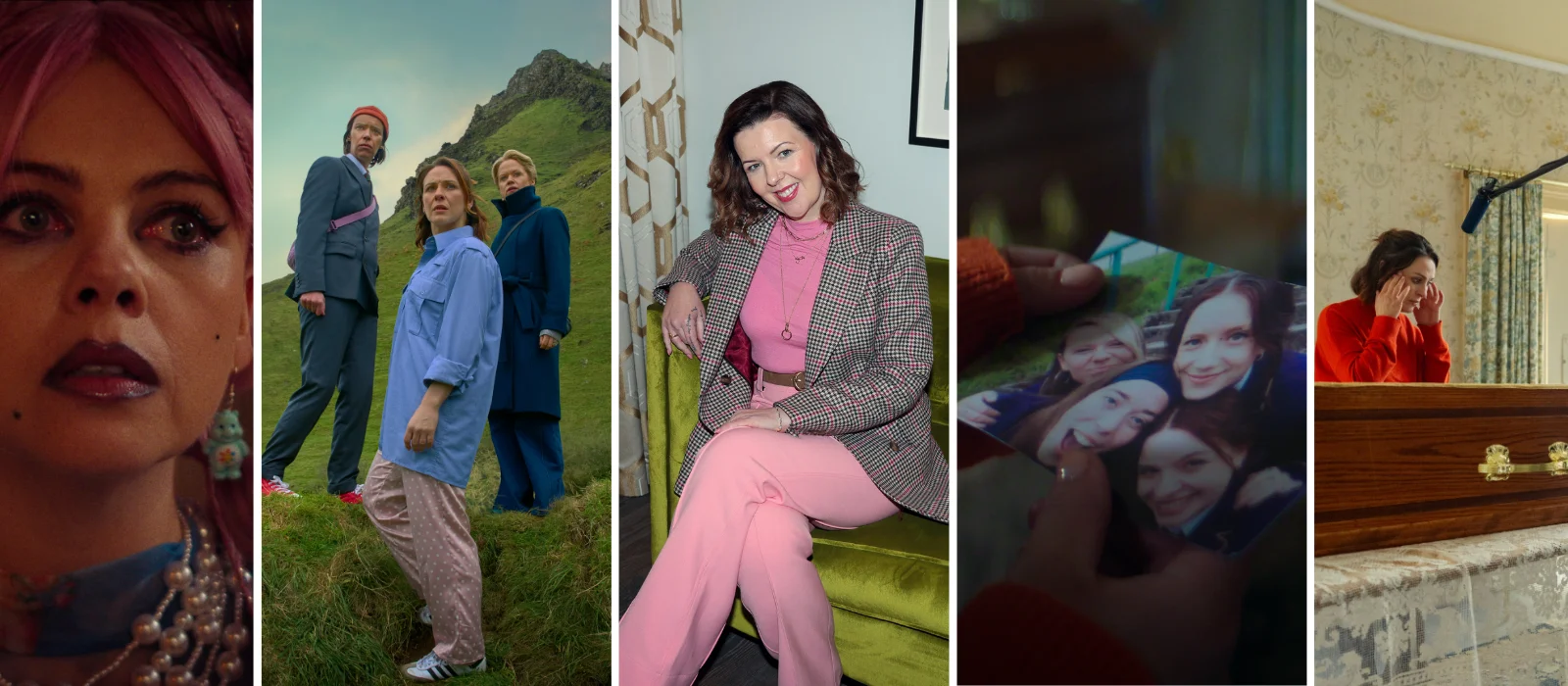
Billed as a comedy-mystery-thriller revolving around three lifelong friends, reunited after the death of an old classmate, Greta, turns a wake into a dark mystery, How to Get to Heaven from Belfast charts their thrilling adventure across Ireland as they piece together enigmatic truths amid complicated lives. You settle in with Robyn (Sinéad Keenan), Saoirse (Roisin Gallagher) and Dara (Caoilfhionn Dunne) immediately, the fast-talking 30-somethings with whom we’ll be spending eight episodes of television that expertly rove between the surreal and the poignant.
These stories we’ve decided on as groups of friends, that you tell over and over again, become like your own mythology. If someone were to fact-check those stories, it would disrupt so much about who you think you are, and who your friends are. All that felt very rich.
“I love these types of shows, they’re my favourite thing to watch, and they have been since I was little,” McGee tells me over Zoom. “Shows like Murder She Wrote and Columbo were my favourites, but right up to The White Lotus or Mare of Easttown, I just love the genre so much. I know myself a bit better now as a writer, and I have to do it my way. To make it interesting for me and for the audience, what I bring to it is that silliness. You can tell a serious story with a light touch and that’s the zone I’m better in, when the writing is humorous and the characters are ridiculous at times.”
Where McGee’s writing chops truly sing is in her masterful dialogue. Chemistry is sewn into the script, and when you see it play out in a beat-up car between three anguished 38-year-olds while a pilgrimage to Knock wheels a six-foot statue of Jesus around a bend in the Irish countryside, well, that’s alchemy.
“I love ensemble work,” McGee says. “I love characters talking and arguing with one another. I’m really fascinated by female friendships, I find them much more interesting than romantic relationships — because they normally last longer! They really know you in a way that nobody knows you. You can really be yourself while also knowing what’s off-limits to talk about. That was quite interesting to examine. These stories we’ve decided on as groups of friends, that you tell over and over again, become like your own mythology. If someone were to fact-check those stories, it would disrupt so much about who you think you are, and who your friends are. All that felt very rich.”
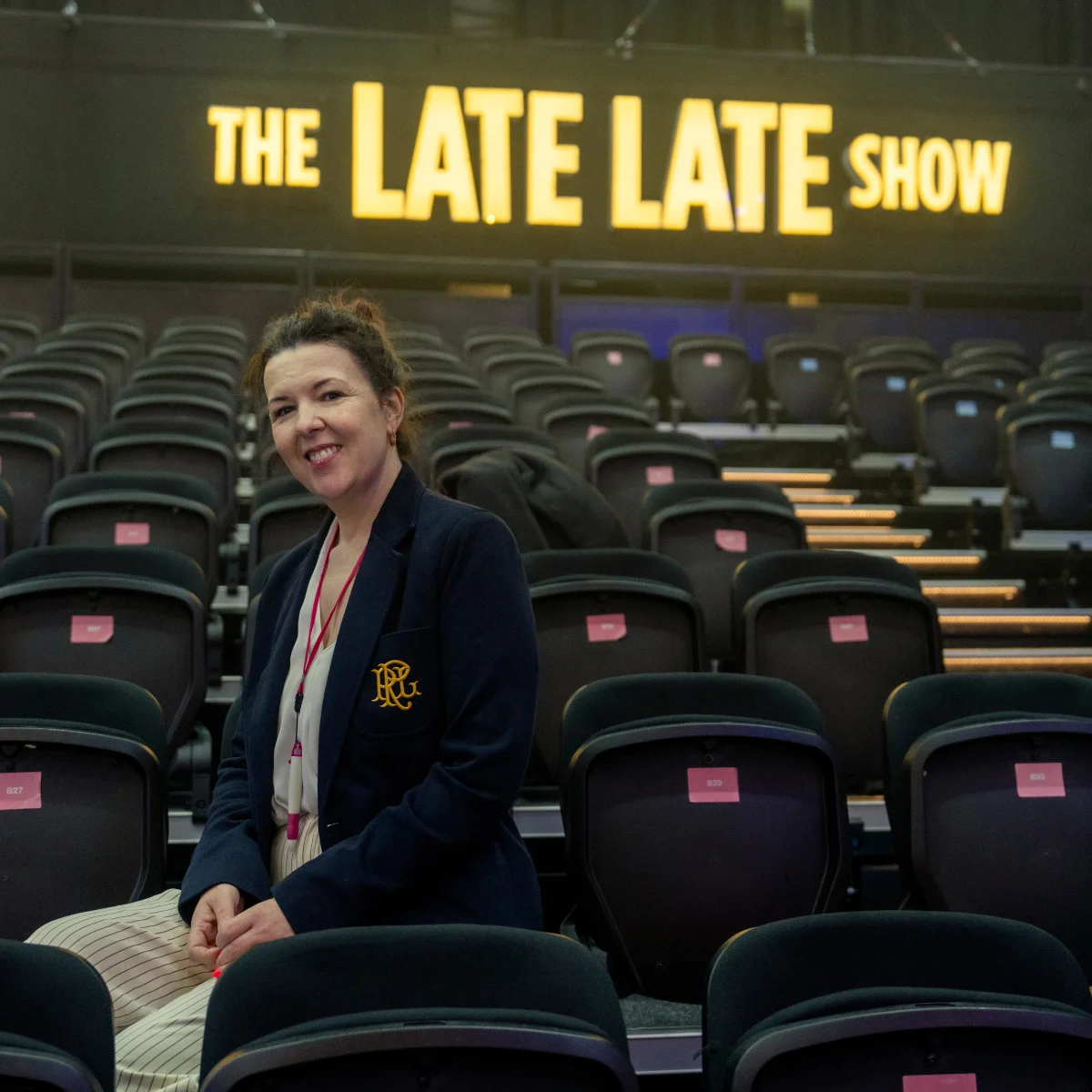
“I find groups of women so funny,” Lisa laughs. “I actually think I never really get close to putting on screen what that joy feels like when there’s a group of women making you laugh so hard. It’s really hard to get close to emulating that because it’s so special.”
There are shades of Scooby-Doo, parallels with Knives Out, and Yellowjackets-esque vignettes of the girls’ teenage and childhood selves. The story extrapolates to include a sort of vigilante-cum-witness protection ensemble that includes McGee alum Saoirse-Monica Jackson in a Harley Quinnian role that somehow works perfectly. Cautiously avoiding spoilers, a central plot point revolves around the psychology of childhood trauma, and as with much Irish art, morbidity and mortality are central tenets.
There’s commentary on religion in modern Ireland—a priest espousing the virtues of work-life balance, religious paraphernalia dotted here, there and yonder—and a strong message of Ireland’s culture of disbelief in a woman’s word. In Ireland, we can feel we have evolved a great deal from our unsavoury heritage, but it’s right there in the rearview mirror, looming.
When I see another female Irish writer succeeding, I know it opens doors and lets people know that it works. Let’s do more stuff like that.
“Unpicking the past through art feels like a very natural thing to me, because it’s so part of all of our stories,” Lisa says. “I think about the position of women in Irish society throughout history and it’s very complicated, because you have these really strong characters who were leaders and on the front lines of art and politics, but also, there was a lot of trauma and buried things and inequality. Those two things sit together hand in hand.”
“When I was talking about the Troubles in Derry Girls, it’s when you have people laughing that you can sneak the truth in. In this, there’s a bit where the girls talk about abortion laws in Northern Ireland in episode six, and it’s not funny at all. They’re not laughing. It was something I really wanted to say. When I see the opportunity to say it, I will take it. For the most part, I’m trying to entertain and make you laugh, but because of the setting and the history, there are opportunities to shine a light that might be a wee bit uncomfortable for an audience.”
Stories coming out of the North of Ireland are getting their flowers in abundance of late, and deservedly so. We’ve got the short adapted from Wendy Erskine’s Nostalgie nominated for both an IFTA and BAFTA; shows like Say Nothing and Trespasses resonating with audiences near and far; Michael Magee’s debut novel Close to Home getting the TV treatment next. That understanding of and appreciation for Northern Irish art is blossoming across all mediums: books, music, film and television.
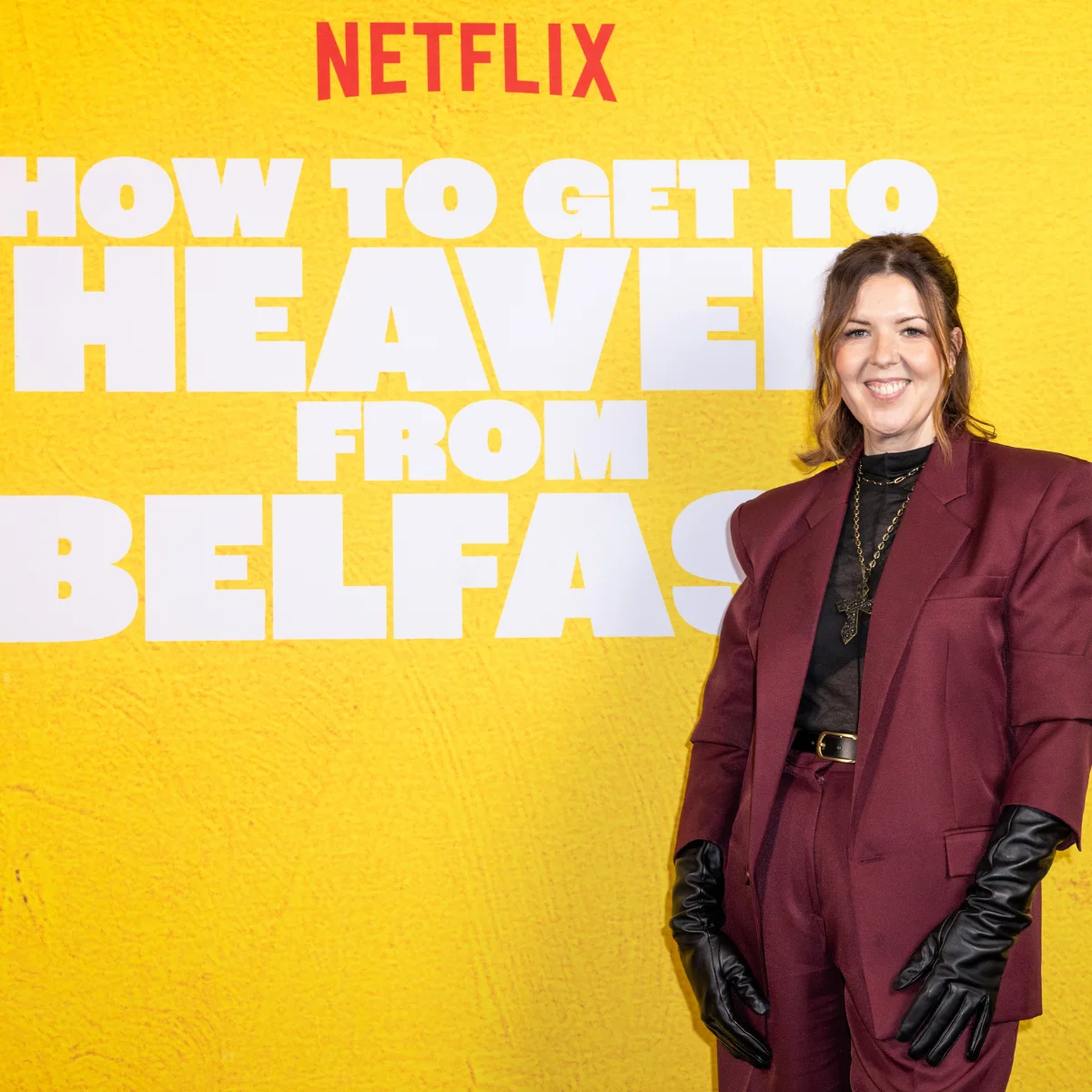
“Ireland’s always had a place on the world stage, culturally. There’s always been incredible Irish art but I think Northern Ireland had this thing where we could only really talk about the one thing, and that was always these very serious, political stories that we were told the rest of the world was interested in,” Lisa reflects. “Now, we’re seeing so many different things, and that’s so exciting. There are so many other stories for us to tell. It just feels like you’re part of a movement, and because the place is so small, you literally know everyone, so when you see someone doing well and winning awards, it’s class, because it’s good news for all of us. When I see another female Irish writer succeeding, I know it opens doors and lets people know that it works. Let’s do more stuff like that.”
So, in How to Get to Heaven from Belfast, we’ve got top-notch writing, stellar performances, cameos from many familiar faces from the McGee cinematic universe (hello, Ardal O’Hanlon in a spinning light-up dickie bow), a sojourn to the set of The Late Late Show, and a genuinely very beautiful and affectionate portrait of Ireland. The cherry on top? A sprinkling of absolute bangers. B*Witched, Girls Aloud, Atomic Kitten, t.A.T.u, S Club 7, the gang’s all here.
I really feel that teenage me had it all worked out. She was an absolute eejit and mad and chaotic but she knew who she was. Then she got out into the world and she started to doubt that.
Music carried a similar significance in Derry Girls, bringing ‘Dreams’ by The Cranberries and ‘Saturday Night’ by Whigfield back to the centre of our consciousness. I ask Lisa about her love of tunes and how she utilises an iconic track to situate a piece of television at a particular point in the culture, while also offsetting a scene’s tension perfectly.
“It’s funny to have ‘Hot in Here’ by Nelly as someone’s favourite song when they’ve just died,” Lisa laughs. “That’s written into the script, and the likes of ‘The Ketchup Song’, we knew completely had to be in the series. You always need a lot more than you think, so we had our incredible music supervisor, Catherine Grimes, and our editors, executive producers and director sitting on our phones in the edit, playing the scenes with no sound, deciding on what song it should be.”
Secondary to the central themes of How to Get to Heaven from Belfast sits a gorgeous poignancy on our connection to our younger selves. Seeing our core cast of three fading in and out between their teenage selves and their current forms is deftly done. It made me wonder at my own link with little me, and so naturally, I had to inquire after Lisa’s.
“I’ve spent a lot of time thinking about this, because of the show but also because of the age I am now. You get more responsibilities, but you don’t necessarily grow up. I really feel that teenage me had it all worked out. She was an absolute eejit and mad and chaotic but she knew who she was. Then she got out into the world and she started to doubt that,” Lisa reflects. “You’re a working-class girl from Derry, and you start listening to the things people say. When I was 15, I thought I could take on the world. If I was with her now again, I’d love to listen to her and remember what I really wanted and what I really believed. It’s fascinating, really, that you lose a lot of yourself. You discover new things as well, of course, I’m a mum now and there’s lots of things that I’ve learned about myself through being a mother, but there’s lots I’ve forgotten as well that were good things.”
Currently streaming on Netflix, I encourage you to watch How to Get to Heaven from Belfast immediately.
Also Read