







Burnout isn’t a badge of honour – here is why the most ambitious women in business are learning to rewire their nervous systems to lead smarter, not harder.
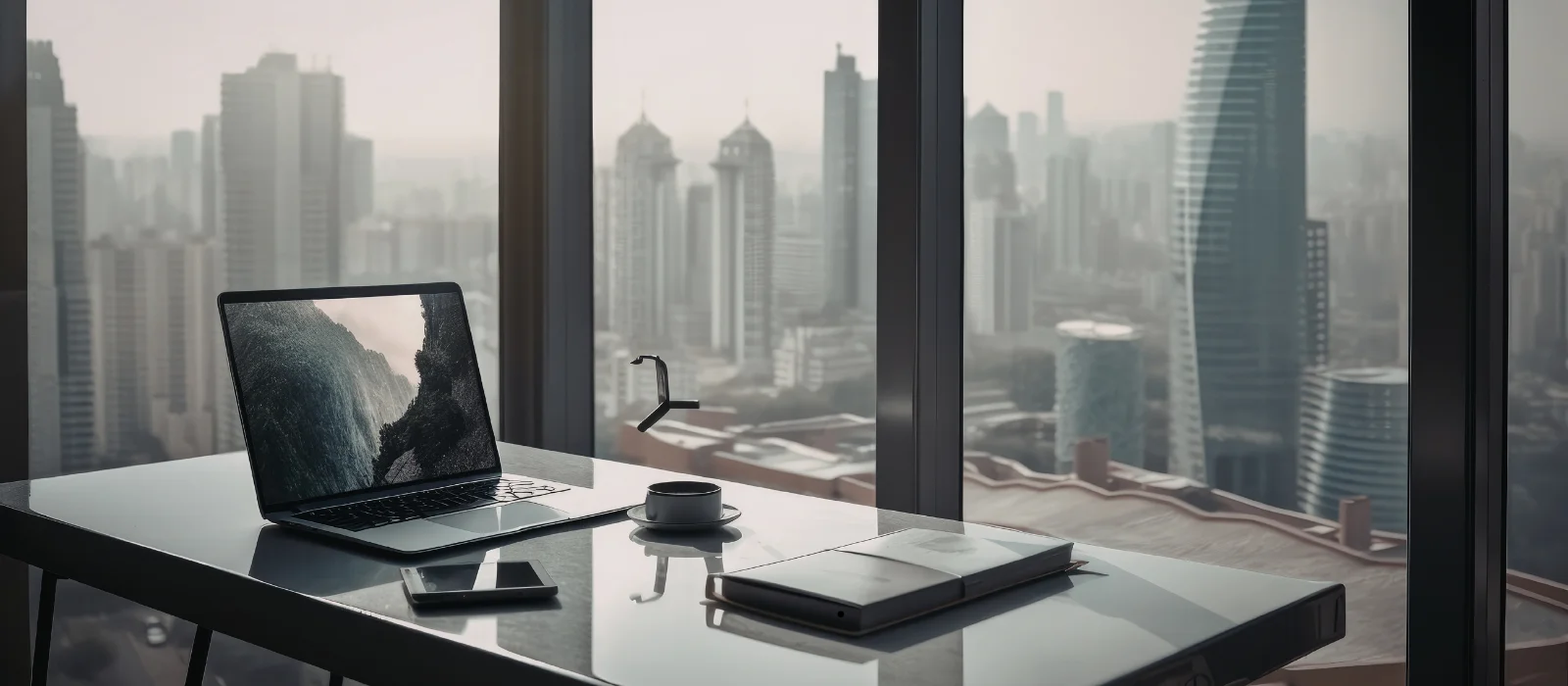
There’s a moment, usually late at night, laptop glowing, to-do list ever-growing, Slack and email still pinging, when even the most driven woman begins to wonder: “Is this what leadership is supposed to feel like?”
You’re hitting the targets. Business is growing. On paper, this is success. But under the surface, there is exhaustion, decision fatigue and a creeping resentment. If this feels familiar, you’re not broken. You’re just running your leadership strategy on an outdated operating system. And it’s time to upgrade it; time to shift from hustle to sustainability,
from cortisol to clarity.
As a business editor and coach, I work with women who are brilliant, ambitious and often, exhausted. Many have experienced burnout or are on their way to it. Some wear burnout like a badge of honour, high-achievers proudly announcing they are “close to burning out again” and “just so, so busy”. These women have burnt out in a system and paradigm that rewards overdrive and penalises pause. These systems glorify the relentless pursuit of productivity and success. But here’s the truth: burnout isn’t proof of commitment or professional success. It’s a warning sign that something in the system – yours or that of your workplace – is unsustainable.
It was back in the 1970s that Herbert J Freüdenberger coined the phrase “burnout” and identified three contributing factors: decreasing sense of accomplishment (an unconquerable sense of futility, feeling that nothing you do makes any difference), emotional exhaustion (the fatigue that comes from caring too much for too long) and depersonalisation (the depletion of empathy, caring and compassion). Since then, there is no denying that it has become an overused phrase, but one that has global recognition.
The World Health Organisation now recognises burnout as an “occupational phenomenon” and global data indicates that women consistently experience higher rates than men. The Deloitte Women at Work Study found 71 per cent of women reported symptoms of burnout compared to 60 per cent of men, and repeated studies by McKinsey & Company indicate a higher number of women leaders reporting burnout compared to men at their level. From a generational perspective, Millennials and Gen Z consistently report higher rates of burnout compared to Gen X and Baby Boomers.
Global trends and gender disparity
A significant driver of women’s burnout is the “double burden” or “second shift”, which is the combination of professional responsibilities with a disproportionate share of domestic and caregiving duties. Women often carry the majority of household chores and family care, leading to increased stress and less time for recovery. This trend has been significantly amplified in the past few years, with our always-on hustle culture and flexible working, which is not always helping the situation. Studies repeatedly show it is a major concern for women’s wellbeing and workforce participation worldwide.
It’s important to recognise burnout isn’t just a mental or emotional issue. It’s neurological. When we’re constantly under pressure, our limbic system – the brain’s threat centre, the emotional centre – goes into overdrive, triggering stress hormones such as cortisol and adrenaline. This shifts us into survival mode, where we become reactive, rigid and short-term in our thinking. Great for escaping a lion. Not great for leading a team, scaling a business or making strategic decisions. At the same time, our prefrontal cortex – the part of the brain responsible for focus, executive function, emotional regulation and empathy – gets dialled down. In short, we lose access to our best leadership qualities just when we need them most. This means there is a brain-based case for tackling it long before it becomes a problem for our health and our leadership.
Burnout isn’t proof of commitment or professional success. It’s a warning sign that something in the system – yours or that of your workplace – is unsustainable.
The stress cycle
So, what can we do? Emily and Amelia Nagoski, researchers, TEDx speakers and authors of Burnout, speak about the importance of completing the stress cycle to combat burnout. They are quick to point out that an individualistic approach to burnout is not the long-term answer – we need a societal shift and to come together as communities to support each other beyond the patriarchy. However, a starting point today is tackling emotional exhaustion as a factor of burnout. “Exhaustion happens when we get stuck in an emotion,” says Emily.
She explains we are often taught to believe that if we fix a problem that causes stress or an emotion, then we will have dealt with the emotion itself. “It turns out you have to deal with the feeling, which is a separate step from dealing with the issue that was activating the emotion in your body,” she says. Without that, we’re stuck in a chronic state of “on”, which can lead to burnout. This makes sense – when we are under threat, our brains shift into the fight, flight, freeze or fawn stress response.
Today, this threat might not be a lion chasing us; instead, it is the unfiled tax return or the pitch deadline which triggers the same neurological pattern in our bodies. In the past, when it was the lion we were escaping, we signalled to our body that we could relax by celebrating with our tribe when we escaped, hugging others, jumping in glee, collapsing and breathing deeply with relief. All of these things told our bodies, “You are safe now, you can relax”. If you look at a gazelle that escapes a close call with a predator, you will see its body shake all over when the threat is gone. The gazelle physically moves the cortisol through its body before getting on with its day.
Horses are great teachers, too – if they are grazing and notice a threat, they will watch, poised to run until they feel the threat has passed. Then they will go back grazing, but not before they shake their heads or stamp a hoof. They physically move the emotion – and the stress hormones – through their bodies and then switch back to a relaxed state. This is what we are so often missing. We press “send” on the stressful tax return or email and then continue with our day (or night) without signalling to our bodies that it is now safe to relax.
We press “send” on the stressful tax return or email and then continue on with our day (or night) without signalling to our bodies that it is now safe to relax.
There are simple ways to complete the stress cycle, such as slowing down to note the moment and then introducing movement, any sort of movement from shaking out your hands to dancing; connecting with other people; or simple breathwork. By taking any of these steps, we signal to our body that it is safe, re-engaging the prefrontal cortex before we can mindfully focus on the next task.
On this theme, Dr Amishi Jha, a neuroscientist and author of Peak Mind, writes that our capacity to focus is like a muscle. When we push it constantly without rest, it fatigues. When we build in intentional recovery – whether that’s a 10-minute walk, a structured pause between meetings, or a work week that doesn’t worship the cult of busy – we strengthen our brain’s capacity for clarity, presence and performance, which are all essential for leadership. Alongside this, it has long been recognised that sleep deprivation has a direct and negative impact on the prefrontal cortex. Conversely, adequate rest enhances these abilities, enabling leaders to respond thoughtfully rather than react impulsively. Reclaiming sleep has been on the radar of any smart leader for some time – Arianna Huffington’s The Sleep Revolution was published back in 2016 – but coupling this with a focus on slowing down to manage our nervous system to support our well-being and our leadership can be a game-changer for any female leader.
We live in a world that glorifies the grind. But the future of leadership belongs to those who know how to stay grounded, leaders who protect their cognitive bandwidth for the tasks that truly move the needle. It is time to be radical, and instead of speeding up, we need to slow down, to reclaim rest and recovery. You don’t build a skyscraper on shaky scaffolding – and you don’t scale a career on a nervous system in crisis.
So, this year, take your cue from the season. Reassess your pace. Rewire your patterns. Redefine success, not as something you sprint toward, but something you expand into.
This article originally appeared in the Autumn 2025 issue of IMAGE.
Have you thought about becoming an IMAGE subscriber? Our Print & Digital Magazine subscribers receive all four issues of IMAGE Magazine and two issues of IMAGE Interiors directly to their door along with digital access to all digital magazines and our full digital archive plus a gorgeous welcome gift worth €75 from Max Benjamin. Visit here to find out more about our IMAGE subscription packages.
Also Read