
Sponsored
‘My kids didn’t need a calmer mum. They needed a regulated one.’
Sponsored By
From emotional dysregulation to co-regulation, Kim Gray explains how healing her own nervous system transformed her family life.
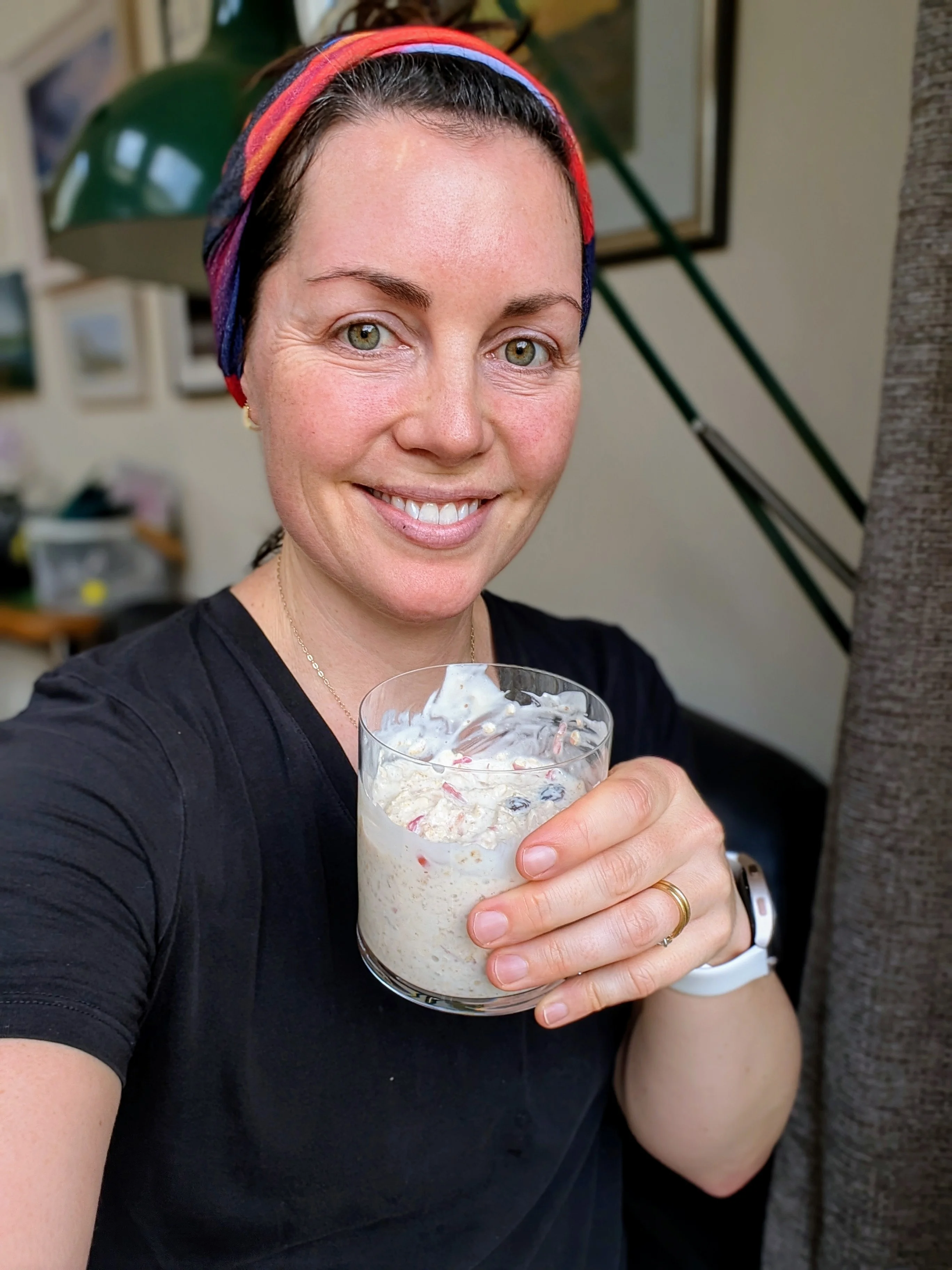
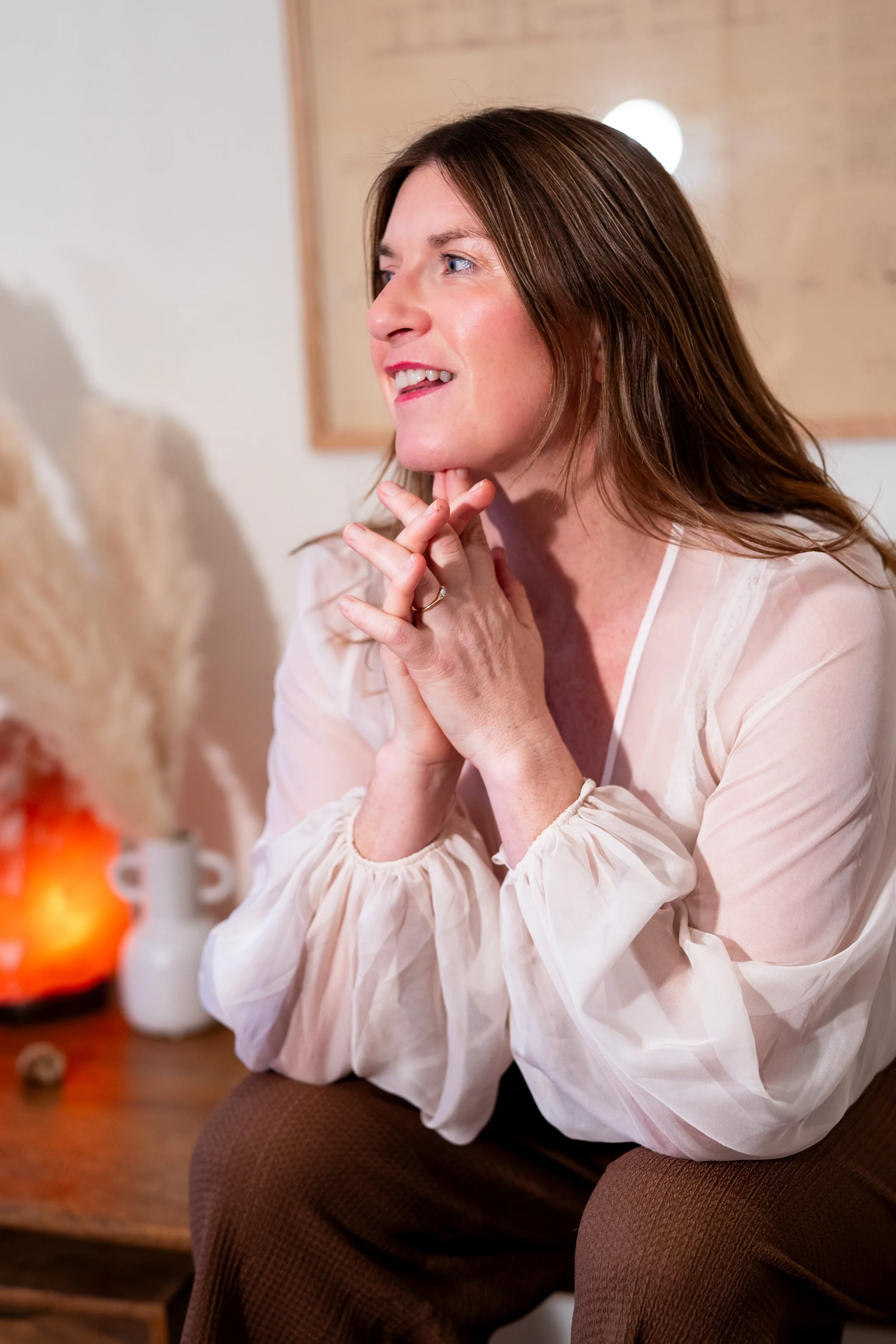
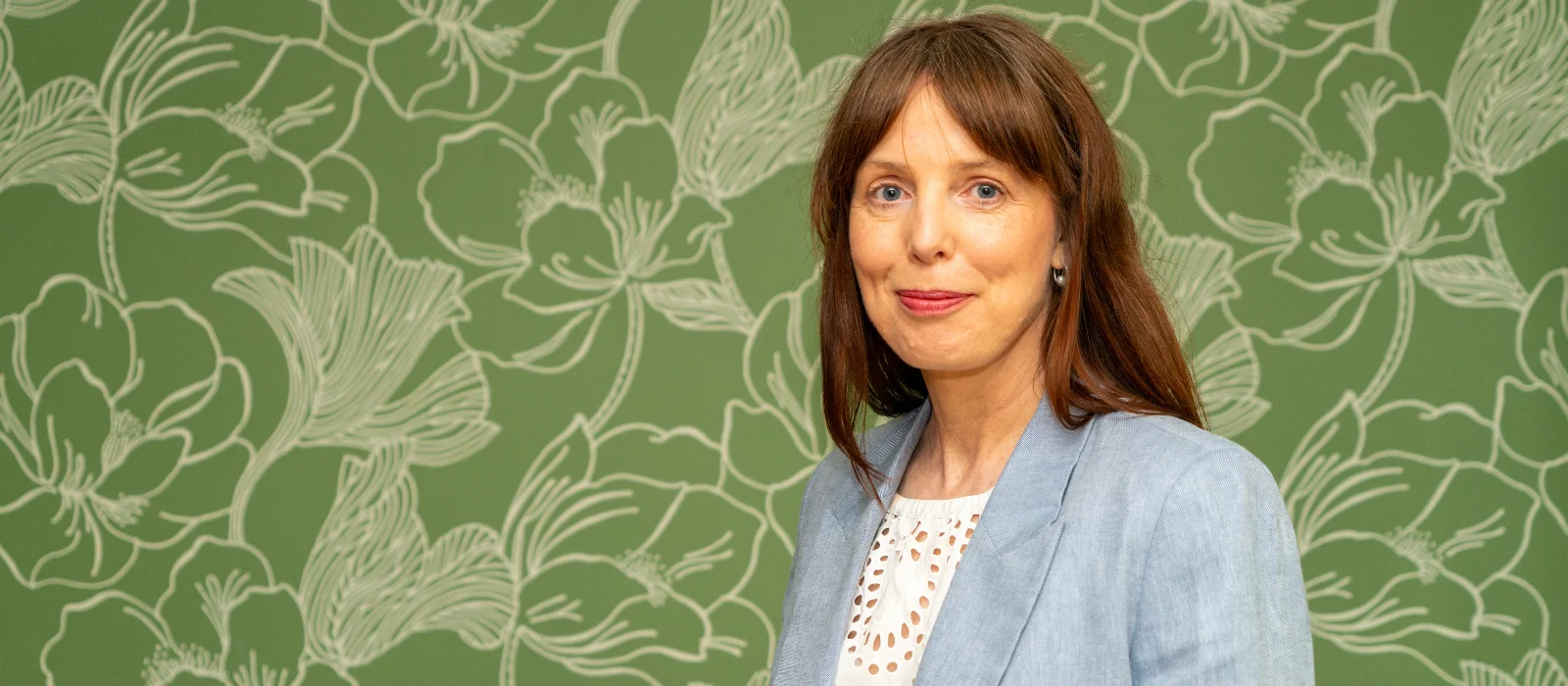
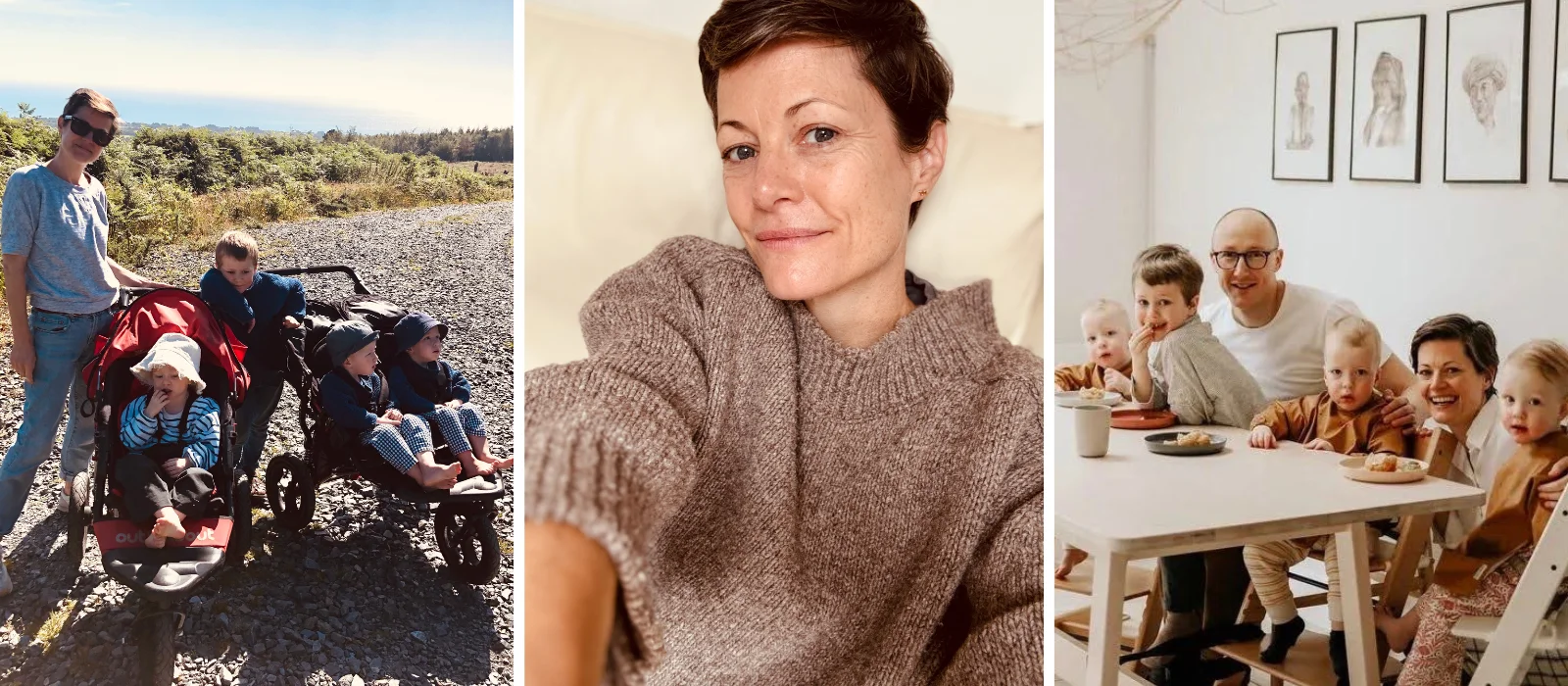
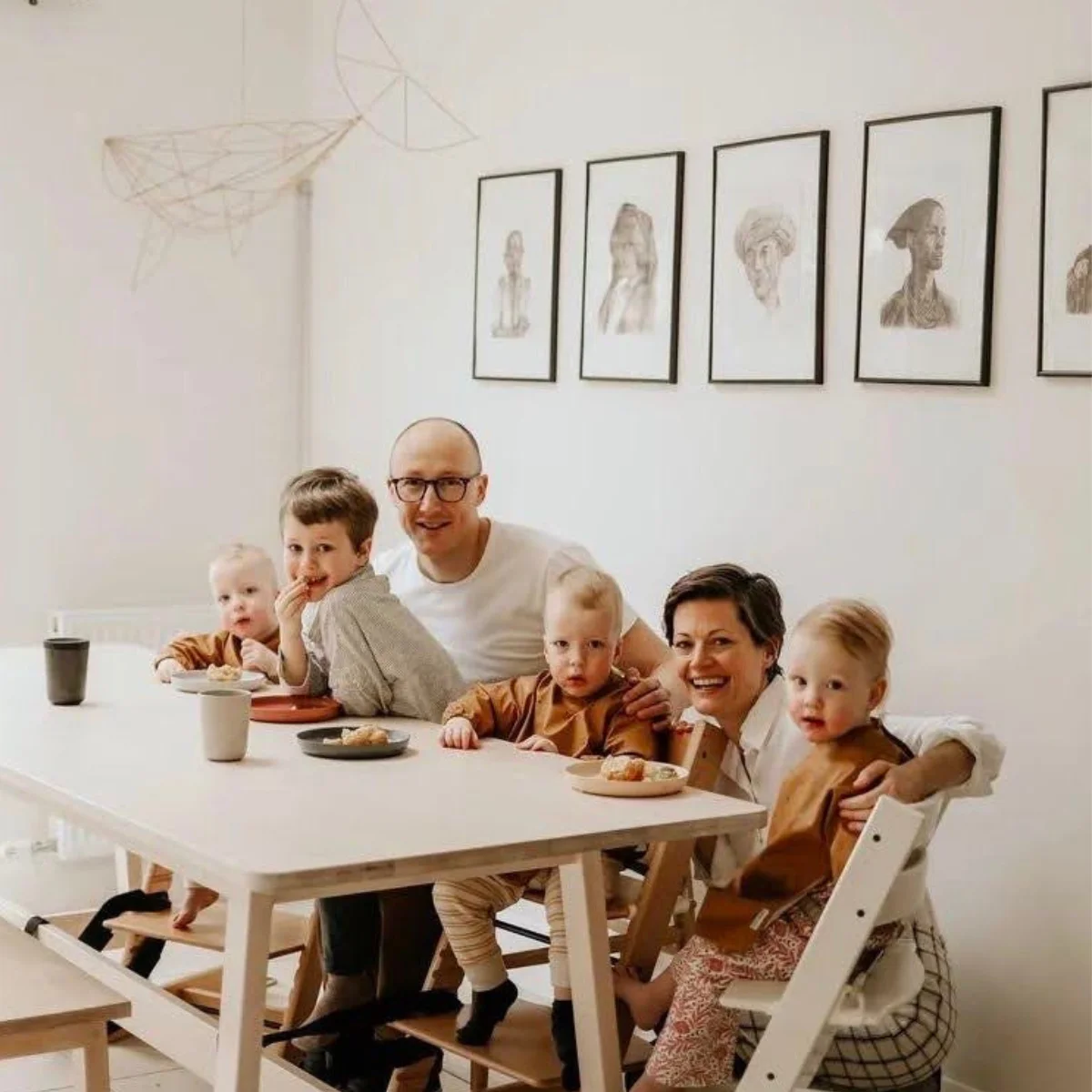
Kim Gray lives in Dún Laoghaire with her husband, their eight-year-old triplets, a 12-year-old son, and a much-loved French bulldog. She is currently in the midst of a meaningful life pivot, transitioning from running her online shop, Kimology – known for its curated tools and wellbeing essentials – to training in Rebirthing Breathwork, a practice she has become deeply passionate about. Alongside this, Kim runs her Instagram platform, @kimgraylifestyle, where the former stylist shares her personal style, evolving journey, and considered approach to modern living as a micro-influencer.
Here, she shares more about life, the birth of her triplets and explains how burnout isn’t just exhaustion, but is actually what happens when women ignore their nervous systems for too long.
Tell us about being a business owner and a mother. Where is the intersection for you?
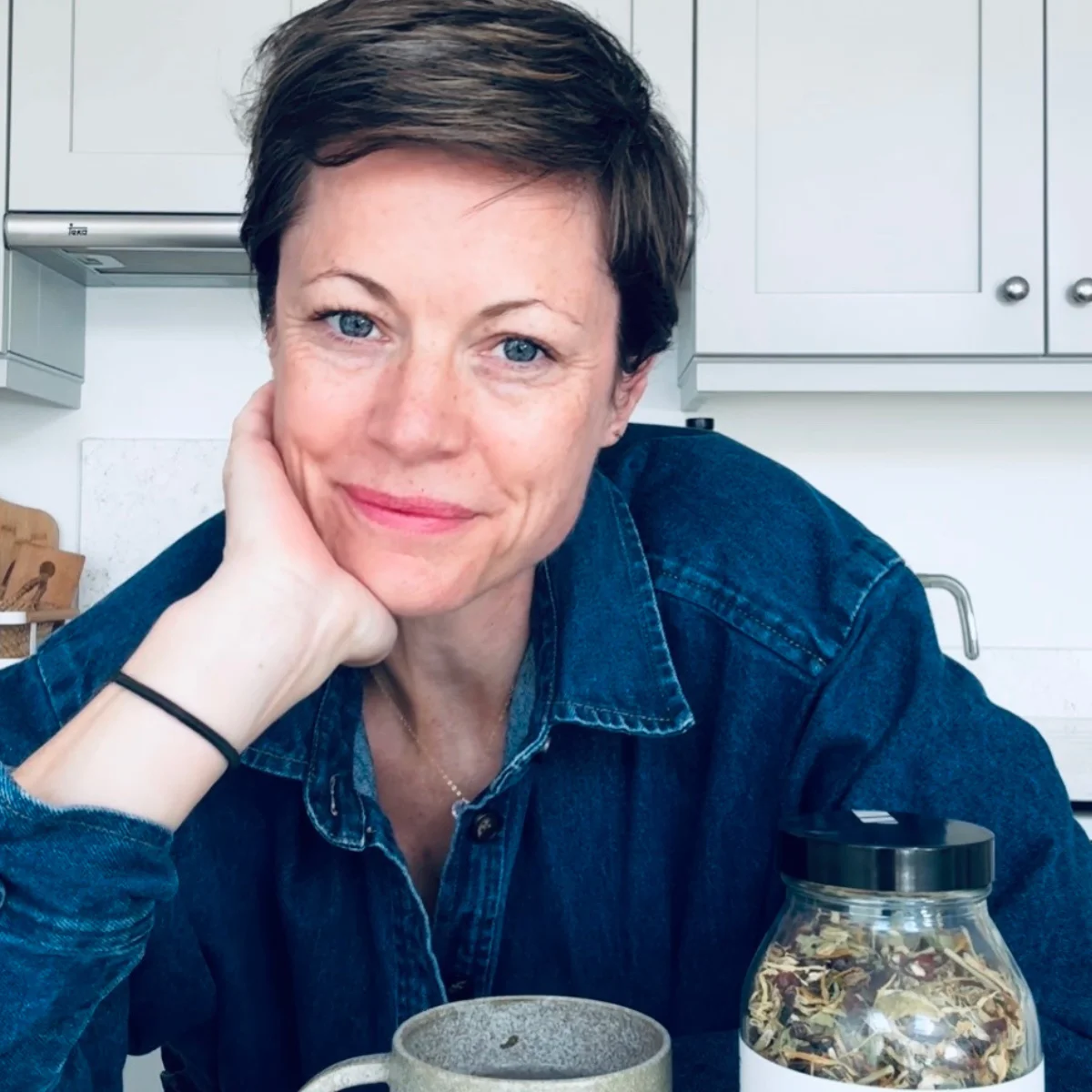
Kimology is my business, and it is all about the art of slowing down. As mothers, how often do we come back to a cold cup of tea or coffee? I am passionate about women honouring time for ourselves and knowing we’re worthy and safe to slow down. Enjoy a moment to yourself, make it beautiful, light a candle or have a special chocolate. These anchoring moments train our nervous systems to know that it’s safe. When it comes to practices like breathwork, people say, “Oh, but I don’t have the time”. As a mom of four (triplets plus one), I have found that breathwork and slowing down have actually given me more time and spaciousness. Moments of stillness bring us clarity.
As a business owner, I love my kids seeing me create something. It’s so beautiful how invested they get. They ask how my day was, if I made sales, and if they can help. I love modelling entrepreneurship, and all it entails. But starting a business takes a lot of headspace, and I’ve had to learn boundaries. I’ve designed businesses from home where family could come first. As I get older, I realise we’re allowed to design a life that feels like ours, I can have my cake and eat it! We are conditioned to believe it should be hard up until a point. Sure, starting a business takes grit, but we are free to reimagine old conditioning and concepts.
Your work now centres on supporting women. How much of that journey began with your own healing?
It’s totally born from that! I was conscious that I was showing myself rocking life with triplets on Instagram, and I never wanted to make someone else feel incapable. So I got vulnerable about our journey. One of the triplets suffers from severe emotional dysregulation, and learning about the nervous system work has been the biggest game-changer. Our nervous systems are intricately linked as mother and child. We don’t have to say a word, or we smile through gritted teeth, but our kids know exactly what’s going on under the surface for us because their feeling of safety is within, co-regulating with our own. And so, when a mum is go-go-go and snapping because she has not had any of her own needs met, we can often think of the kids as being XYZ when in fact it’s all our own layers being triggered.
It’s only now I’m really getting under the covers and watching a movie with my kids. My nervous system was too wired before. People often think burnout means rest is needed, but it’s much deeper than that. It’s the nervous system regulation. Our bodies carry a lifetime of experience from birth. I’m so passionate about sharing my learnings. All we need is a big dose of self-compassion. Self-reflection and awareness trump perfection.
You have talked about suffering burnout. What did it feel like?
It hit me after Covid when the kids were still very young, and I was opening my first online store. I was trying to do it all. I was homeschooling with elaborate setups, doing the sourdough, living out of recipe books, documenting it all on Instagram, and I was doing it well, until I wasn’t. I was on the couch for days, and I totally lost my mojo for being in the kitchen. The kids became too much. I understand now that when we keep ourselves busy, we are often suppressing things and not giving ourselves time or space to just be, feel or process. I found myself sobbing on the kitchen floor with a pile of kids on top of me. That’s when I saw an advertisement on Instagram for a breathwork programme with The Reconnected, saying, “If you think gentle parenting is about being calm all the time, you’re setting yourself up for failure.” And I felt seen. As my breathwork teacher would say: “When we’re in pain enough, ready enough, willing or supported enough, we put up our hand for change.”
Where did you feel the greatest pressure to keep going, and who did you feel you were letting down if you stopped?
I was getting so much validation. On Instagram or from people I knew. “How do you do it all with triplets?” “Super mom”, etc. It was just adding fuel to the fire. Having all these plates spinning in the air gave me a sense of control over life, but I couldn’t yet see that my nervous system was in overdrive. I was just desperately and unconsciously trying to prove myself. I was a people pleaser.
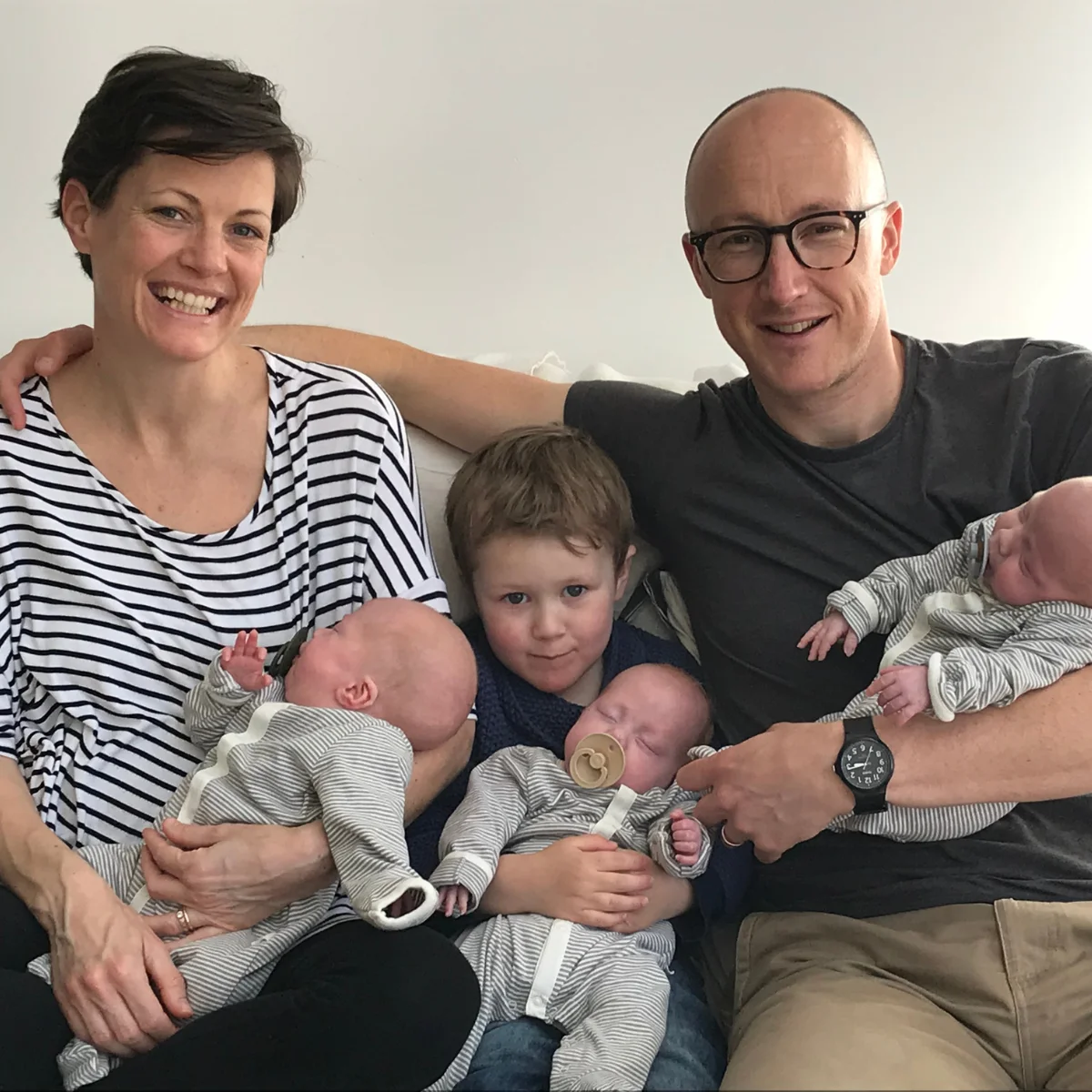
Can you tell us about the triplets’ birth?
The pregnancy wasn’t easy to begin with. The twins had twin-to-twin transfusion syndrome*, and on a scan, it showed potential risk of Down syndrome. Being triplets, we wanted to know what to expect, but because abortion was illegal at the time in Ireland, we had to fly to Birmingham to have three amniocentesis.**
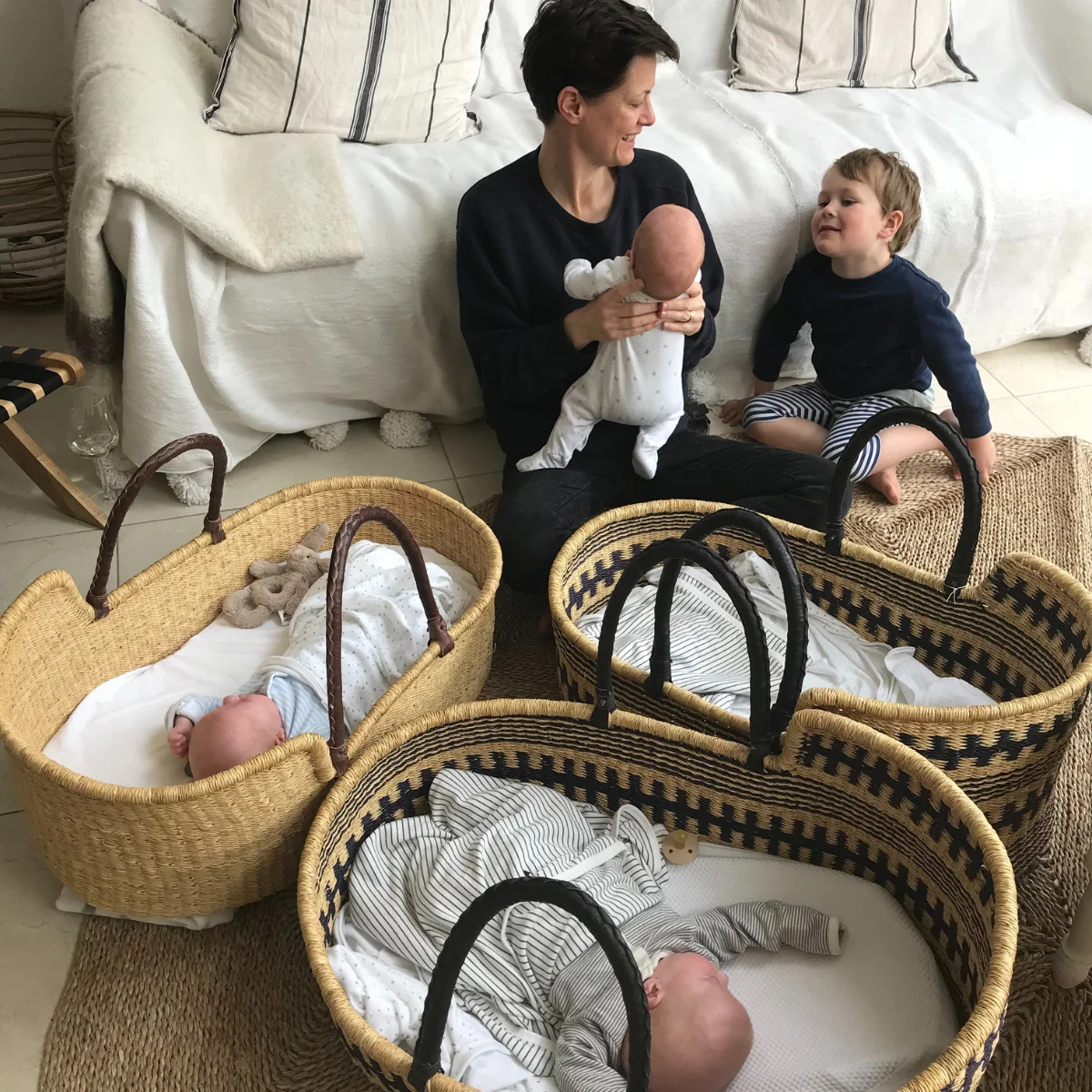
I was taking a huge amount of steroids and had three litres of fluid drained. I felt a lot of pain, and I could barely sleep. At 28 weeks, I was called in for a C-section after a full team hospital brief; they felt the boys were too at risk. So, at 28 weeks, identical twin boys and a daughter arrived. There was a team of doctors and paediatricians per baby. I gave them a quick kiss, and then it was the next day before I saw them again. In the hospital, we felt held, informed and looked after.
Does your triplet pregnancy and NICU experience still live in your body today?
Yes. Funnily enough, I had my son’s blood pressure taken the other day, and the sound of the machine transported me straight back to the NICU, and I got the absolute chills. The sound of the NICU stays with you. I can feel the stress in my body when I think back to watching brain scans and blood transfusions.
What do you think Ireland is still getting wrong when it comes to postnatal care?
Emotional support and a space for women to feel safe in their vulnerability. I’ve had one baby, and I’ve experienced three at once. Both are tough! All the things you say you’ll never do as a parent inevitably happen, and we are then so quick to jump to failure, shame and exhaustion. This might not be the experience for everyone, but I think a lot of women stay silent out of guilt and shame. Personally, we had no family in Ireland, and I’m sure many don’t. It would be nice to have some sort of support call. Like a friend, you can have a cup of tea or a chat over the phone and say, today felt hard.
If postpartum care were designed around mothers, what would it truly look like?
I never thought about how much my body had been through. I could have done with a lot of education and help around nutrition. I have also had major anxiety since triplet birth and even went on medication, which was a struggle to receive and even a struggle to convince doctors that I needed it. When you have a new baby, you’re all in, you’re proud, and it’s difficult to ask for help or even see that you need it. Check-ins would have really helped. I could have done with a birthing mentor or a psychologist. We need something like a doula, but for public healthcare.
Rebirth Breathwork was a turning point for you. What did it unlock that other forms of support didn’t?
Rebirth Breathwork is a gentle unwinding of the nervous system. Where a lot of styles act like a band-aid in the moment, Rebirthing Breathwork unwinds the stored stress. They say, ‘the body holds the score’ – well, the nervous system holds the blueprint of your entire life. I didn’t want to be on medication forever, and breathwork became a tool of hope and deep trust that I could take into life (not to discredit medication; every individual’s needs and experiences are different).
I remember my very first breath session. One always sets the intention of how one would prefer to feel afterwards. I set the intention, something around wanting to be a calmer and more playful mom. It was a simple 15 minutes of breathing a fuller than usual inhale through the nose and exhale through the nose. That evening felt like magic. I felt the world lift off my shoulders, a lightness and playfulness with my kids. I’ve been breathing for over two years now, and while life has had big bumps and it’s certainly not perfect, I’ve become more resilient. I’ve held my family through big stresses, and my mindset has shifted hugely from victim (we’ve no family here, four kids, etc.) to opportunity and hopefulness. I’m becoming less of a people pleaser and hustler and more grounded in who I am and what I believe. It gave me the capacity to do life again. From crying on the floor, to dealing with family, to starting a business and feeling inspired again. Everyone should know about it!
For women deep in survival mode right now, what’s one small thing you would recommend they do?
Over the years, I’ve had to learn to talk rather than bottling up. A simple chat with someone you feel safe with can work wonders. My breathwork teacher always says, “If you could, you would, and when you can, you will.” Another breathwork teacher, Eleanor Mann, also says, “We are all doing the best we can with what we have.”
*(Editor’s Note: TTS is a rare, life-threatening placental condition affecting 10–15% of identical twins)
**(Editor’s Note: Amniocentesis is a diagnostic procedure, typically performed between 15 and 20 weeks of pregnancy, that involves removing a small amount of amniotic fluid for genetic testing. Its application was severely restricted due to the legal, constitutional, and ethical implications of Ireland’s historically strict abortion laws, specifically the Eighth Amendment [Article 40.3.3°], which was in place from 1983 to 2018.)
Also Read