











From rising energy costs and BER ratings to smart meters and green energy, we asked you to share your concerns and priorities when it comes to your energy use.
Our relationship with energy is constantly evolving. Beyond heating and lighting our homes, as consumers, we decide what providers to trust, what kind of energy we want to invest in, and ultimately, how we use our energy day to day. There’s a lot to consider, and especially at this time of year, when cost is front of mind.
That’s why we created the Big Energy Survey, in collaboration with Pinergy, to ask what matters to you when it comes to your energy options, what you need support with as an energy consumer, and how you’d like to curate and evolve your energy use in the future. We surveyed 1,037 IMAGE readers, and the results are fascinating. They provide a unique snapshot of what matters most to energy users right now. Here’s what you had to say.

Price is top of mind
Over 90% of respondents chose pricing as the most important factor when selecting an energy provider. Customer service came second (28%), while green energy credentials came third (21%).
Takeaway: Price and cost reign supreme. Consumers want a supplier that is competitive and can support them in lowering their bills.
Working from home is the new normal
Over half (57%) of respondents have at least one person who works at home at least one day a week. Just over 24% report that at least one person in their household works from home full-time, while more than 32% report that at least one person works from home at least one day per week.
Takeaway: With remote work continuing, many consumers are using energy throughout the day rather than just during peak morning and evening periods.
Lack of understanding of daily energy costs
Almost half (44.8%) of survey respondents don’t know how much they are spending on electricity each day. More than 30% report spending €4-9, and more than 15% report spending €1-3 on energy each day.
Takeaway: With many consumers unaware of their daily spend, there is a significant knowledge gap that needs to be addressed to help everyone understand and, over time, reduce their bills.
Energy bills remain the number one way consumers monitor their use
When asked how closely survey respondents monitor their energy bills on an ongoing basis, more than 60% admitted they only check once their bill arrives – 4% monitor their use daily, 9% check weekly and 24% monitor monthly.
Takeaway: More than half of respondents are waiting for their bills to arrive to see how much they have spent on energy and monitor their use.
BER ratings matter to you
69% say the BER (energy efficiency rating) of a device affects their decision to buy it.
21% admitted it doesn’t impact their decision, while 6% say it sometimes does.
Takeaway: Many consumers understand the correlation between an appliance’s or device’s BER rating and its energy consumption.
Energy consumption remains a worry
91% of respondents reported being somewhat or very concerned about energy consumption. On a scale of one to five, with one being not worried at all and five being very worried, 66% of respondents selected three or four, and a further 24% selected five.
Takeaway: There remains a high level of concern amongst energy users about their consumption.
You care about improving consumption habits
Over 80% of respondents are very interested in improving their energy consumption habits. On a scale of one to five, more than 26% selected four, and 54% selected five. Just one per cent indicated they are not interested.
Takeaway: Consumers care about their energy use and want to learn how to reduce it, tweak their habits, and improve their overall consumption.
Smart technology is helping
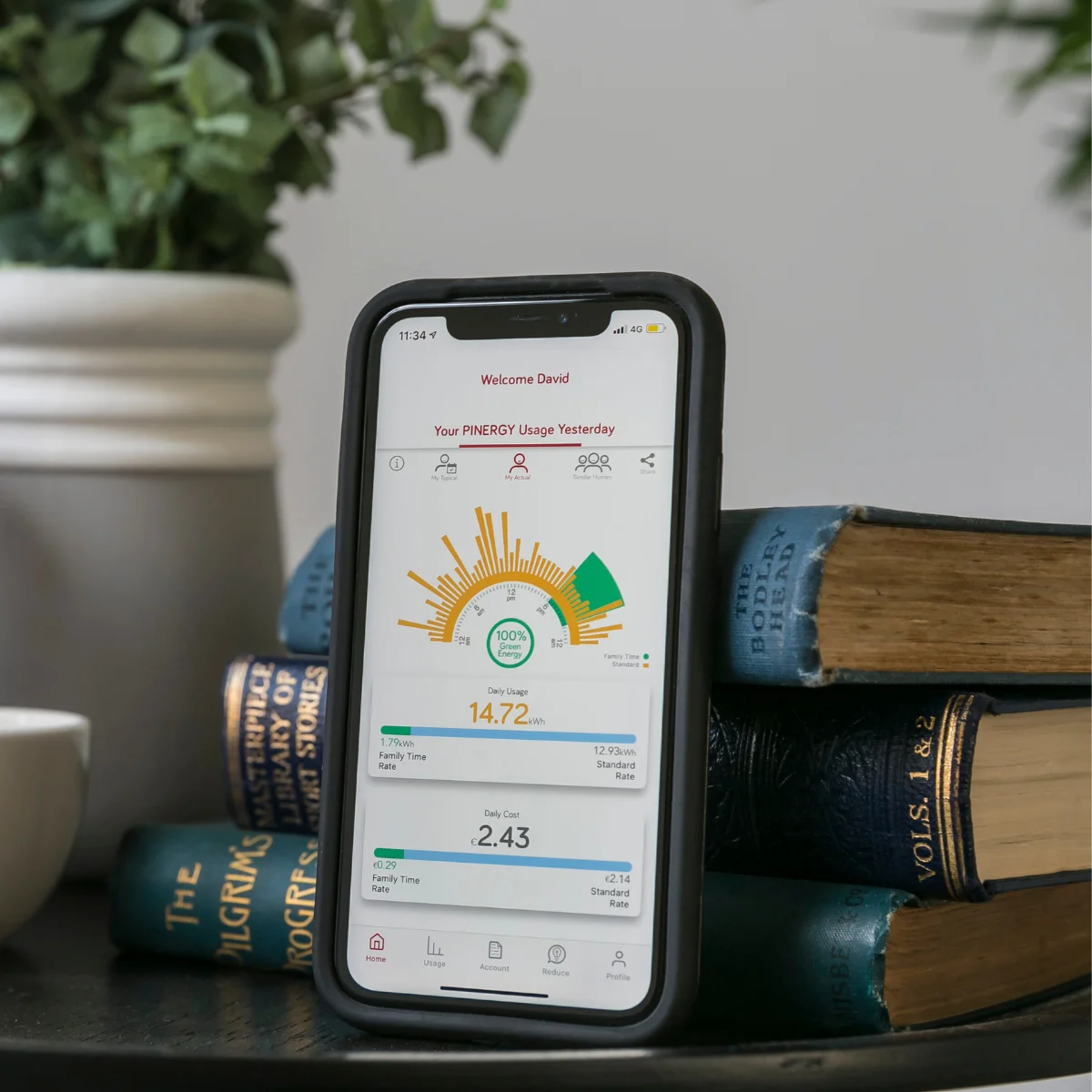
For respondents who feel they have control over their energy use (47%), smart meters, phone apps, solar apps, and home tracking apps were cited as the technologies helping them stay informed and on track. 79% currently use an app or smart meter to track their usage, and over 70% of those who don’t would be open to using technology in the future.
Takeaway: Technology is a key tool in helping consumers understand and reduce their energy use. More needs to be done to support consumers who wish to use smart technology to do so.
Energy providers need to step up
Just under half (48%) of respondents don’t feel they receive enough advice from their energy provider to help them reduce their energy consumption, while a further 24% aren’t sure. Only 27% are satisfied with the consumption advice from their providers.
Takeaway: Energy providers need to do more to help consumers reduce their consumption.
Sustainability matters to you
More than 78% say they are very interested in becoming more sustainable and energy conscious. On a scale of one to five, 46% chose five, 31% chose four, and 17% chose three. Just one per cent indicated they are not interested. More than 80% of survey respondents are worried about climate change.
Takeaway: Consumers care about climate and their impact and are interested in taking more action to support sustainability.
Progress needed in helping homes become more energy efficient
53% of respondents said they haven’t carried out any work to improve their home’s energy performance. While insulation, window and door upgrades, solar upgrades, and heating system improvements were listed by those who have carried out upgrades, the majority have yet to implement these measures.
Takeaway: More work is needed to support homeowners in making their homes warmer and more energy-efficient.
To find out how Pinergy is working to address your energy priorities, visit pinergy.ie.
Also Read