


Testimony director Aoife Kelleher: ‘I wanted the campaign to be the spine, and the stories of the survivors to be the heart’
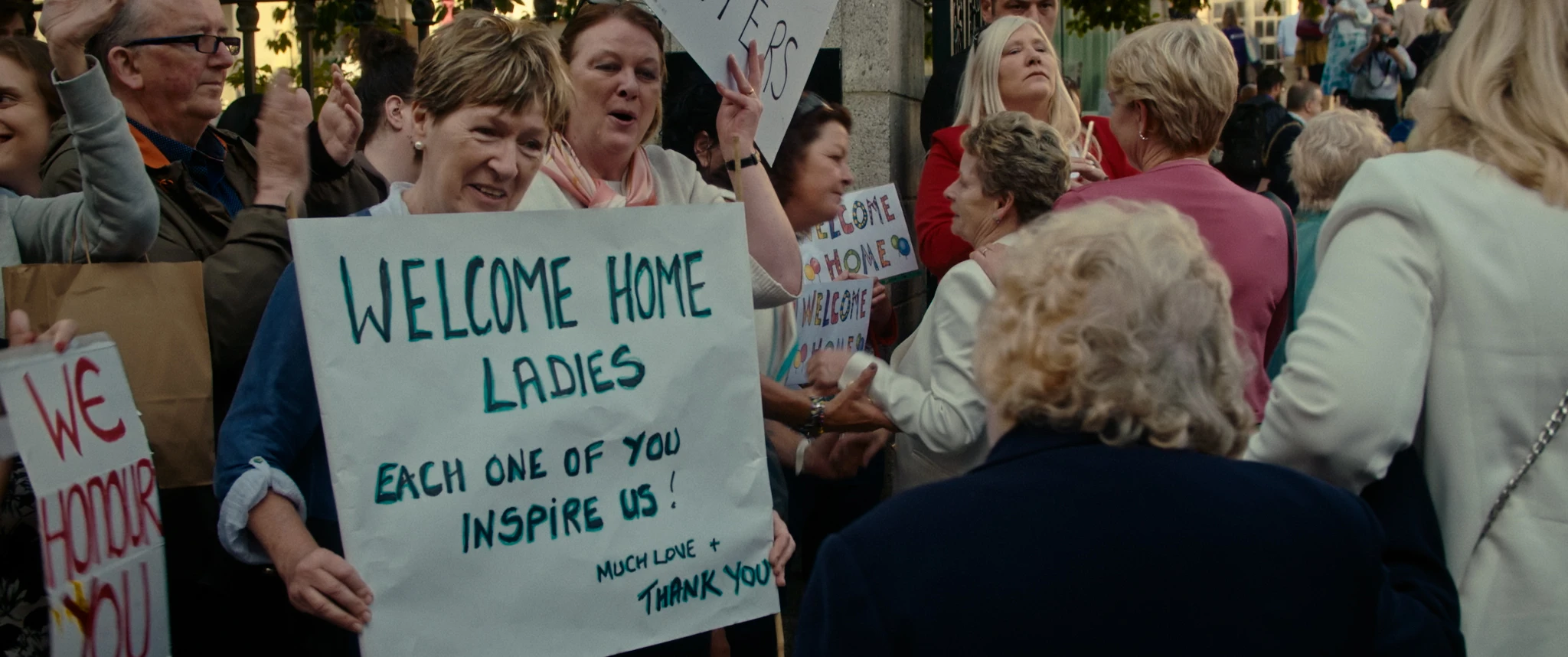
Uncovering the buried truth of the Magdalene Laundries and Mother & Baby Homes, Aoife Kelleher’s award-winning documentary Testimony is a powerful piece of work that centres survivors, holds the State accountable, and has resistance at its core. Sarah Gill spoke with the filmmaker ahead of its cinematic release this weekend.
Irish artists and activists have a unique way of pulling at the threads of our country’s dark past, threads that were tied up in messy knots by the church and state in equal measure. They do so with a mix of tenderness, fury and unflinching honesty, and this collective insistence on truth-telling refocusses the narrative we were fed, reshaping Ireland’s moral landscape.
Films like The Magdalene Sisters, Anne, Philomena, Small Things Like These crackled with cultural weight, and powerful documentaries like Margo Harkin’s Stolen and Sinéad O’Shea’s Pray for Our Sinners stand as uncomfortable but crucial viewing. These pieces of cinema confront us with the realities of our historical and living histories. Aoife Kelleher’s newly released, award-winning documentary, Testimony joins the ranks, bringing the voices of survivors into sharp focus and holding the state accountable for its continued shortcomings.
In Ireland a system existed wherein the Church and State colluded to place 1%, ultimately, of the population in these carceral institutions. It’s really important that we acknowledge the sheer extent of that in order to ensure that it never happens again.
“There can often be a sense that these stories are tales from the distant past, but the reality is that throughout Ireland and elsewhere, there are men and women who were separated from their mothers in Mother and Baby Homes and placed for adoption by the religious orders who ran them,” Aoife tells me over the phone. “We have people who are still trying to find and connect with birth parents. There are still people who are living in exile, shame and stigma, dealing with this trauma on a daily basis. This is living history, and it’s vital for all of these survivors that there be a full and frank discussion about what happened. In Ireland a system existed wherein the Church and State colluded to place 1%, ultimately, of the population in these carceral institutions. It’s really important that we acknowledge the sheer extent of that in order to ensure that it never happens again.”
Testimony follows an extraordinary group of women with lived experiences from Magdalene Laundries, institutions operated by religious orders with state complicity up until the late ‘90s in Ireland where women were imprisoned and dehumanised. These women and their children were incarcerated, unwed mothers were coerced into surrendering their children for adoption, with many being subjected to vaccine trials and human trafficking.
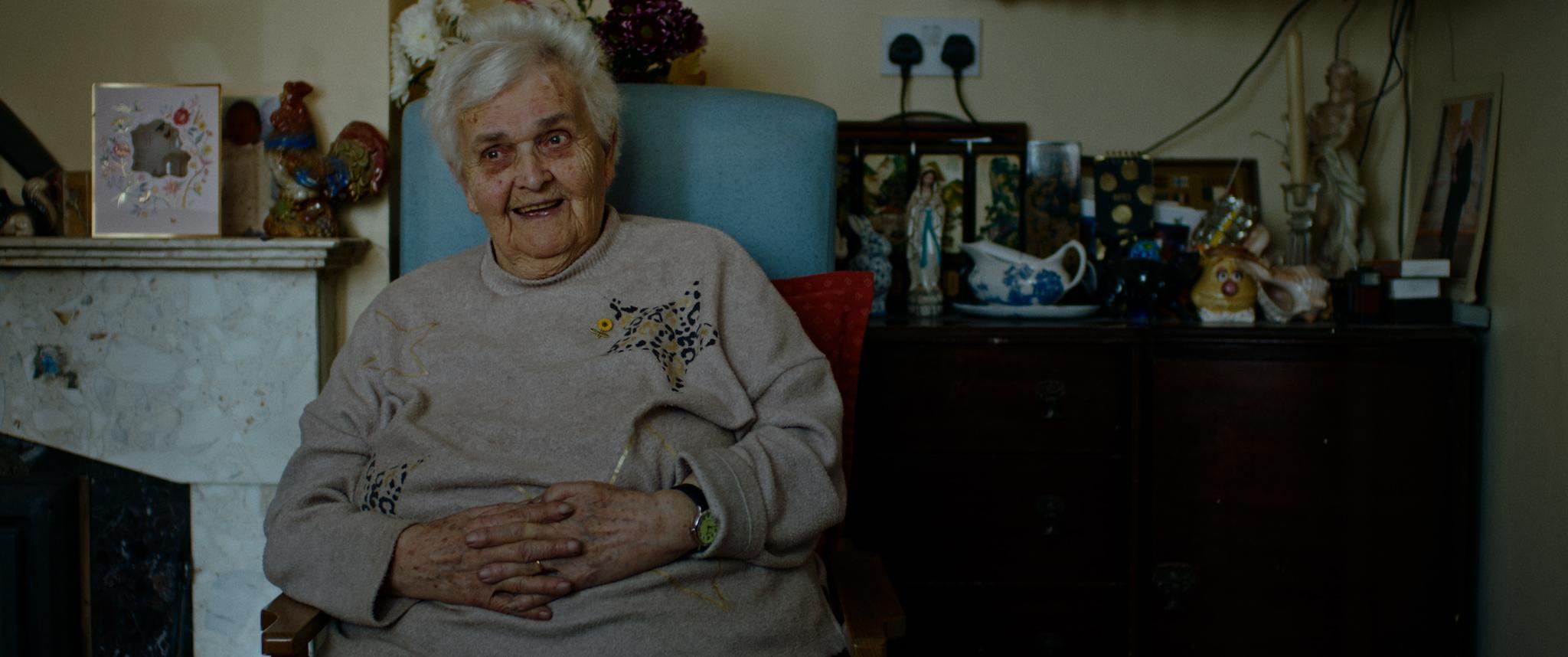
These women were branded “fallen”, but it’s clear from watching them tell their stories—their testimonies—that these women are so incredibly strong. Galway woman Angela Fahy speaks with humour, putting the room at ease, about her experience of escaping. She says she will never go into a nursing home due to the trauma of being “locked in” against her will. Philomena Lee speaks with grace about her attempts to not carry anger, to prioritise healing. Madeleine Marvier—who had not previously shared her story but has since spoken at a Bessborough commemoration and accepted Testimony’s award for Best Documentary Feature at the Irish Film Festival London alongside Jane Libberton—spoke about her desire to sit at her son William’s grave, if she knew where exactly it was. She was robbed of that knowledge and peace.

“I think in a lot of cases there was this perception of survivors as passive victims,” Aoife says. “What we discovered time and time again was that these were sharp, intelligent women who had advocated for themselves in so many ways. In multiple stories that I’ve heard, these women had tried to escape. Sometimes they were thwarted by the State or escorted back by Guards, but in some cases like Angela’s, they successfully escaped and managed to build new lives for themselves.”
“These are stories of abuse and trauma. The most important thing was that their participation in the documentary was a positive experience, and that the process of interviewing wouldn’t retraumatise the survivors. Everyone on the crew was very sensitive, respectful and empathetic. Everyone was feeling privileged to be in that room.”
The documentary is supported by and captures the unwavering determination of the activist organisation Justice for Magdalenes, whose fight to hold the Irish government accountable took them all the way to the United Nations. The campaign group was founded in 2013 by Claire McGettrick, Katherine O’Donnell, Maeve O’Rourke, James Smith and Mari Steed, who has passed away since the making of Testimony.
I think in a lot of cases there was this perception of survivors as passive victims. What we discovered time and time again was that these were sharp, intelligent women who had advocated for themselves in so many ways.
As previously mentioned, the seeds for this documentary were sewn 12 years ago, when Aoife was working on her first feature documentary, One Million Dubliners. “In 2013 I became aware of the story of the High Park graves, which now makes up the opening section of Testimony,” Aoife says. “The Sisters of Our Lady of Charity sold a site at High Park to a property developer for £1.5 million, and included in the site was this small piece of land, which was the final resting place of 133 women who had died in the High Park laundry. To facilitate the sale, the bodies of the women were to be exhumed and moved to Glasnevin, but while these exhumations were taking place, the bodies of an additional 22 women were found on the site. It was also discovered that only 75 death certificates existed for what was then 155 women. Some of the bodies were missing, there was a woman whose body was missing the skull, and then, before any attempt could be made to confirm their identities, the bodies were cremated and reinterred. I found it so shocking.”
Having met and stayed in touch with the Justice for Magdalenes team, Aoife gained a “profound appreciation for all that they had achieved as this tiny group of activists working totally pro bono in their spare time.” She said: “It just seemed extraordinary to me that this was the group of people who had been so instrumental in achieving this State apology.”
“What we’re talking about when we’re talking about Justice for Magdalenes is a group of five people literally working in their spare time. The role that Mari Steed had in connecting the ‘Banished Babies’—adoptees in the United States, with their lost parents back in Ireland—the work that they did and the network that they built up, the idea that five people who had full time jobs were able to bring about a government apology, were able to bring about a flawed redress scheme, but a redress scheme nonetheless.”
“I knew I wanted the campaign to be the spine of any film that I made on this issue, and that the stories of the survivors would be the heart. Over those years, I met multiple survivors, and once we got the funding together, we were really ready to go.”
Testimony is really very focussed on the failings of the State and what remains to be done. The story isn’t finished, and it acts as a rallying cry for a society-wide process of truth and reconciliation. In June of this year, the landmark decision was made to issue over €66 million to mother and baby home survivors which has been criticised for creating a “hierarchy of suffering.” I ask Aoife for her thoughts on this.

“For me, the biggest issue in relation to the redress scheme for the Mother and Baby Homes is the fact that you have people who spent less than six months in the institutions being cut off from the possibility of redress entirely. The sense that it’s the duration of time spent, rather than the forced separation of mothers and children that is the key harm,” Aoife says. “I know that in 2026 there’s going to be a re-evaluation of the redress scheme, and on November 11, Carmel Cantwell—Madeleine Marvier’s daughter—went to the European Parliament with a delegation where the redress scheme was discussed and it’s hoped that the European Parliament will help to put pressure on the Irish government to look at the redress scheme again.”
“I meet people all the time—in professional environments, in social environments, people who are the same age as me, or very slightly older, or very slightly younger—who say, ‘I was in one of those institutions’, or ‘I was adopted and separated from my mother in one of those places’,” Aoife elaborates. “There are so many people for whom these institutions formed part of the fabric of their lives, and is still part of how they experience the world today. There are still families being reunited with lost members today. In the last year, one of our contributors Mary Harney was reunited with her father, who is in his 90s. Now she has a whole new big family of supportive sisters and nephews and nieces.”
It’s the message of resistance that’s at the heart of Testimony.
So much has come about through pressure from grassroots campaigns and public outrage. That’s what I really do take away from Testimony, the way a united and unwavering chorus of voices speaking on behalf of a people really can make things happen. You can see how apathy breeds real damage. For these women, Testimony serves to honour their legacy and their experiences and helps to restore their dignity.
Arriving in Irish cinemas this weekend, I ask Aoife what her hopes are for the documentary, what she hopes it ignites in those who go to see it.
“I hope that viewers get the sense that there is that darkness in our past, but also that the resistance to these institutions, to this carceral system, has existed on so many levels. These women tried to escape and build new lives for themselves, they rejected the messaging that they were getting from the nuns and were willing to fight back, to fight the consequences.” Aoife continues, “It is very inspiring and empowering. It’s the message of resistance that’s at the heart of Testimony.”
TESTIMONY hits cinemas in Ireland from November 21.
Also Read