
Deirdre Breen: ‘Treat a career in the arts as seriously as you would one in finance or tech’
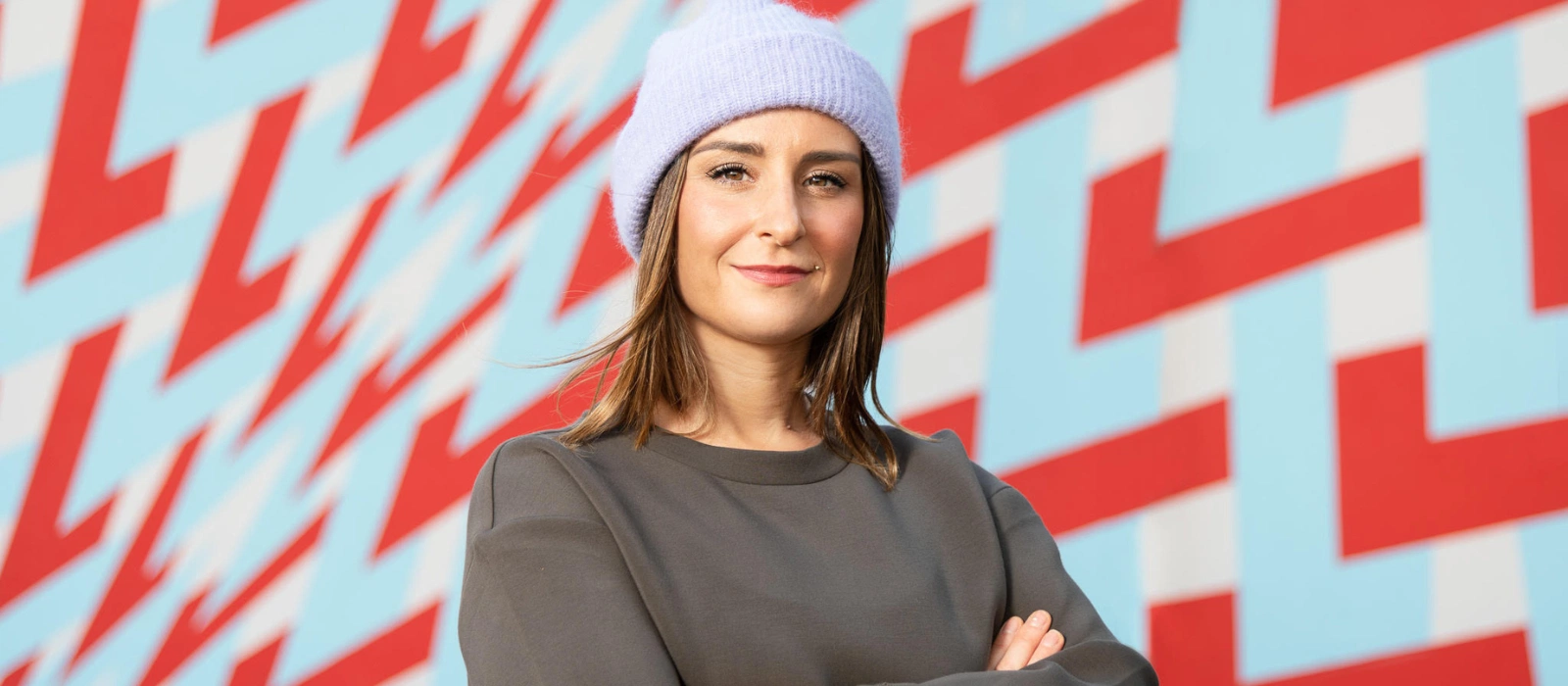
Visual artist and creative director at Studio Boon, Deirdre Breen plays with form, colour and composition through her work, whether that be murals, installations or at prints. She chats with us about the unseen labour involved in being an artist, her points of reference, and the importance of collaboration in her practice.
Deirdre Breen is a multidisciplinary designer and visual artist whose practice explores the boundary between art and design, and compositional principles common to both. She investigates form, colour theory and geometry, and manipulates them to create a series of abstracted, playful structures and expressions of relational elements.
Her artworks comprise screenprints, textiles and site-specific mural installations. She has a strong interest in collaborative practice and has worked with local artists, curators, designers and community groups on site-specific projects.
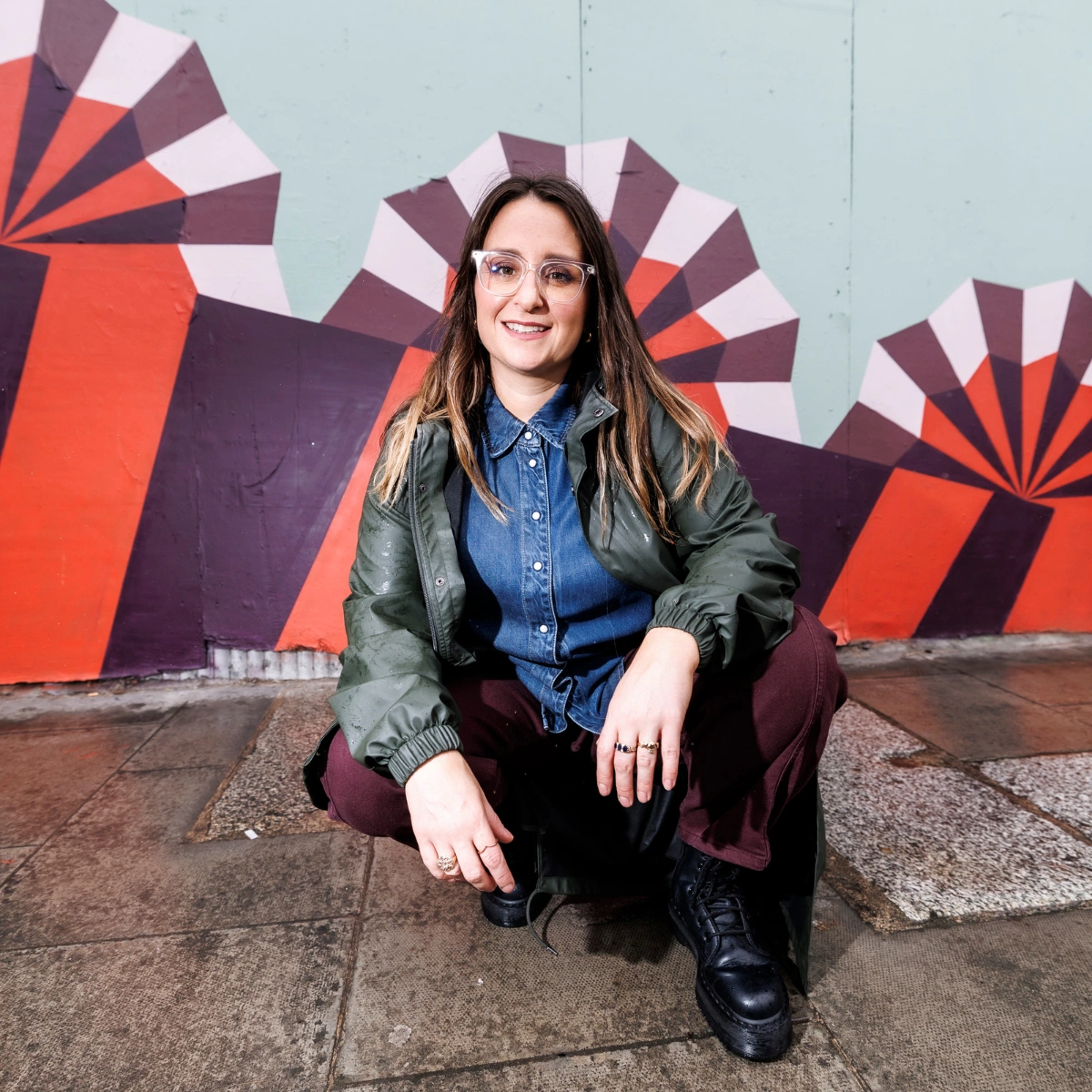
Was a career as an artist something you always aspired to?
I was always drawn to the arts as a child, whether it was singing, dancing, speech and drama, drawing or painting, and I tried a bit of everything. It wasn’t until sixth year, when my art teacher Miss Bennett showed us a prospectus for art colleges, that I realised this could actually be a path in life. Before that, I didn’t even know art colleges existed, let alone what they offered. For a while I thought I’d be a P.E. teacher, but my Leaving Cert points were five short of the course. Instead, I decided to do an art portfolio course in Coláiste Stiofáin Naofa in Cork to test the waters, and that’s when it really clicked for me. I knew I was where I was supposed to be.
How did you pursue this path?
After the PLC course, I went on to study Visual Communications at LSAD in Limerick. Like many designers, I was working to client briefs during the day, but I still loved creating my own work in my spare time. When I moved to Dublin, I decided to do a screen-printing course, and that really shifted the direction of my practice. I started making art for myself. I’ve always enjoyed the interplay between art and design and wanted to explore that in my personal work.
I became a member of Damn Fine Print in Dublin and Cork Printmakers, where I design and hand-print my own screen prints. From there, things started to take a natural path: new work led to exhibitions and collaborations, and gradually my work moved from the page to the street in the form of murals.
In 2021, I went back to study for an MA in Art and Process at Crawford College of Art and Design. It was a big step. I left my job as a designer to focus on my art practice, and it coincided with the start of the pandemic. But it was incredibly enriching, both personally and professionally. The program taught me to research, investigate, and sustain an ongoing studio practice, while also placing a strong emphasis on theory and critical engagement. It helped me situate my work in a broader contemporary context and respond to it thoughtfully.
Since then, my work has moved into new areas, including sculptural installations, objects, and immersive experiences. It hasn’t been a linear route, but I think that’s one of the best things about it.
Tell us about your work with the Guinness Storehouse for These Walls.
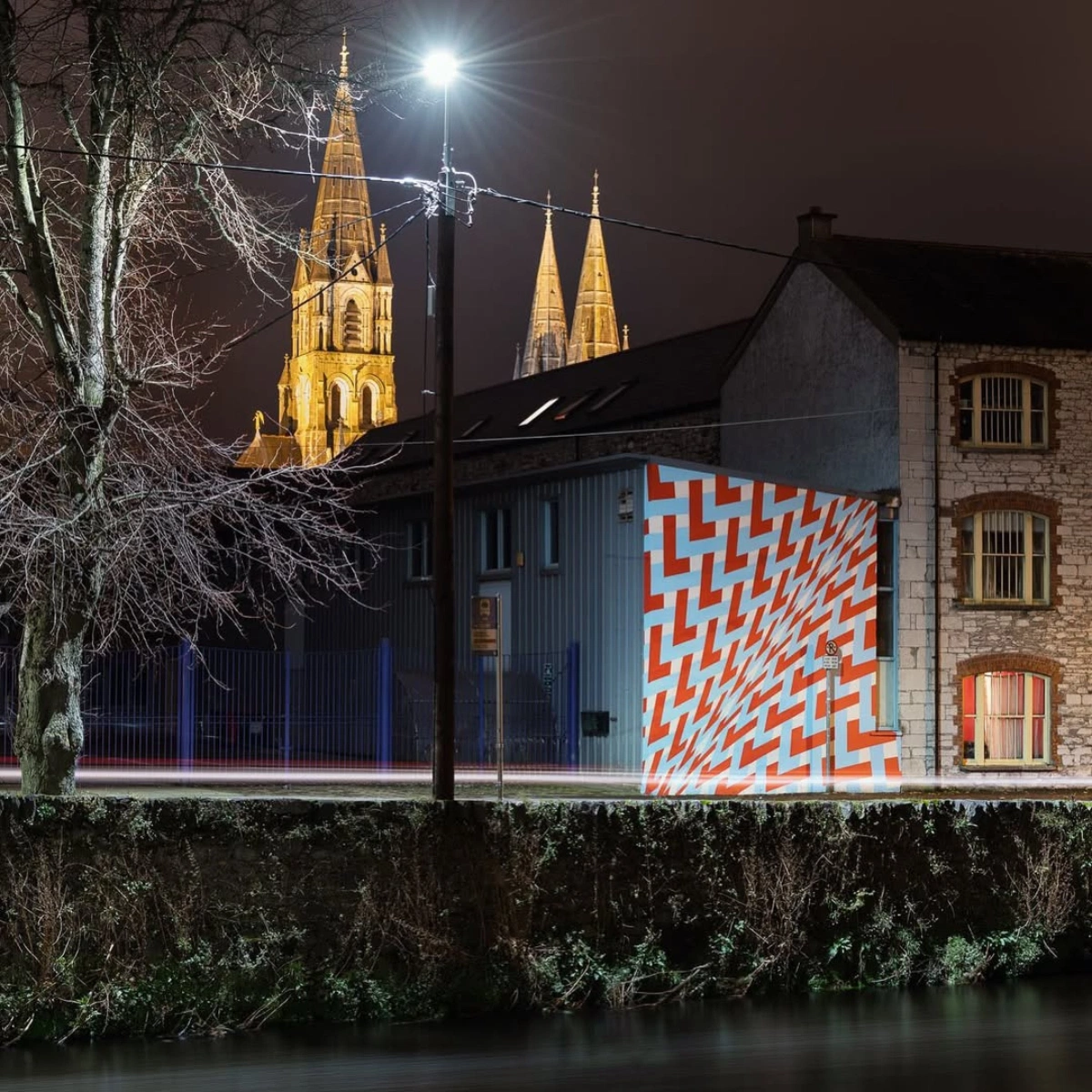
In early September this year, I contributed to These Walls, a collaborative street art initiative by the Guinness Storehouse in Dublin 8. As part of the project, Owen de Forge and I created a series of murals on Thomas Street, an iconic Dublin thoroughfare with a rich history and vibrant community. Our work responded to the area’s layered identity, drawing on our distinct but complementary practices.
Owen focuses on figurative painting, capturing the people and everyday interactions that give Dublin 8 its character, while my work centres on the built environment, reflecting the transformation of housing and industrial spaces and the traces of memory and belonging they carry. Together, we wanted to convey both the physical place and its community, exploring the balance between permanence and change.
The murals were also part of an immersive Culture Night installation, featuring a commissioned soundscape by Saoirse Miller and Wastefellow alongside live contemporary dance. It was incredibly rewarding to see the work engage with the public while celebrating Dublin 8’s past, present, and future.
What is your process when creating new work? How do certain themes and experiences feed into or present themselves in your art?
My process tends to shift depending on the project, but it usually starts with observing the space and context I’m working in, whether that’s a gallery, a public site, or even the traces of everyday urban life. I’m interested in the material world around us, the built environment, industrial and domestic objects, even things we might normally overlook, and I like to think about what they reveal about how we live and interact with our surroundings.
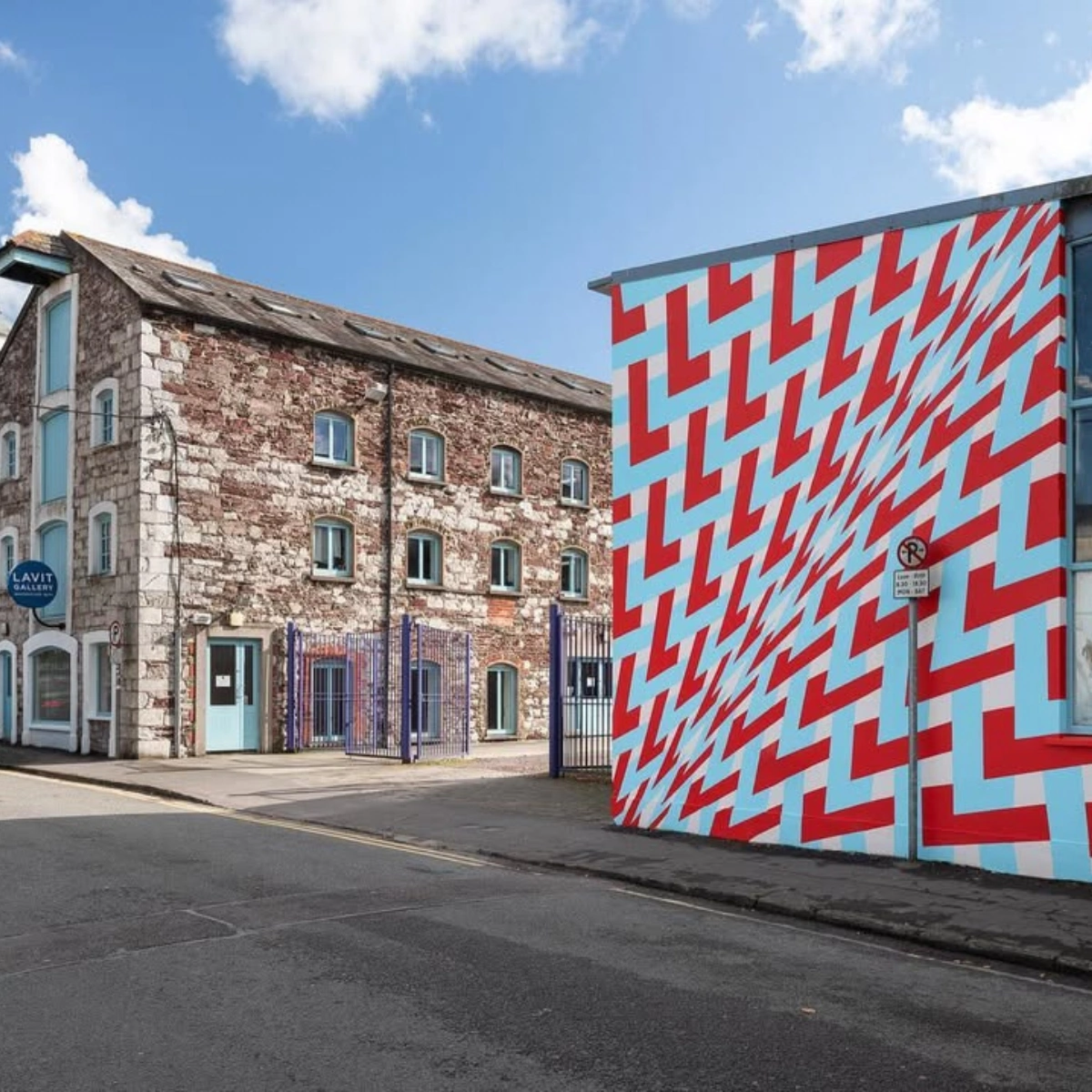
From there, I play with form, colour, and composition, experimenting across different media like screenprints, textiles, murals, or sculptural installations. My work often blurs the line between art and design, combining abstraction with a sense of playful structure. I’m drawn to how ordinary materials can be transformed, how they can feel almost alive or take on new meanings, sometimes pointing to ecological, social, or political ideas without being didactic.
Collaboration is a big part of my practice too. Working with other artists, curators, and community groups often sparks ideas I wouldn’t have found on my own, and the projects evolve in dialogue with both the site and the people engaging with it. Ultimately, my process is about creating encounters, whether spatial, sensory, or conceptual, that invite viewers to reconsider the world around them and our place within it.
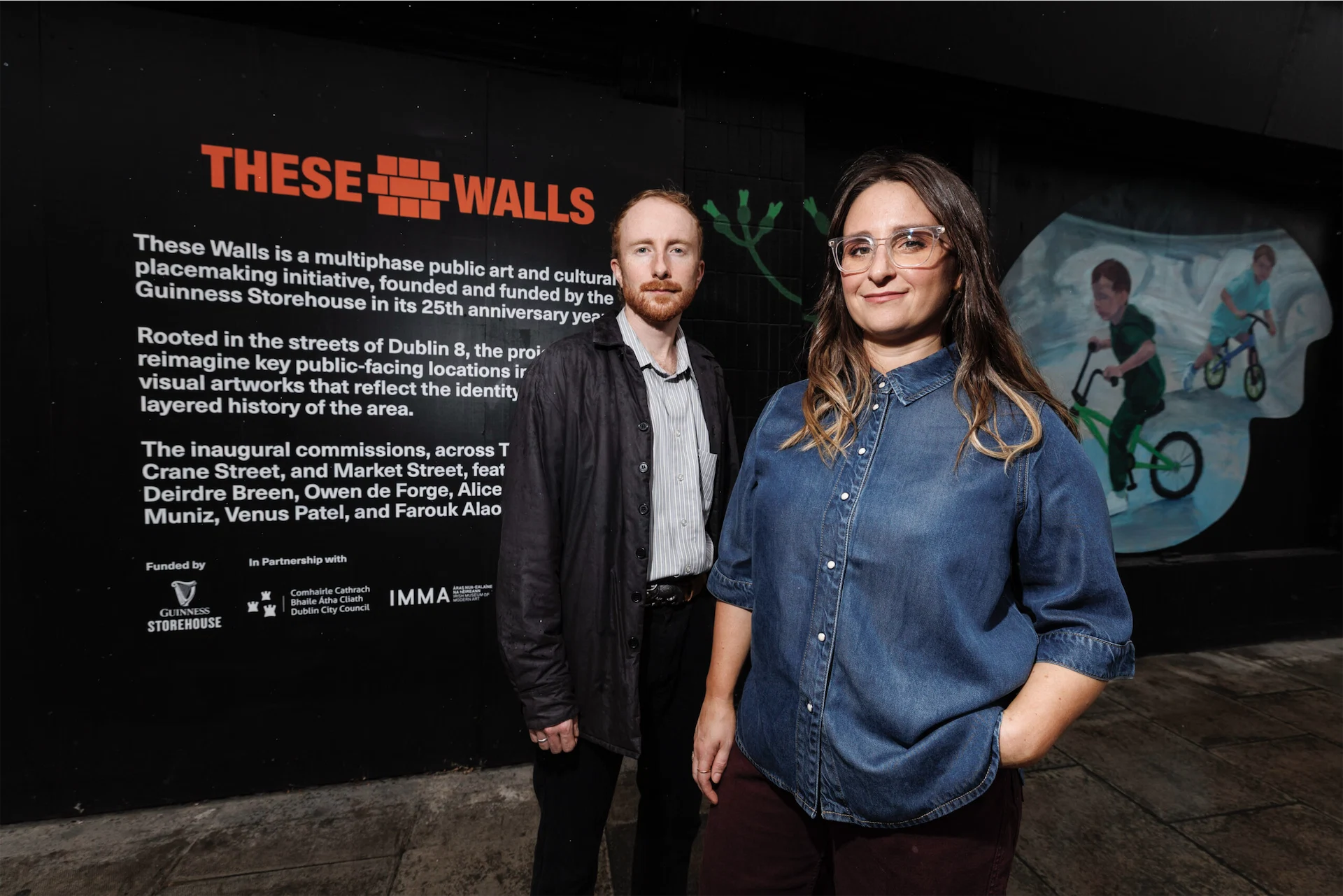
Photo by Andres Poveda
Who is someone you look up to in the realm of Irish art?
I really admire Maud Cotter. Her work balances concept and material in a way that’s just really inspiring. She has this ability to make materials feel almost alive, so that the objects themselves seem to have their own energy and ideas. Her installations respond to their spaces in subtle but powerful ways, inviting viewers to see and feel things differently. I also love the way she talks about her work; thoughtful, grounded, and full of insight without ever feeling heavy.
I’m similarly inspired by Eva Rothschild, who explores how industrial or synthetic materials can take on a life of their own, creating a conversation between the object, the artist, and the viewer. Both of them push how I think about materials, value, and what art can do.
What has been the highlight of your career so far?
Working on These Walls with the Guinness Storehouse has definitely been a highlight. It feels really special to make work in a space with such a long history of patronage and connection to Dublin’s public life. I think this collaboration captures a moment of transformation while also celebrating what makes Dublin 8 unique.
Art in public spaces is so important to me because it creates moments of pause, reflection, and surprise in everyday life. It gives people a chance to see their surroundings differently and provides accessible experiences outside the walls of a museum or gallery. Public art can also spark social interaction and community, bringing people together in ways that feel both immediate and shared.
What is one thing you wish everyone knew about working as an artist?
People often don’t realise just how many roles an artist wears. Beyond making work, we’re often our own communications team, writer, curator, researcher, project manager, and finance team! There’s a huge amount of unseen labour involved, from repeated grant applications to organising exhibitions, managing budgets, and coordinating collaborations. It isn’t just about inspiration; it’s about commitment, persistence, and treating your practice seriously every single day. We’re often juggling a lot behind the scenes to make the work itself possible.
What would you say to a budding artist unsure of their next steps?
I’d say try to engage with your community as much as you can, even if it feels a bit daunting or doesn’t come naturally. Most people are supportive and generous, and connecting with others can lead you to the right opportunities at the right time. Be confident in your own convictions, but also stay open to different ways of thinking about your work. That mix of belief in yourself and curiosity about new perspectives will take you a long way.
What is one piece of advice you would give to someone hoping to have a career in the arts?
Treat a career in the arts as seriously as you would one in finance, business, or tech. Be ambitious, know your worth, and don’t be afraid to have conversations about compensation or contracts. Your work is valuable, contributes to contemporary Irish life, and deserves recognition. Being an artist shouldn’t create barriers in other areas of your life, so make sure to advocate for yourself and your practice while staying confident in the importance of what you do.
Deirdre Breen’s life in culture
Photo by Andres Poveda
The last thing I saw and loved… The Second Woman at Cork Opera House with Eileen Walsh. The play repeats a key scene with a different male actor every hour for 24 hours straight. I went in around 9pm and it was so hard to leave. Once inside with your wristband, you could move seats after every scene and watch the scene from different angles. The format was fascinating, and Walsh’s stamina and improvisation were just unbelievable. It made the experience feel alive and unpredictable in the best way.
The book I keep coming back to… In terms of my practice, Vibrant Matter by Jane Bennett. I keep going back to it because it really changed the way I think about the world, how even seemingly inert things have energy and a role in shaping our lives.
For life and motherhood, Matrescence by Lucy Jones. It looks at the process of becoming a mother and charts the personal impact of having children. I read it about a year after my twins were born, and it felt like someone had really seen me while also giving fresh insights into the pressures of modern motherhood. I recommend it to anyone navigating parenthood!
I find inspiration in… I find inspiration in the everyday, ordinary objects, colours, and materials that we might overlook. Nature, the built environment, and our surroundings constantly spark ideas, as do our bodily experiences in response to the systems we live within, including social, political, and environmental structures.
My favourite film is… It’s hard to pick just one, but here are a few films that have really stuck with me. Parasite and Get Out are brilliant for how they blend original concepts with striking visual storytelling. Jordan Peele, in particular, has a really unique way of combining social critique with horror and dark humour, and I also loved his film Us for these same reasons. I’m drawn to films that capture a moment or a world in detail, like Paris is Burning, which documents NYC drag ball culture over years, or The Lives of Others, which I first saw in university and return to again and again.
The song I listen to to get in the zone is… It changes all the time, but right now I’m loving Barry Can’t Swim’s ‘Still Riding’ and the Queen of Ireland herself CMAT’s ‘Take a Sexy Picture of Me’. For an old reliable, I often go back to Run The Jewels’ ‘Close Your Eyes’ or Kate Bush’s ‘Running Up That Hill’, both definitely get me energised and in the zone.
The last book I recommended is… Dance Move by Wendy Erskine
I never leave the house without… My phone and my AirPods.
The exhibition I still think about is… The Hayward Gallery’s exhibition titled Shape Shifters in 2015. I absolutely loved it and still go back to it in my mind.
The best advice I’ve ever gotten… The best advice I’ve ever gotten is to think of life like a cake: you divide it between work, relationships, and everything else, but you have to make sure there’s still enough left for yourself. It’s a reminder not to overstretch, and to make space for your own needs too.
The art that means the most to me is… That’s such a hard question! I feel like I have different pieces of art that have mattered at different stages of my life. But one real standout in recent years was a Cormac Begley gig at the Sounds from a Safe Harbour festival in Cork in 2023. The twins had just turned one, and I hadn’t been to a live gig with my partner Shane since they were born. We went along with some friends, and at one point we both turned to each other mid-performance with tears in our eyes. It was the sheer impact of hearing live music again after such a long break, and the performance itself was so beautiful (it also featured Romain Bly, Kate Ellis & Caimin Gilmore). Two sleep-deprived, slightly delirious parents being completely undone by the power of music!
The most challenging thing about being an artist is… The most challenging thing about being an artist is balancing the realities of making a living with the demands of the work itself. Many artists need to juggle multiple roles or jobs to sustain their practice. For me personally, it’s currently balancing family life and work life. I’m grateful for the flexibility that working for myself allows, but it can also be tough to find the extra hours I used to dedicate to studio time, especially when family life naturally takes priority.
If I wasn’t an artist, I would be… If I wasn’t an artist, I’d probably say a farmer. Both sides of my family come from farming backgrounds, so maybe it’s in the blood. I’m sure my idea of it is far more romantic than the reality of the hard graft. I’d probably last about a week, but I think it comes from a pull towards nature and the idea of being more self-sustainable.
The magic of art to me is… The magic of art to me is how it helps us process the world around us, making sense of things that can feel complex or overwhelming, and opening up new ways of seeing. I love that moment after a show or exhibition when everything feels like it’s shifted into a new perspective, and you leave with that bubbling excitement about how what you’ve just witnessed might change the way you move forward.
Also Read