











By Holly O'Neill
23rd Apr 2020
23rd Apr 2020
Blackhead busters, congestion killers and hero hydrators – these are the new ingredients to add to your skincare routine.
Just when you think you’re up to scratch on your ingredients and you’re confident you know your niacinamide from your salicylic, a host of new products appear with ingredients you’ve never heard of. Here’s your cheat sheet to the ingredients worth your money, so you can make smart, informed decisions when you’re skincare shopping.
Lactic Acid
WHAT DOES IT DO?
Lactic acid is an alpha-hydroxy acid, which works to speed up our skin’s own process of exfoliation. “It’s more gentle than glycolic acid, as it has a larger molecule and thus penetrates into the skin in a much more controlled manner,” says Jennifer Rock, The Skin Nerd. “Additionally, it’s a humectant meaning that it draws moisture towards it, hydrating the skin. It also boosts the production of ceramides in the skin, which are key lipids that make up your skin’s protective barrier.”
WHAT’S SO GOOD ABOUT IT?
“It’s fantastic for uneven skin tone and pigmentation as well as mature skin and ageing skin,” says Jennifer. “It’s fab for those who suffer from congestion (ie. blackheads, spots and any lumps and bumps), specifically when used in conjunction with salicylic acid.”
WHEN SHOULD I USE IT?
“I’m partial to an exfoliating cleanser and in my opinion, your exfoliant should be coming after you’ve thoroughly cleansed your skin,” says Jennifer. “Massage your lactic acid cleanser onto your face for about a minute and wash it off. This means that your skin will be prepared to accept all of the other lovely, skin-beneficial active ingredients you will be applying after.”
PRO TIP
“For a super effective lactic acid, you’re looking for a product that contains 10% lactic acid,” says Jennifer. “If it is the exfoliation you’re looking for, you need that potency. If lactic acid is number 73 on the ingredients list on the back of the product, be a bit sceptical.”
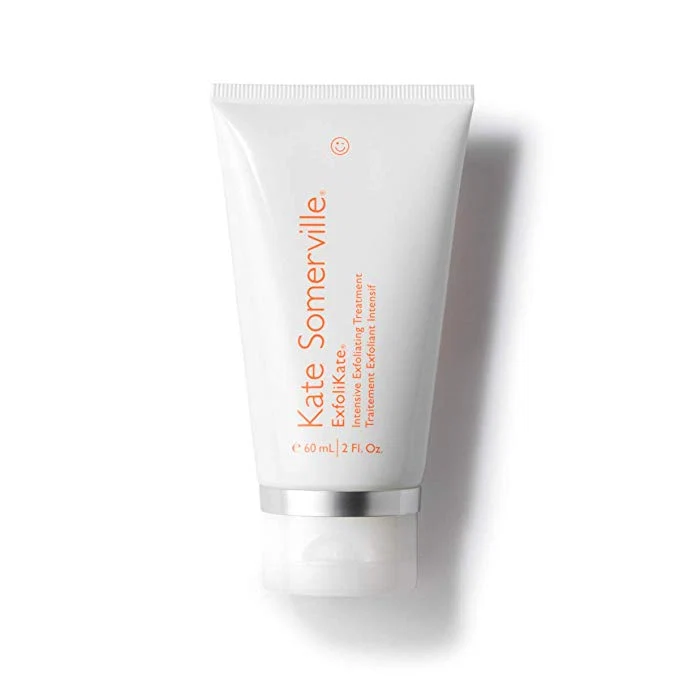
Kate Somerville ExfoliKate, €25
Polyglutamic Acid
WHAT DOES IT DO?
It smooths, brightens, reduces the appearance of fine lines, helps with natural exfoliation and hydrates the skin’s surface while locking in moisture.
WHAT’S SO GOOD ABOUT IT?
It holds up to four times more moisture than hyaluronic acid.
WHEN SHOULD I USE IT?
Morning and night, after your serums but before your moisturiser.
PRO TIP
Add a few drops with your foundation for a glowy, flawless finish that leaves your skin looking skin-like.
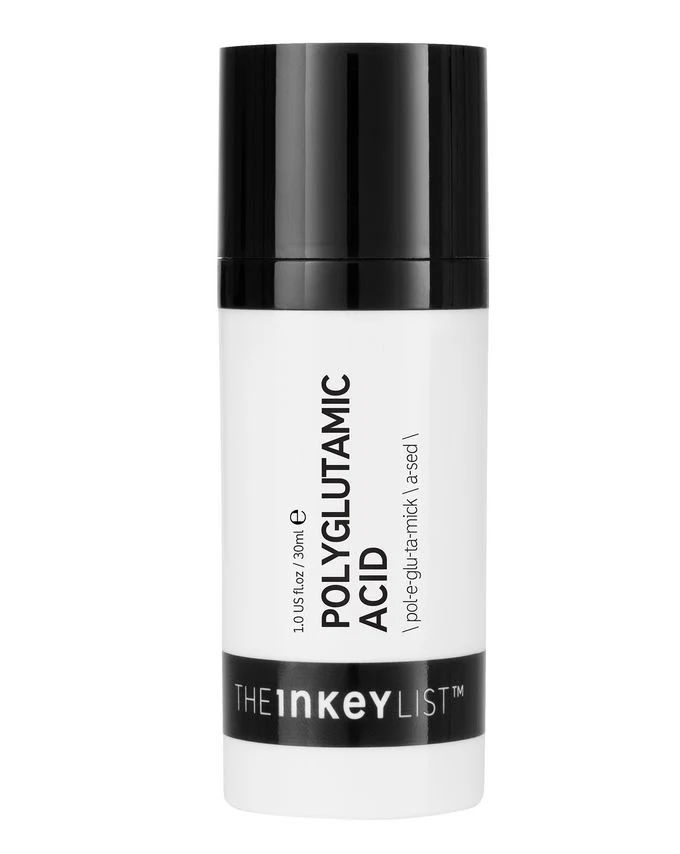
The Inkey List Polyglutamic Acid, €15.99
Copper Peptides
WHAT DOES IT DO?
Copper peptides are a combination of the element copper and three amino acids. Copper peptides are antioxidants, they’re healing and regenerating plus they stimulate collagen production, leaving skin firmer and smoother.
WHAT’S SO GOOD ABOUT IT?
Copper peptides “serve as an antioxidant, promote collagen and elastin production and also remove damaged collagen and elastin from the skin,” says Joanna Vargas, celebrity facialist.
WHEN SHOULD I USE IT?
Copper peptides should only be used in their designated concentrations within skincare products.
PRO TIP
Do not overuse!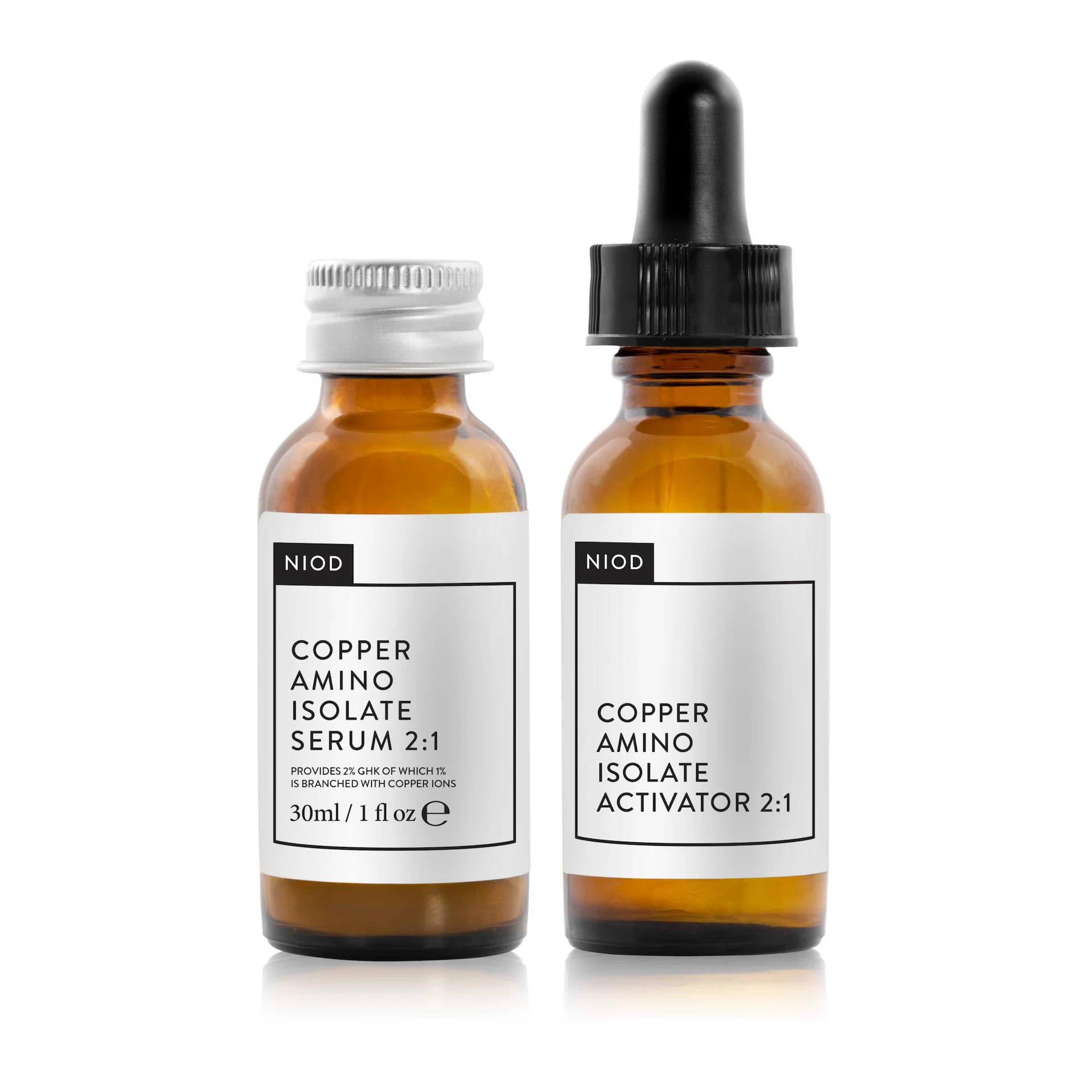
NIOD Copper Amino Isolate Serum, €67
Centella
WHAT DOES IT DO?
Centella (full name centella asiatica) is a plant native to Asia and Africa and is by no means a new ingredient, it has been used for thousands of years in traditional medicine. It’s an antioxidant, tackling inflammation, calming redness and stimulating collagen synthesis for plumped skin.
WHAT’S SO GOOD ABOUT IT?
Centella has powerful healing, plumping and soothing properties, plus according to some studies, it can be used to relieve eczema.
WHEN SHOULD I USE IT?
It comes in just about everything, from cleansers to serums, so choose your favourite formula.
PRO TIP
Centella has wound-healing abilities, so be sure to use it on the spots you just picked.
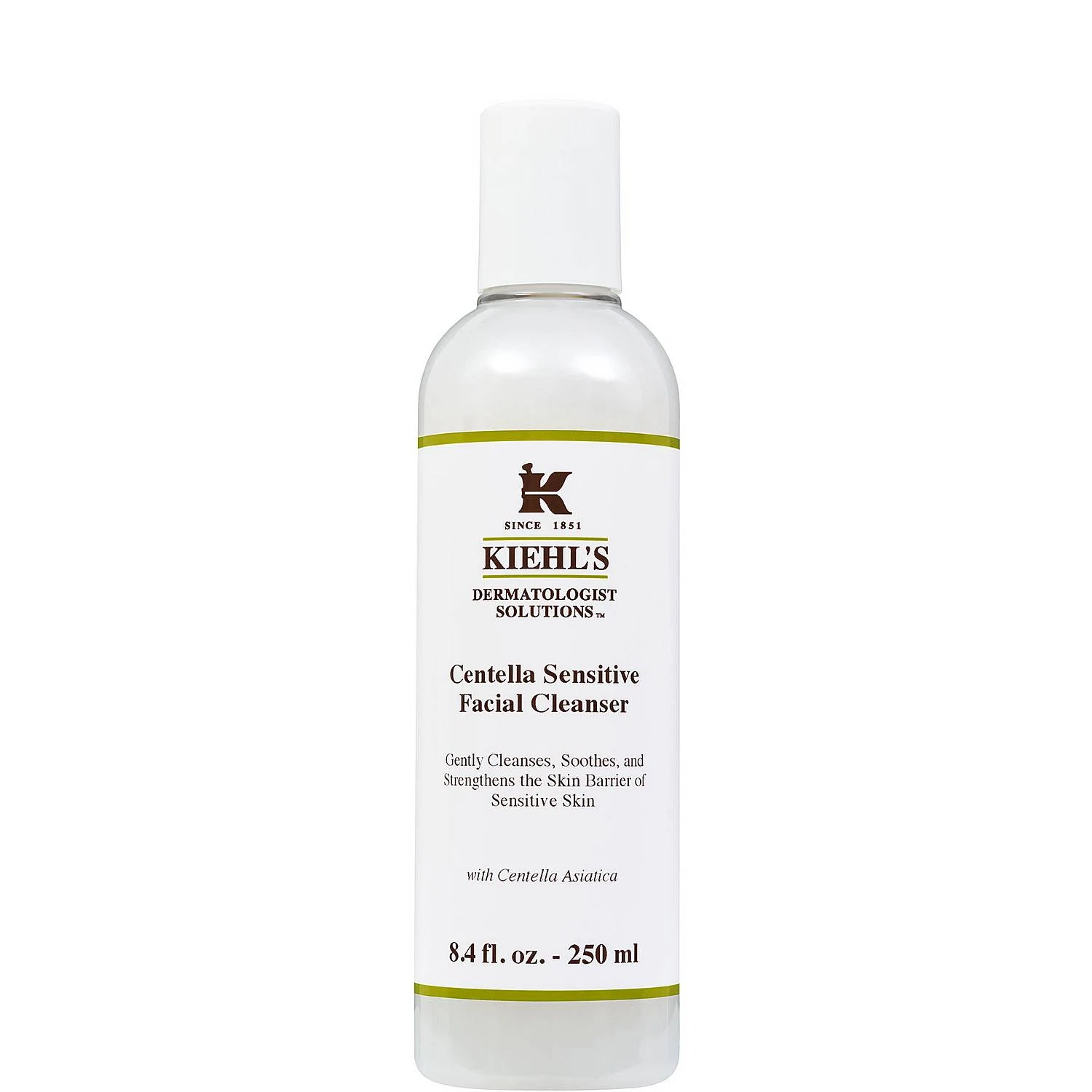
Kiehl’s Centella Sensitive Facial Cleanser, €32
Bakuchiol
WHAT DOES IT DO?
Like retinol, bakuchiol reduces the appearance of fine lines and wrinkles and improves elasticity. It has antioxidant properties, nourishes, soothes and brightens the skin and it evens skin tone.
WHAT’S SO GOOD ABOUT IT?
Bakuchiol’s benefits mimic retinol’s. “Only a couple of years ago we saw that the bakuchiol molecule in skin cells express the same type of patterns of chemical reactions to retinol. They put bakuchiol on skin cells, retinol on skin cells and they’re both the same but they act in very different ways,” says Mark Curry, skincare expert, ingredients nerd and co-founder of The Inkey List. The best thing is, there’s none of the peeling, redness or irritation that you associate with retinol.
WHEN SHOULD I USE IT?
If you can’t tolerate retinol or tretinoin, or you’re missing your retinol during pregnancy or breastfeeding, bakuchiol is for you. “We’ve done it as a moisturiser that you use at day or night,” says Mark. “Less than one in five people use hydrating skincare. You can also use it when you’re pregnant and you can use it during the day,” says Mark Curry. “There’s no photosensitivity at all.”
PRO TIP
Bakuchiol works best, according to research, when it comes in concentrations between 0.5-2%. In amounts lower than 0.5-2%, you will not have retinol-like benefits.
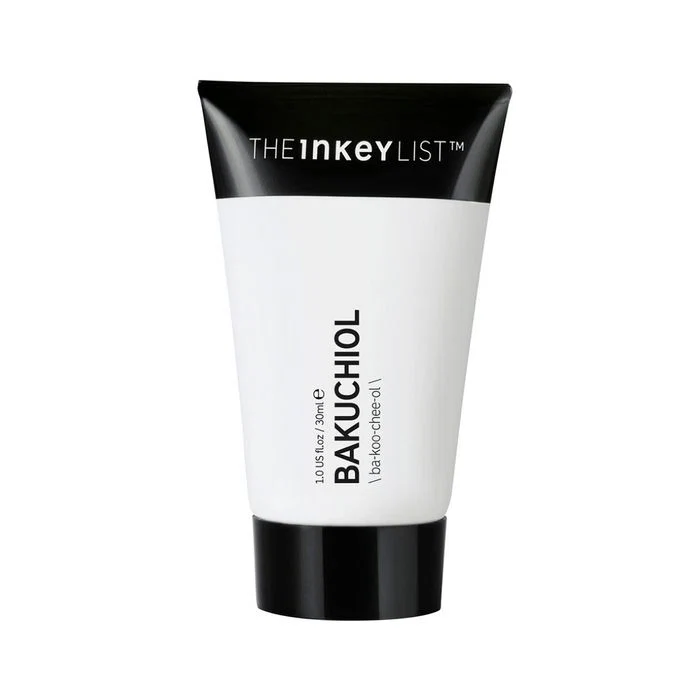
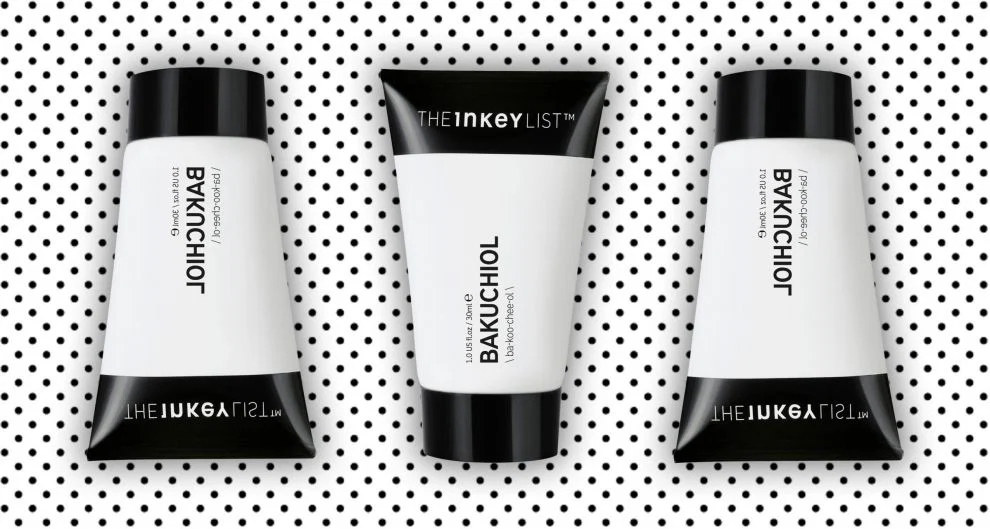
The Inkey List Bakuchiol, €13.81
Digital illustration by Sophie Teyssier.
Read more: The greatest under-eye masks for dark circles and de-puffing tired eyes
Read more: Clean beauty terminology explained and debunked by 2 experts
Read more: Tom Ford on the art of looking good on Zoom

Also Read