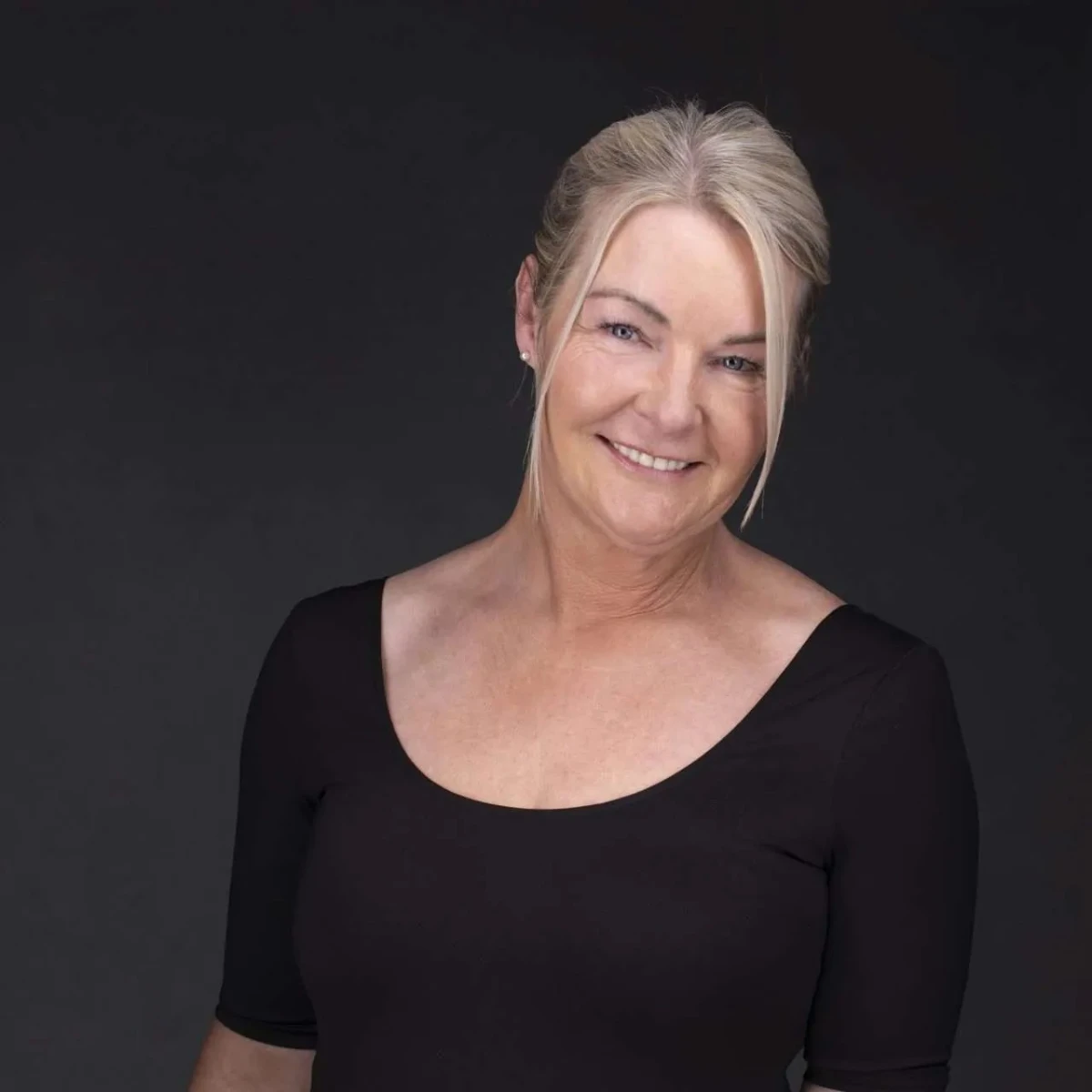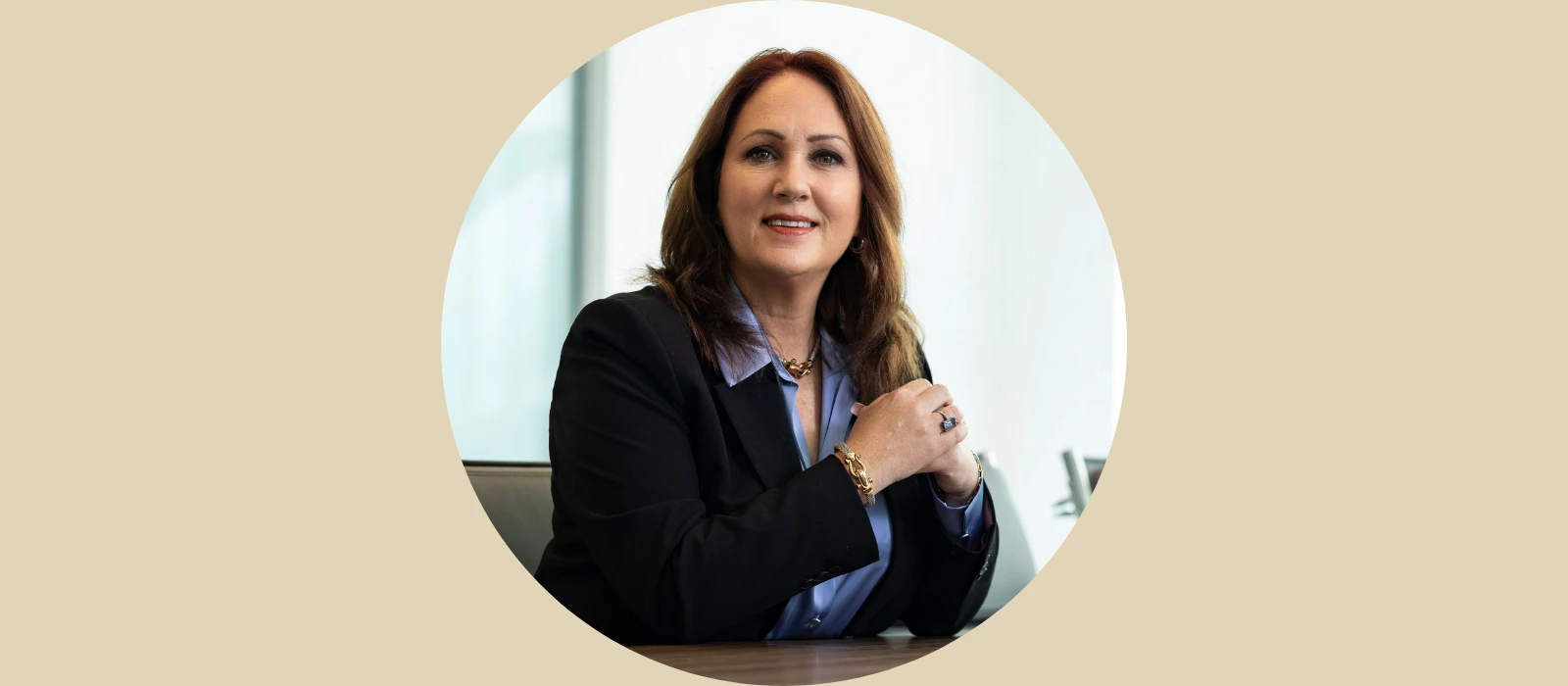



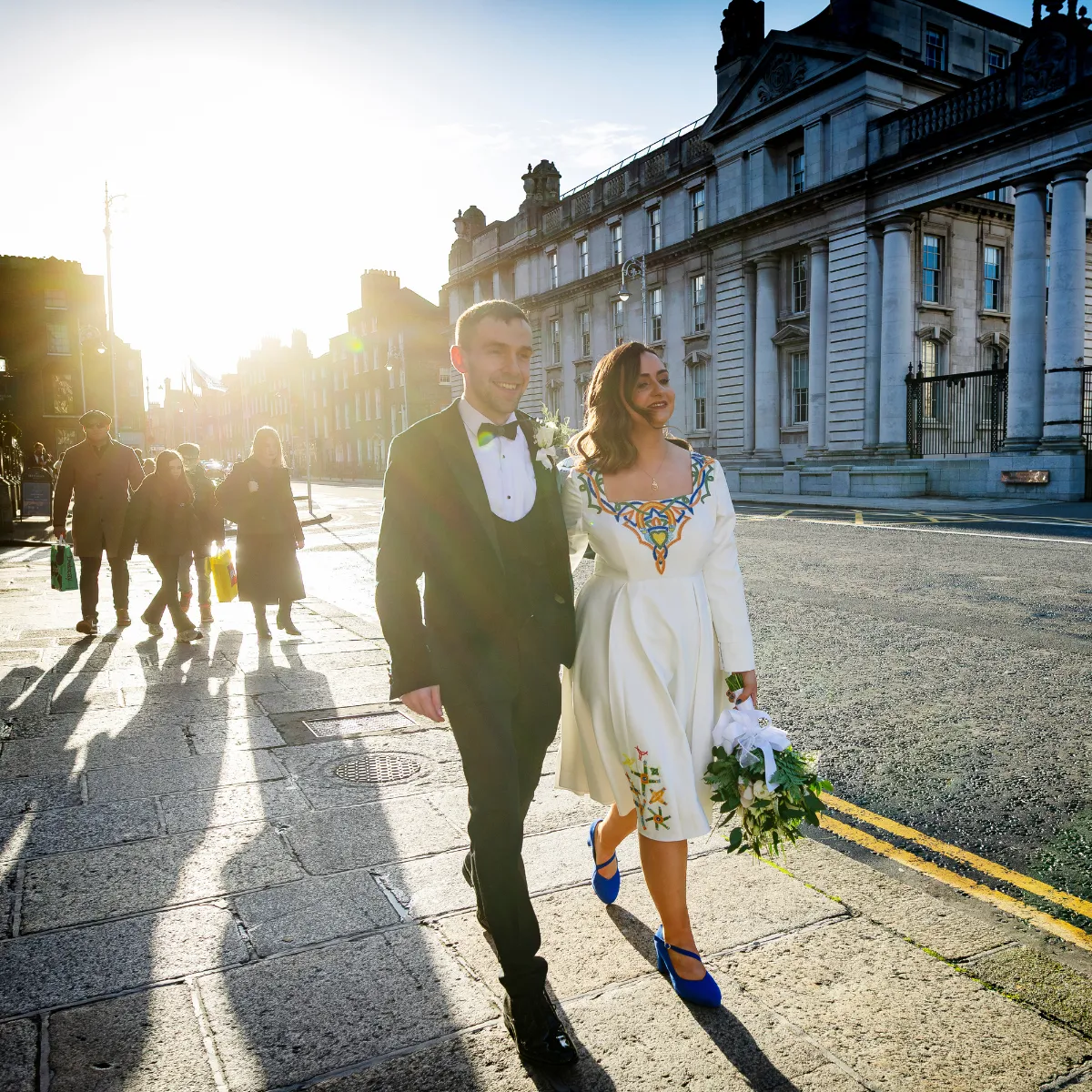
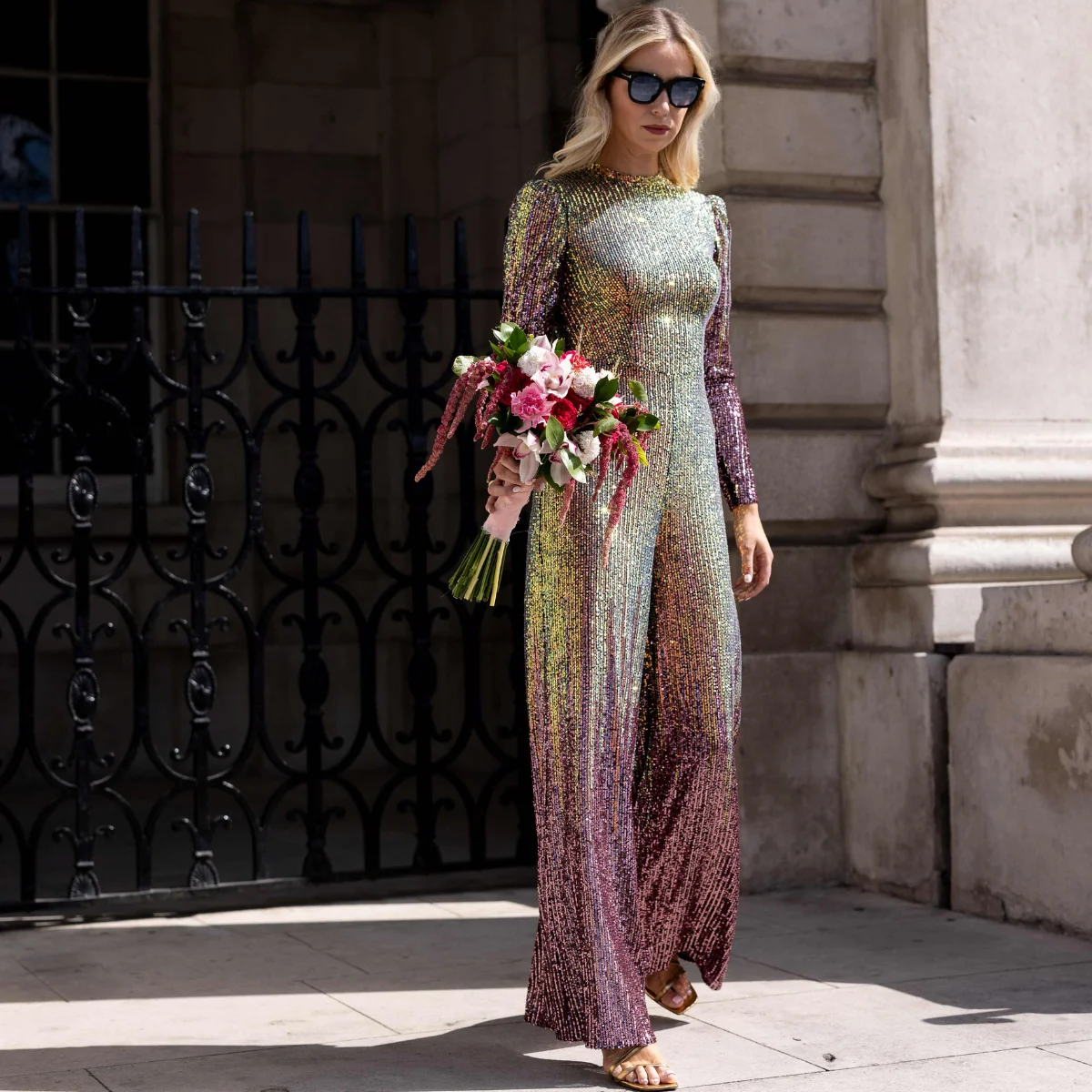
“It's okay to wear colour for your wedding and it's okay to wear sequins on a Monday,” says Mizz Rio founder and designer Mags Morgan. “Write your own rules.”

Where did the idea for Mizz Rio come from? What is your ‘why’?
Mizz Rio is an independent bridal brand built from the foundation that, as a bride, your identity can still shine through. You can look like a bride while staying true to who you are. There are so many societal expectations for a bride to conform to, age-old rules and it’s just not something I wanted to subscribe to for my wedding. The light bulb moment came from my own bridal experience in 2015 – from what I saw in the bridal space, it was repetitive with little room for the bride’s actual identity. That vision of a bride didn’t represent me, didn’t resonate with me and it didn’t excite me. I wanted to feel like me and not that I was playing dress up.
My ‘why’ is so important to me – I want to give a space to brides who don’t feel represented in the bridal space. Having been in the industry for almost ten years, the version of alternative bridal that I created at the outset is now becoming mainstream. I don’t feel that the ‘alternative’ label is the right one any more. I believe this is just what bridal is now.
Women being supported to be themselves and show up to their wedding in whatever version of a bride that makes sense to them. At the outset this was a small cohort – but the cohort is growing and will dominate in the years ahead.
What’s your big business goal?
The biggest goal is to transform the expectation of bridal and to aid removing the stress to be the ‘perfect’ version of yourself for one day. For me, bridal goes far beyond an outfit for one day – it speaks to identity, heritage and fashion, and who the bride is at her core. It’s not a performance, it’s a celebration of self.
I want Mizz Rio to be the brand women think of when they want bridalwear with design, meaning, attitude and freedom. Alongside our bespoke work we are growing the brand and creating ready-to-wear bridal pieces, accessories and veils that will sit confidently in a luxury retail environment.
We currently export to many markets across the globe and our goal is to increase that reach. Irish design is already renowned across the globe in its various forms and I see the bridal space as no different. Irish bridal design doesn’t have to be separate from that, it can be part of it.
Why did you decide to start your own business?
I started because there needed to be an alternative. With so many bridal boutiques carrying the same lines and same designers, there needed to be a point of difference. For my bridal experience, I didn’t fit into the stereotypical bridal mold – it didn’t feel like me.
Starting Mizz Rio allowed me to build what I felt was missing for me. I had no experience in the industry and this was my super power – I didn’t know any rules that I had to follow so I led with instinct and a quiet knowing that if I didn’t fit the mold there was a whole tribe of other women who must feel the same.
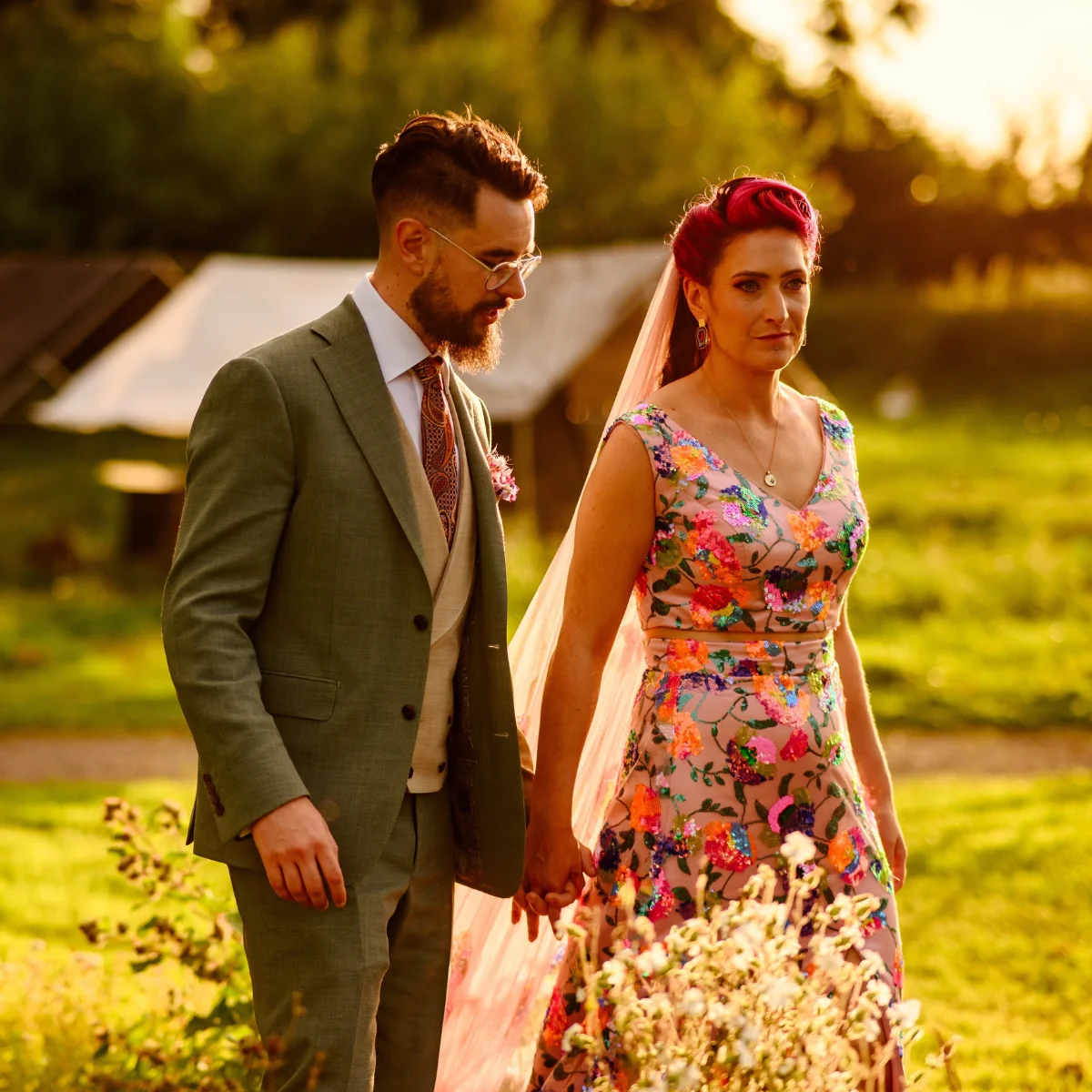
In 2018 the first dress I brought to market was a blue dress ZEPHYR, the second a Chloe and gorgeous pink floral dress. At the time both of these pieces were almost alien in the bridal space with many saying that it’s not something bridal could ever be. However, so many years on, my instinct was right as floral gowns are now one of the trends on the upward spiral in bridal. It allows a little bit of colour and fun while linking closely to the ‘white’ dress
How did you raise the capital needed to start your business?
My brand was bootstrapped from very humble beginnings. I started small, leaned into gut instinct and constantly invested back in the business. There was no pot of capital to draw from, so every decision and every cent spent was considered. That teaches discipline and patience.
There was no marketing budget so I was the model, the makeup artist, the photographer and editor – and it worked because it was real and that’s what resonated. There was a person behind the business, a woman, a mam, a wife and someone who wasn’t afraid to say she didn’t have it all figured out
Each sale allowed me to reinvest, learn and grow. We started from zero so I still get a jolt when I see orders come through the website from the US or Germany – it’s something that never gets old!
For the long term I haven’t ruled out investment if it’s the right strategic fit.
Did you do any business training or schemes before setting up your business?
In my previous working life I worked in Senior Management roles responsible for growth and operations of different geographical regions. I had a core understanding of budget control and service delivery, people management and the importance of supply chain. While those skills definitely helped, nothing really ever prepares you for running your own business — especially when the team is small. When you pour your heart into what you do, it’s very personal. The highs and the lows of business impact you directly.
In larger organisations there are dedicated teams for different functions of the business, but in founder-led, that doesn’t exist. It can be an echo-chamber at times so you have to look outside the business to your peers and look to other founders for support. Not having all the answers is fine, but you need to build a network that can provide the assistance and sometimes grounding as you encounter different elements of the business.
I engaged with my local LEO and Enterprise Ireland and was lucky to be part of growth acceleration and export programs. These programs were excellent as they created the environment for you to examine your business and your strategy and to identify clear goals.
What’s the best piece of financial advice you ever received?
Know your numbers. This is something that’s said in business constantly – however I feel that you only know the value of it and understand the importance of it during difficult times. The business can have huge momentum but the numbers tell you the truth and keep you grounded.
For a creative brand, personally, the numbers don’t excite me. I’d love to stay in the creative space each day and focus solely on fabrics and new pieces, but finance keeps the dream alive, so knowing the numbers is a cliché but it’s at the core of everything you do in business.
Do you think the Irish education system supports entrepreneurship?
I think it is improving, but needs a massive overhaul. We just don’t all learn the same way. Some flourish with a text book and others need to get their hands dirty to learn and I feel the education system approach needs to widen to take in all aspects of how children learn and identify that at an early age and adapt the cycle to the child. It sounds ambitious but it’s not impossible. The early years in school are precious because it sets the marker and sets the belief in the child of what they are capable of.
I would love to see more focus on life skills, money management, home improvements – practical real world situations. Entrepreneurship requires resilience, commercial thinking, creativity, communication, financial literacy and the ability to make decisions without having all the answers. Those are skills that should be encouraged much earlier. Ireland has incredible creative talent, but I think we could do more to help people understand how to turn creativity into viable, real-world business models.
Did or do you experience any fear or doubt about being an entrepreneur? If so, how do you deal with it?
Yes! Daily! Imposter syndrome is something that’s very real. I feel also with social media you can easily fall into a cycle of comparison – how well your business is doing versus someone else maybe in the same space or the same age group. Everyone can drift but it’s important to keep coming back to your own goal and your own mission.
An element of fear is a healthy thing as I feel it keeps you alert, hungry and passionate to achieve the next goal, the next collection, the next milestone. Without that, it’s easy to become complacent.
Tell us something that is personally important to you as a business owner.
I’ve built the Mizz Rio brand so that women feel seen, heard and understood, and know that it’s okay to want something a little different. That it’s not weird or out there and there certainly isn’t anything wrong with them.
So based on that, it’s important to me that anyone wearing a Mizz Rio piece feels that little spark and connection to the growing community of like-minded women. It’s okay to wear colour for your wedding and it’s okay to wear sequins on a Monday. Write your own rules.
How do you feel about risk-taking?
I feel everything in business is a risk – nothing is guaranteed. You can strategise and examine the market closely to make the most informed decision you can, but nothing is ever a sure thing. You have to calculate the risk as best you can and pay close attention to the outcomes or initial hints of the outcome.
Mizz Rio as a brand took a massive risk in 2018 by releasing a bridal collection with floral detailing, blue dresses, black dresses and multicolour floral. This was unheard of at the time, but it worked and that’s what has built a bridal brand that people remember.
A question I always ask, of all the weddings you have been to, what dresses do you remember? The risk we took ensures that our brides are remembered because they’ve been so individual.
What does ambition mean to you?
Ambition, to me, is all about maintaining the quality of the product and the connection with our customer as we grow. It’s also about pushing the boundaries and exploring the possibilities and not settling for what we have created so far.
Name one thing that supports your wellbeing as a business owner.
You’ll either find me on a GAA pitch with my Clann Mhuire team, in the gym in Elite Fitness or running the roads around my area. Movement is so important to me. Along with that is fueling my body properly to allow it to do the things I need it to do.
Being in the studio daily, you can get locked in your own head so that blast of exercise on a pitch or fighting for my life in a strength and conditioning class just really allows me to get my head clear so I can go again. That was two things but they do go hand in hand!
What qualities do you think someone needs to be resilient as an entrepreneur?
I’m never really sure if resilience comes from confidence or delusion – possibly equal parts and both are definitely needed.
However, a key thing is a support network through family, friends and peers. It’s so important to have people behind you that you can talk openly to, receive feedback positive and negative and be able to remove the personality from it to look at the core issue of whatever it is you’re seeking help with. You also need to recognise when something isn’t working. Have enough self-belief to keep going, but enough self-awareness to be able to ask for help and make a change when needed.
How do you feel about building a team?
I have been slowly building a team of trusted people around me over the past number of years. I’ve made some mistakes as most founders do and I have learned to watch actions, not words.
Skill matters, of course, but so do reliability, integrity, delivering and whether someone genuinely understands the standard and direction of the brand, and have the professionalism to execute their role
How do you feel about delegating?
Every founder will feel that no one can do any of the jobs as well as they do. Naturally it’s because as a founder – you are the brand. It’s your everything and you breathe it every day.
However, in order to grow, delegation is a must. Releasing different roles to team members is essential and you have to put the right guide rails in place so that they fully understand how their role should be executed.
It’s impossible as a brand grows to maintain that direct work application to each function of the business – you either delegate or you stay where you are.
What are your thoughts on work-life balance — a myth or achievable?
I feel it’s achievable but we have to take each week as it comes. Some weeks I’m on fire and I’m getting the work done and I’m there for my children each day with activities and homework and dinner, but other weeks the work dictates you work late nights, up at 5am and doing what’s necessary to deliver.
I’ve never been afraid of hard work and I love a challenge and then seeing the results of the hard work. I’m an early riser – I’m generally up at 5am before the kids wake and get ahead of some paperwork before the day begins. So it’s possible but it’s never perfect.
What’s your favourite thing about running your own business? And the thing you dislike the most?
My favourite thing by far is the people I meet. When a bride comes to my studio I have no idea what that woman has been through that day or what it took to get there. Sometimes there are tears and other times just a quiet comfort.
We are all facing so many internal battles daily and I feel as women we take on everything. We just keep going until next week, when I get this project finished then I’ll rest – we all do the same – but in reality we don’t take the rest that we need to. I feel society has had a massive impact on women as they work, try to raise children, keep up with daily life and stay hydrated!?
It can be impossible and the weight of it is sometimes too much. I feel I’ve created a space for the appointment whether that’s 60 minutes or 90 minutes. Nothing is expected of the woman in front of me. It’s just a moment of calm to figure out what makes that woman tick and come back into herself and who she is.
The thing I dislike the most – I should really say logistics but it’s actually VAT returns.
What’s the most rewarding risk you ever took?
The most rewarding risk was starting Mizz Rio to begin with and following my gut. When people said Irish brides, or any really, will never wear anything other than white, I ignored it and kept focused. The risk paid off because it created the space for something different.
What advice would you give to someone just starting or considering starting their own business?
Start before you feel fully ready because there is never a perfect time. Make sure you’re very clear on your idea and offering. If you’re not clear on it, you can’t identify your customer.
I would also say to start small, learn, make the mistakes and understand the market you’re operating in. In the early days the phone isn’t ringing off the hook – it’s quiet and this is where discipline and showing up everyday counts the most. If you want to work in your business full time, then work on your business full time.
There was a point in my early days when I realised one morning that no-one was coming – no-one was coming to rescue me, no-one was coming to do it for me. It was me and if I didn’t do it, it didn’t get done. That was when everything changed.
Also Read