





Joan Higginbotham never planned to become a NASA astronaut, but the stars kept calling. Édaein O’Connell spoke with her about her journey from shuttle engineer at Kennedy Space Center to orbiting Earth.
Joan Higginbotham never planned on becoming an astronaut.
Instead, she worked as an engineer at the Kennedy Space Center, where she got the shuttles ready to fly. Her career trajectory took an unexpected turn during a casual conversation with the director of shuttle engineering. “He said, ‘Hey, I think you make a great astronaut,’” she recalls. “I smiled and said thank you, and just let it go. When he asked me for a third time if I had put in an application, I realised that was his way of encouraging me to apply.”
At first, Joan was hesitant, but she eventually sent in her application. “I fully expected absolutely nothing to come of it; astronauts are 10 feet tall and really smart, after all,” she laughs. Out of roughly 6,000 candidates, she was among the 120 invited to interview for the 1994 class. She wasn’t selected the first time, but in a show of determination, she asked for feedback and tried again. “They told me to get more education,” she says. “I earned another Master’s degree and eventually was chosen. Sometimes the first no is because the timing wasn’t right.”
Intense and multifaceted, astronaut training could have been overwhelming, but Joan threw herself into it wholeheartedly. “Becoming an astronaut isn’t just about stepping into a spaceship; it’s about being ready for anything, anywhere,” she explains. “Basic training for astronaut candidates lasts about a year and a half to two years, and that’s when you officially earn the title of astronaut candidate.”
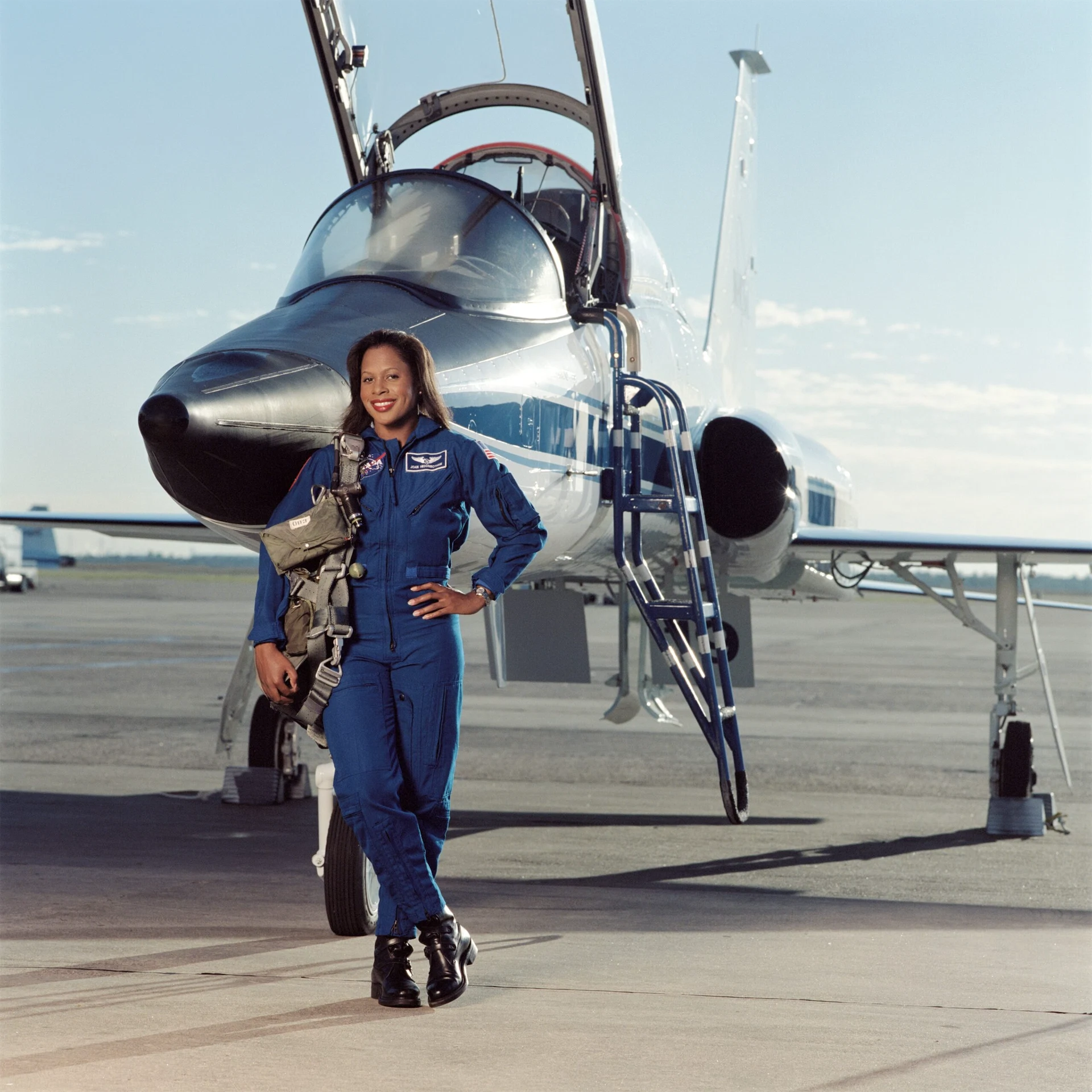
The program is as physically demanding as it is mentally rigorous. “We learned how to fly T-38 supersonic jets, but before we even got in the cockpit, we had to go through water and land survival training,” she recalls. “The idea was simple: if something went wrong and you had to eject, you needed to survive on your own until help arrived, whether you landed in the ocean or the forest.”
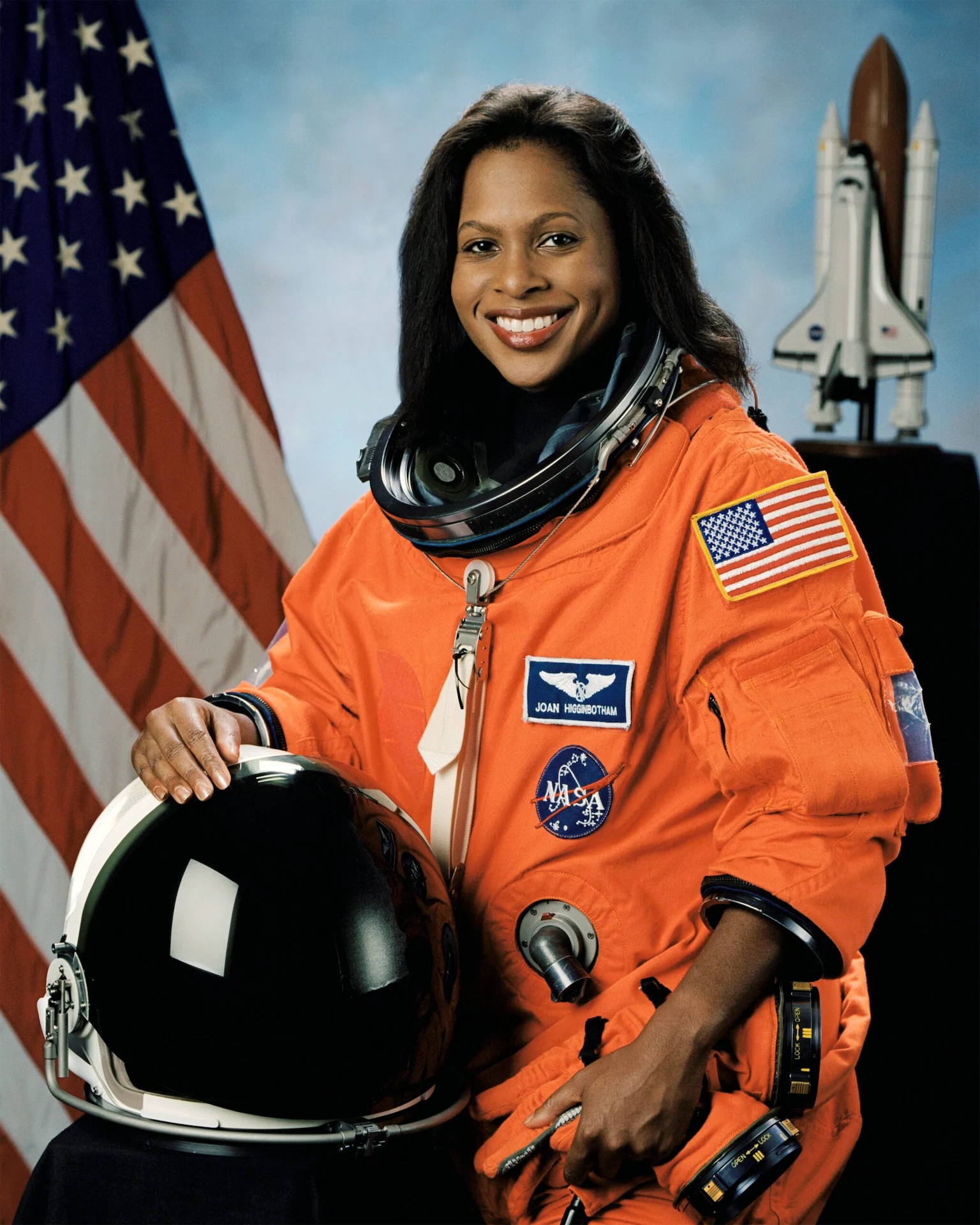
Beyond survival skills, the training demanded mastery of complex systems. “We learned how to operate every system on the space shuttle and the space station,” she says. “Once we completed that training, we graduated and were officially designated as astronauts.”
Following her graduation, it was a waiting game for a flight assignment. It would be 10 years before she would be assigned a mission, and timing, program priorities and devastating unforeseen events shaped that wait.
“I was actually supposed to fly in 2003,” she says. “But then the Columbia disaster happened, and our flight was delayed three years because the shuttle program came to a grinding halt, rightfully so.”
Following such a disaster, fear would undoubtedly play a part in your psyche, but for Joan, this wasn’t the case. Instead, it made her braver. “With Columbia, of course, it was devastating,” she says. “But the accident never made me think, ‘I don’t want to do this.’ If anything, it felt like the right time to fly. After a tragedy, everyone becomes hyper-focused on safety and details, dotting the i’s and crossing the t’s, and I knew the engineers whose passion and job it was to give us the best possible vehicle would do exactly that. Ultimately, when it’s your time to leave planet Earth, the launch site doesn’t change the fact that you’re going.”
Of all the memories from Joan’s first spaceflight, the one that endures is her view of Earth’s delicate and fragile beauty. “You don’t see borders. You don’t see divisions,” she notes. “From space, what you feel is a sense of harmony, a reminder that at the core, we’re all human beings who need to be kinder to one another. And then there’s the Earth itself. It’s so breathtaking, yet so fragile. The atmosphere looks like the thinnest blue line, and you realise that’s the only thing standing between us and extinction. It makes you deeply mindful of how we care for our planet.”
As one of only five African Americans to have gone to space, Joan is honoured to be a trailblazer, but hopes that space travel reaches a point where numbers are no longer relevant. “I hope people like me will be the norm and not the exception,” she says.
Passionate about women pursuing careers in STEM, Joan has some sage advice for young girls with dreams larger than this world. “First, say yes to opportunities even if you don’t feel completely ready,” she urges. “Growth comes when we’re stretched. Second, find your village: mentors, supporters and then be that for someone else. And third, use your voice. In male-dominated spaces, it’s easy to stay quiet, but confidence means speaking up and knowing you belong.”
In a full-circle moment, Joan now serves as an ambassador for the Kennedy Space Center Visitor Complex in Florida, the very place where her career began. And while her own journey as an astronaut came to a close in 2007, she remains excited about the future of space exploration and how far this new generation of astronauts will go.
“Well, at some point we’re going to be sending people to Mars,” she says. “Right now, I can’t quite fathom that. The moon is just a three-day trip, but Mars is about nine months. That’s a lot to wrap your head around, and I haven’t fully done that yet. But we’ve already made such incredible strides, so who’s to say it won’t happen within the next decade? I think it’s just incredible, the leaps and bounds we’ve made. I’m envious of the next generation. I’d do it in a heartbeat, but I’m fascinated just watching it unfold.”
Joan Higginbotham is a veteran NASA Astronaut and one of the Astronaut Ambassadors for Kennedy Space Center Visitor Complex, located near Orlando, Florida. Among the many exhibits, attractions & experiences, visitors have the chance to speak with a veteran Astronaut, like Joan, every day. www.kennedyspacecenter.com
Also Read