






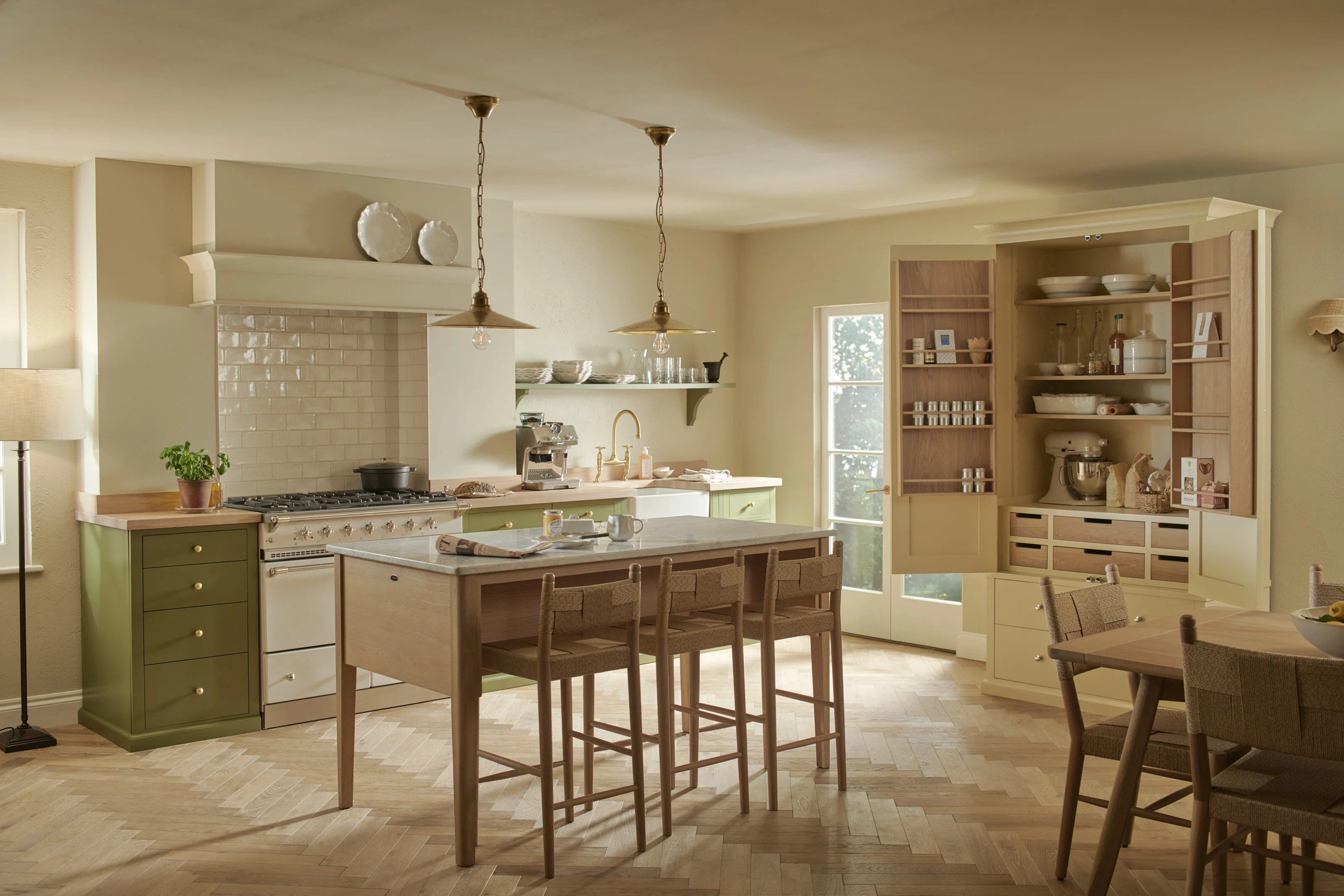
The new Irish kitchen: designing a space that feels calmer, softer and more concealed
Interior designer Sorcha Harman is seeing a shift in the way we think about our kitchens.
Founder of Porcha Design, interior designer Sorcha Harman has experience in helping clients craft their perfect homes. So often, the kitchen is one of their main focuses, being such an integral part of every home.
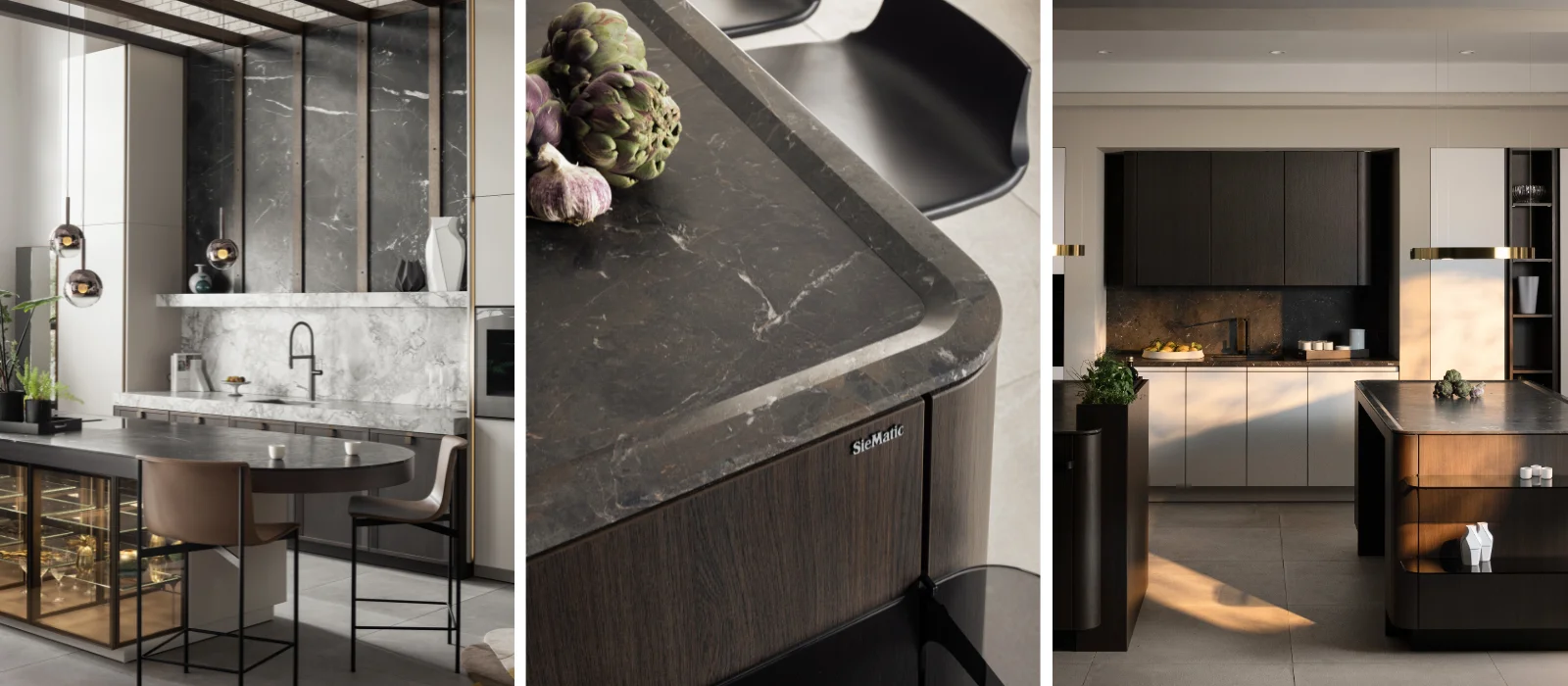
“The kitchen is, as they say, one of the hardest-working parts of the home, but more and more it is being designed to look less like it,” Sorcha explains. “Not in a cold or stripped-back way, just a quieter one. Less visual noise and sometimes less obvious function, less sense of the kitchen as a block of built-in units demanding your attention.”
Open-plan living
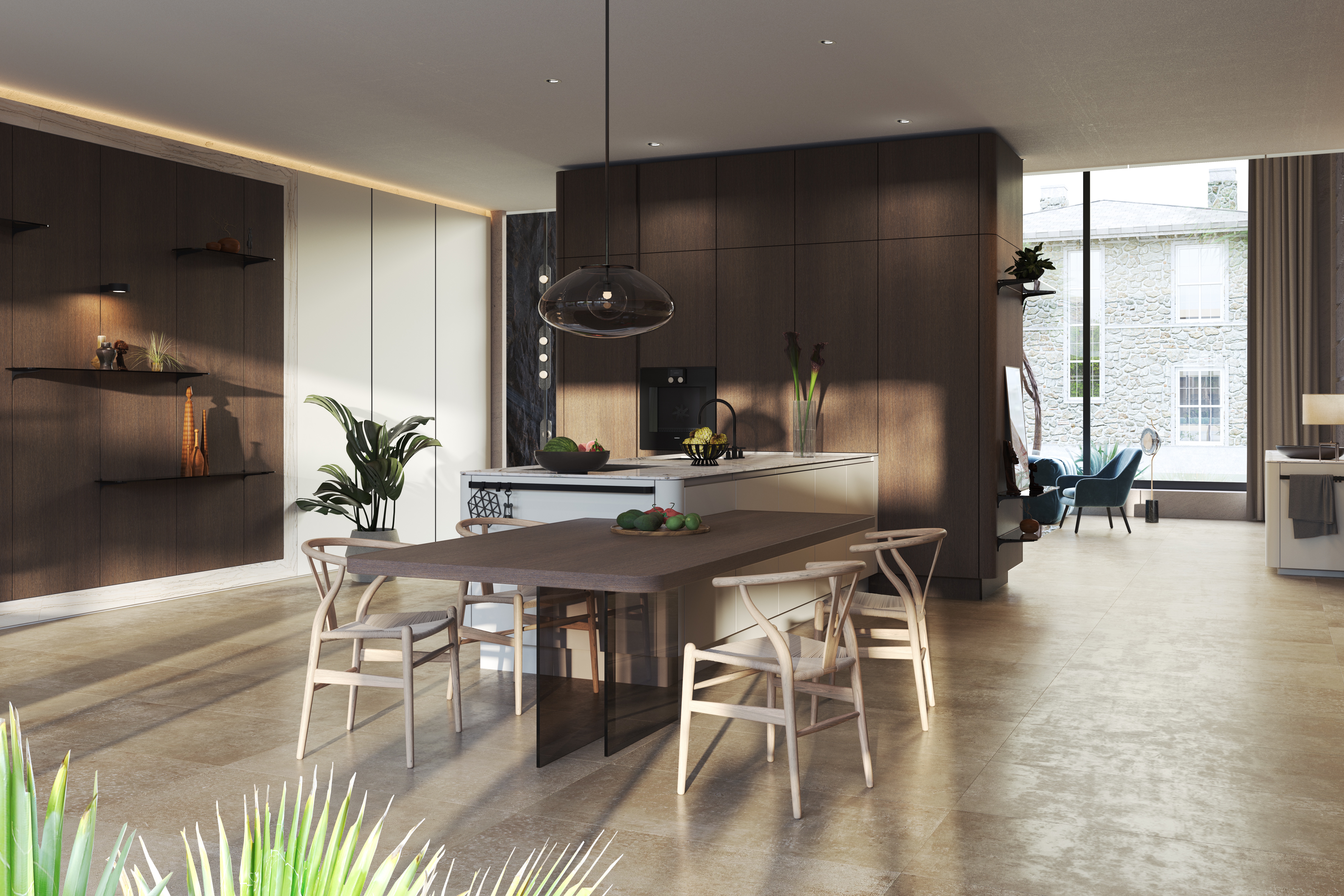
This manifests in a number of ways, but with the prevalence of open-plan spaces, one way is how a kitchen interacts with what’s around it. “It’s rarely viewed in isolation,” Sorcha says, “it sits beside dining tables, sofas, media units, upholstery, lighting, joinery, art, floor finishes and everyday family life, so it has to do more than function well. It has to sit well too.”
One place you can start is thinking about worktops. “Kitchen stone can pull a room in so many different directions, cooler, warmer, heavier, softer, more formal or more relaxed, so it makes sense to think of it as part of the room rather than a surface in isolation. It is rarely just a worktop decision. It has to sit comfortably with the flooring, the dining table, the wall colour, any other stone in the room, the metal finishes and the overall mood. The same goes for timber or door-front finishes. It’s not just about what looks good on cabinetry, but what works with everything else around it.”
Rethinking units
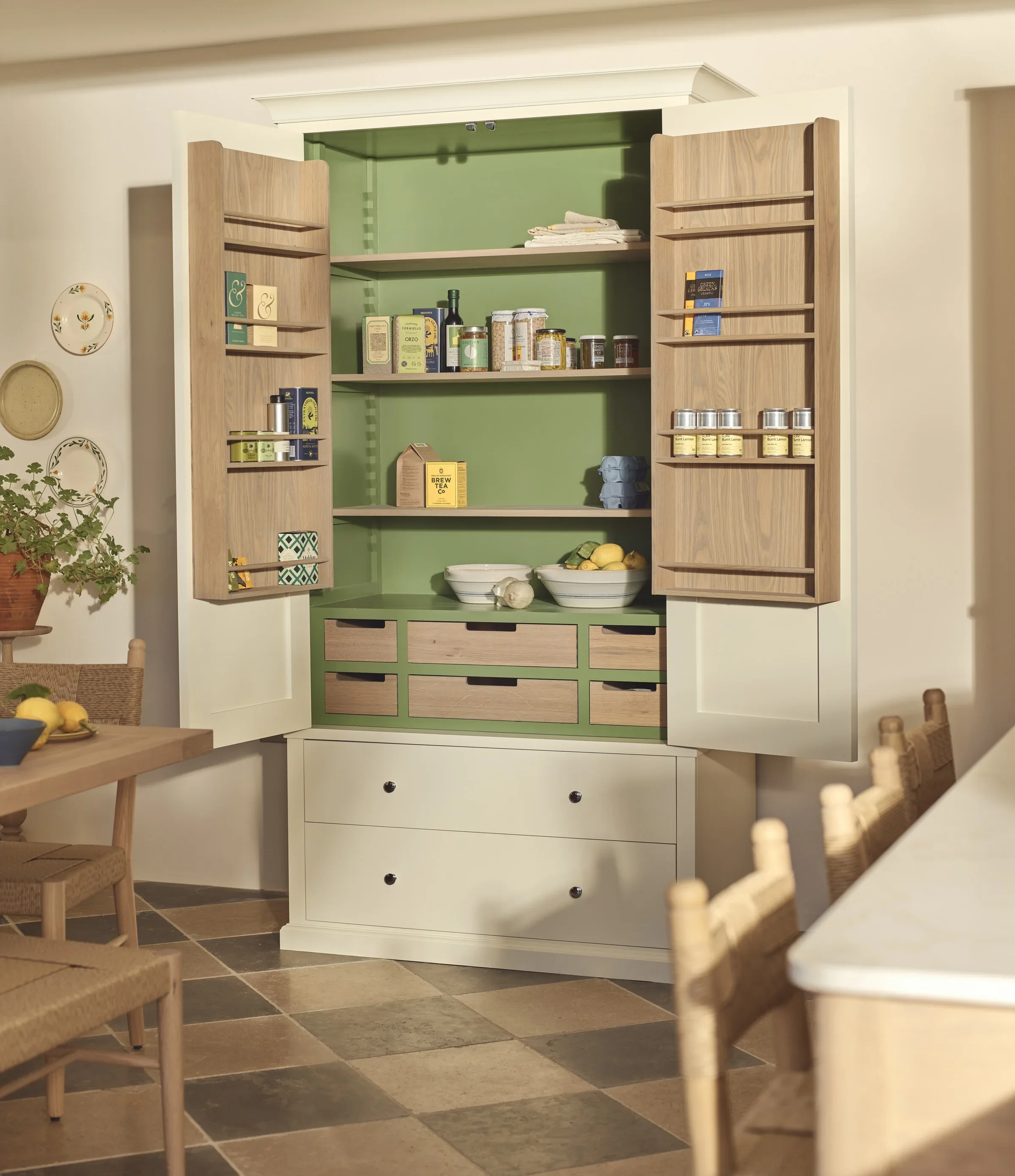
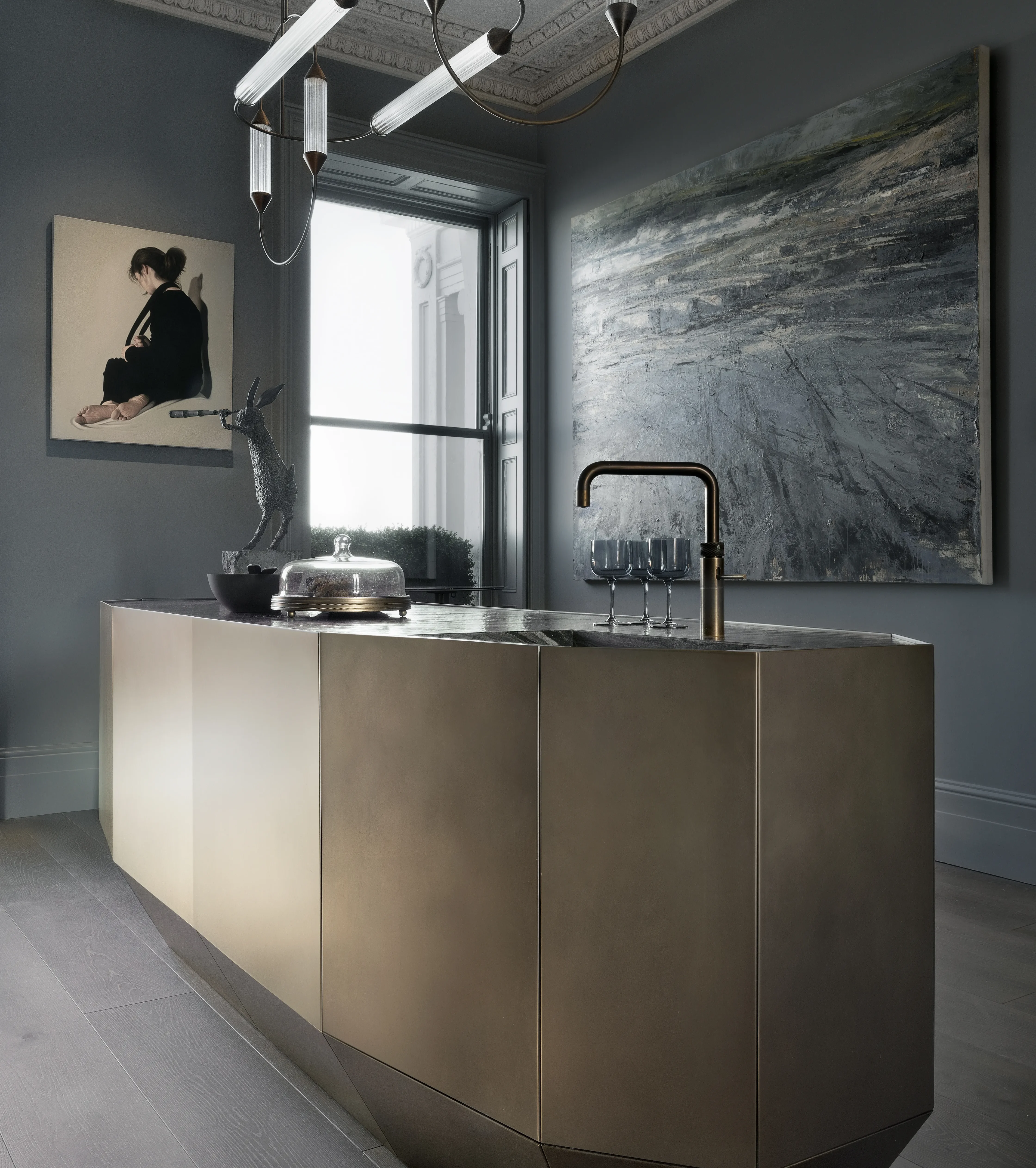
Instead of an approach where all units are uniform, Sorcha is seeing a more individual approach to each piece. “Islands can feel more like bespoke tables, and larder cupboards can feel more like furniture pieces. Banquettes, dressers and glazed cabinets all help soften the fitted look and make the room feel more layered. Even textile touches, such as a skirted sink or upholstered banquette, can move the kitchen away from pure utility and towards something more relaxed and room-like.”
How appliances are treated is key to pulling off this look, Sorcha explains. “Integrated fridges and dishwashers really help reduce visual clutter, while we’re seeing more and more clients moving away from bulky overhead extraction, keeping sightlines cleaner and in doing so it gives much more flexibility to the overall kitchen layout, allowing for much more freestanding pieces.”
In the details
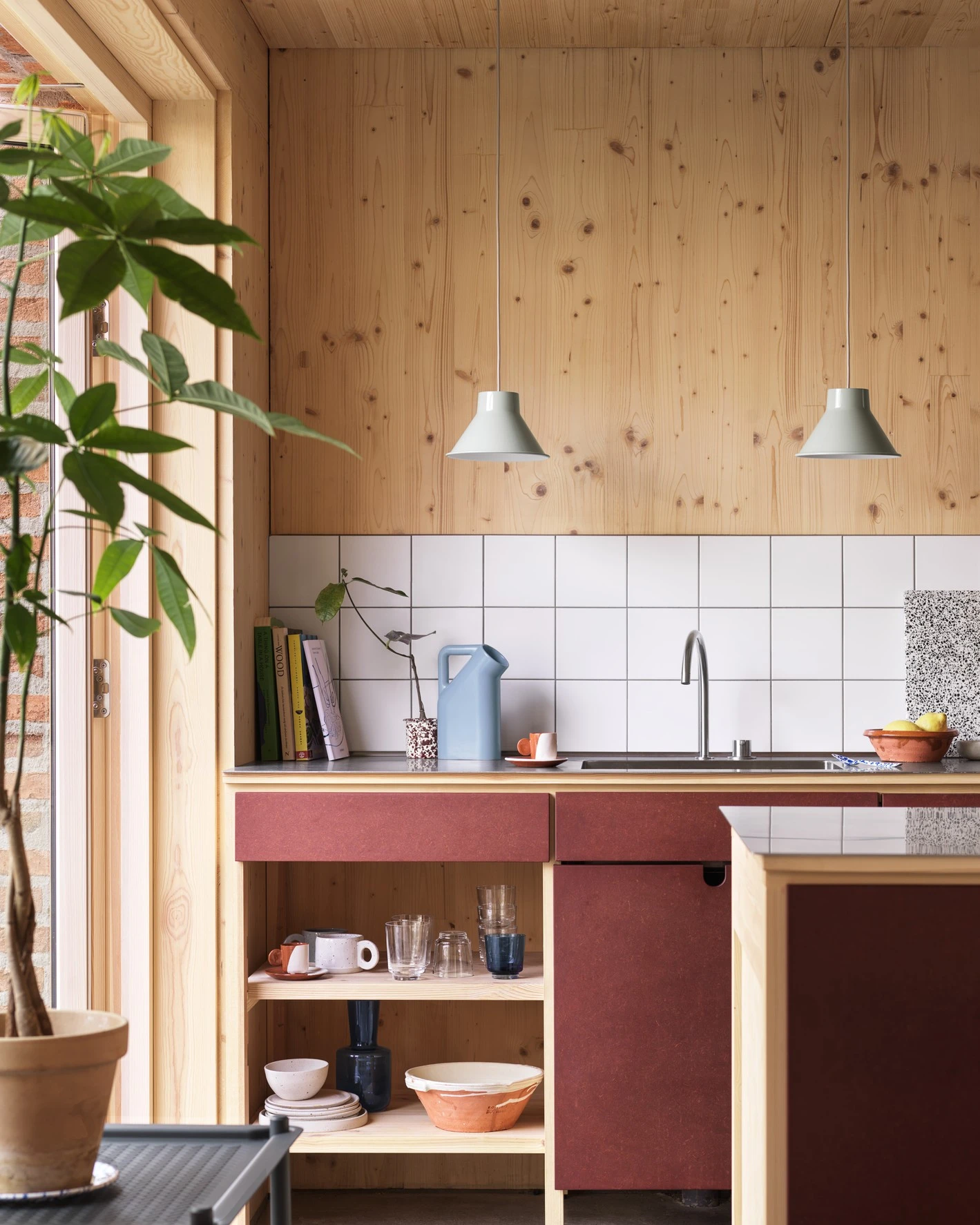
When it comes to lighting, rather than relying on bright overhead lights alone, adding layered light makes the space feel much more relaxing. “From integrated cabinet lighting to task LEDs under shelves, this makes the room feel calmer and less exposed, especially in the evening. It is often softer, lower-level light that makes a kitchen feel more like part of the home and less like a workspace.”
Hardware is also a great way to bring a design in a less traditional direction. “As more and more brands bring out distinctive, decorative and unique hardware, it’s become a really important part of how a kitchen is dressed. It may be a small detail, but the right handle or knob can pull cabinetry towards something more architectural, more decorative or more like furniture. Hardware has become far more decorative too, not just practical. It can become like the jewellery of the kitchen.”
Finally, Sorcha advises, the beauty of this approach is that it leaves more scope to add character, rather than a uniform set of classic units. “Concealed does not have to mean bland. A lot of personality can come through more clearly in grain, texture, colour, hardware, proportion, a beautiful stone or a really good timber tone. It is less about disguise, and more about ease.”
Also Read