





Romantic comedies once offered a shared script for how to flirt, how to fight and reconcile and most importantly, how to find our way back to each other. Roe McDermott writes that as those stories fade, so too does our cultural imagination for connection.
Reese Witherspoon has a theory about romance, and like many of her best roles, it comes wrapped in sunshine while carrying a sharper cultural insight than anyone expects.
Speaking on the Armchair Expert podcast, she responded to Dax Shepard’s account of his ‘beautiful’ friend who complained that men no longer approach her or her friends when they go out to restaurants or bars. Shepard’s conclusion was blunt: “The system is really fucking broken. Dudes need to be going up to girls and asking them for numbers.” Witherspoon did not hesitate. “Something’s wrong,” she said, before offering a more ambitious diagnosis. “I have a theory about it. It all has to do with rom-coms and sitcoms. You know how there’s been, like, the past 10 years, I would even say the past 15 years, this decline in the making of rom-coms? Or, like, legitimate big movie stars being in rom-coms?”
For Witherspoon, the loss is not simply aesthetic but pedagogical. “It’s not just rom-com movies, but I also think of rom-com television shows,” she continued, explaining that the series you watched as a preteen “made you imagine and visualise dating skills.” She watches Young Sheldon with her 13-year-old son because, she says, it includes “two other teenage characters who are dating,” making it one of the few remaining shows “where they’re learning about relationship and romantic dynamics.” In her view, the slow disappearance of romantic narratives has quietly created a generation whose relational imagination has been starved of models, gestures and scripts.
It is easy to mock fond nostalgia for Meg Ryan gazing across a bookshop or Hugh Grant blinking his way through declarations of love, and it is even easier to point out how many classic rom-coms contained troubling assumptions about gender and consent. Yet Witherspoon’s instinct touches on something sociologists have been documenting for decades: cultural narratives serve as our first, and often most lasting, teachers. They supply the emotional templates and conversational rhythms we absorb long before we ever have to use them. Children learn how to flirt from the timing of banter, how to apologise from third-act reconciliations, how to negotiate boundaries or acknowledge desire from scenes that model those skills in ways parents rarely discuss. These stories become practice grounds for intimacy.
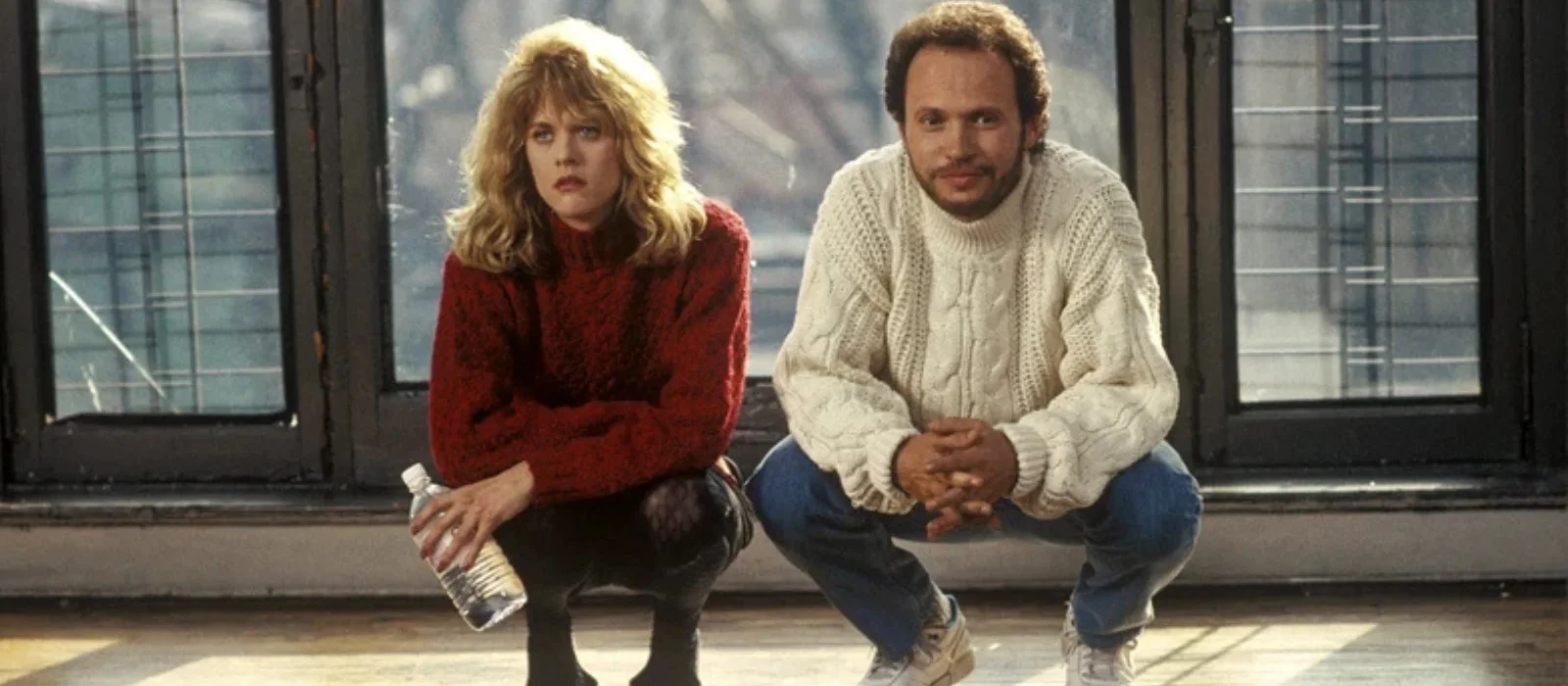
For a long time, those stories belonged to a shared cultural pool. When Harry Met Sally taught viewers that friendship can shift into romance without either losing dignity, and shows like Friends offered an extended seminar in the messy, looping, affectionate labour of connection. Even films that now read as dated or imperfect gave viewers a common emotional vocabulary that allowed them to understand each other’s references and anticipate each other’s expectations. Today, however, that monoculture has largely vanished. Instead of gathering around a handful of popular shows that provided unified romantic scripts, Gen Z grows up in a viewing landscape so atomised and personalised that two people in the same friend group may have no overlapping references at all. Romantic cues that once emerged from a shared canon now scatter across thousands of TikTok feeds and niche streaming platforms, which means the erosion of a communal romantic language is not just noticeable but consequential, especially in a moment when other, more insidious messages are poised to fill the gap.
And those messages, far from offering reassurance or possibility, often dramatise relational failure rather than connection. Over the past decade, the heterosexual couple has become one of the most charged sites for cultural storytelling, a space where anxieties about gender, ambition and emotional labour are played out with almost forensic intensity.
Cultural narratives serve as our first, and often most lasting, teachers.
In Fair Play, the balance of power between a woman rising professionally and a man collapsing under the weight of his own insecurity turns an intimate relationship into a pressure cooker, the tension between them escalating as his jealousy curdles into resentment. Anatomy of a Fall takes this further by dissecting a marriage with the tools of a courtroom drama, transforming the ambiguity of marital dissatisfaction into a legal, ethical and emotional puzzle.
Scenes from a Marriage and Marriage Story invite viewers to sit inside the prolonged autopsy of relationships that unravel in slow, painful increments, exposing all the ordinary miscommunications and accumulated hurts that make their collapse feel both devastating and inevitable. Fleishman Is in Trouble approaches marital breakdown from a sociological angle, tracing how gendered labour, unmet expectations and cultural pressures corrode a once promising partnership. Even comedies like Catastrophe, You Hurt My Feelings, and This Is 40 treat long-term relationships as terrains of awkwardness, misunderstanding and emotional fatigue rather than spaces of aspiration or warmth.
The recent remake of the bitter divorce comedy The War of the Roses, starring Benedict Cumberbatch and Olivia Colman, suggests that this appetite for narratives of domestic ruin is far from exhausted. If anything, it reflects a broader cultural moment in which heterosexual intimacy feels particularly strained, hemmed in by political and social forces that make connection seem riskier and more precarious than ever. It is within this atmosphere that the rise of heteropessimism becomes impossible to ignore.
Coined by scholars to describe the weary resignation many straight people feel toward heterosexual relationships, heteropessimism captures a mood of ironic detachment, disappointment and low-grade despair, particularly among women, who articulate the sense that straight relationships are structurally imbalanced, emotionally depleting, or simply not worth the trade-offs. It is not quite hatred of men, nor even fear, but a cultural shrug in the face of persistent gender inequality, an expectation that straight relationships will inevitably involve a degree of compromise that falls disproportionately on women.
This mood does not develop in a vacuum. The so-called male loneliness crisis dominates headlines, often framed as an epidemic of men suffering because women are no longer willing to partner with them on unequal terms, while increasing numbers of women speak openly about choosing singlehood because straight relationships demand labour, patience and emotional generosity that are rarely reciprocated. At the same time, misogynistic online communities target boys and young men with a mixture of grievance, paranoia and fantasy, producing a digital ecosystem in which entitlement, bitterness and suspicion toward women spread with alarming efficiency.
The consequences of this widening ideological gulf are felt by women not only in legislation and policy but in the ordinary negotiations of dating, communication and trust. Viewed together, these conditions make the dimming of the romantic imagination feel less like a cultural quirk and more like a rational response to a relationship landscape that feels newly treacherous.
It is not quite hatred of men, nor even fear, but a cultural shrug in the face of persistent gender inequality, an expectation that straight relationships will inevitably involve a degree of compromise that falls disproportionately on women.
Yet in the midst of this bleakness sits Couples Therapy, a reality television show that feels almost radical in its insistence that collapse is not the only available narrative. What distinguishes it is not sentimentality but patience. Featuring real couples who undertake weeks of couples therapy with Orna Guralnik, the show doesn’t fall into the easy lure of staging conflict for spectacle, instead allowing viewers to witness the slow, sometimes painful, sometimes astonishing work of actual repair. The series reveals how relational breakthroughs occur in increments, how ambivalence and tenderness can coexist, how people learn to listen in ways that feel both realistic and quietly hopeful. It neither idealises intimacy nor treats dysfunction as fate; rather, it suggests that relationships can be recalibrated with effort and willingness, even if they cannot always be saved.
Still, realism alone cannot sustain a culture’s romantic imagination. People need stories that model possibility and generosity, that offer glimpses of emotional courage and shared joy. They need flirtation and humour, moments of accidental chemistry, scenes where vulnerability is met with care rather than suspicion. Without such narratives, the cultural space once inhabited by the rom-com becomes easily colonised by cynicism. Witherspoon’s point is that romantic stories shape expectations long before most people experience real intimacy, and in an era marked by online radicalisation, social isolation and widespread relational confusion, the absence of hopeful models matters more than ever.
Past rom-coms were far from perfect, but they normalised the idea that love required communication, effort and empathy. They presented the act of trying to understand another person as worthwhile. They made emotional openness seem desirable rather than embarrassing. Contemporary romantic narratives could evolve these lessons with a more progressive understanding of gender and consent while still offering the hope and imaginative possibility that younger audiences are currently missing.
We do not need to return to outdated tropes. We need narratives that blend honesty with optimism, acknowledging the inequities and pressures shaping modern relationships while also depicting the pleasure and dignity of mutual desire. We need stories that show intimacy as a shared endeavour rather than a battlefield. And, crucially, we need narratives that interrupt the pipeline of misogynistic content reaching adolescent boys, replacing scripts of dominance and entitlement with models of reciprocity and respect.
Reese Witherspoon is right to miss rom-coms, not because they were perfect but because they taught people how to try. In a cultural moment when love feels newly uncertain, we need stories that expand our sense of what intimacy can look like. We need stories that reaffirm the value of connection rather than foreclose it. We need stories that remind us why reciprocity matters. Above all, we need stories that make it possible for people to imagine love as something attainable, rather than a relic of an easier past.
Hope, like any other skill, requires repetition. Romantic stories, at their most powerful, give us that rehearsal. They show us the selves we might become with one another. They remind us, even in an age of cynicism, that connection is still possible.
Also Read