
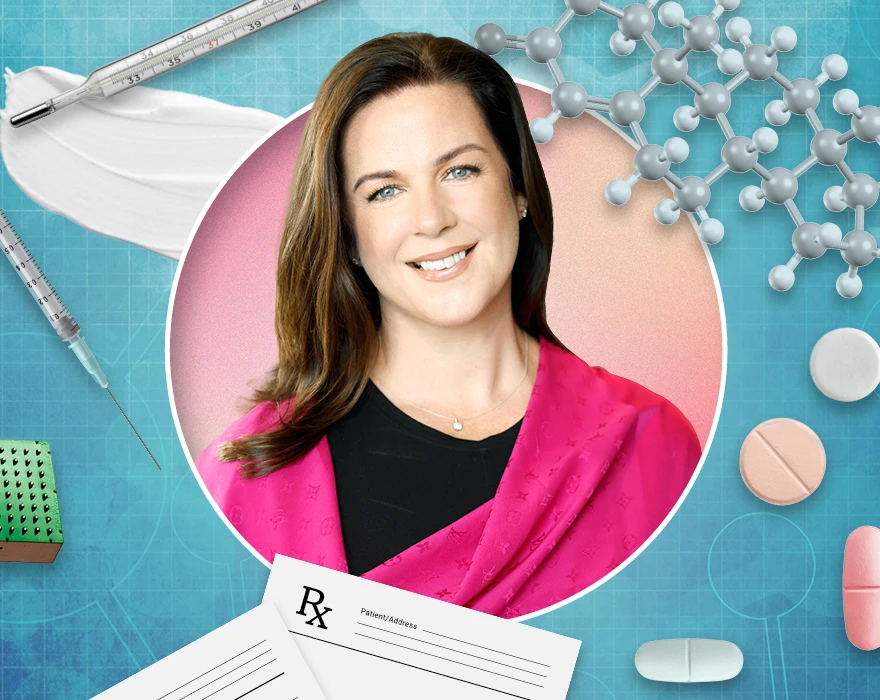
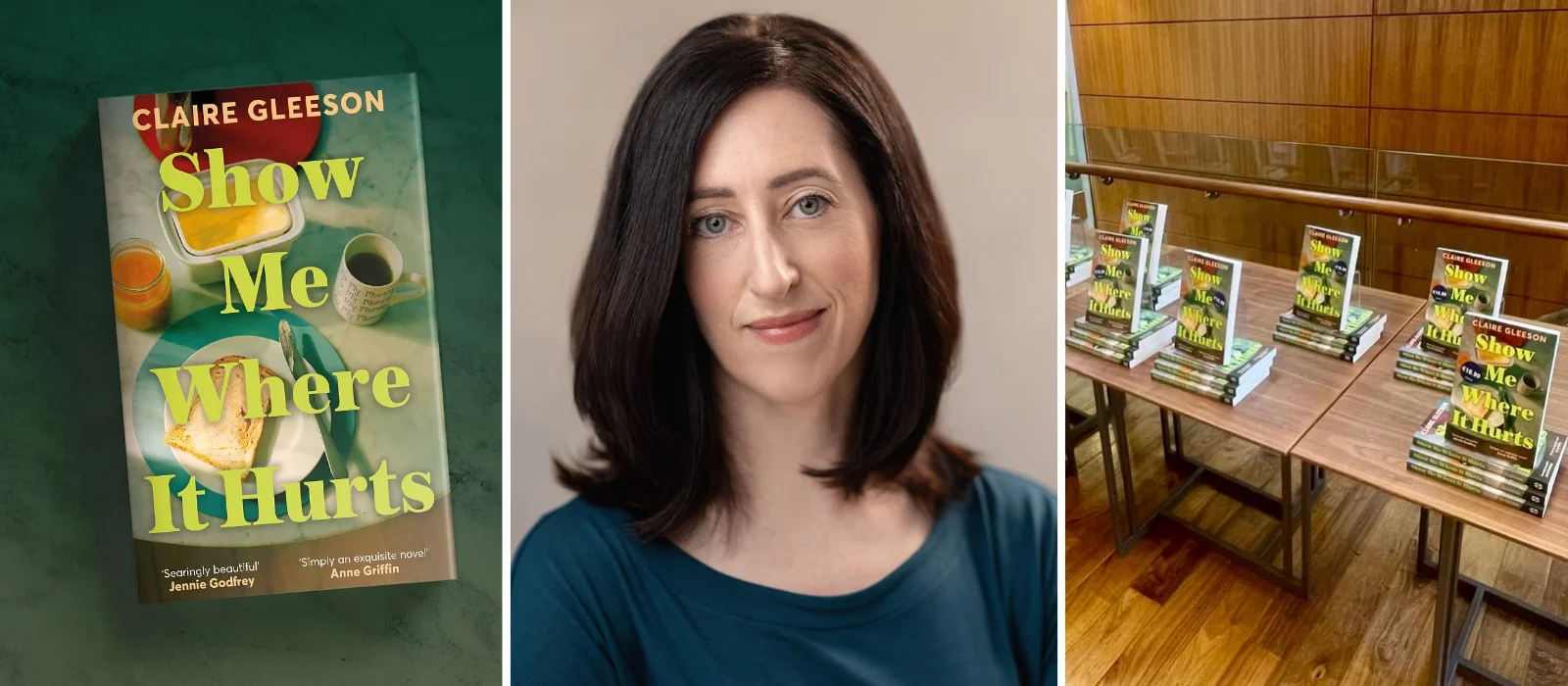
Claire Gleeson’s debut novel, Show Me Where It Hurts, asks the poignant question: How do you survive the unsurvivable? Here, the GP-turned-author shares her literary inspirations, writing process, and the profound poignancy to be found in reading.
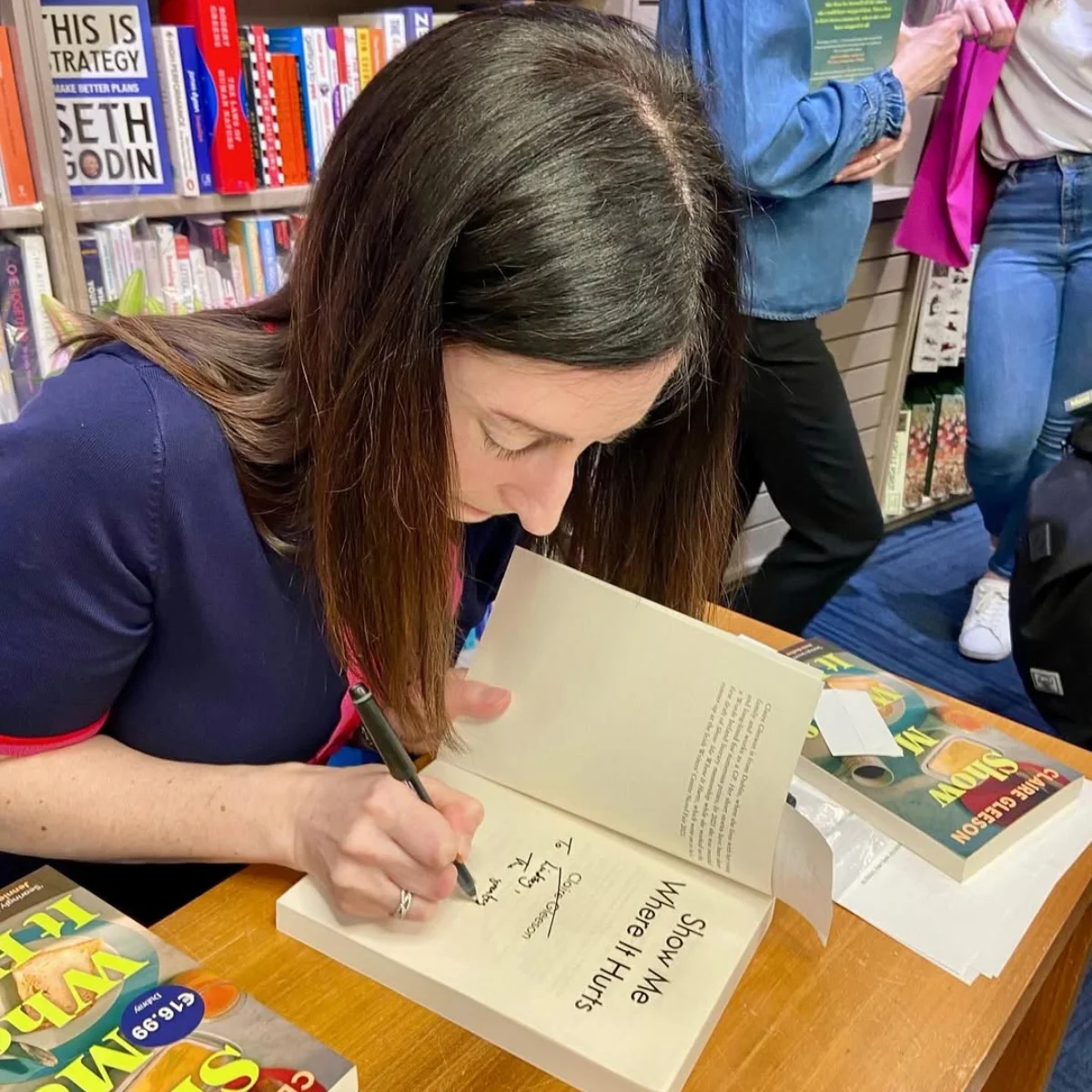
Claire Gleeson is from Dublin, where she lives with her young family and works as a GP. Her short stories have been short- and long-listed for numerous prizes. In 2021 she was awarded a Words Ireland literary mentorship while she worked on the first draft of Show Me Where It Hurts, which was released earlier this year and has been shortlisted for an An Post book award.
Rachel lives with her husband Tom and their two children: it’s the ordinary family life she always thought she’d have. All of that changes in an instant – when Tom runs the family car off the road, seeking to end his own life, and take his wife and children with him. Rachel is left to pore over the wreckage to try and understand what happened – to find a way to go on living afterwards.
What emerges is a snapshot of what it’s like to live alongside someone who is suffering, how you keep yourself afloat when the person you love is drowning, and how you survive irreparable loss.
Impossible to turn away from, Show Me Where It Hurts is a compelling, heartbreaking and ultimately life-affirming story of recovery and unexpected hope.
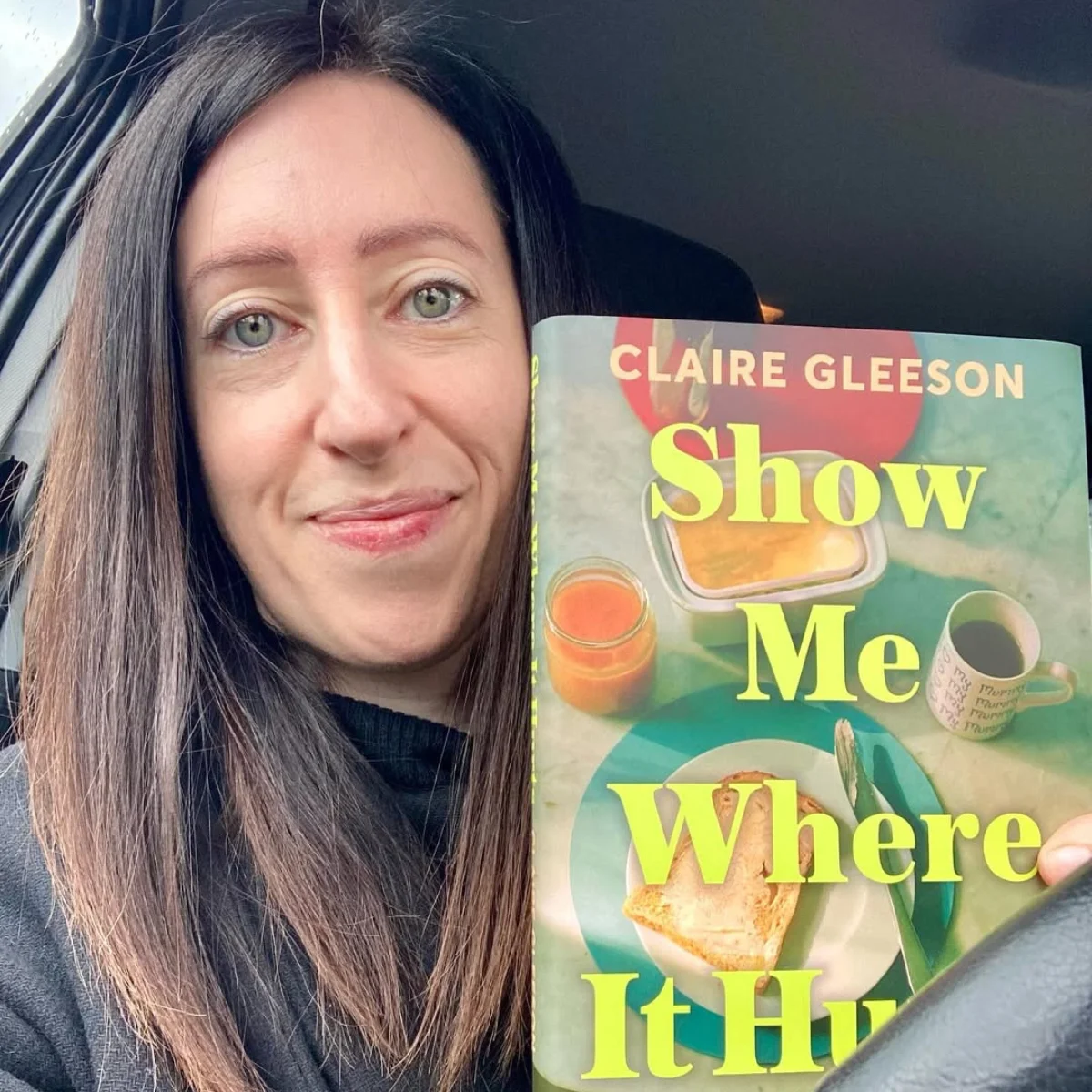
Did you always want to be a writer? Tell us about your journey to becoming a published author.
I did, and as a child I was always writing bits of stories and then losing interest before I would get them finished. It was really in my late twenties, when work had settled down a bit and I had more free time, that I started writing short stories and sending them out to literary journals and competitions, trying to build a bit of a writing CV. In my thirties I wrote two novels which didn’t get anywhere, before finally managing to secure a literary agent with Show Me Where It Hurts.
What inspired you to start writing?
I think reading had always been such a big part of my life, from early childhood, that I just assumed I would someday write myself. That feeling of resonance you get when you’re reading a book and come across a thought or feeling that you’ve had yourself but never heard anyone else articulate – that’s a really profound experience. The thought of being able to create that moment for a reader was very powerful.
Tell us about your debut novel, Show Me Where It Hurts. Where did the idea come from?
Show Me Where It Hurts is about a woman named Rachel who loses everything she has to a sudden act of violence by her husband; the dual timeline goes back and forth between the events leading up to this, and the years afterwards, as Rachel tries to rebuild some sort of a life for herself. In terms of where the idea came from, I had always been aware of these types of stories in the news—they’re not easy to forget—and at some point I started thinking about what it might be like to be the person who had survived this type of tragedy, and how you might start to pick up the pieces of a life that has been completely blown apart. It felt like such a rich emotional landscape that I was really keen to explore it.
What do you hope this book instils in the reader?
I suppose what I’m hoping people take from it is that behind the headlines there are real people with full lives, and that things are rarely as black and white as they might seem. That people can and do go on, even in the face of what seems like unsurvivable tragedy. And that there remains the capacity for joy in life, alongside the pain.
What did you learn when writing this book?
To pare everything back; not every thought or action needs to be put explicitly on the page. Readers are smart and will fill in the blanks.
Tell us about your writing process?
It would probably look a bit chaotic from the outside, because I don’t tend to write in sequence, but rather write individual scenes as they come to me. I promise it all makes sense in my head! My first drafts are usually quite clean, but a bit short, and I expand on them then as I’m revising. I don’t like to let anyone see what I’m working on until it’s at a fairly polished stage.
Where do you draw inspiration from?
Anywhere and everywhere – just observing life in all its messy glory. I work as a GP, and while obviously I would never use a patient’s own story in a novel, the job does give you a real insight into the human experience, and the sorts of things people are struggling with every day. And of course I draw huge inspiration from other books. Ordinary life gives you the stories; reading widely teaches you how to write them.
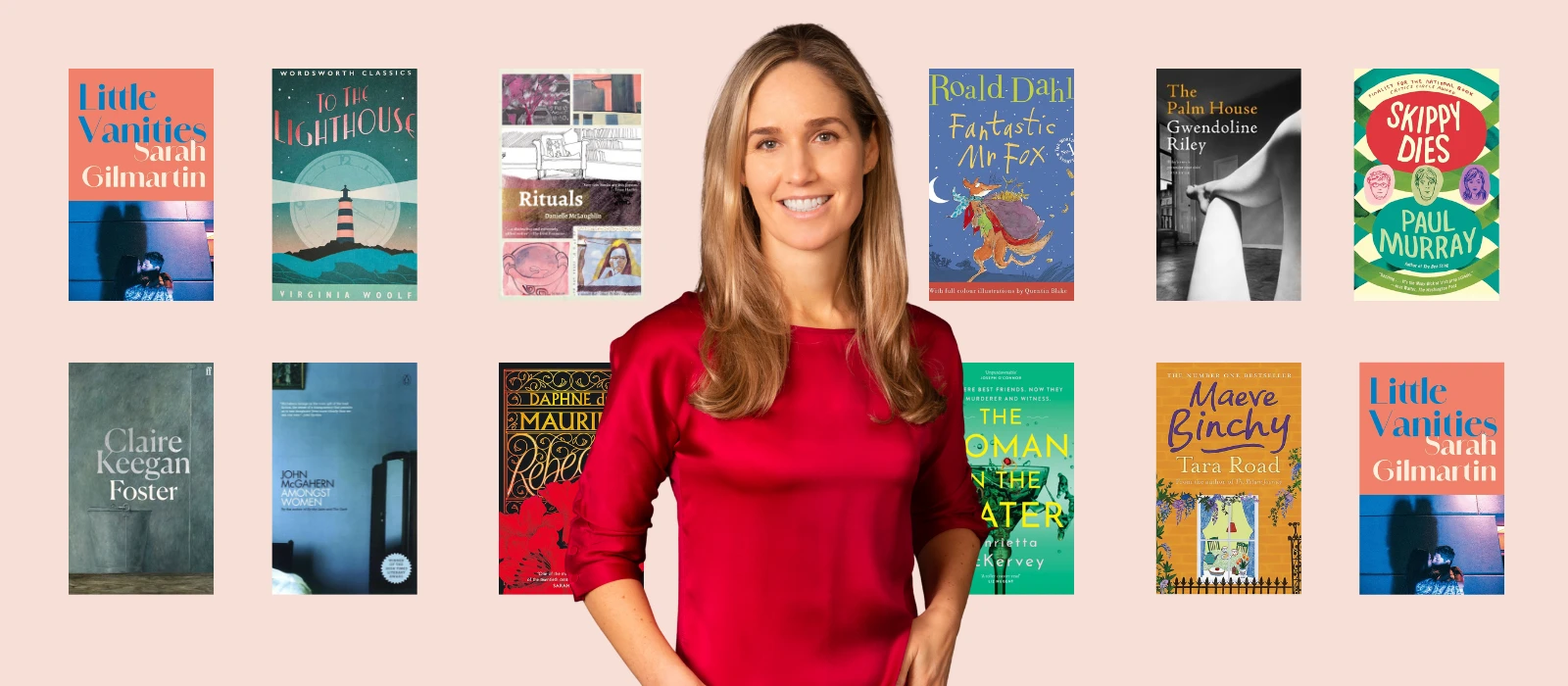
What are your top three favourite books of all time, and why?
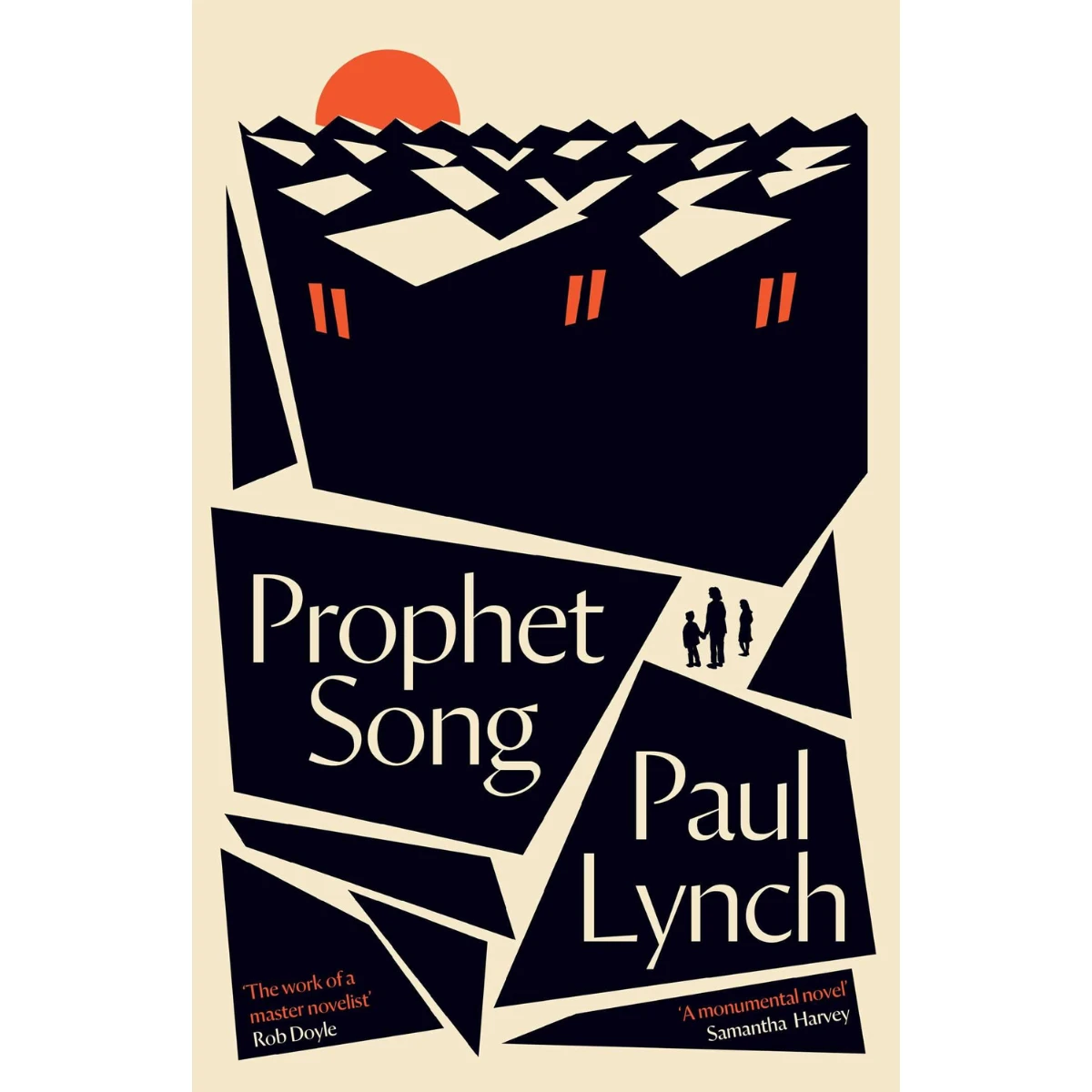
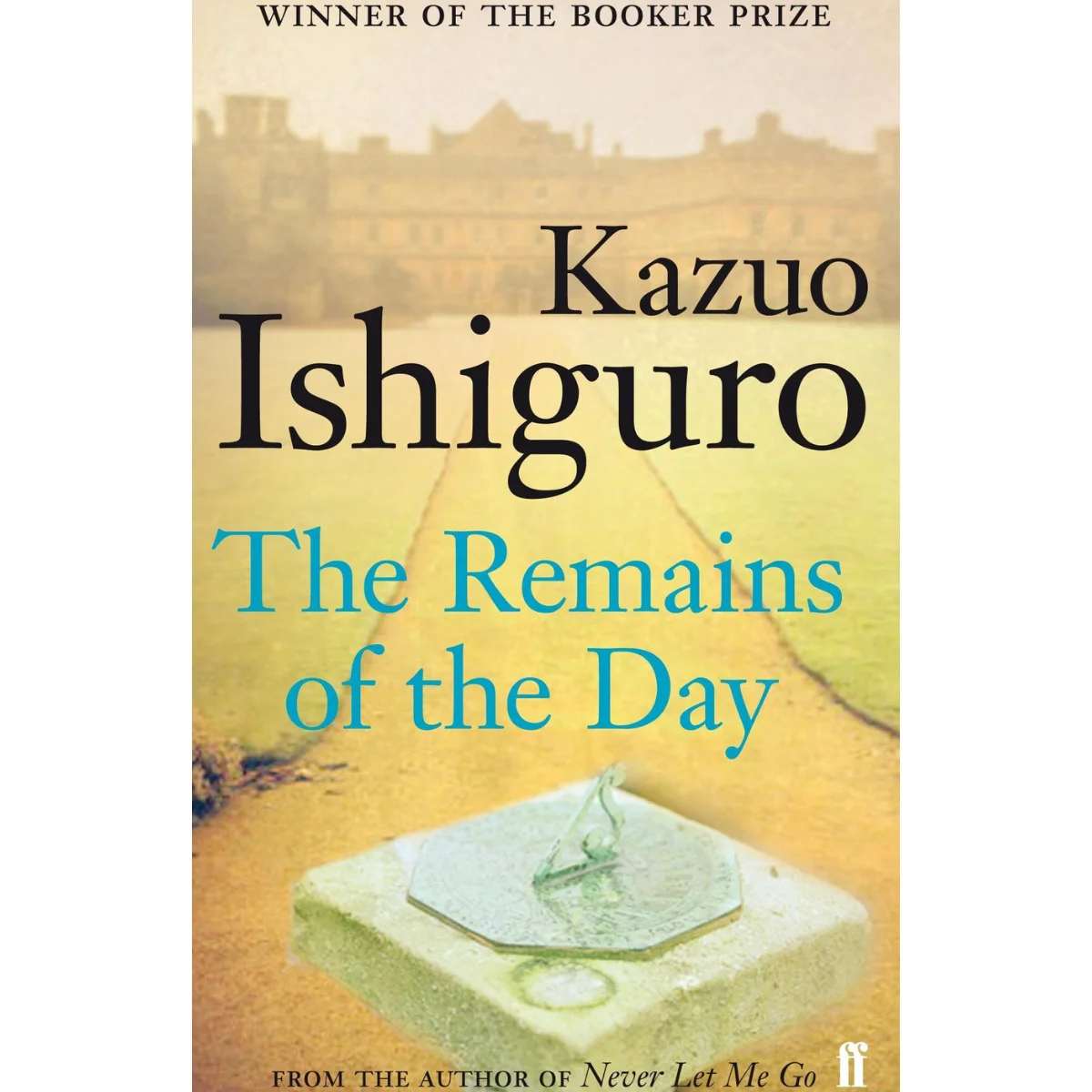
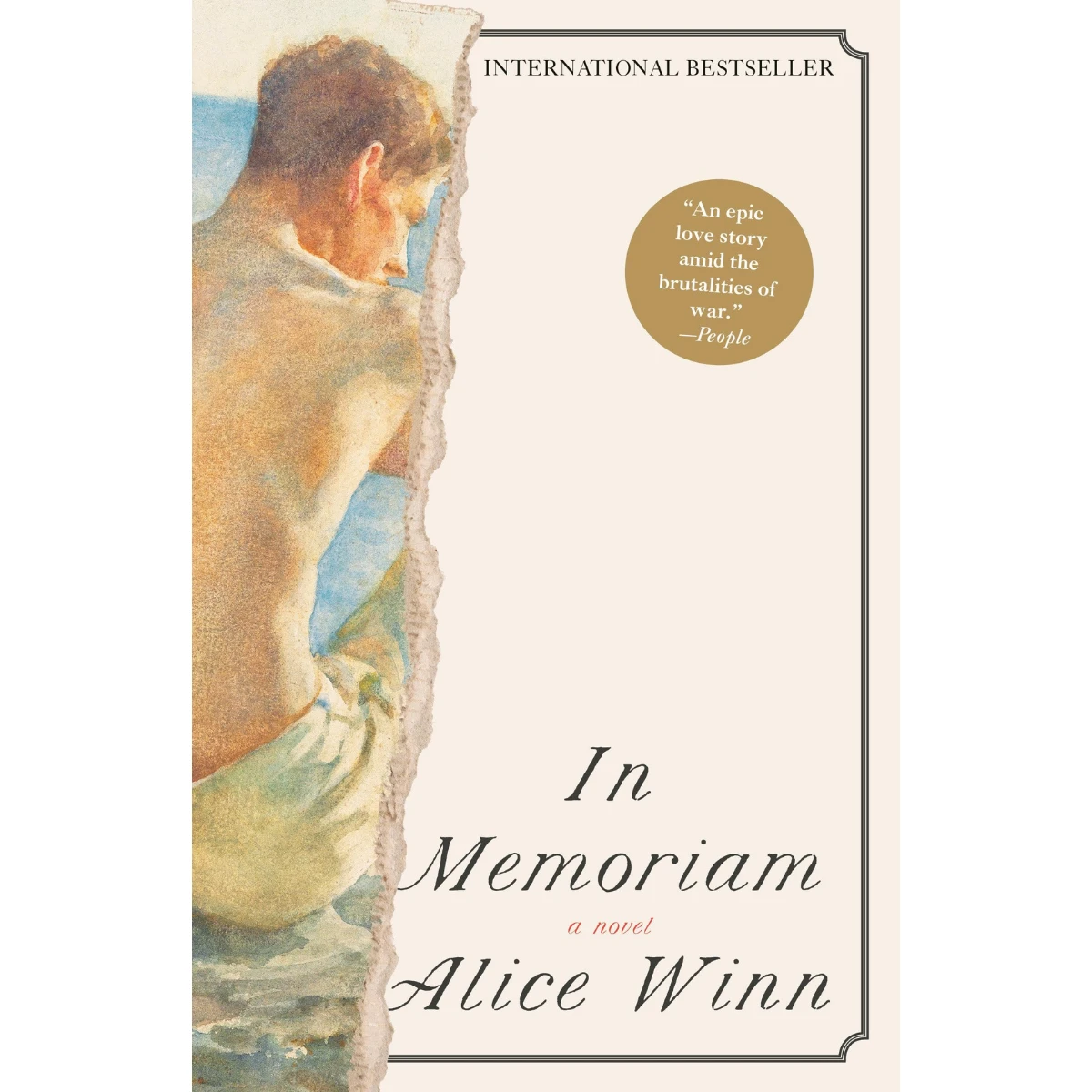
I could try for a year and still not be able to settle on a list I’m happy with. But The Remains of the Day by Kazuo Ishiguro is as close to a perfect novel as you can get, and I’m going to add In Memoriam by Alice Winn and Prophet Song by Paul Lynch as two from recent years that I stayed up late into the night to finish.
Who are some of your favourite authors, Irish or otherwise?
Another impossible question! Anne Enright, Sarah Moss, Curtis Sittenfeld, Meg Mason, Sally Rooney, Sebastian Faulks are just some of the many I love. We’re spoilt for choice these days, in Ireland and beyond.
What are some upcoming book releases we should have on our radar?
Two of the all-time great novelists, Maggie O’Farrell and Elizabeth Strout, have new books coming out next year, which is exciting. And two of my favourite Janes have new crime novels out soon too – Jane Harper with Last One Out and Jane Casey with Everything She Didn’t Say.
What book made you want to become a writer?
My very first attempt at a novel was a (very derivative!) boarding school story, so I think I have to credit the series of Enid Blyton and Elinor M. Brent-Dyer as my earliest inspiration.
What’s one book you would add to the school curriculum?
It’s great to see the broad range of books already on the curriculum these days – a real mix of classics and contemporary novels. I think I’d add Kate Atkinson’s Behind the Scenes at the Museum, which was such a formative read for me as a teenager.
What’s the best book you’ve read so far this year?
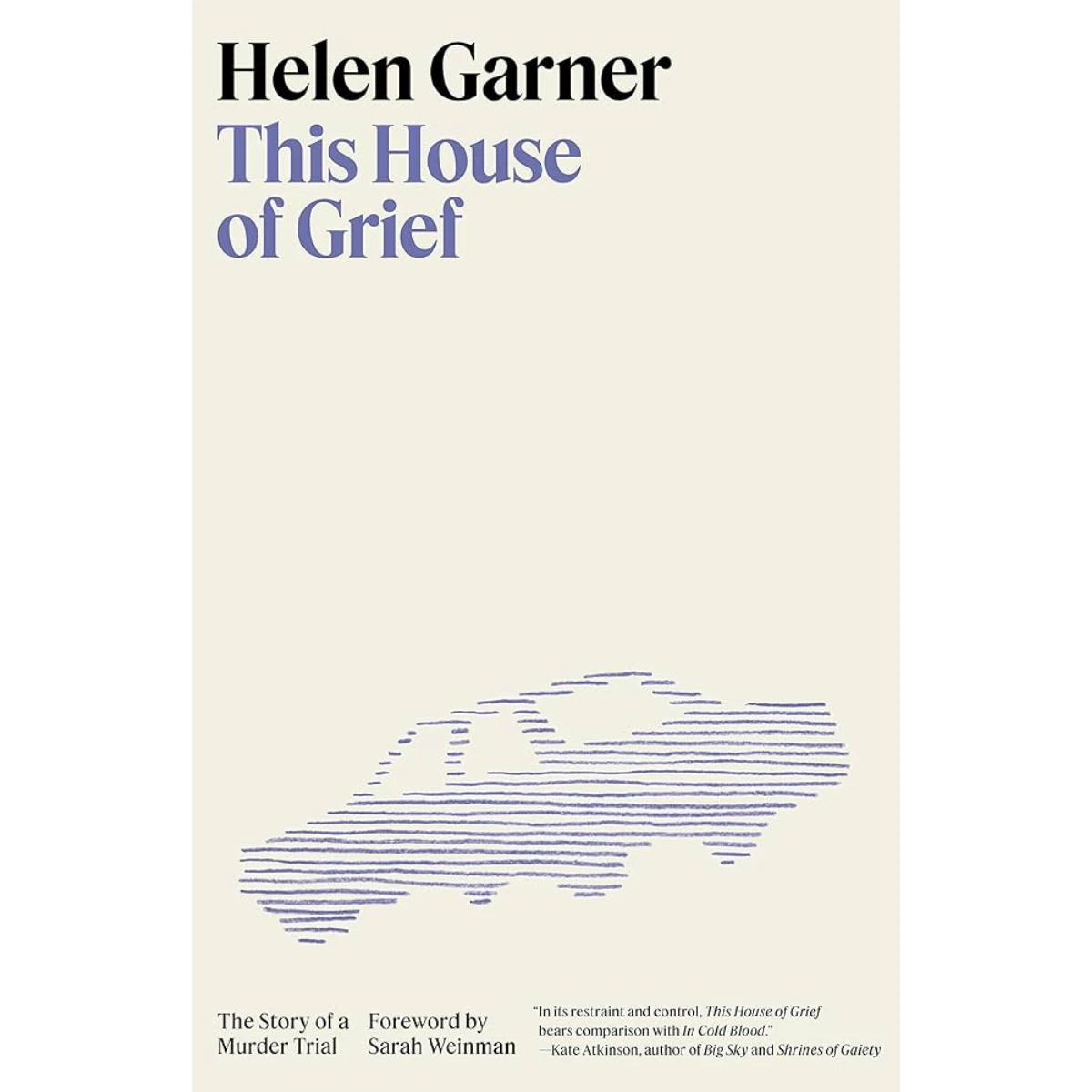
Helen Garner’s This House of Grief, which is not a new release but one that had been on my radar for a while. It’s narrative non-fiction, about a real-life tragedy and its aftermath, and as gripping as any novel.
What’s your favourite bookshop in Ireland?
There’s very strong competition, but I think I’ll have to go with Chapters in Dublin, for its sheer size, range of new and second-hand books and the lovely cafe upstairs, which is the perfect place to settle down with a new read.
What’s some advice you’ve got for other aspiring writers?
Write to the end – you can always fix it later, so take the pressure off to get it right the first time. It’s so easy to start a new project, when you’re full of ideas and enthusiasm; it took me quite a while to develop the stamina to get to the end of a novel-length piece. But it’s so worth it when you do.
Lastly, what do the acts of reading and writing mean to you?
Next to the people I love, reading has always been the greatest joy of my life. To have a book out now, and to feel I’ve made some contribution to this world of literature that has enriched my own life so much, honestly means everything to me.
Claire Gleeson is shortlisted in the Newcomer of the Year category in this year’s An Post Irish Book Awards. You can vote for all your favourite books from 2025 at www.irishbookawards.ie/vote.
Also Read