









How method acting became a gendered performance of power in Hollywood
Kristen Stewart’s comments expose why men’s “commitment” is celebrated, women’s professionalism is punished, and abuse is too often excused, writes columnist Roe McDermott.
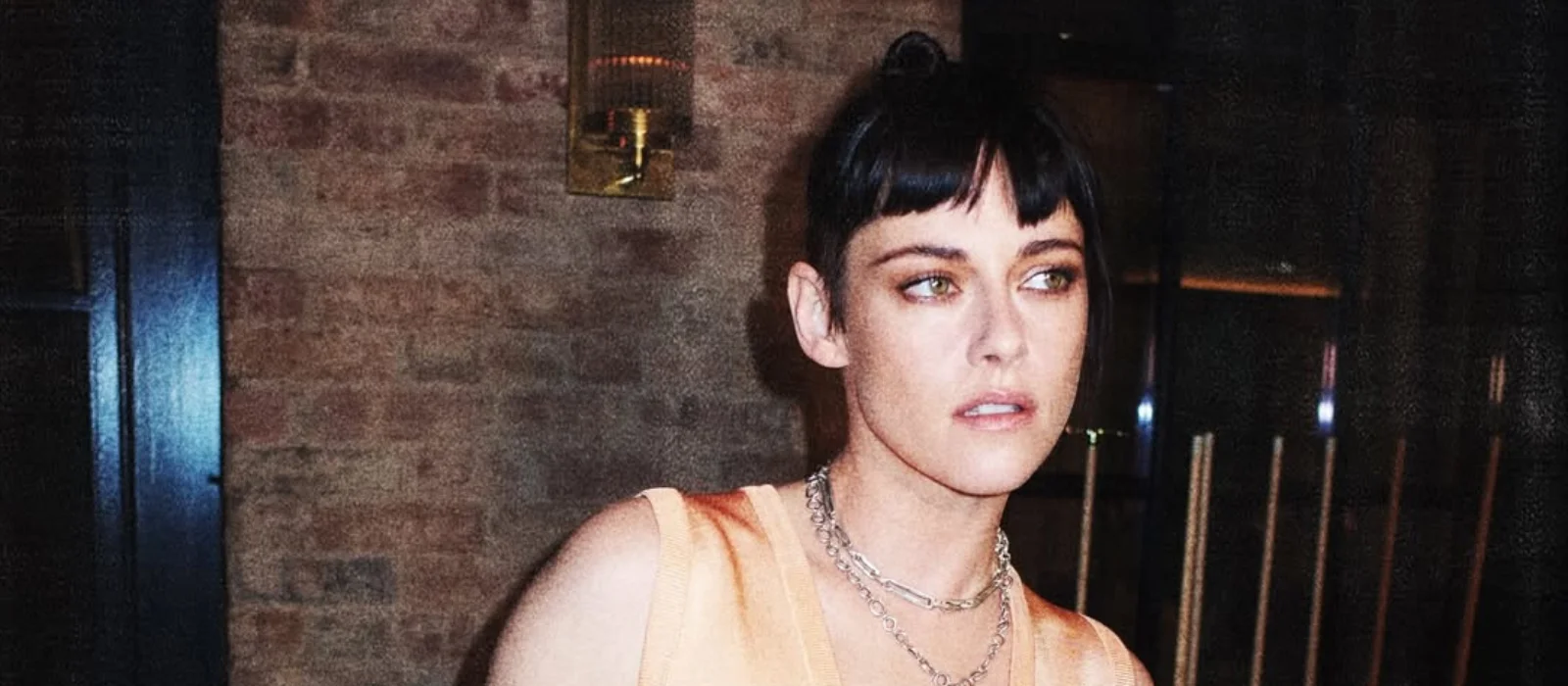
Kristen Stewart is weighing in on the Method Acting debate, and doing so with the kind of precision that quietly destabilises an entire mythology. In a recent conversation with The New York Times, the actor and director described acting as by nature “quite embarrassing and unmasculine,” a craft defined less by bravado than by submission, by the willingness to serve someone else’s ideas, emotions, and rhythms.
“Performance is inherently vulnerable and therefore quite embarrassing and unmasculine,” Stewart said, adding that there is “no bravado in suggesting that you’re a mouthpiece for someone else’s ideas. It’s inherently submissive.” Method acting, in her telling, is often less a creative necessity than a defensive manoeuvre, a way for some male actors to protrude out of that vulnerability before stepping back into it. “Have you ever heard of a female actor that was method?” she asked, a question that lands not as provocation but as diagnosis.
The remarks came during a discussion of Marlon Brando’s famously idiosyncratic performance in 1978’s Superman, including his mispronunciation of “Krypton,” which Sean Penn once framed as Brando’s way of maintaining integrity while appearing in a “sellout” movie. Stewart was careful to say she was not “coming for” Brando (while shrugging in a way that suggested that even if she was, it may be warranted). What she lingered on instead was how readily men in Hollywood are “aggrandised for retaining self” in moments like these. “Brando sounds like a hero, doesn’t he? If a woman did that, it would be different.”
She went on to describe the ritualised, attention-seeking, energy-changing behaviours that often precede male vulnerability on set. “There’s a common act that happens before the acting happens on set: If they can protrude out of the vulnerability and feel like a gorilla pounding their chest before they cry on camera, it’s a little less embarrassing. It also makes it seem like a magic trick, like it is so impossible to do what you’re doing that nobody else could do it.”
Stewart then recalled a conversation that reaffirmed her belief that actresses are not given the same liberties when it comes to their craft. “I asked a fellow actor: ‘Have you ever met a female actor that was method and needed to scream and do a whole thing?’ As soon as I said, ‘male actor, female actor,’ the reaction was like, ‘Do not mention the elephant in the room.’ And he goes, ‘Oh, actresses are crazy.’”
What Stewart is naming is not simply hypocrisy, but a gendered structure of meaning that governs how seriousness in acting is recognised and rewarded. Acting itself, with its emotional permeability and willingness to be shaped by others, has long been coded as feminine and therefore suspect. Method acting, at least in its popular mythology, offers a way to masculinise that vulnerability, to repackage submission as endurance, openness as conquest. It allows male actors to frame their exposure as something they have mastered rather than something they must tolerate.
Method acting can be traced back to early twentieth-century teachings of the Russian theatrical realist Konstantin Stanislavski and Lee Strasberg, often described as the father of method acting in Hollywood. Traditional method techniques encouraged actors to draw on their own experiences and emotions to give an authentic performance. Modern interpretations, however, more commonly focus on replicating the external conditions of a character’s life in order to access an internal emotional state.
Method acting, at its most neutral, is often described as commitment and immersion. Actors change their bodies, habits, and daily rhythms to better understand a character’s inner life. Christian Bale starved himself and went for days without sleep to play an insomniac in The Machinist. Leonardo DiCaprio ate raw bison liver and slept in animal carcasses to play a hardened frontiersman in The Revenant. Anne Hathaway lost twenty-five pounds and cut off her hair to play a destitute sex worker in Les Misérables. Hilary Swank trained extensively to play a boxer in Million Dollar Baby, sustaining multiple injuries. During the filming of The Crucible, Daniel Day-Lewis built his own seventeenth-century house with tools from the era and lived without running water or electricity. On the surface, these stories are often grouped together as evidence of dedication. But the way they are interpreted, narrated, and rewarded reveals a stark gender divide. Men’s method acting is framed as an assertion of mastery. Robert De Niro’s transformation for Raging Bull is remembered as a feat of will, a conquest. Christian Bale’s physical extremes are catalogued like athletic records. Daniel Day-Lewis’s immersive preparation is treated as myth-making. The male actor goes method and returns triumphant, having expanded his legend, his authority, his sense of self.
When women undergo similarly demanding transformations, the meaning shifts. Their commitment is framed not as mastery but as erasure. They “disappear” into roles. They “uglify” themselves. They lose weight, endure pain, abandon conventional attractiveness, and are praised for how completely they shrink. Where men retain and amplify selfhood through method acting, women are expected to surrender it. The transformation must consume them, not empower them. They are not meant to return enlarged, but quieter, smaller, grateful to be let back in.
This difference is not merely rhetorical. Men’s method acting is allowed to be expansive, indulgent, even disruptive. It can reshape sets, schedules, and the emotional atmosphere around them. Women’s method acting, by contrast, is expected to be contained within their own bodies. It should hurt them, not others. It should make them less, not more. Commitment, for women, is only acceptable when it is self-destructive rather than self-authorising.
Then there are actors whose version of method acting goes beyond training or physical transformation and actively harms other people. Unsurprisingly, this form of method acting is overwhelmingly tolerated and encouraged in men.
On the set of Suicide Squad, Jared Leto decided to embody the Joker’s cruelty twenty-four seven, which included harassing his co-stars. Leto openly bragged in interviews about sending Margot Robbie and Viola Davis live rats, used condoms, and anal beads. Rather than facing consequences for sexual harassment, he was enabled on set and applauded for his “commitment.”
While playing a serial killer in The Fall, Jamie Dornan decided that the best way to understand his character would be to stalk random women, proudly recounting how he selected a woman and followed her home one evening. Stalking strangers becomes justifiable, apparently, if you are “in character,” even if the woman has no way of knowing the difference.
Actresses who express opinions are punished. Actors who harass, intimidate, or assault people in the name of art are declared geniuses, risk-takers, provocateurs, enfant terribles. This is systemic sexism.
While filming Kramer vs. Kramer, Dustin Hoffman emotionally abused Meryl Streep, whispering the name of her recently deceased partner before scenes to destabilise her. He also physically assaulted her, slapping her without consent and throwing a wine glass past her head so that it shattered, leaving shards in her hair. Hoffman was rewarded with the Oscar for Best Actor.
These are only a few examples. Actors such as Shia LaBeouf, Vincent D’Onofrio, and Judd Nelson have also abused or harassed co-stars in the name of method acting. The list of “method directors” is just as long. Alfred Hitchcock, Stanley Kubrick, Lars von Trier, Gaspar Noé, David O. Russell, and Quentin Tarantino have all famously emotionally abused or physically endangered actors to provoke performances, only to receive widespread acclaim.
Though this abuse does not exclusively target women, it frequently does, and often involves sexual violence. Maria Schneider’s account of Last Tango in Paris remains one of the most devastating examples. Schneider revealed that director Bernardo Bertolucci and co-star Marlon Brando conspired without her knowledge to violate her onscreen, with Brando applying butter to her genitals during a rape scene to provoke a “real” reaction. Bertolucci later said he wanted “her reaction as a girl, not as an actress.” Schneider said, “I was crying real tears. I felt humiliated and to be honest, I felt a little raped.” The film entered the canon. Her trauma became trivia.
In the supposed pursuit of “authenticity,” men are able to abuse women and walk away with their reputations intact, even enhanced. The long-term impact on the victims, personally and professionally, is treated as incidental. For many abusers, the trauma inflicted is justified as a means to a creative end.
That these abusive method actors and directors are overwhelmingly men is not a coincidence. While many actresses have studied method acting, including Marilyn Monroe, Ellen Burstyn, Sally Field, and Jane Fonda, their approaches never required abusing others. For women in Hollywood, such behaviour would not be rewarded; it would be punished swiftly.
This gender imbalance is reinforced by the vast chasm between what a man must do to be deemed unworkable – a threshold we still seem unable to locate – and how little it takes for a woman to be branded “difficult.” The kinds of actions routinely tolerated, even celebrated, in male method actors would be career-ending for women. Men who shout, intimidate, disrupt sets, or refuse to collaborate are framed as uncompromising artists. Women who critique scripts, express dissatisfaction, or assert boundaries are branded “difficult.”
Katherine Heigl’s career was effectively stalled after she very correctly pointed out sexist stereotypes in Knocked Up and criticised the writing on Grey’s Anatomy. Mo’Nique has spoken about being blackballed for speaking openly about pay inequity. In each case, the transgression was not bad behaviour, but the act of naming the disparity.
Actresses who express opinions are punished. Actors who harass, intimidate, or assault people in the name of art are declared geniuses, risk-takers, provocateurs, enfant terribles. This is systemic sexism.
This asymmetry mirrors broader patterns in the industry. From routine sexism in casting rooms to the more overt retaliations of the Weinstein era, the lesson for women has been consistent: compliance is rewarded, while resistance is remembered and punished. The gendered romanticisation of method acting fits neatly into this system, elevating male volatility to an aesthetic principle while pathologising women’s professionalism as temperament.
Further along that spectrum, the pattern darkens. There is a grim consistency to the roster of male method acolytes held up as exemplars. Jared Leto, Shia LaBeouf, Dustin Hoffman, and others have all faced publicly reported accusations of misconduct toward women. The overlap is not incidental: a culture that valorises male intensity while discouraging accountability creates ideal conditions for harm. Method acting becomes not just a technique, but a permission structure.
None of this is an argument against seriousness or immersion in performance. It is an argument against the selective mythology that clings to certain bodies and not others. In pointing out that performance is coded as feminine and therefore suspect, Stewart invites us to rethink what we mean when we praise commitment.
Perhaps the bravest thing an actor can do is not barricade themselves behind a persona of suffering genius, but show up, respect boundaries, and trust that the craft does not require collateral damage. If that sounds unheroic, it may be because our definition of heroism has been warped by too many stories that confuse cruelty with depth.
The task now is not to abolish method acting, but to strip it of its gendered alibis, and to imagine an industry where vulnerability is not something to be apologised for or weaponised, but simply acknowledged as the shared condition of anyone brave enough to step in front of a camera.
Photography by @hairbyadir.
Also Read