






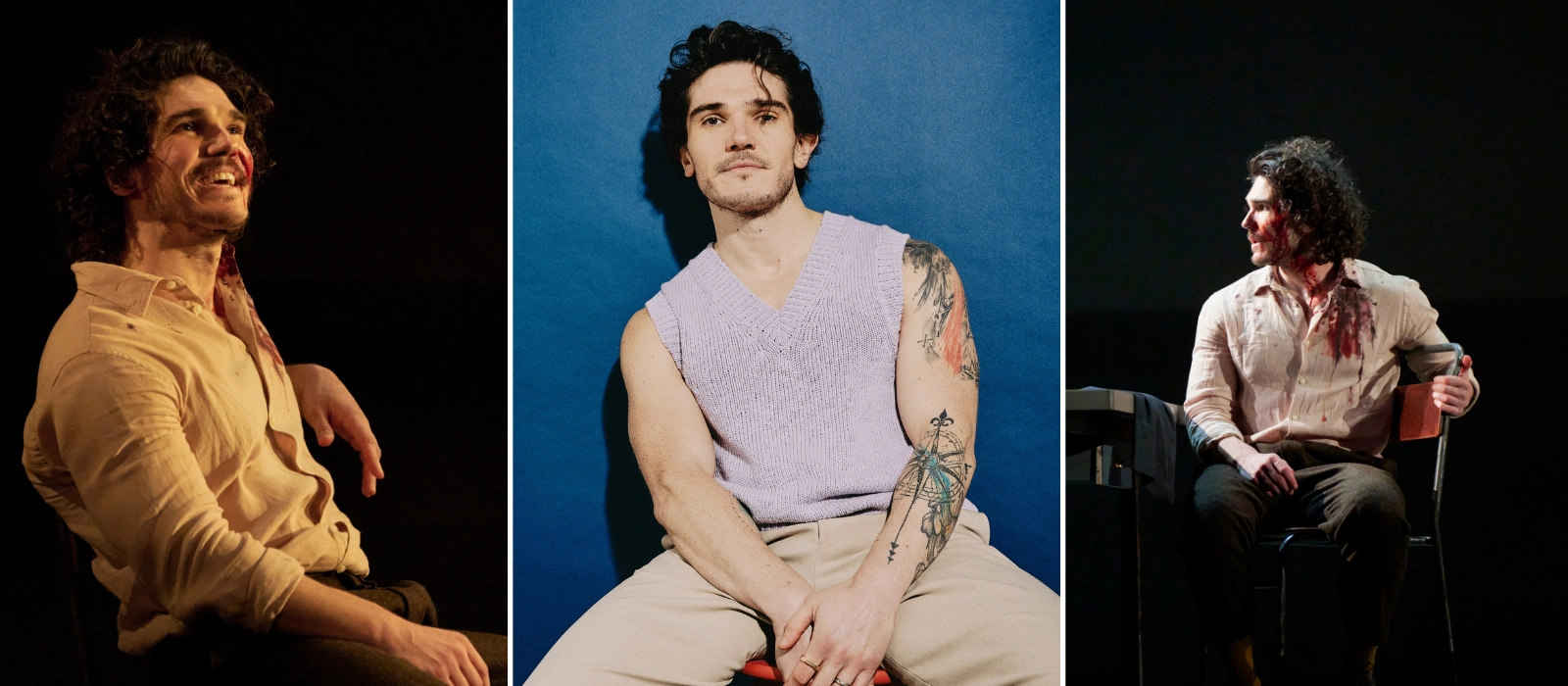
Fra Fee: ‘Working on a Martin McDonagh production is a real bucket list role’
Currently starring in Martin McDonagh’s The Pillowman at the Gate Theatre, Fra Fee lifts the curtain on the world of Irish theatre, his points of reference, and the magic of the arts.
Born in Dungannon, Co Tyrone, Fra Fee left Northern Ireland at the age of 18 to follow his aspirations to be on stage. Now, between legendary performances across the West End, Broadway and the National Theatre, and roles in BAFTA-nominated television shows like Lost Boys and Fairies, Fra Fee is a true talent.
From appearing alongside Jeremy Renner and Hailee Steinfeld in Marvel’s Hawkeye, and sharing the screen with Russell Crowe in Les Mis to taking to the stage for the world premiere of Jez Butterworth’s The Ferryman directed by Sam Mendes, Fra’s experience speaks for itself.
Fra is currently playing the role of Katurian in Martin McDonagh’s The Pillowman at the Gate Theatre, running until September 7. Directed by Olivier Award winner Lyndsey Turner, Fra stars alongside Ryan Dylan, Aidan McArdle, Julian Moore-Cook, Donncha O’Dea and Jade O’Connor.
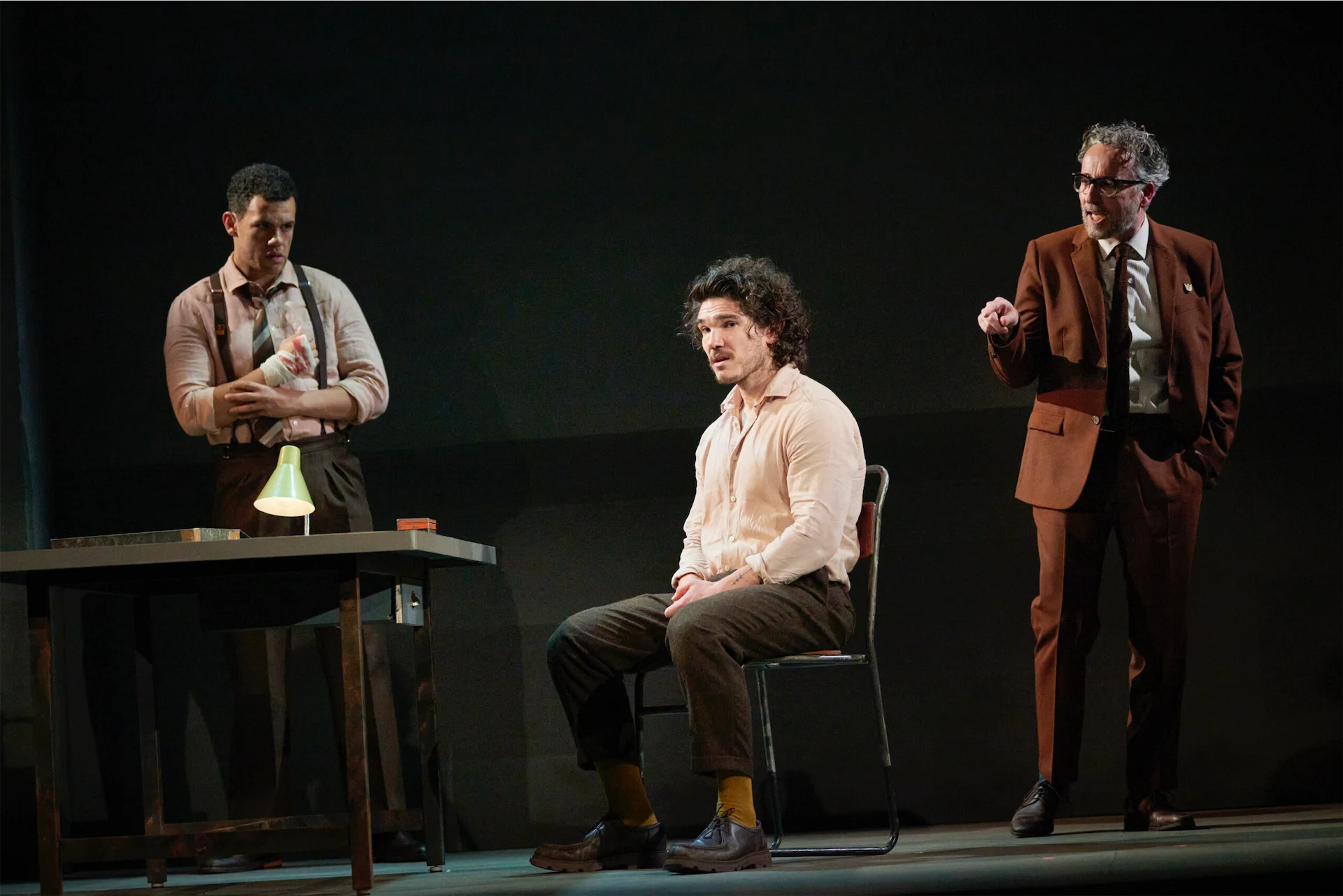
Described as a savage tale about the stories we tell to keep the monsters at bay, The Pillowman opens as a writer is arrested while a series of murders, bearing a chilling resemblance to his own stories, come to light. As two detectives chase a confession, they discover a truth much stranger than fiction.
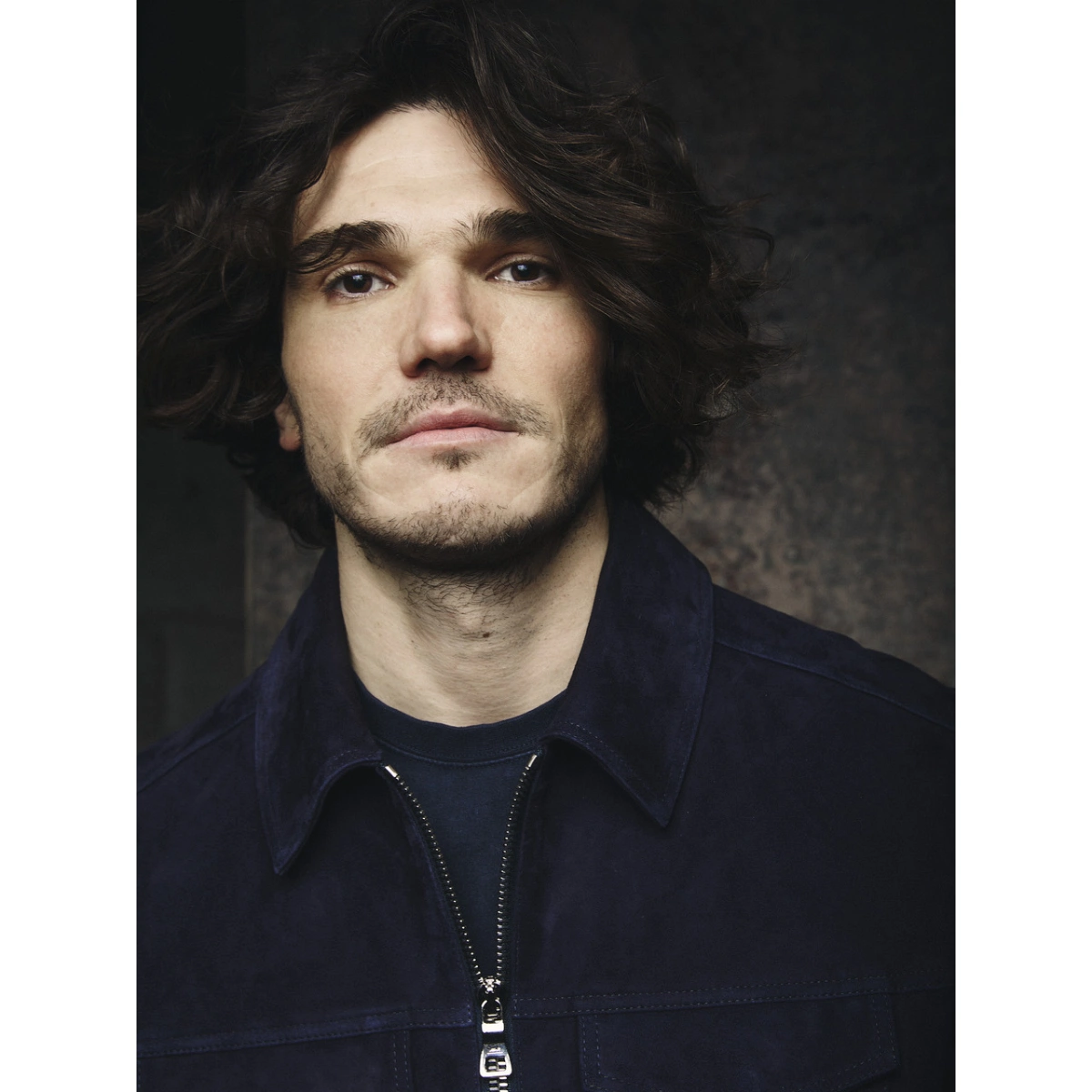
Was a career in the theatre something you always aspired to?
Pretty much, yes. There was a short-lived aspiration to be a mountain climber when I was about four years old. But after a local community theatre production of The Sound of Music in which I played Kurt, next to my sister who played Louisa, and my dad who played Franz the butler, I was pretty much hooked from then on in. I did lots of local shows and took my singing very seriously growing up. It was certainly a career in theatre as opposed to film or television, which just seemed like another entity entirely. Theatre, live performance, was the thing that was really exciting for me.
How do you go about taking a story or character from the page and bringing it to life on the stage or screen?
If you are doing a play or a musical, you typically tend to get quite a lot of time to rehearse, usually four or five weeks, with a director, and of course, a musical director if it’s a musical, a choreographer, etcetera. So, there’s a lot of collaborative efforts to help you bring that character from the page to the stage, and it’s a very, very enjoyable process. There can be a lot of independent work involved. Even the best scripts in the world can’t give you every single nugget of information about your character. Sometimes you have to fill in the blanks a little bit and try and dissect or create a more fully rounded experience than what is given to you. Trying to perhaps create the lived history of the person, if it’s not within the narrative of the script, can be really useful.
Bringing a character to life from the page to the screen can be a bit more of a solitary endeavour. You don’t have the luxury of weeks and weeks of rehearsal and discussion. It might just be something you discuss a couple of times with the writer or director on set. It’s a lot more intuitive and instinctual, but yes, I’m a fan of research. I like to read the books that my character may have read, or to watch shows that they may have watched, to just get a sense of who they are. It means that when I’m saying their words, I feel a bit more connected to them.
Tell us about The Pillowman and your character of Katurian.
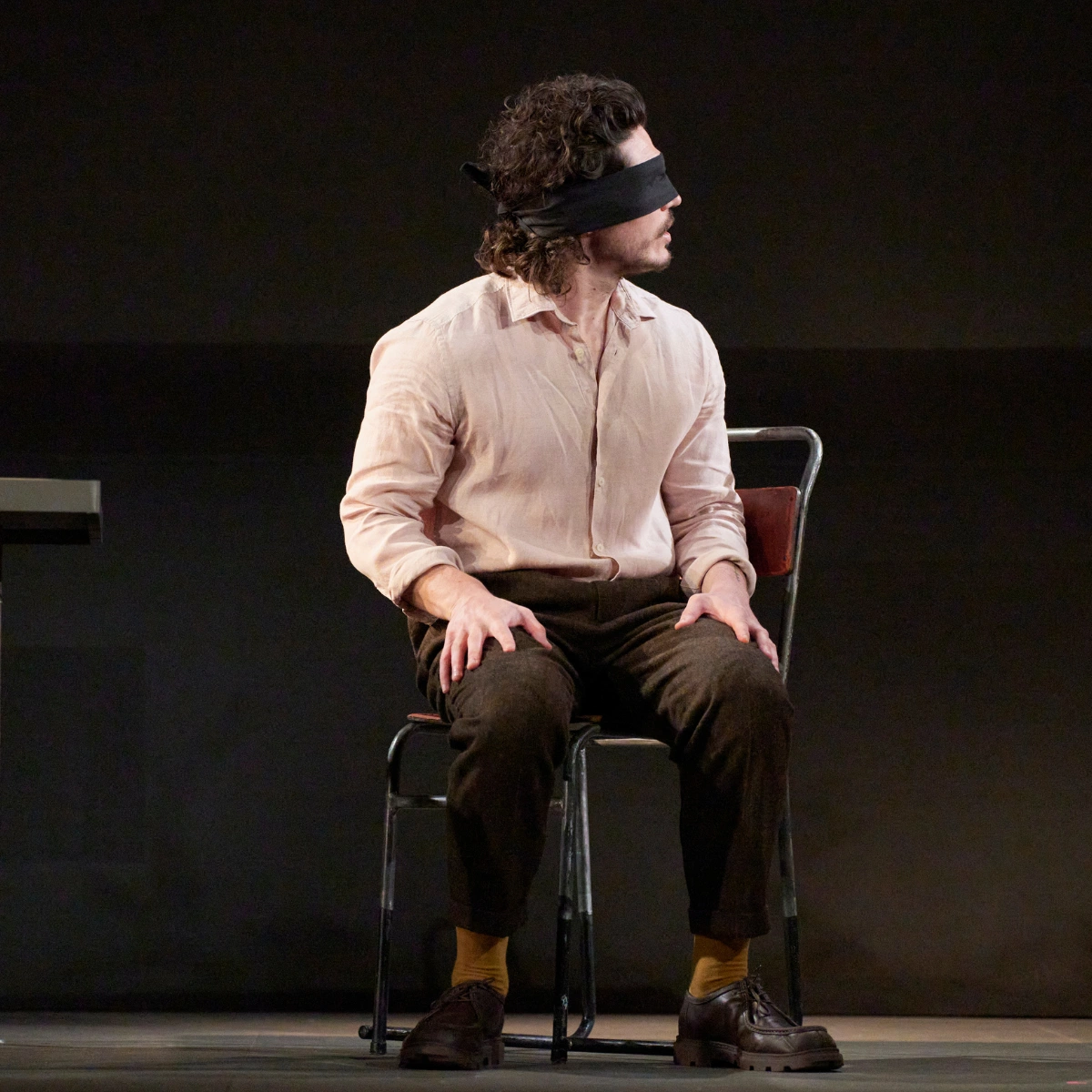
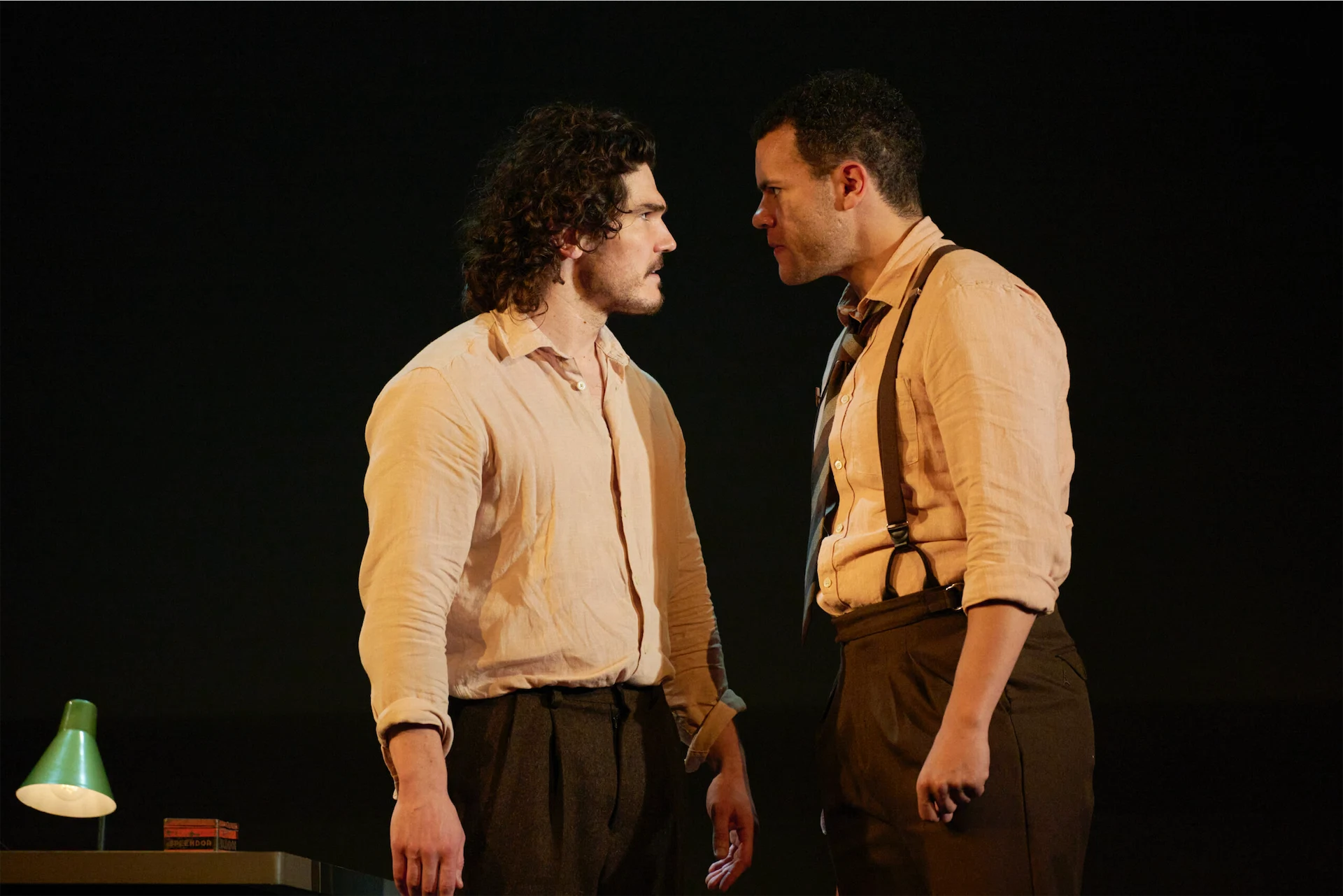
The Pillowman is a deliciously dark play by Martin McDonagh. It is one of his few plays that is not set in Ireland, although we are all using our own Irish accents (and I think it works extremely well). It is set in an unnamed, unspecified, totalitarian state/regime. And at the beginning of the play, we see Katurian, my character, sitting in an interrogation room with a blindfold on his head. Initially, he is very confused as to the reasons why he’s there. It seems to be something to do with his stories. He’s a short story writer, albeit not a particularly successful one. A series of murders has taken place in the town that closely resembles the dark plots of his stories, and as such, he is Suspect Number One. And the play goes from there. It is just wonderfully dark, provocative, extremely funny and absurd.
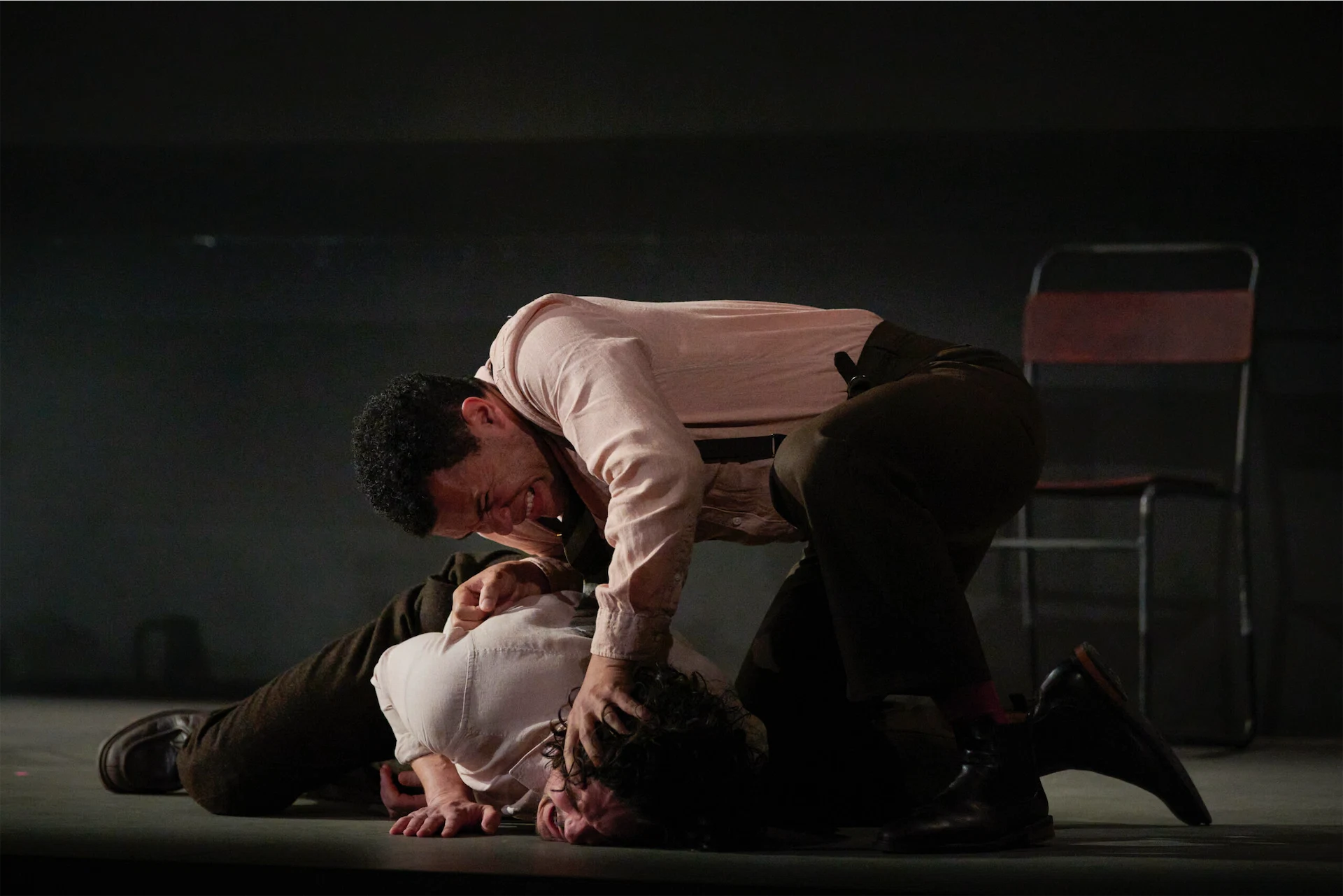
What has it been like working on one of Martin McDonagh’s productions?
It’s a real bucket list role, for sure. I’ve always loved Martin McDonagh’s plays. I just thought they were thrilling. I’m now very aware of his unbelievable films. I would consider Three Billboards Outside of Ebbing, Missouri one of my favourite films of all time. It’s exceptional. And so it’s thrilling to be in a Martin McDonagh play, particularly in Ireland, at the Gate Theatre, which is a theatre I love so much. I’m back in the Gate 10 years after performing there as Romeo in Romeo and Juliet. It’s a real lovely sense of homecoming, and to be doing this play, particularly, it’s a dream scenario.
Who is someone you look up to in the world of Irish theatre?
There are so many people that I respect so much, that I look up to in the world of Irish theatre. I just think we’re so passionate about theatre-making here. I left Northern Ireland when I was 18 to go to university, with aspirations to be on stage. The West End was calling me, particularly since I was a singer and I wanted to do musicals. But I deeply respect the work that is done here, and the passion and the fervour and the love and attention that goes into it.
You know, on the acting side of things, Ciarán Hinds is such a hero of mine. From the body of work he does across theatre, film and television, and the fact that he is just the nicest man. I’m also a big fan of Des Kennedy; I’m very excited for what he’s doing in the Cork Everyman Theatre. Anne Clarke, at Landmark, I’m a big fan of the work that she does. And of course, the Gate Theatre has just always held such a place in my heart and always will. I look up to everyone who is doing good work here, because it’s such a beautiful community.
What is one thing you wish everyone knew about working in theatre?
My goodness! That’s it’s often a labour of love. We’re not making a fortune; it’s a labour of love for absolutely everybody involved, I would say, it’s not just the people on the stage. There are incredible people behind the scenes, helping to sell tickets, pulling curtains, and setting props. There are so many unspoken or unheard legends backstage and off the stage.
One thing I wish everyone knew was that it’s a hugely collaborative effort, and it’s a labour of love for absolutely everyone who is just passionate about telling the story that you see every single night for a long, long run.
What is one piece of advice you would give to someone hoping to have a career in the arts?
I would say there’s lots of little tidbits that I could offer, because it can be a really difficult career, and for all of the highs, there are many, many lows. We have to deal with disappointment on an unbelievably regular basis. But the one thing I would say is to continue to fuel your curiosity, particularly in the downtime. Whenever you’ve got free time, read as much as you can, watch interesting dramas with good performances, read scripts, and go to see as much as you can. There are ways to get to see things without spending a fortune. Just continue to be intrigued by what is out there, rather than just sitting on your laurels waiting for a phone call, because all of that stuff just fuels you, and it means that you’re fully nourished for when the time is right.
Fra Fee’s life in culture
The last thing I saw and loved was… The Cave at the Abbey Theatre by Kevin Barry. I also saw Dancing at Lughnasa at the 3Olympia, which is a Gate Theatre production. I loved it as well. Two fantastic playwrights, two fantastic productions. They were just brilliant.
The book I keep coming back to… I’ve only actually read it once. I rarely read books a second time, although I am going to read this one again, because I keep referring it to people as a recommendation. The book I keep coming back to as a recommendation is The Heart’s Invisible Furies by John Boyne. It’s just stunning.
I find inspiration in… I find inspiration in walking. Does that make sense? If I go for a lovely, long walk, I feel inspired to either walk more, to read a book, to write something, to call a friend. Walking is an amazing way to clear one’s head and find inspiration.
My favourite film is… I find that an impossible question because there are just so many types of movies; it depends on what one is after. If I need a good laugh, I’ll stick on The Wedding Singer. But similarly, I love The Lord of the Rings, and that fills a void on a certain night of the week. I also love Three Billboards Outside Ebbing, Missouri.
My career highlight is… Similarly, there’ve been so many different highlights for different reasons, and doing The Ferryman on Broadway was a big highlight. I’d always wanted to be in a show on Broadway. That was so fun and so unforgettable. Playing the Royal Albert Hall with On The Town by Leonard Bernstein. That was extremely fun. There’s a few, I’m lucky to say, and these are two of them.
The song I listen to to get in the zone is… It depends on the day, I tend to like to listen to music when I’m getting ready, particularly on a matinee day where there’s two shows, and I like to stick on this really fun little sort of early wartime song by Jo Stafford called ‘It’s a Lovely Day Today’.
The last (book/film/show/piece of work/artist etc.) I recommend is… The last artist I recommended was the young, incredible jazz singer, Samara Joy. Her voice is from another era. It’s extraordinary.
I never leave the house without… My house keys, to be honest. I am a fan of going for a walk with nothing but the clothes on my back. And yeah, it’s just the house keys to get back in. My sister Claire is an advocate of the saying “you’re never fully dressed without a smile”, so I try to adopt that…without freaking out any passersby.
The film/performance/piece of work etc. I still think about is… Keeping in the theme of the Gate Theatre, Lia Williams playing Blanche DuBois in A Streetcar Named Desire at the Gate Theatre. Harris Yulin in Death of a Salesman, god, he was amazing. Those are two good performances in Ireland. And Andrew Scott playing Hamlet in London. I still think of those performances regularly.
My dream role would be… George, in Sunday in the Park with George by Stephen Sondheim. I have quite a few Sondheim roles that I’d really love to play, but George is the number one. I’d love to play Bobby in Company as well. Hamlet is also a dream role.
The best advice I’ve ever gotten… Was by an acting teacher who just celebrated his 100th birthday, George Hall; he’s a bit of a legend, and he was my acting teacher at the Royal Academy of Music. You can listen to a podcast that celebrates his 100th birthday, some wonderful interviews and stories and anecdotes that he’s got. The best advice he gave me, and my class, was after an audition, allow yourself the time to drink one pint. In order to get that time to mull over it, to lull over it, to grieve over it, and then just let it go.
The art (book/film/performance/show etc.) that means the most to me is… There’s lots of different things; Les Misérables means a lot to me because it was such a game-changing moment in my career. But, I’ve got this line from a Tennessee Williams poem on my arms tattooed. It says “there will be pity for the wild”. It’s a line from a poem that means a lot to me.
My favourite moment in this show is… My favourite moment in this show is performing with the three other gents. They’re just phenomenal, Aidan McArdle, Julian Moore-Cook and Ryan Dylan. They’re such brilliant actors, and it’s a real thrill bouncing off each other with such brilliant dialogue. Ryan (Dylan) described it as a boxing match. You’re in the ring. It’s really alive. It’s really thrilling.
The most challenging thing about being on stage is… Your stamina. Your energy levels. If something goes wrong, how you sort of deal with it. That’s also going to be fun in the moment. Keeping it alive, not letting your mind drift. It’s not too challenging, though, especially if you’re in something as good as The Pillowman.
After a show, I… I sometimes have a beer in the bar. I need to decompress. If I go home, I take the dog out, have a cup of tea. I need to de-adrenalise.
If I wasn’t an actor, I would be… I would probably be an English teacher, or a music teacher. Or a choral conductor!
The magic of theatre/acting to me is… that it is magic.
Production imagery by Ros Kavanagh, centre feature image by Dean Ryan McDaid.
Also Read