








By IMAGE
03rd Sep 2014
03rd Sep 2014
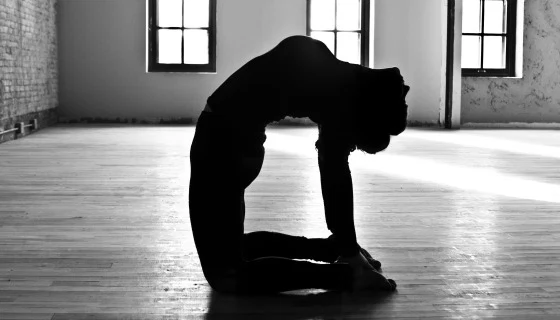
Buteyko breathing. Haven’t heard of it? Neither had we, until very recently. If you’ve been suffering from asthma, stress or panic attacks throughout your life, you’ll want to keep reading.
Japanese though it sounds, it’s actually a form of breathing exercise created by Russian doctor?Konstantin Pavlovich Buteyko, who observed that many of our modern day health issues – asthma in particular – are rooted in improper breathing, or over breathing, that results in an imbalance in our Carbon Dioxide and Oxygen levels, both of which are necessary for our overall sense of wellbeing. As per Buteyko.com, this method is neither a medical treatment nor a procedure, it won’t cost you a penny and it’s relatively easy to incorporate this breathing practise into your daily routine, whether you’re sitting down to meditate for a moment or working away in the office.
Here’s how the late doctor arrived at The Buteyko Method:?”Thirty seven years have passed since the time I found the cause of several of the most wide spread diseases which belong to so called “civilisation diseases” (bronchial, cardiovascular, allergic etc.). These diseases have one common cause – alveolar hyperventilation or deep breathing. It had occurred to me: reduction in depth of breathing or normalisation of breathing may treat such diseases. An experimental study proved the validity of this presumption; more so, as it was based on the laws of physiology, biochemistry, biology and other disciplines. The essence of the method is to decrease the depth of breathing by will power and by relaxation of breathing muscles until one achieves a slight feeling of lack of air. All mentally healthy adults and children from the age of three can use the method.”

And here we thought enormous, deep lungfuls of air was a far better approach to breathing than short, reduced breaths. Are we wrong? Perhaps.
“Traditionally it is thought that deep breathing is good since it provides the most oxygen. However many people are unaware that there needs to be a balance between oxygen and carbon dioxide levels in the body. When you breathe normally haemoglobin (the major carrier of oxygen in the body) is saturated with oxygen by 96-98%. But when you breathe more you can increase oxygen saturation negligibly and but lose carbon dioxide which is essential for oxygen utilisation. If the level of carbon dioxide in the body drops, haemoglobin does not release oxygen to the tissues (this is known as the Bohr effect). Hence, the more you breathe the less oxygen is passed to the tissues of your body.”
There are three principles to this method: reduced breathing (not deep breaths in which the person next to you can audibly hear you breathing), nasal breathing (breathing with the mouth closed at all times) and relaxation (well, couldn’t we all do with a bit more of that?)

Though it seems strange, the key here is to consciously reduce your breathing to small diaphragmatic breaths. Buteyko training then uses a measurement called the Control Pause (CP), defined as the amount of time that an individual can comfortably hold breath after a normal exhalation. In practise, you take a small breath in and a small breath out, always through the nose, then hold your nose and count the number of seconds that you can sit comfortably before needing to breathe in again. According to the research done around Buteyko, with regular Buteyko reduced-breathing practice, asthmatics in particular are expected to find that their CP gradually increases while their pulse rate decreases along with a decrease in asthmatic symptoms.
While the average control pause is around 17 seconds, the aim with proper training from a Buteyko expert, is to increase your control pause to 40 seconds at least. Sounds tough, but as per its advocates, you will feel better and better with each increment.
It’s also been said that Butekyo can help alleviate symptoms for those suffering with lethargy, Chrohn’s disease, anxiety and more.
Would you consider giving it a try?
Caroline Foran @CarolineForan
Related Stories


Also Read