








By IMAGE
10th Apr 2015
10th Apr 2015
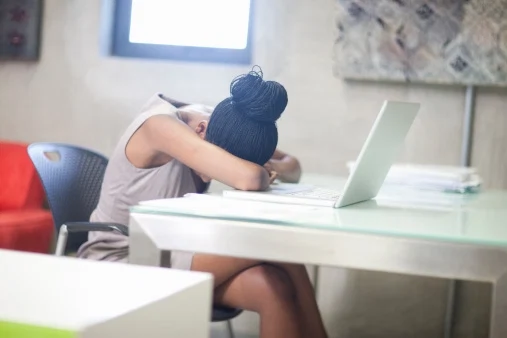
We could not be more supportive of this research, backed up by our own experience. Social media, and the ways in which we observe other people’s perfectly curated lives does not a happy person make; instead, it makes you feel like a pile of pants.
What’s hard to remember, when you’re scrolling through Instagram, delving deeper into the layers upon layers of tan-enhancing filtering – seriously, it’s like cosmetic Inception – is that none of it is real. People, you may have noticed, choose most often to only share the absolute best bits of their lives, from their new pair of shoes to that crazy fun night they had swinging from the rooftops, surrounded by good-looking people. What they tend to leave out are the days they looked like they’d been dug up – we ALL have them: ‘are you not well?’ ‘no, this is just how I look without make-up’ – the days when for some strange reason, they’re experiencing more flatulence than normal, and the times they suffered the most acute form of FOMO whilst watching re-runs of Say Yes To The Dress with a tub of Nobo.
Nevertheless, we flick through other people’s lives in the same way we torture ourselves on Pinterest: this kind of aspirational comparison is painful.?New scientific research confirms what we already know to be true: Facebook (or social media in general) is bad for our wellbeing. Mai-Ly Steers, researcher at University of Houston’s Department of Psychology explains: “Depressed feelings and lots of time on Facebook and comparing oneself to others tend to go hand in hand… One danger is that Facebook often gives us information about our friends that we are not normally privy to, which gives us even more opportunities to socially compare.”

ICYMI: The Best Life Advice You Could Share
In a paper, entitled “Seeing Everyone Else’s Highlight Reels: How Facebook Usage is Linked to Depressive Symptoms”, published in the Journal of Social and Clinical Psychology, Steers undertook two distinct experiments to explore how Facebook affects us psychologically. What Steers first discovered with test one is that there’s a direct correlation between the amount of time people spend on Facebook and their symptoms of depression.
Think about it, do you ever feel good after you’ve spent an hour lying in bed scrolling through everybody else’s lives?
The second study went a little further, discovering that the relationship between the amount of time spent on Facebook and one’s symptoms of depression was due in large part to our tendency with social comparisons.
“You can’t really control the impulse to compare because you never know what your friends are going to post,” she continues. “In addition, most of our Facebook friends tend to post about the good things that occur in their lives, while leaving out the bad. If we’re comparing ourselves to our friends’ ‘highlight reels,’ this may lead us to think their lives are better than they actually are and conversely, make us feel worse about our own lives… Any benefit gained from making social comparisons is temporary and engaging in frequent social comparison of any kind may be linked to lower well-being,” said Steers.
We’re going to make a concerted effort to a) stop comparing ourselves to others on Facebook and b) stop assuming that life must be amazing for everyone else, as their social media profiles seem to suggest.
Related Stories


Also Read