










By Lauren Heskin
08th Jun 2020
08th Jun 2020
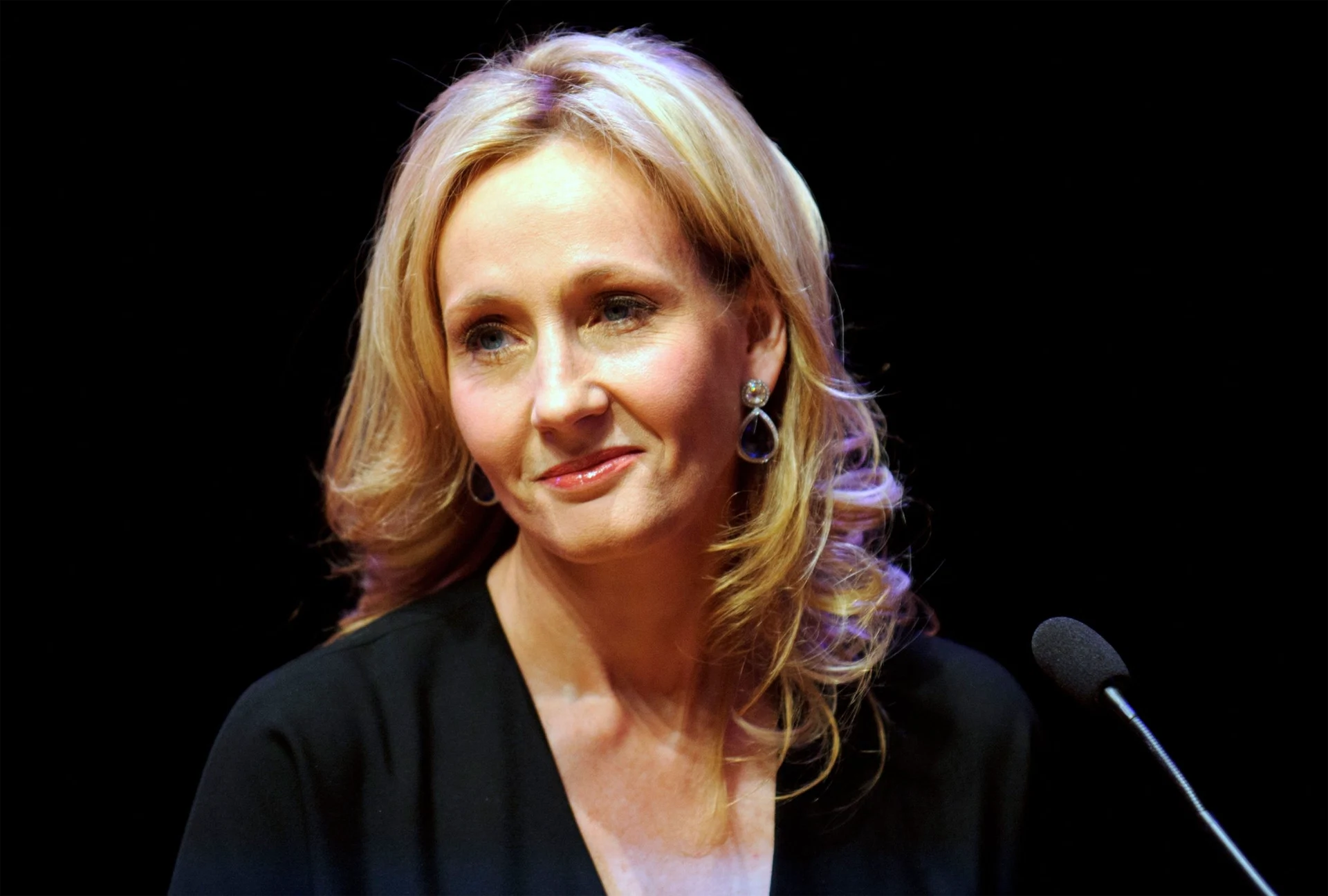
Gender is not as binary as JK Rowling’s recent tweets would have you believe. Here’s why, aside from its social constructs, gender isn’t certain.
This week, author JK Rowling tweeted this:
‘People who menstruate.’ I’m sure there used to be a word for those people. Someone help me out. Wumben? Wimpund? Woomud?
Opinion: Creating a more equal post-COVID-19 world for people who menstruate https://t.co/cVpZxG7gaA
— J.K. Rowling (@jk_rowling) June 6, 2020
This is not her first foray into anti-transgender discourse and a reductive understanding of biological sex. Back in December 2019, Rowling was then tweeting her support for Maya Forstater, a woman who was fired from her job for tweeting her opposition to a British proposal that would allow people to identify as the opposite sex.
As we see the same anti-transgender attitude crop up once again (in another tweet, she suggested she would march with the trans community “if” they were ever discriminated against on the basis of being trans), we’ve decided to revisit this explainer on gender and biological sex.
Last year, Forstater’s appeal to the UK employment tribunal was dismissed and Rowling tweeted, “Dress however you please. Call yourself whatever you like. Sleep with any consenting adult who’ll have you. Live your best life in peace and security. But force women out of their jobs for stating that sex is real? #IStandWithMaya #ThisIsNotADrill”
Dress however you please.
Call yourself whatever you like.
Sleep with any consenting adult who’ll have you.
Live your best life in peace and security.
But force women out of their jobs for stating that sex is real? #IStandWithMaya #ThisIsNotADrill— J.K. Rowling (@jk_rowling) December 19, 2019
Stripping away all of the social constructs that so tightly define men and women, Rowling here is arguing that biological gender is a scientific and indisputable fact. And on the surface, it seems like a legitimate statement – most of us are born with a male or female external organ after all.
But the truth is much more complicated than that.
Because you see, scientifically speaking, gender is not binary. Scientists use a three-factor method to identify sex and they’re known as the three G’s – genes, gonads and genitals. Genes refer to whether you have two X chromosomes (female) or an X and a Y chromosome (male). Gonads refer to your internal sexual organs – testes or ovaries. And finally genitals, or your external sexual organs.
You probably have a rough understanding of these from biology class, but did you know that only when all of these markers are fulfilled can sex be scientifically confirmed? Between 2-5% of the population do not hit all three of these markers. That’s a handful of people in every 100 that do not fulfil the scientific definition of their sex.
Maya didn’t say sex was real. She said trans women are men & you are co-signing her. The existence of sex doesn’t mean trans women aren’t women & trans men aren’t men. The determination of sex is not binary, it can be determined in many different ways USING SCIENCE.
— INDYA (@IndyaMoore) December 20, 2019
And in fact, some scientists argue that there are more than two sexes – professor of Biology and Gender Studies at Brown University Anne Fausto-Sterling has argued that there are in fact five. This is because the three Gs definition is somewhat simplistic and can be broken down further. Males and females who have the corresponding gonads and genitals can have an extra X or Y chromosome. Females can have an extra X chromosome (XXX) and approximately 1 in 600 people with male gonads and genitals have an extra X chromosome (XXY) and 1 in 1,000 have an extra Y.
Sexual expression relies on a complex process of gene mutation and any slight differentiation can affect hormone production, physiological function or physical traits. Female genes may express female organs but also create typically “male” elements like high levels of testosterone while still being able to complete all of the “female” tasks like becoming pregnant.
The reality is that biological sex is a spectrum. Even if you satisfy the genes-gonads-genitals rule in general, there may be discrepancies within each one. Just like a colour may appear red but on closer inspection has pockets of pink and orange. Even the 2-5% who don’t perfectly fit the scientific definition of genes-gonads-genital sex could be higher because, depending on the level of those discrepancies, people might go their entire lives without knowing that their gender isn’t a perfect fit.
Sex isn’t binary, it’s not a scientific certainty and it should not be confused with gender, which is a social construct. The sooner we start understanding that, the more compassionate, nurturing world we will be.
Read more: This is why JK Rowling is facing a backlash on Twitter
Read more: The Caster Semenya ruling and why the IAAF are on the wrong side of history
Read more: My trans child: ‘Everyone’s journey is different, but seeing your child happy is every parent’s ultimate goal’
Related Stories




Also Read