



My Start-Up Story: Brand strategist Designs for Growth founder Lucy O’Reilly
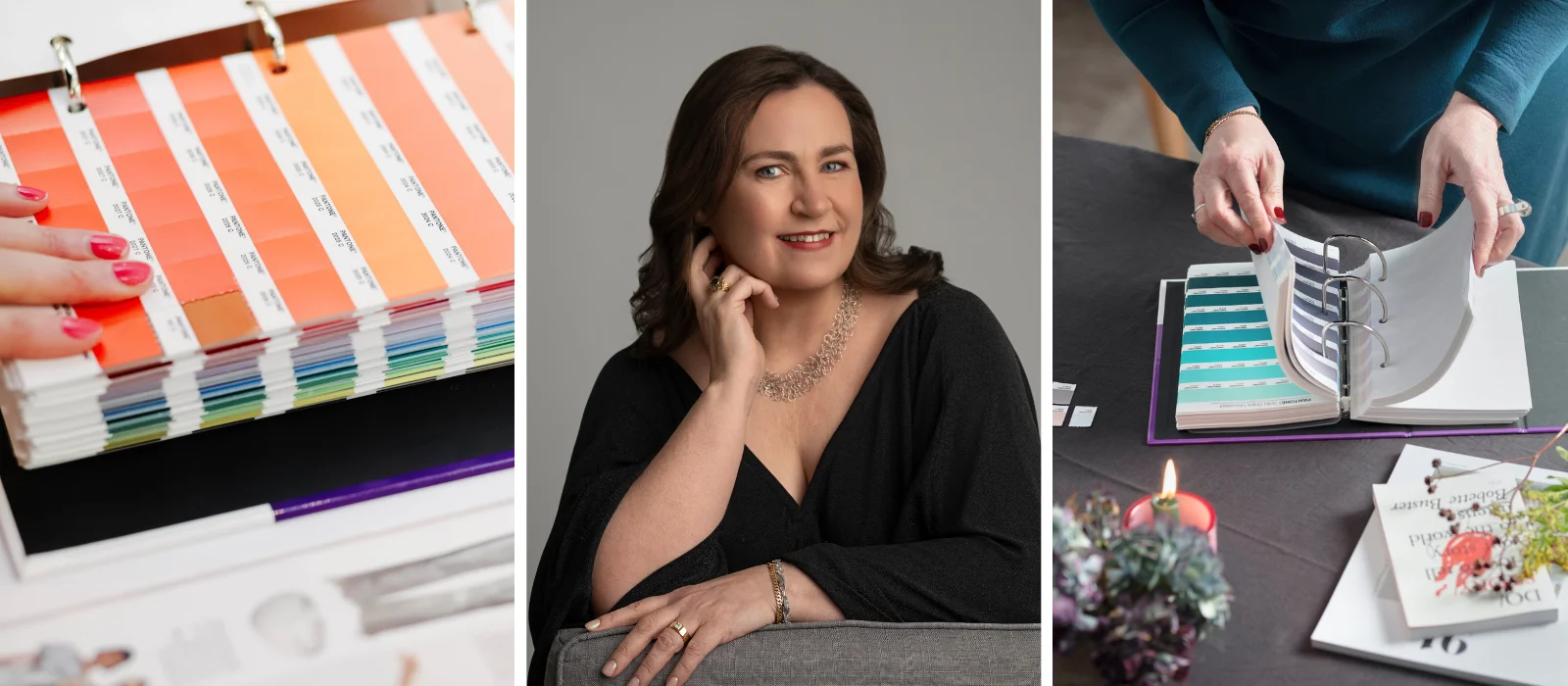
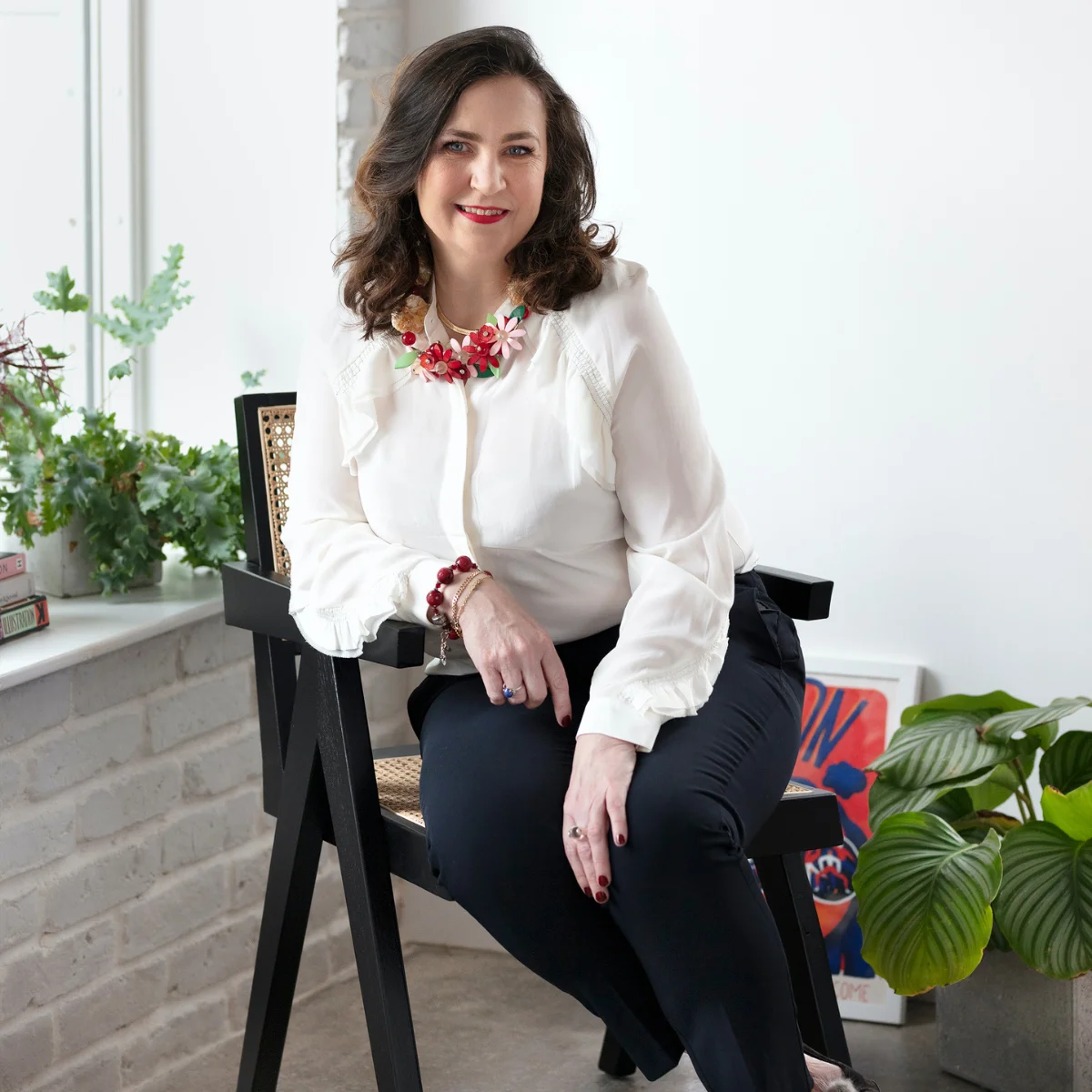
Lucy O'Reilly is an award-winning brand strategist and designer based in Dublin, and the founder of Designs for Growth. With nearly a decade in practice and over 100 founders and business owners worked with, she is the creator of the Brand Authority Method™ — a six-step process that takes an established business from brand strategy through to a fully built website. She works with female founders and entrepreneurs whose businesses have outgrown their brand.
Where did the idea for Designs for Growth come from? What is your ‘why’?
There wasn’t really a lightbulb moment. There was a direction I’d been moving in for years without naming it, or even realising it.
In my twenties, I worked in Paris as an international event planner. I spent a lot of time looking over the shoulders of my designer colleagues as they worked — QuarkExpress, late nights, things appearing on screen that hadn’t existed before. It seemed like magic. I wanted to know how to do it.
Life moved on. Fast forward to my early forties, children no longer babies, and I went back to college to do a postgraduate diploma in creative multimedia. To scratch the itch, more than anything else. The organisations I was volunteering with at the time were eager to get online. I discovered Squarespace, fell in love with it, and started building. Honestly, it didn’t occur to me to turn it into a business — it seemed too easy, too enjoyable to be work.
Then my marriage ended. And I needed to find a way to make money.
So I went back to college again — at night this time, working during the day, an au pair at home holding things together. I studied Digital Design and Technology, specialising in Digital Marketing, part of the first cohort to graduate from the newly formed TU Dublin. Somewhere in the middle of it, I realised I knew a lot about design, websites, and marketing. The years hadn’t been wasted – they’d been building something I hadn’t yet named. And honestly, getting back into employment as a returner wasn’t working. So I made a different decision: I had the skills; I made the decision to back myself and go out on my own.
Designs for Growth launched in 2018. What started as a website design business became something I hadn’t anticipated at the time: a brand strategy practice. The work kept showing me the same thing – founders with exceptional businesses and brands that couldn’t carry them. A better website wasn’t the answer. Strategic thinking was. So I went and learned it properly, from the ground up, and rebuilt everything around that.
Nearly a decade later, that’s still the work: established founders at an inflexion point, where the business has outgrown the brand. The assessment I made about my own capabilities in those early years turned out to be good practice for the assessments I now make about other people’s businesses every day.
The instinct to guide is the same. What I’m guiding people through has changed entirely.
What’s your big business goal?
To be the name that scaling female founders in Ireland reach for when their business has outgrown its brand.
Not as a solo operator, but as a strategic lead with the best people around me — the designers, copywriters, photographers and specialists who execute at the highest level. I do the strategy. They deliver the work. The Brand Authority Method™ becomes something the market knows by name, not just the clients who’ve been through it.
That’s the version of this business I’m building toward
Why did you decide to start your own business?
Several reasons, and I’ll be honest about all of them.
I wanted to fulfil my potential. I knew I could help people, and I got genuine satisfaction from the design work in a way I hadn’t felt in other roles. There’s a particular feeling when something you’ve built for a client lands exactly right; I wanted more of that.
I also wanted to (or rather had to) make my own money and have the freedom that comes with running your own business. That’s not a glamorous answer but it’s true.
And I had just spent six months in a financial services firm as a returner — reporting to a manager twenty-five years my junior, doing work that had nothing to do with what I was actually capable of. That experience clarified things quickly. I didn’t want to go back to that. I wanted to build something of my own, on my own terms, doing work I was genuinely good at.
It turned out I was right about all three.
How did you raise the capital needed to start your business?
There was no capital to raise. The business started with me and a Mac. No investment, no loan, no external funding, just existing skills, existing equipment, and a decision to start.
That’s one of the genuine advantages of a service business built on expertise: the infrastructure is almost irrelevant. What you’re selling is the thinking.

Did you do any business training/schemes (before you set up your business)?
Not before I started. I went in on instinct and existing knowledge. But very early on, I did one online course that turned out to be invaluable: Square Secrets, by Paige Brunton. Not a general business course, it was specifically about how to run a Squarespace web design business as a business – the pricing, the client relationships, the structures that stop a creative practice from becoming an expensive hobby.
It taught me a lot. I’d recommend that kind of focused, practical training to anyone starting out in a service business: something specific to your industry and your model, built by someone who has actually done it.
That was it for formal training. The rest has been a decade of doing the work and one or two very specific branding-related courses in between.
What’s the best piece of financial advice you ever received?
Become a limited company, specifically for the pension benefits.
I came to that advice later than I should have. Property I’d had an interest in was sold as part of my divorce settlement, so it was au revoir to what I’d assumed would be part of my financial future. The pension question became considerably more pressing after that.
Incorporating changed how I could structure my finances and what I could put away for the future in a tax-efficient way. It’s not advice that sounds exciting, but for any self-employed woman in her forties or fifties who hasn’t addressed her pension, it’s the most important conversation she can have — with a good accountant, as soon as possible.
Do you think the Irish education system supports entrepreneurship?
In my own experience, no, and I say that as someone who went back into education in her forties specifically to build skills for work.
I studied digital technology, design and marketing through formal programmes, and entrepreneurship wasn’t part of any of them. That’s a strange omission when you think about it, teaching people craft skills with no instruction on how to turn those skills into a sustainable business. We hear it constantly in the design community: nobody learns the basics of running a business until they’re already out there doing it, usually expensively.
My three sons have recently come through the Irish education system too. The one bright spot I’d point to is the Junior Entrepreneurs programme at primary school level — my youngest loved it and it was genuinely brilliant. Beyond that, I’m not sure they encountered entrepreneurship as a serious subject at all. Unless you count overhearing every one of my Zoom calls during Covid, which probably taught them more than any curriculum would have.
I’d love to go back to the Blackrock Further Education Institute or TUD – where I studied – and teach what I’ve learned. Not theory. The actual practical knowledge of how to build and run a business. That’s what’s missing, and it doesn’t have to
Did/do you experience any fear or doubt about being an entrepreneur? If so, how do you deal with it?
Constantly. The fear doesn’t go away – it just becomes more familiar!
The one that never entirely leaves is the fear of the empty pipeline. No matter how many clients I’ve worked with, how many years I’ve been doing this, there is still a version of me that wonders whether the next enquiry is coming. I suspect most honest entrepreneurs would say the same thing.
How do I deal with it? I look back. Eight years of work, over a hundred founders and business owners, a methodology that didn’t exist when I started. The evidence is there. I’m still here. That’s usually enough to keep going.
I also think about AI; as a designer, it would be dishonest to say I don’t. The tools are changing fast and they’re changing the economics of design work. My response to that has been deliberate: move further into strategy, where the thinking is the product. You can automate execution. You cannot automate the kind of strategic clarity that tells a founder exactly what her brand needs to do and why. That’s where I’ve chosen to stand, and it’s a choice I’m confident in.
Fear, it turns out, can be useful. It keeps you paying attention.
Tell us something that is personally important to you as a business owner.
Working with the right people.
I get into the trenches with my clients. My Brand Authority Method™ is a deep engagement, working through the kind of strategic questions that don’t always have easy answers. For that to work, there has to be affinity. There has to be ease. There has to be genuine enjoyment on both sides.
That’s not a soft criterion; it’s a commercial one. The best work I’ve done has come from relationships where the client trusts the process and I’m genuinely invested in the outcome. When that’s missing, everyone feels it.
So I’m selective. Not precious, selective. The founders I work best with are serious about what they’re building, willing to be challenged, and ready to do the thinking the work requires. When that’s the room, I’ll give everything I have.
How do you feel about risk-taking?
I don’t think of myself as a risk-taker. And yet I built a business from scratch when employment wasn’t giving me what I was capable of, rebuilt that business around a methodology that didn’t exist when I started, and have made every significant decision without a safety net.
So perhaps the more accurate answer is that I go with my gut, and my gut has a higher risk tolerance than I consciously do.
I’ve learned to trust that. When something feels right, I move toward it. When something feels off, whether it’s a client, a direction or a decision, I’ve learned to pay attention to that too. The gut isn’t infallible, but eight years in, it has a reasonable track record.
What does ambition mean to you?
For me, ambition means fulfilling one’s potential. Not accumulation, not scale for its own sake, but becoming what you’re actually capable of.
I went to an all-girls school where female ambition was actively encouraged. It was simply expected that we would go out and do things. I think that shaped me more than I sometimes remember, the baseline assumption that capability should be used, not managed down.
It’s also, I realise, exactly what draws me to the entrepreneurs I work with. They’ve built something real. They’re capable of more. The brand hasn’t kept pace with what they’ve become. That gap between potential and how it’s presented to the world – that’s what I spend my days closing.
Ambition, for me, and for them, is just the refusal to stop short of what’s actually possible
Name one thing that supports your wellbeing as a business owner.
My choir.
I’ve been a choral singer for years and it is the thing that most reliably takes me out of my own head. There’s something about the discipline of it… the need to listen, to blend, to be entirely present in the room, that a business owner’s brain genuinely needs. You cannot be worrying about your pipeline when you’re holding a part in eight-part harmony.
Going to the gym keeps my body functional, more or less. Networking keeps me connected. But the choir feeds something that neither of those can reach. I’d recommend it to any entrepreneur who spends too much time in their own thoughts, which is most of us.
What qualities do you think someone needs to be resilient as an entrepreneur?
Back yourself. And when that feels hard, which it will, look at what you’ve actually built. Resilience isn’t a personality trait you either have or don’t. It’s a practice. And the practice, for me, is simply refusing to discount what I’ve already done.
How do you feel about building a team?
I’m not interested in hiring. What I want is collaboration: the best designers, copywriters, photographers and specialists, working together on the right projects, without the overhead and obligation that comes with employment.
That’s a deliberate choice, not a limitation. The model I’m building toward is one where I lead the strategy and bring in exceptional people around me, depending on what the client needs. Everyone at the top of their craft, assembled with intention – that produces better work than a permanent team of generalists, and it keeps the business lean enough to stay excellent.
The best people I know work the same way. They’re not looking for a job — they’re looking for the right collaborations. That’s exactly what I want to offer.
How do you feel about delegating?
Not a natural strength, I’ll admit. I’m better at it than I was. I’ll leave it at that.
What are your thoughts on work-life balance – a myth or achievable?!
Completely achievable, but only if you design it deliberately.
I manage my projects with timelines that I set, not my clients. That’s not a small thing. It means I’m usually the one chasing them for content and decisions, not the other way around. The work moves at a pace I control, which means my weekends are mine. Nobody bothers me on a Saturday and I don’t feel guilty about that.
I think work-life balance gets a bad reputation because people treat it as something that happens when the work calms down. It doesn’t work that way. The work never calms down on its own. You have to build the structure yourself — the boundaries, the timelines, the clear expectations with clients from the beginning. Once that’s in place, balance isn’t a myth at all. It’s just a decision.
What’s your favourite thing about running your own business? And the thing you dislike the most?
The flexibility around time, without question. I don’t ask permission for anything – not for a long lunch, not for a Friday afternoon off, not for a holiday. After years of operating within other people’s structures, that freedom is something I don’t take for granted.
The thing I dislike most is fluctuating revenue. I’ll be candid about it: I haven’t cracked the recurring revenue model yet. It’s the characteristic tension of project-based work — a full pipeline one quarter, a quieter one the next. Every service business owner I know lives with some version of this. It doesn’t get easier to sit with, but you do get better at managing it.
It’s also, if I’m honest, part of what’s driving the next phase of the business. The model I’m building toward – strategy-led, with a team around me – is partly about creating something more sustainable than the feast and famine of solo project work.
What’s the most rewarding risk you ever took?
Online dating!
I know that’s not the business answer this question expects. But it was a genuine risk — putting yourself out there at that stage of life, with all the vulnerability that involves — and the return has been extraordinary. Six years ago, I met the man of my life. He’s still here, and so am I.
The business risks I’ve taken have had good returns too. But none of them has made me quite as happy.
What advice would you give to someone just starting or considering starting their own business?
Just get started.
Don’t wait until everything is perfect – the website, the branding, the offer. None of it needs to be perfect at the beginning. What you need at the beginning is clients.
Get in front of people. Start working. Figure out which clients make you happy, which ones make you money, and which kinds of work you could sustain for the long term. That takes time and real experience; you can’t think your way to those answers before you begin.
Then, after a year or so, once you know what you’re actually building, invest in your positioning, your brand, your visual identity. Do it properly, with strategy first. But do it second, not first.
I say this as someone who sells exactly that investment. The founders I work with best are the ones who have already built something real and are ready to scale it. You can’t brand potential. You can only brand what exists.
Also Read