





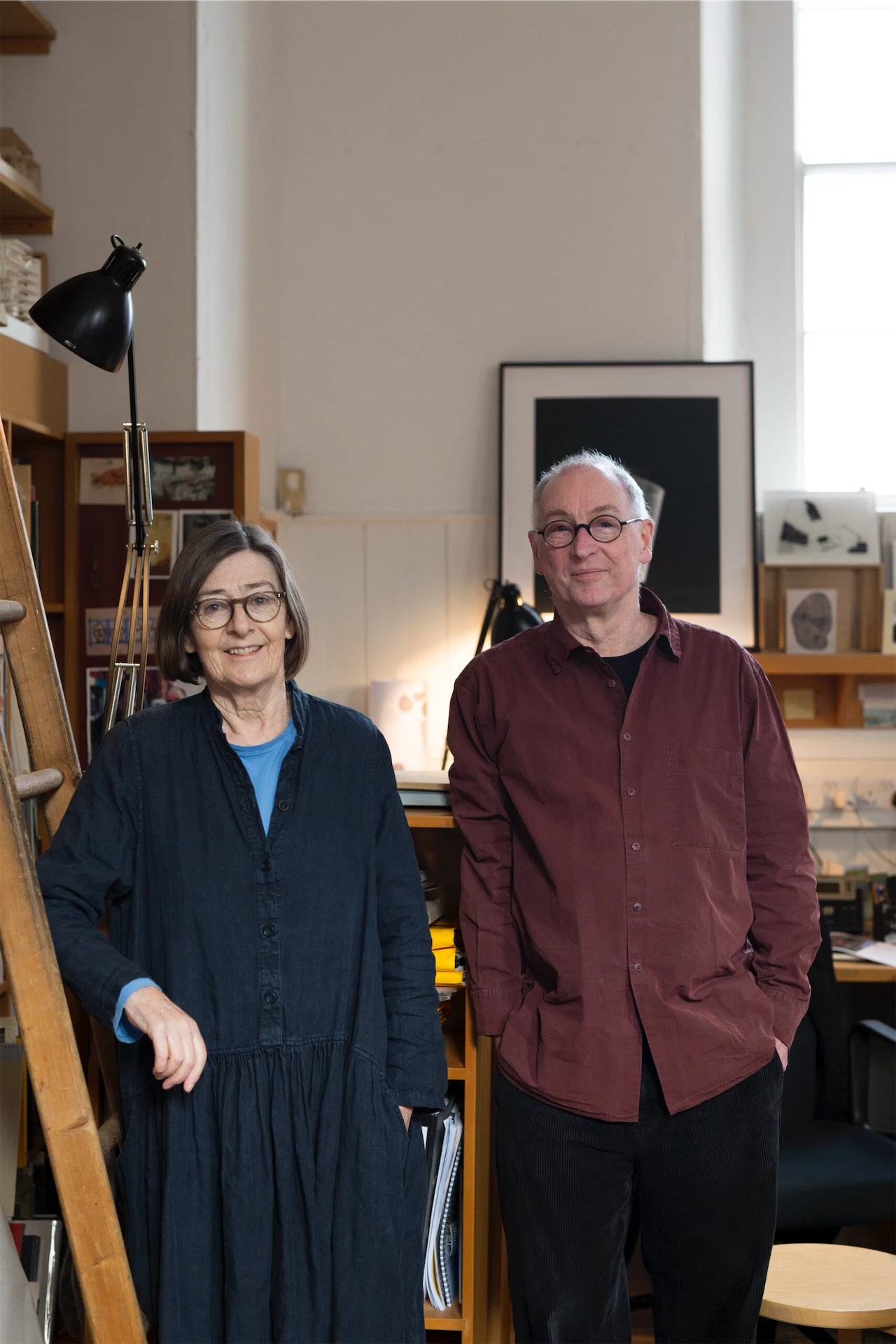
“Making buildings… you are inventing a world”: iconic Irish architecture duo O’Donnell + Tuomey
O’Donnell + Tuomey have designed everything from schools to museums, to housing, but what connects every project is a considered curiosity about the people who will populate each building.
Many children have reason to be grateful to Sheila O’Donnell and John Tuomey. One of the couple’s first projects was their design for the Ranelagh Multi-Denominational School, completed in 1997. They later added an extension, and now the children of former students wander the halls, making new friends and learning about the world.
More schools, and university buildings have followed, and O’Donnell + Tuomey have an impressive international portfolio, including a new museum space for London’s illustrious Victoria and Albert Museum, a dance theatre for Sadler’s Wells, an academic hub and library for the Technological University campus at Grangegorman, and beautifully crafted pavilions in West Cork for furniture maker extraordinaire, Joseph Walsh.
Given they’ve been nominated for and won more awards than you could fit on even the most well-designed shelf, you might expect to meet a pair of larger than life “starchitects”, but nothing could be further from the truth. Low-key, well read, and with a passion for art, music and theatre, the couple share a love of ideas, books and words. While their obvious intellects call for a certain amount of living up to, they quickly reveal a genuine warmth, and a delight in the unexpected that makes their company very rewarding.
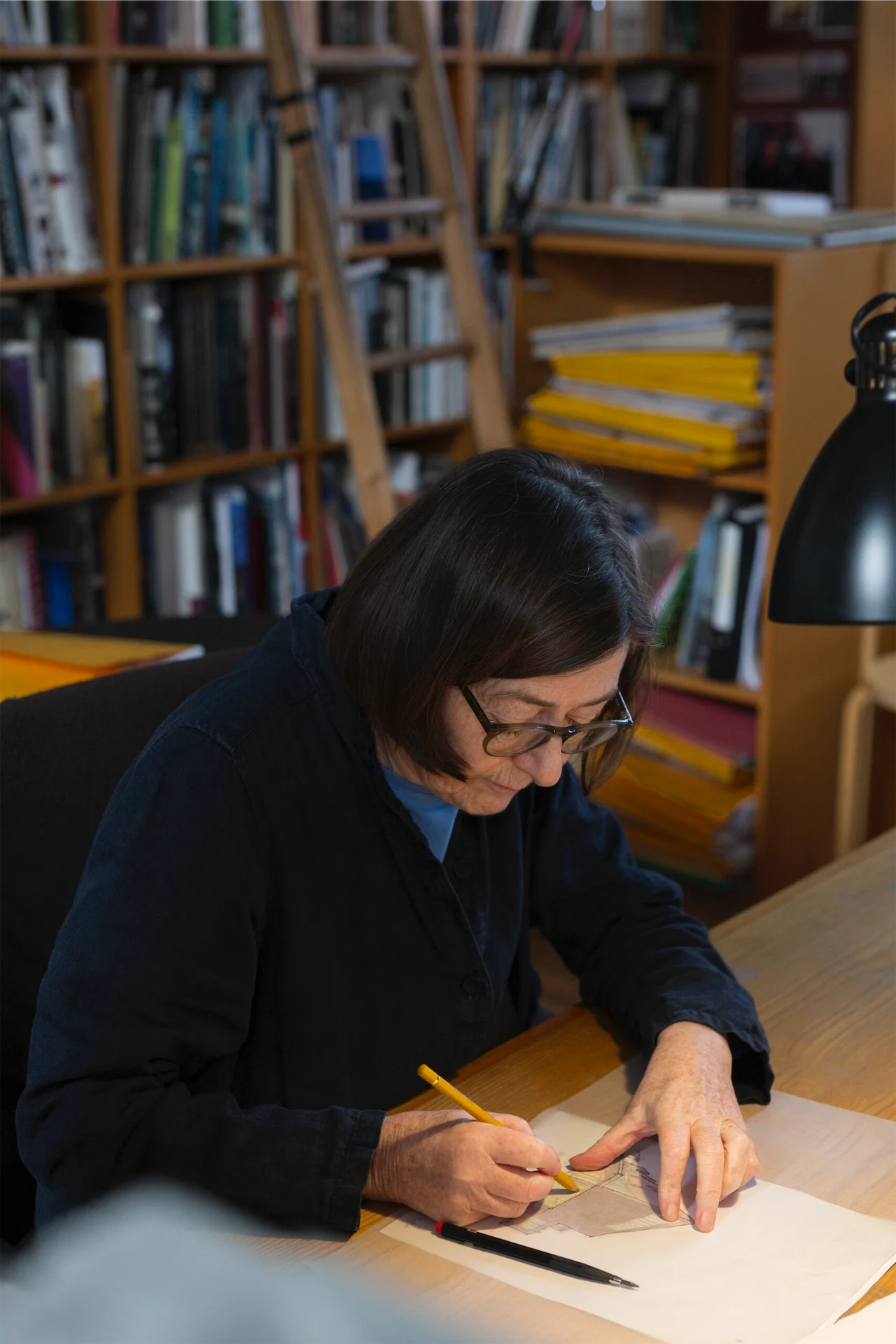
When we speak they are working from their Dublin home, close to the Grand Canal, although they have offices in Dublin, Cork and London. Home is a classic period terraced house, and such was its state of repair when they bought it, three decades ago, they had no qualms about changing its interior layout, to create a cosy kitchen at basement level that opens up to a double height workspace with bright views to the leafy garden. This in turn looks out to the dome of the Mary Immaculate Church in Rathmines, so close you could almost touch it. At the end of the garden, a new studio is nearing completion.
“There has been something simmering for 31 years,” says Sheila. “I’m glad we didn’t do it when we first moved in,” adds John, who also admits to quietly visiting his buildings to see how they’re getting along. “Everything I’ve ever done, I wish I could do it again,” he continues, although he agrees to a certain pride in projects such as the Sean O’Casey Community Centre in Dublin’s East Wall, which includes gardens, a theatre, day-care and other amenities.
One thing that has changed since the pair first started musing on their studio designs is that the trees they planted are now all grown up. A meandering path leads through gorgeous silver birches. “It has adjusted itself to allow for the trees,” says John. “It’s hard to know at what stage they stopped being spindly white things
and became trees,” adds Sheila, “but you could say we started the studio 27 years ago, when we planted them.”
The couple met studying architecture at UCD, and while John has described Sheila as his “soulmate”, they didn’t immediately get together. Perhaps when you know something is inevitable, you have the luxury of putting it off for a while, lingering in the pre-beginning period. But even before they became an item, they were best friends, involved in writing, activism, and exploring all the new ideas the world had to offer to a pair of students invested in discovery and making change.
Today, their house is full of art, objects and books, many made and written by friends. There is a desk by Joseph Walsh, and works by artists including Nick Miller, Janet Mullarney, Robert Armstrong and more. Sheila has been adding to the mix, ever since her friend, artist Cecily Brennan gifted her a box of watercolours. During one of the early lockdowns, she painted at an easel in their Dublin home, while John worked on his memoir, First Quarter, which was published by The Lilliput Press at the end of last year.
Sheila also paints from the couple’s house in another favourite spot, Connemara. “I often persuade myself there’s a practical agenda,” she says. “That I’m using those paintings as a way of thinking about forms and geometries… They are a way of noticing material and texture, colour and light, which are all part of architecture.” As she goes on to describe the West of Ireland’s mountains as “triangular”, you quickly realise that she probably was always going to be an architect.
Making buildings… you are inventing a world, and you’re imagining lives in that world. Anticipating and projecting what kind of world you could make is one of the most interesting aspects of making architecture.
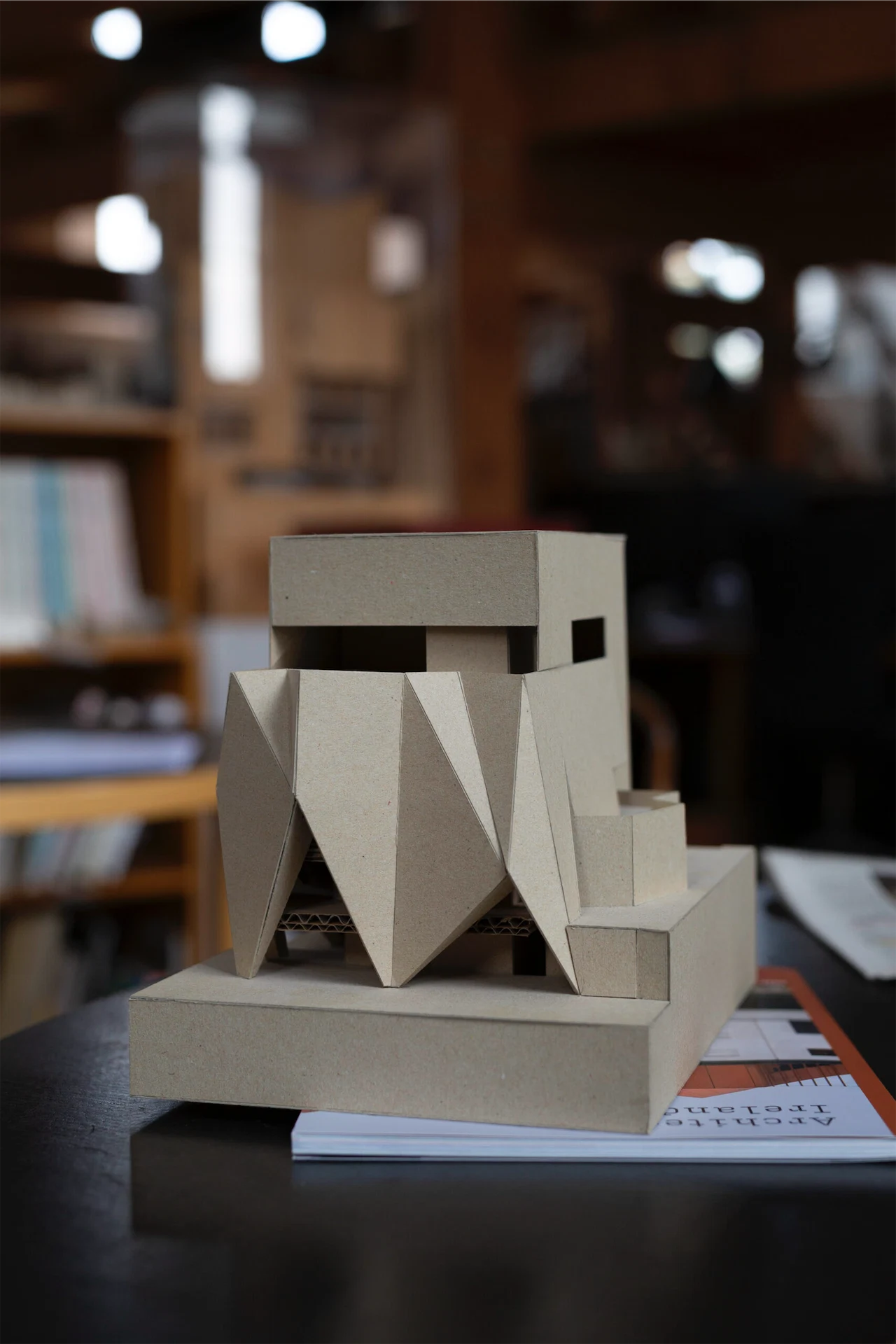
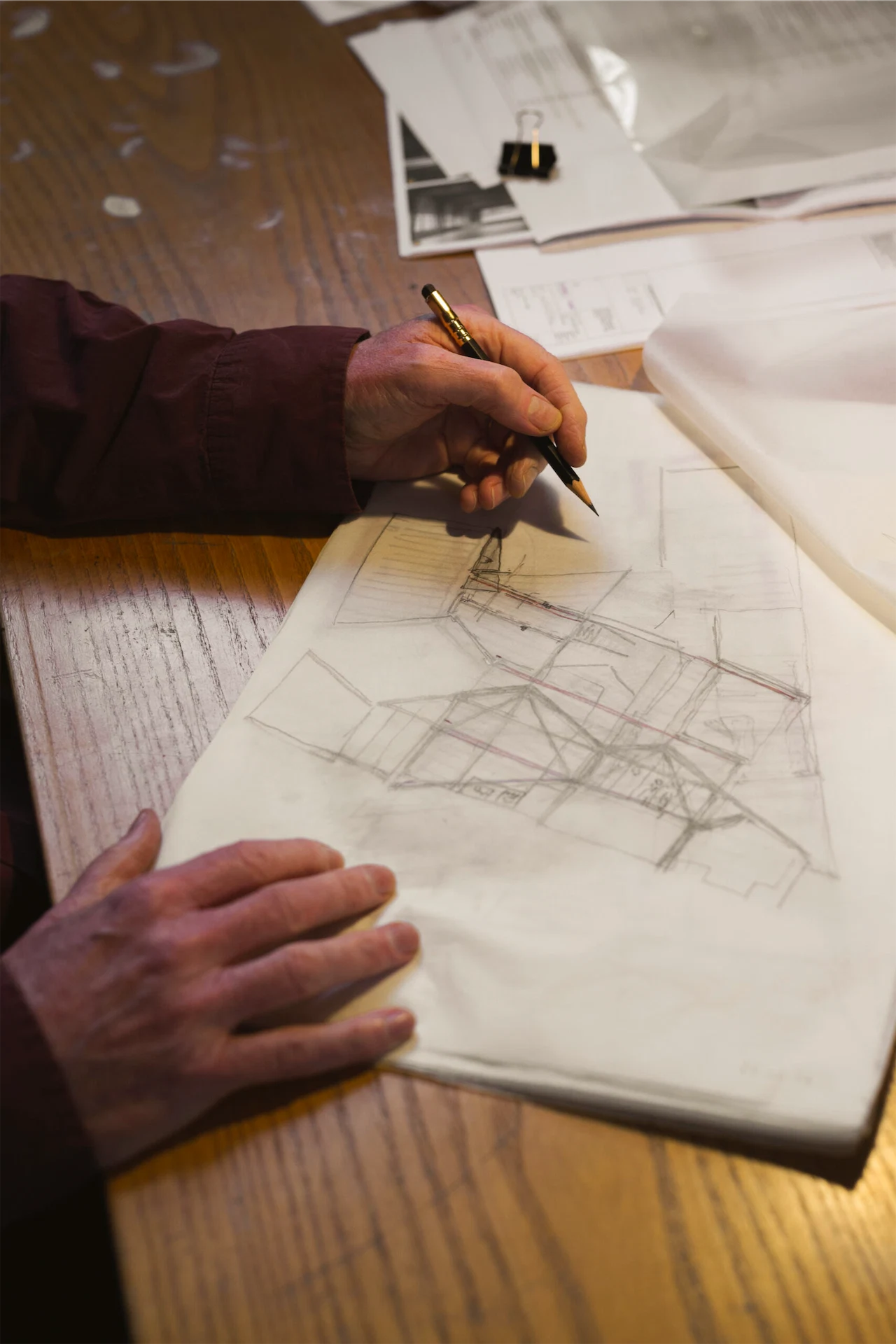
“In my secondary school,” she says. “I used to think maybe I’ll be a writer, but I found I was more interested in art. And my father was an engineer, which is often the case with architects. So I reached a point where I knew I definitely wanted to be an architect. I had never met one, and I didn’t know exactly what they did, but I had a sense that it sat somewhere between art and maths, and that it had an aspect of language, both verbal and visual.”
She goes on to describe long conversations with John about words, and what they might mean,
and how even their shared love of fiction seeps into their work. “Making buildings is different, but you are inventing a world, and you’re imagining lives in that world. Anticipating and projecting what kind of world you could make is one of the most interesting aspects of making architecture.”
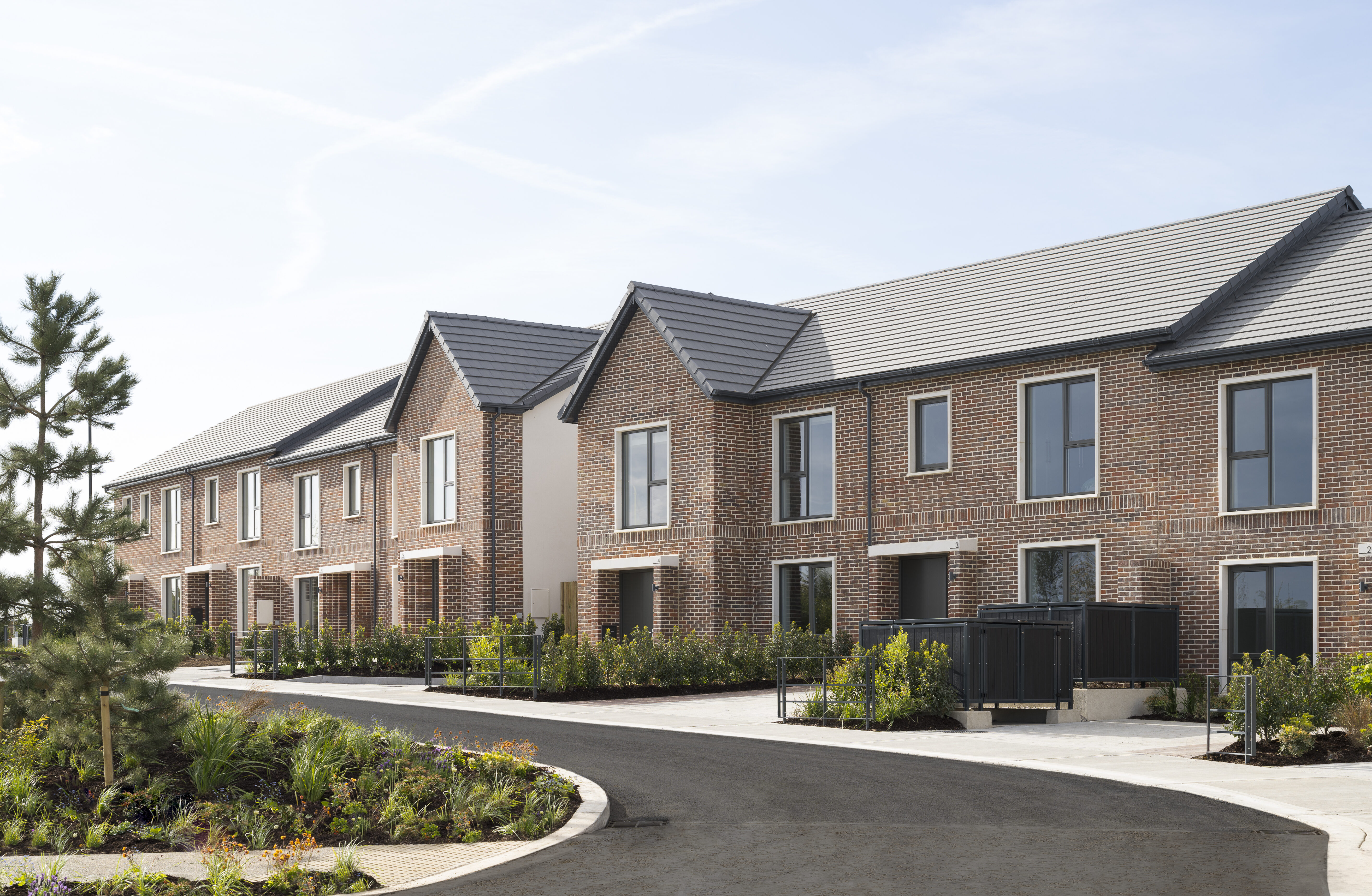
Alongside their cultural projects, which range from their early Irish Film Centre in Temple Bar, through Cork’s Glucksman gallery, to the Lyric Theatre in Belfast, Sheila and John are also passionate about housing. While they have made some extremely beautiful one-off houses, they are particularly committed to creating housing and are working on a series of projects for Dublin City Council. John describes the idea of “useful beauty”. “I grew up in an age of promise and possibility,” he writes in his memoir, recalling a Dublin where people may have had less money, but the city was open to new ideas, and students could rent flats and bedsits in locations that are now the closed-off domains of the very wealthy.
“Sheila has described making a piece of the world,” John says. “But we want to be able to be useful. We have a way of thinking about things that balances the practical and the poetical. That can make a memorable place, and we want to do that in a socially useful way. I think we’re built for public work, it’s what we’re supposed to be doing,” he adds, suggesting that in the right hands, every street corner is actually a public park. Sheila takes up the thought, considering how urban density can include shared spaces, and how you can build at height without losing community and intimacy.
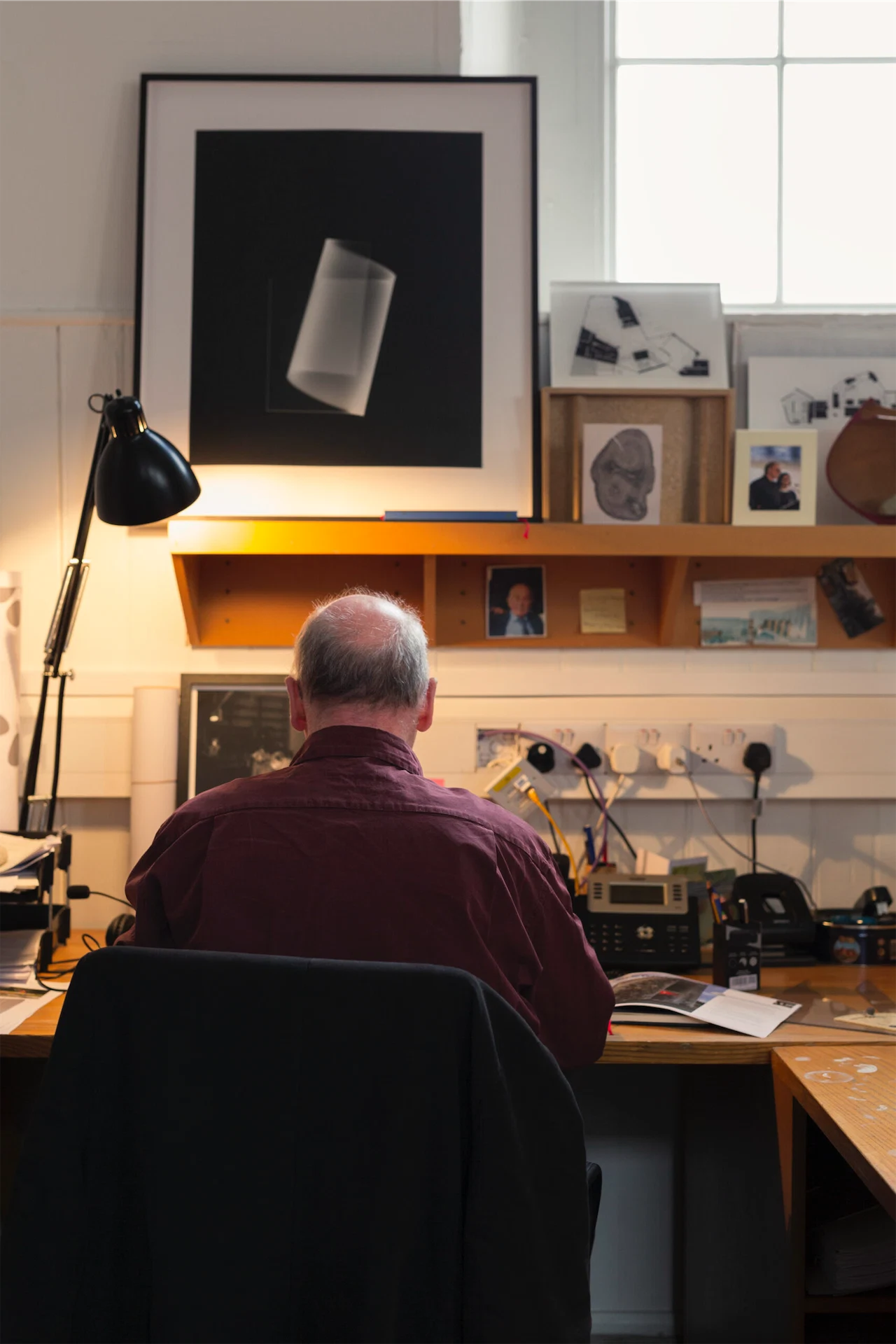
As they talk, they reveal how sensitive they are to context, and how richly they understand the organic nature of good architecture. They have a lovely interplay in conversation, and clearly a great respect for one another and their different thought processes. Behind John’s desk is a shelf of notebooks, all filled with notes, ideas and sketches. “That’s the last thing I wrote, just before you called,” he says, smiling, showing me a sketch of a gable end and some musings on the nature of tea. The best architecture is, after all, all about the space it creates for all the lives that go on inside.
Photography: Melanie Mullan
This feature originally appeared in the spring/summer 2024 issue of IMAGE Interiors. Have you thought about becoming a subscriber? Find out more, and sign up here.
Also Read