


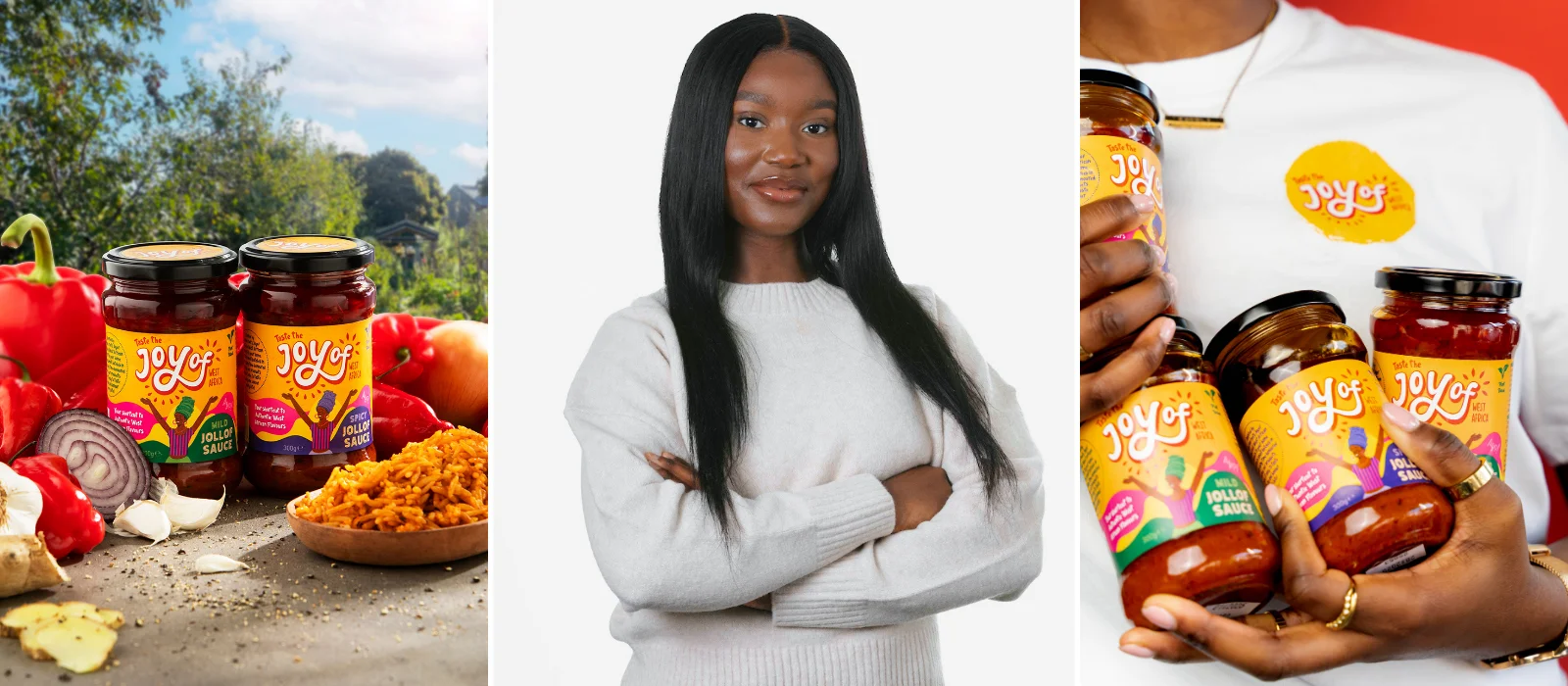
Eniola Salami shares her life in food, from her earliest memories to her favourite flavours and culinary inspirations.
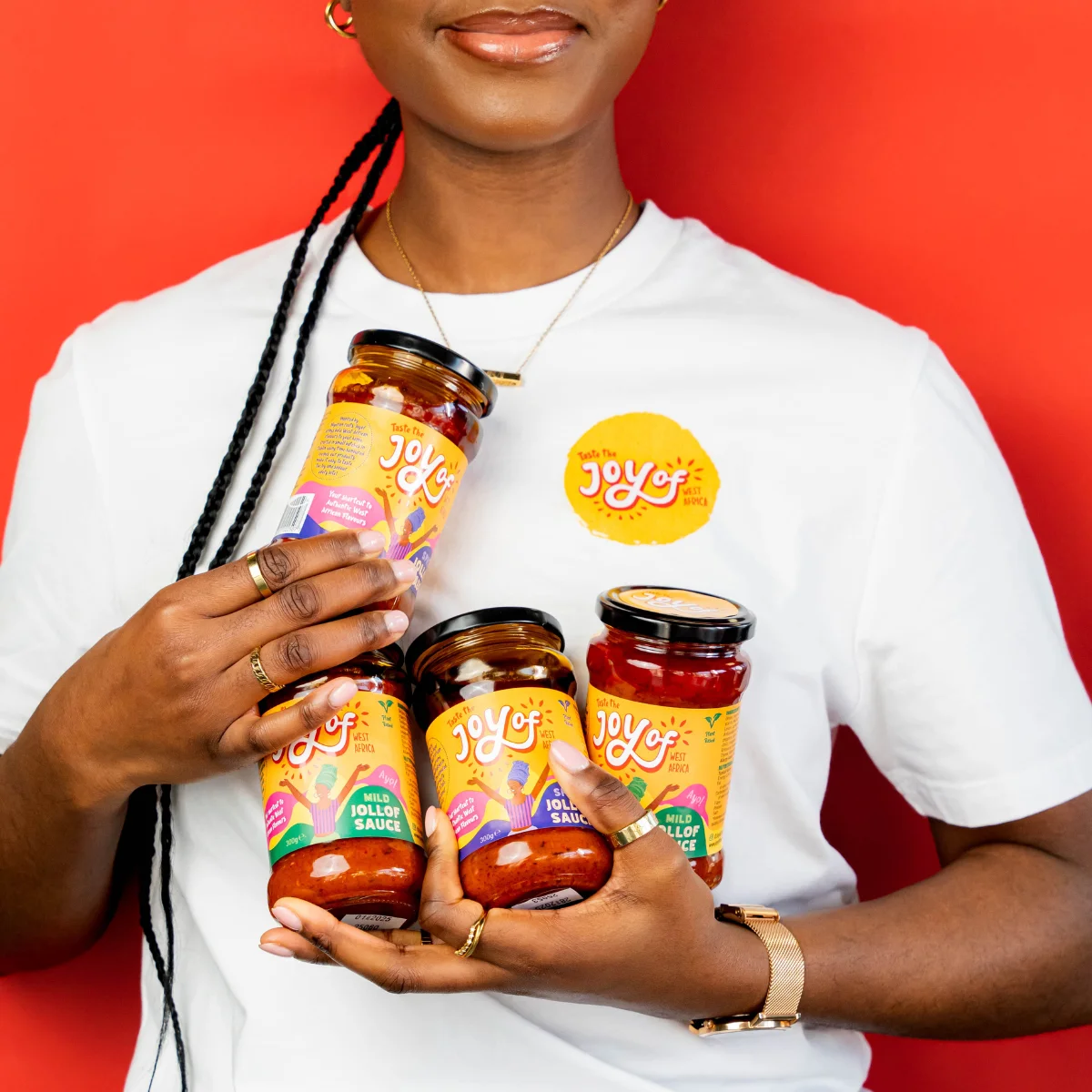
Joyof Foods was launched in May 2025 by former TUD Culinary Arts student, Eniola Salami, who moved to Ireland from her native Nigeria aged seven. Growing up in a Nigerian home, where she learned to cook the traditional way from her mum, the kitchen was where tradition, stories, and memories were shared.
After completing her four year course at TUD in 2020, Eniola spent the next five years working in New Product Development (NPD) for Donnelly Fresh Foods and Lir Chocolates.
Working these 9-5 office jobs, Eniola soon realised that she no longer had the time to cook the West African cuisine (with some dishes taking several hours to cook) that she’d developed such a deep love for.
Every time Eniola walked into a supermarket, she’d ask herself where the West African products were, and why this incredible cuisine isn’t more accessible. That’s what sparked the idea for her to create Joyof, an innovative food brand with a range of authentic West African products founded to make authentic West African cuisine more accessible, convenient and stress free.
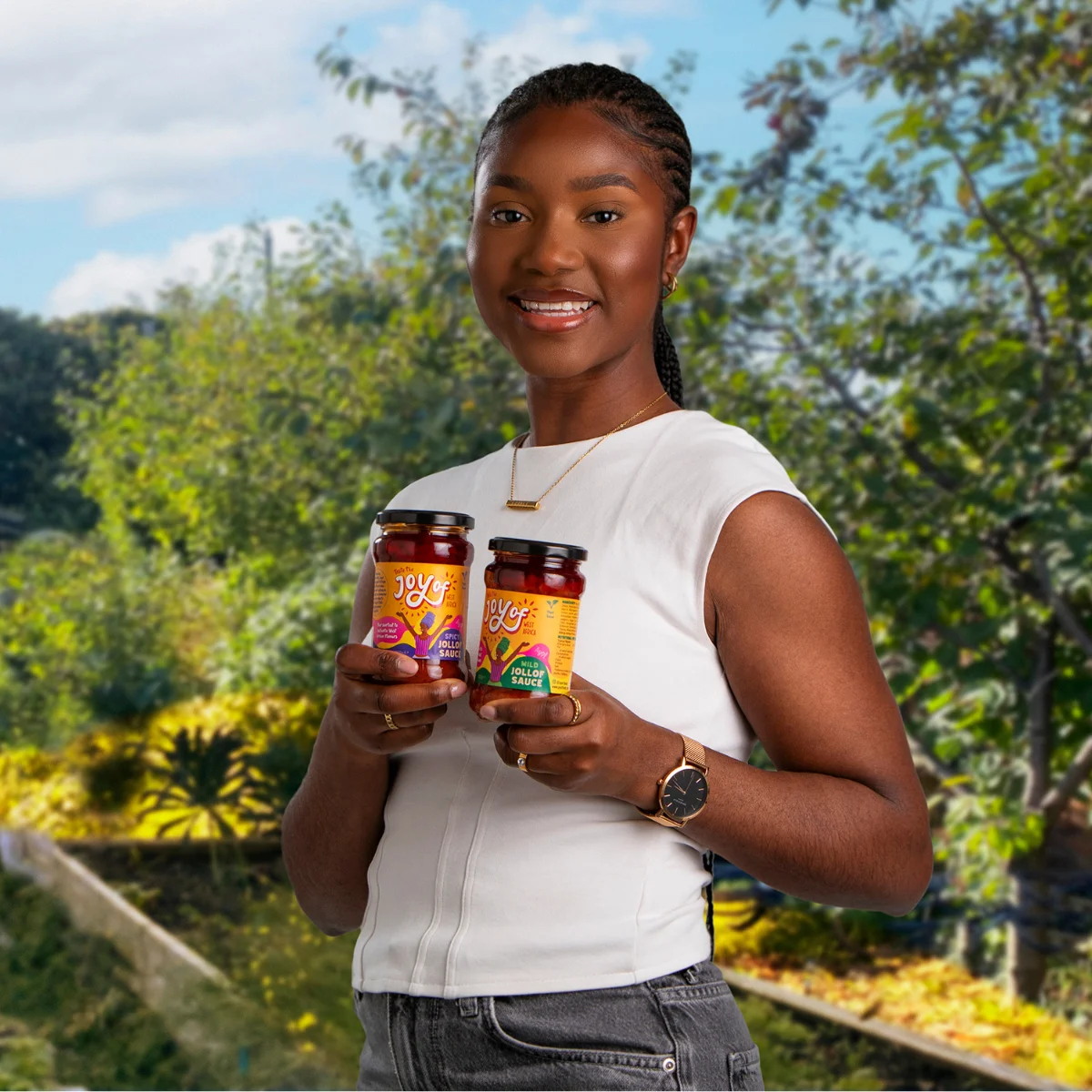
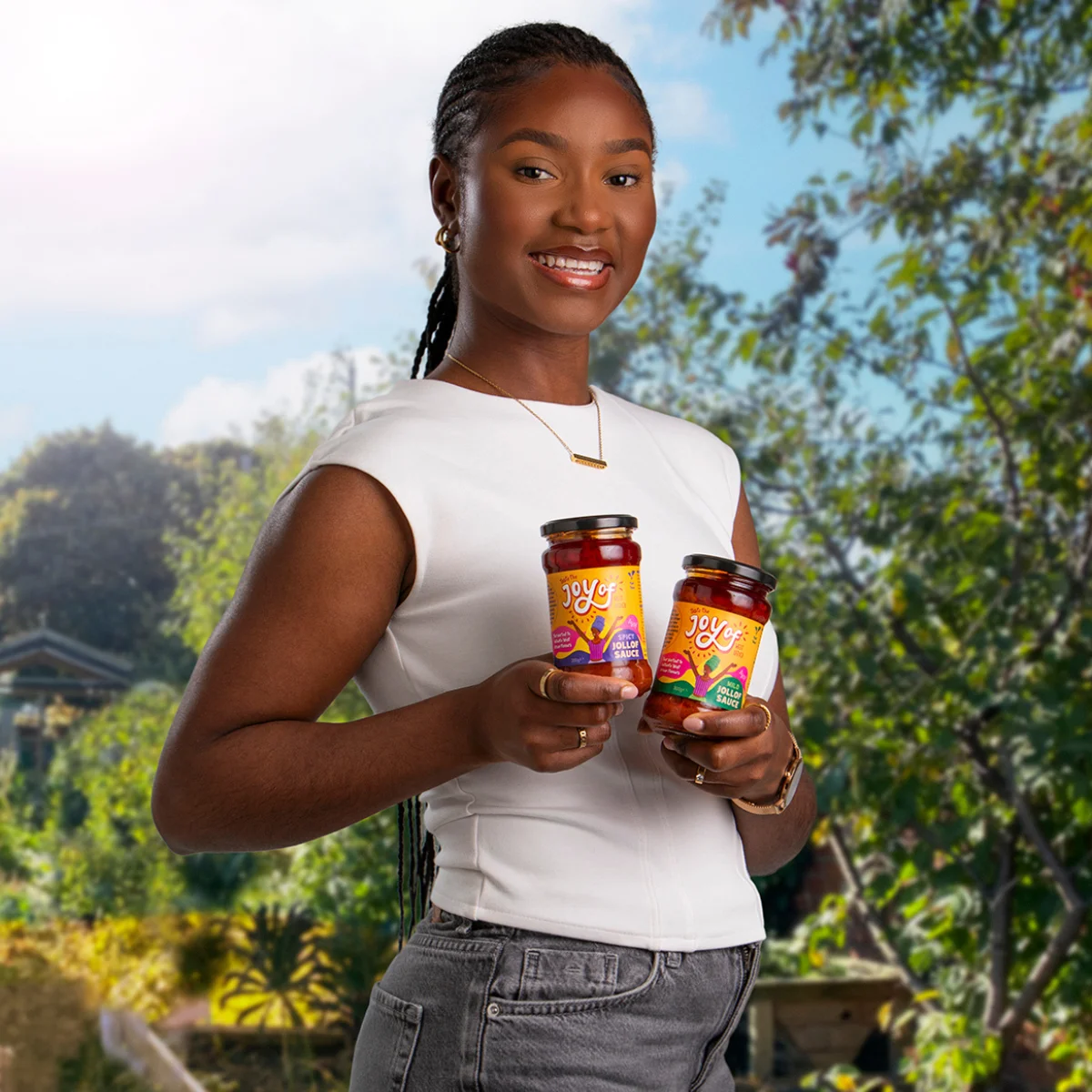
Joyof blends cultural authenticity with modern convenience, delivering high-quality products that remove the complexity traditionally associated with these dishes.Joyof’s current product range includes two Jollof Cooking Pastes, available in Spicy and Mild.
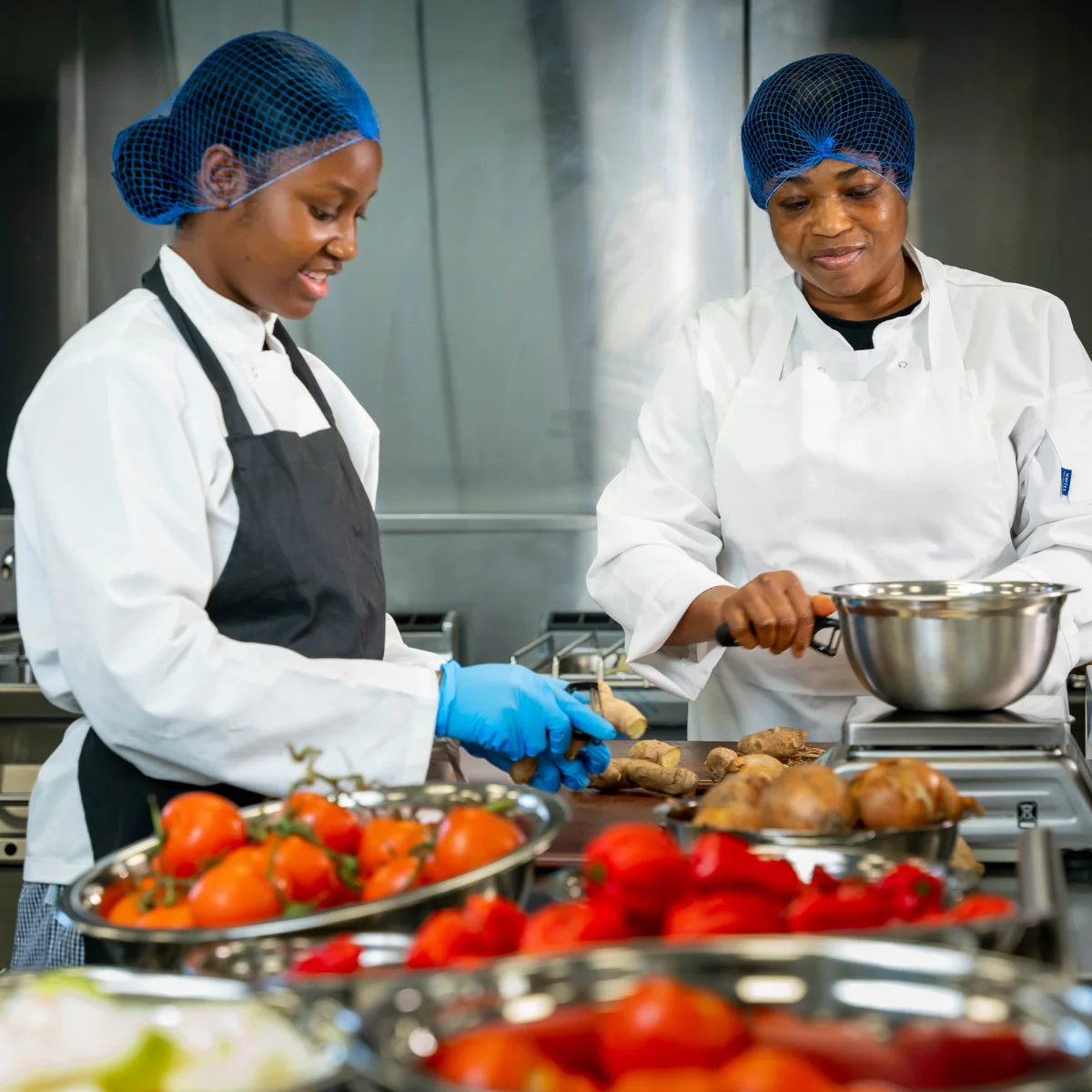
These products are designed to save time while preserving the bold, traditional flavours of West Africa, making it easy for both seasoned cooks and beginners to enjoy delicious, authentic West African meals. Sustainability is a core value of the business; Joyof produces in small batches, sources local ingredients where possible, and uses eco-friendly packaging to minimise environmental impact.
Joyof Foods is supported by Dublin Food Chain, a collaborative initiative of the four Local Enterprise Offices in the Dublin area supported by Bord Bia, created to champion and encourage the flourishing Co Dublin food sector.
What are your earliest memories of food?
One of my earliest food memories is cooking with my mum. Food was always central to our lives, especially growing up as a West African girl. Cooking and learning traditional dishes wasn’t optional, it was simply part of who we were and how knowledge was passed down.
There was something deeply comforting about coming home from school and being in the kitchen with her, watching her cook, helping where I could, tasting as we went. That kitchen felt like a place of warmth, connection, and quiet learning, long before I understood how formative it really was. Looking back now, I realise it wasn’t just about food, it was about identity, belonging, and learning who I was through what we cooked and shared.
How would you describe your relationship with food?
My relationship with food is deeply personal and rooted in identity. It’s something I associate with home, family and culture, rather than just nourishment. Food has always been a way of expressing care, of staying connected to where I come from, and of carrying traditions forward. At the same time, it’s also been a space of curiosity and creativity for me. What started in the kitchen with my mum grew into a desire to explore flavours, techniques and stories more deeply. So, my relationship with food feels layered, it’s emotional, cultural and creative, and it continues to evolve as I grow.
What was the first meal you learned to cook?
The first dish I learned to cook was Jollof rice. It’s a staple in many West African homes. Even though it has depth and complexity, it’s actually one of the easier dishes to learn to make.
How did working with food become your career?
Working with food became my career through a mix of curiosity and intention. Food was always present in my life, so discovering that I could study Culinary Arts and build a career in food felt like a natural path. From there, my journey evolved beyond the kitchen into product development and food innovation, where I began to see how culture, creativity and commercial food could intersect. That realisation ultimately led me to building Joyof.
What’s your go-to breakfast?
You can’t beat a good full Irish breakfast, especially on a lazy Sunday.
If you’re impressing friends and family at a dinner party, what are you serving up?
If I’m cooking to impress friends and family, I’m usually serving something rooted in West African flavours. A comforting dish that’s meant to be shared, like Jollof rice with well-seasoned protein and sides. For me, impressing people isn’t about fine dining, it’s about bold flavours, warmth, and creating a table that feels full and welcoming.
Who is your culinary inspiration?
My culinary inspiration is Adejoke Bakare. She’s a British Nigerian chef and the first Black woman to earn a Michelin star in the UK, which in itself is incredibly powerful. What inspires me most is the way she’s unapologetically showing that West African food is Michelin-star worthy. Doing that as a woman in a male-dominated industry makes her work even more impactful. It feels affirming, and it opens doors for so many of us who want to see our food and culture recognised at the highest level.
What would your last meal on earth be?
Honestly, it would have to be seafood. I love anything from prawns to mussels to crab. There’s something about seafood that always feels like a treat to me, full of flavour, indulgent, and satisfying in a way nothing else quite matches.
What’s your go-to comfort food?
My go-to comfort food would be Jollof rice. It’s familiar, deeply comforting, and tied to home for me. No matter what kind of day I’ve had, it’s the kind of food that instantly makes me feel better and comforted.
What’s the go-to quick meal you cook when you’re tired and hungry?
I love a good packet ramen, it’s definitely a guilty pleasure. I’ll usually dress it up with a nice runny egg and extra seasoning, and that’s me sorted.
What is one food or flavour you cannot stand?
Beetroot. It’s probably the only food I genuinely can’t stand, it just tastes like dirt to me.
Hangover cure?
I’m not a big drinker, so hangovers are rare for me. But if I had to recommend a cure, it would probably be a nice dirty burger.
Sweet or savoury?
Definitely sweet. I have the biggest sweet tooth, even when I’m completely full, I’ll always find room for dessert.
Fine dining or pub grub?
It depends on the occasion, but I’m definitely a fine dining girl.
Favourite restaurant in Ireland?
One of my favourite restaurants at the moment is Achara. The food is incredible, the flavours, the concept, everything just feels really well thought through and executed.
Best coffee in Ireland?
I’m actually not a coffee drinker, so I’m probably the wrong person to ask.
What are your thoughts on the Irish foodie scene?
I think the Irish foodie scene has grown so much over the years. I remember when I was in college, there wasn’t a huge amount of diversity, it felt like the same go-to places were repeated again and again. Now there’s a real breadth to it. There are so many restaurants representing different cultures and cuisines, doing exciting, thoughtful things with food. It feels more open, more expressive, and much more reflective of the people living here.
What’s your favourite thing about cooking?
My favourite thing about cooking is the way it allows you to experience different cultures. By cooking a dish, you’re stepping into traditions, ingredients and ways of doing things. It’s a form of learning and connection that doesn’t require words.
What does food — sitting down to a meal with friends, mindfully preparing a meal, nourishment, etc — mean to you?
For me, food means connection. It’s how I feel close to people, how I show care, and how I slow down in a world that moves too fast. Sitting down to a meal, whether I’ve cooked it mindfully or we’re sharing something simple, creates a space where I feel present and grounded. Food allows me to connect with others without needing anything else, to experience something together and feel a sense of belonging. That’s what it means to me, it’s not just nourishment, it’s relationship.
Food for thought — What are some areas for improvement within the Irish food/restaurant/hospitality scene?
I think there’s room for more opportunity and more diverse coverage within the Irish food and hospitality scene. Often, it feels like the same restaurants and voices are spotlighted again and again, even though there are so many people doing incredible work across different cultures, formats and communities. Creating more space for emerging and underrepresented food businesses to be seen and supported would only strengthen the industry as a whole.
Chef’s kiss — Tell us about one standout foodie experience you’ve had recently.
A standout foodie experience for me recently was visiting Kaldero. I’ve been a fan of the Bahay team since their pop-up days and had eaten at a few of them, so I was really excited to see what they’d do with a permanent space.
I love Filipino food and first fell in love with it after spending a month island hopping in the Philippines, experiencing the food and culture firsthand. Walking into Kaldero felt like that same energy brought to Dublin. The menu was diverse, the atmosphere was great, and the food was fab. They’ve managed to keep the essence of Filipino cuisine while adding a modern, creative twist.
One dish that really stood out for me was the oxtail Kare Kare, the meat was falling off the bone and the roasted peanut sauce was rich and creamy. I’ll definitely be going back for that alone.
Compliments to the chef — Now’s your chance to sing the praises of a talented chef, beloved restaurant or particularly talented foodie family member.
If I had to give compliments to anyone, it would be my mum. She’s the first person I learned to cook from, and so much of how I understand food, flavour and care comes from her kitchen. That influence still shapes everything I do today.
Secret ingredient — What, in your estimation, makes the perfect dining experience?
When it comes to dining out, it’s not just about the food anymore, it’s about the experience. Serving good food alone isn’t enough. What really makes a dining experience memorable is the atmosphere, the care and intention behind each dish, and how the space makes you feel the moment you walk in. When all of those elements come together, food becomes part of a bigger story. You leave feeling well looked after, and wanting to return, and that, to me, is what makes a perfect dining experience.
Also Read