






Photography by James Gabriel Martin
Black magic: The craft, science and ceremony behind the perfect pint of Guinness
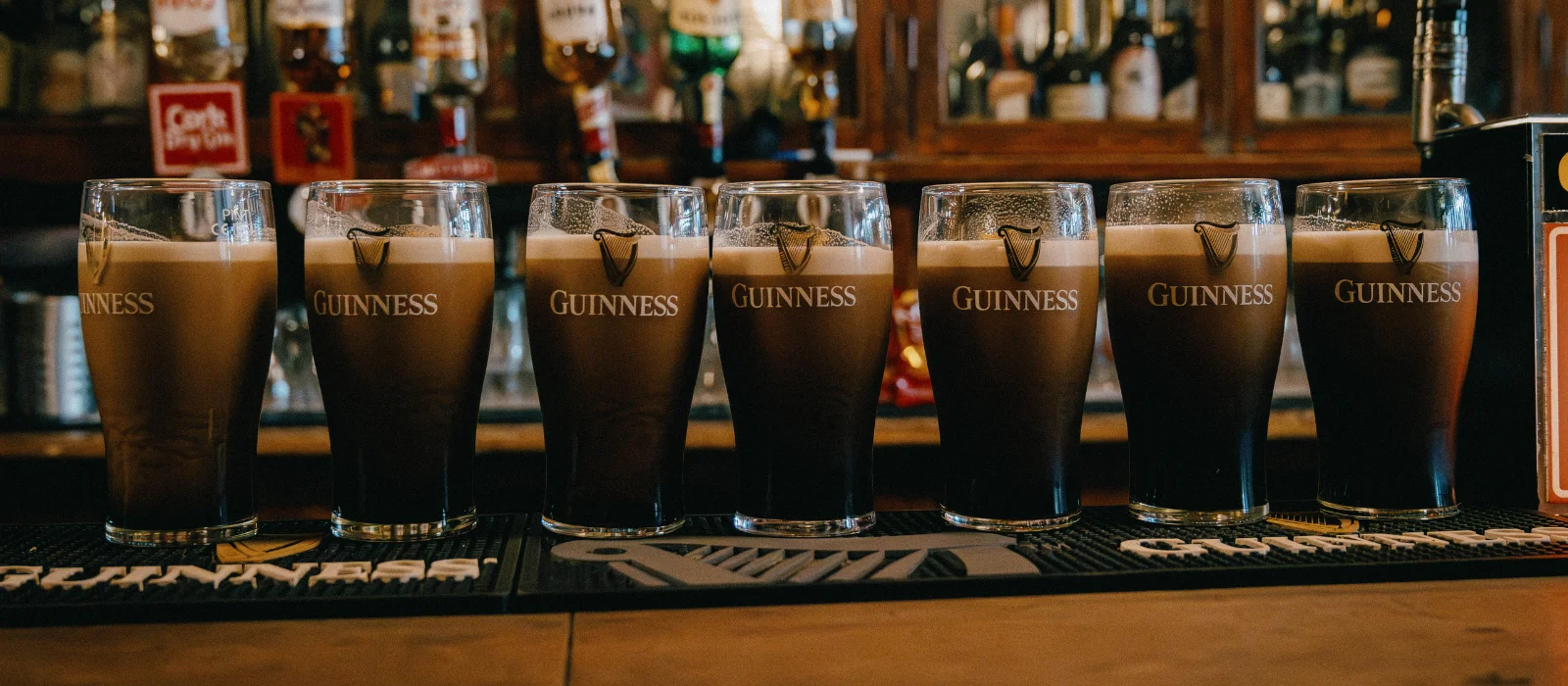
Irish people have strong opinions when it comes to Guinness. A pub garnering a reputation for serving a great pint of plain is arguably the most surefire way to set it up for success. But what actually goes in to making the perfect pint? Does such a thing even exist? Here, James Gabriel Martin of Leviathan takes a deep dive into the topic, examining the drink from a cultural lens, as well as speaking to experts in the field to find out about the alchemy behind a great glass.
I will begin with a confession. One that, as an Irish person, carries with it a degree of dishonour. But on I must endeavour in the name of truth and transparency. So here it is.
I didn’t like Guinness when I first tried it. The words feel weighted as I write them. I see a vision of a pristine pint, standing distinguished and disappointed atop a dark wooden table, its crisp white collar pinned above its cold black body. Forgive me Father, for I have sinned.
In fact, it took me quite some time to get the taste for it. As a younger man, I struggled with the notion of an acquired taste in general. If you tried something once, twice even, and didn’t like it, why on earth would you go back for more? In my lowest moments, in hushed murmurs, I even requested a dash of blackcurrant cordial be added.
My older brother sought to save my soul. I recall nights when I was drinking nondescript lagers, and he would appear suddenly with a fresh pint of Guinness, thrusting it into my hand earnestly. “Just try it again,” he’d say. “You need to have two or three to really get the taste.” One particular night, buoyed by his concern, I made myself power through. I was midway into the third pint when something clicked. It made sense.
What was once peculiar became complex. My palate began to appreciate the subtle bitter undertones. Those dissonant ghost notes elevated and, by contrast, sweetened the rest of the orchestra. I began to pick out the hints of caramel and coffee. To marvel at how the viscous, creamy waves on the surface seemed so at odds with the mysterious, malty ebony ocean below.
It’s like getting into a hot bath on a winter’s night. It might take some time to ease in, but once you’re in, you’re not wanting to get out.
Looking back, I begin to wonder if I was alone in this experience. I poll friends and family, perhaps seeking reassurance. The feedback proves surprising. Granted, my methodology isn’t the most scientific, but results show that 50% of all people that I randomly bother with this question also had to acquire the taste for Guinness.
It reframes things for me, I realise that I may have unknowingly experienced a rite of passage, that learning to appreciate a good pint may well be part of the process for many people. As one person that I asked commented, “It’s like getting into a hot bath on a winter’s night. It might take some time to ease in, but once you’re in, you’re not wanting to get out.”
And here marks another aspect of Guinness that strikes me as wholly unique. The way in which we speak about it. We romanticise it. There is a passion for this drink in Ireland that seems to unify the past and present and resonates through our collective culture. People identify with it.
It’s as if we almost forget that it is a product, one that is today owned and operated by a multinational corporation. It is seemingly impervious to the consumer-fatigue and advertising wariness that we see creeping into modern life as we are bombarded more and more by ads, paywalls, and globalisation.
This has historical roots. Guinness has long invested in genius marketing. The famous “Guinness is Good For You” slogan started it all, when the family first agreed to run advertisements back in 1929. The work of artist John Gilroy in the period from the 1930s through to the 1960s has become iconic. He is responsible for a spate of colourful creations featuring big and bold typography alongside animals like toucans, ostriches and sea lions. The inspiration for that work supposedly came to the artist while he was visiting a zoo. The advertising has evolved with the times, whether it’s evocative television commercials or the brand’s involvement with rugby.
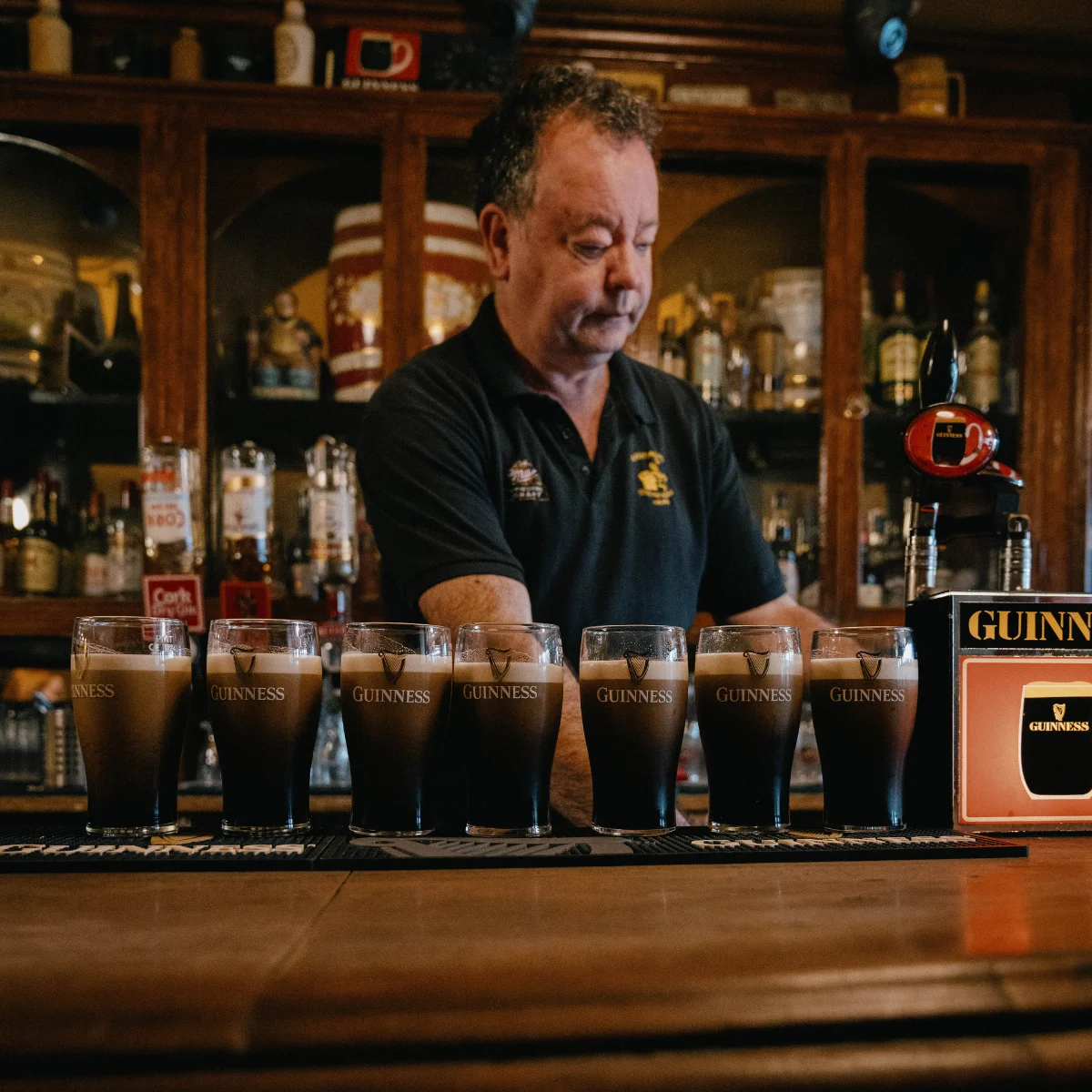
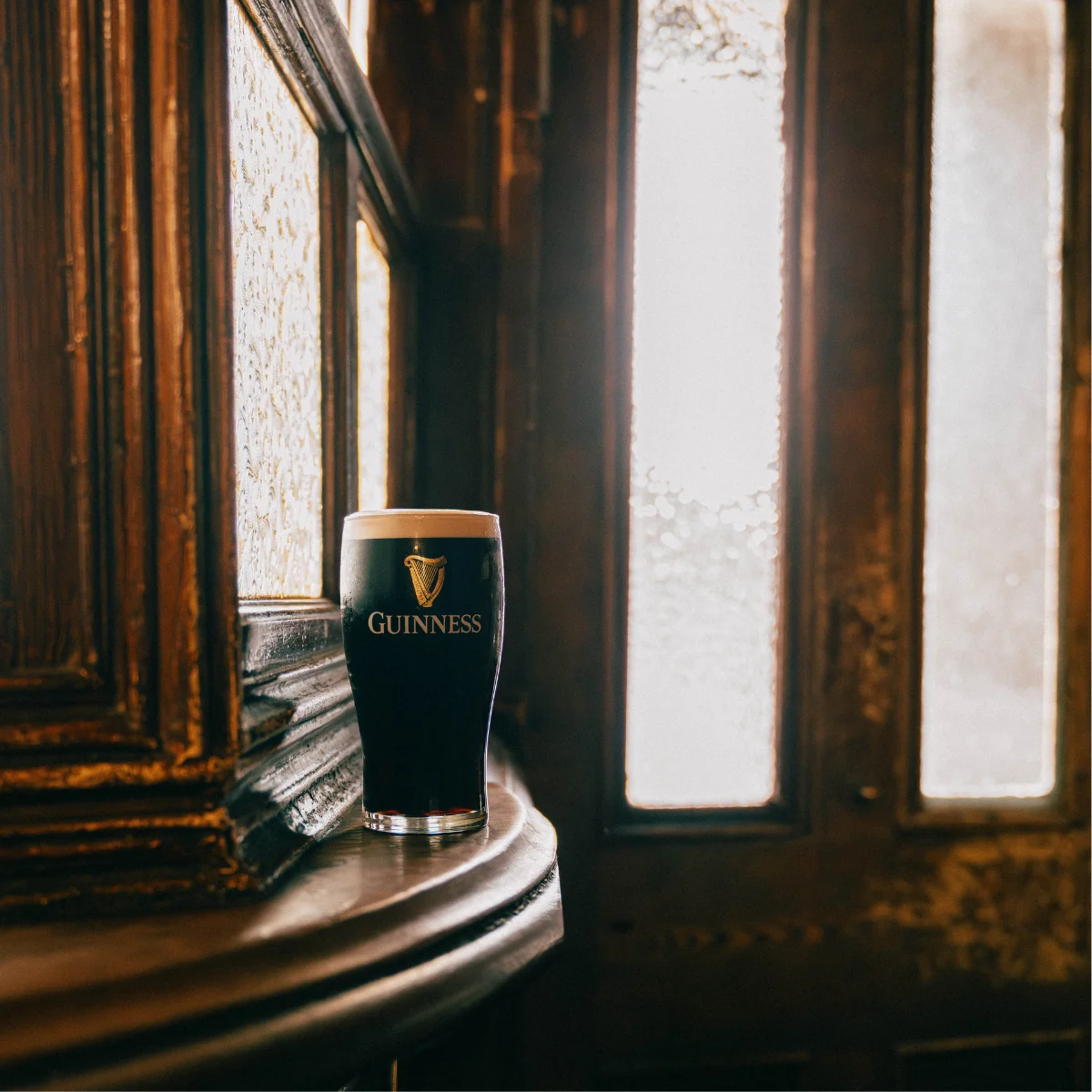
Today this translates to well-chosen collaborations with artists and creatives who have cultural capital. The brand is cool. Irish artists such as Kathi Burke and Stephen “Hephee” Heffernan have happily brought their own distinct styles to the world of Guinness, while independent streetwear brand Lazy Oaf has just announced a Guinness collection, supported by a pop-up shop in Stephen’s Green Shopping Centre. Bohemian Football Club, marketing geniuses in their own right, even has a Guinness Jersey. I have witnessed the excited reactions to these products. They are seen as new manifestations of Irishness and are rarely deemed as cynical capitalist cash grabs. I struggle to see the likes of Coca-Cola having such a wide stream and niche appeal. There’s even a Netflix series, House of Guinness, which adds some poetic license to the history of the family.
Another example of distinctive conversations regarding Guinness in Ireland revolves around where you can get the best pint. It’s hotly debated by locals. People have their chosen spots. There are now numerous social media accounts with massive followings dedicated solely to this idea, rating and reviewing pints across the island. To bring my youthful naivety in once again, I admit that there was once a time that this struck me as curious. How could the same exact product be different in multiple locations? Was this just a strange form of tribalism? Or was it the placebo effect in action? A pub gains notoriety for having a stellar pint of plain, so we therefore perceive their pints to be great.
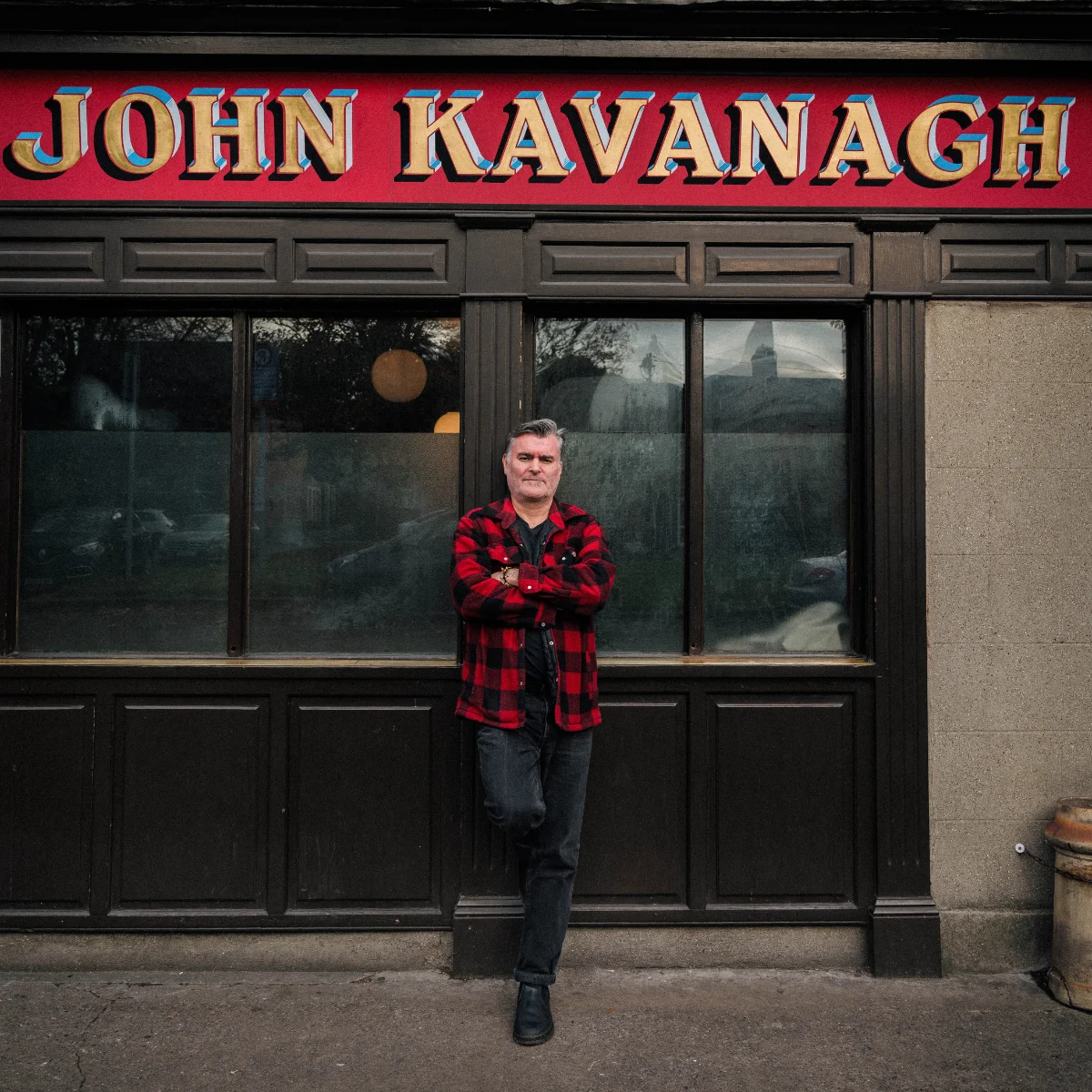
I seek answers, and so I go straight to a trusted source whose opinion holds a lot of sway in this arena. Ciaran Kavanagh is the chef and proprietor at one of Dublin’s most beloved establishments, John Kavanagh, also known as The Gravediggers.
The pub has been in the Kavanagh family for a startling eight generations and is beloved by tourists and locals alike. Sharing a wall with Glasnevin Cemetery, it’s said that back in the day, the shift working gravediggers would tap on a hatch of the pub and pass their shovels in to receive stout.
There are four cornerstones of a great pint. Consistency, temperature, glass hygiene, and pride. My family all grew up here pulling pints, and everyone that works here now cares deeply about what they do.
It’s particularly famous for two things. Coddle—a traditional dish of bacon, sausage, potatoes and onion simmered in a simple broth—and an amazing pint. I call in to talk with Ciaran one cold winter’s morning. It’s a Monday, and the pub has just opened. Despite this, there’s already a steady stream of patrons trickling through the door. Ciaran places a freshly poured pint down in front of me.
“There are four cornerstones of a great pint. Consistency, temperature, glass hygiene, and pride. My family all grew up here pulling pints, and everyone that works here now cares deeply about what they do,” Ciaran says.
As a younger man and before purchasing the pub from his grandfather, Ciaran’s father worked for Guinness. Nowadays, most pubs follow roughly the same procedures for cooling the drink, which plays a big part in delivering a good pint. “Back in the 1980s, there was no such thing as cold rooms. Dad introduced a system in the pub for double cooling. Underneath the tap, there was a large cooler and the beer would then go over an ice bank to chill it down before tapping, so he was way ahead of the game from early on,” Ciaran says.
He also goes on to explain more of the technical details that go into keeping things consistent. First and foremost, the kegs are stored for a few days in the aforementioned cold room at around seven degrees centigrade until the core temperatures have lowered. It then goes to what The Gravediggers have coined “the coffin”, a large cooler that sits at zero degrees, with liquid water that never freezes. It is pumped into a pipe so that the temperature can sit at something closer to three degrees. From there it goes to the tap. They have taken steps to make sure that the draw distance is short, meaning that the final product can arrive as cold as possible. I learn that temperature consistency is what leads to the perfect height for that signature head on a pint of Guinness.
“We are massively into glass hygiene, too. We wash our glasses with cool water in the morning and then they go into a sterilised machine. During the day, they get washed, dipped in cold water and drip dried to ensure that there is no residue like soap, lipstick or lip balm,” Ciaran says.
One side of the establishment serves food while the other is reserved for drinks. Things like coffee cups and plates are washed in a completely separate area to ensure that grease and debris do not make an appearance.
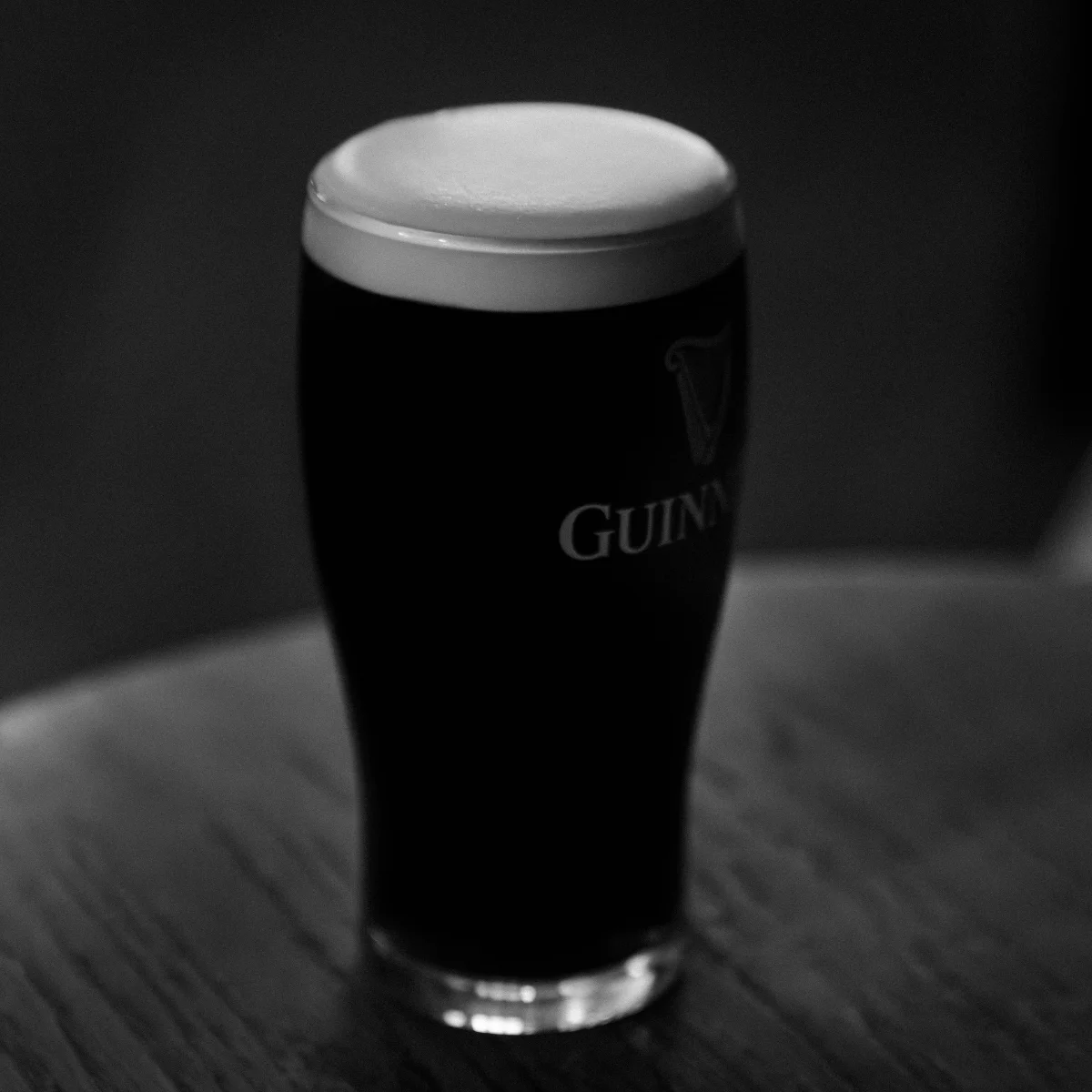
“It isn’t just about the pint, of course. I feel that there is a collective energy in spaces like this. Meeting your friends to have a drink. Reading the newspaper or talking to the barman, it’s all a part of the ritual,” Ciaran adds.
There’s no doubt that John Kavanagh has a special aura, and it obviously resonates with people. As we talk, we are periodically interrupted by visitors who want to meet Ciaran. One young couple presents him with a deck of illustrated playing cards titled, ‘The Pubs of Ireland’, with paintings of different establishments. They ask him to sign one of the John Kavanagh faces, and tell me that they are making their way across Ireland to visit every pub featured in the deck. Ciaran tells me that he frequently has visitors who fly over from the UK just to spend a few hours at the pub before going home.
One of the pub’s most famous guests was Anthony Bourdain, who visited back in 2012. He tried Ciaran’s take on coddle, and the two struck up a friendship over pints of Guinness. This played a pivotal role in the establishment’s reputation, and today, they are still feeling the aftermath of it. With all the history and passion in the building, Ciaran reiterates that attention to detail and not becoming complacent are key.
Guinness, for their part, has made a major shift towards supporting pubs and bars in their efforts. The brand’s owner, Diageo, channels an impressive amount of time and energy into working with pubs like The Gravediggers across the country, with technicians from the quality team visiting establishments every 28 working days.
I speak to Vicki Donlon, Head of Quality, Events and Third Spaces at Diageo Ireland.
“Ireland’s bars, pubs and restaurants have rightly earned their excellent reputation for outstanding hospitality, and we continue to support our partners as they uphold that mantle. Every detail matters. Clean beer lines, the right gas pressure, correct temperature, and a clean tap spout all come together to create a perfect pint and that beautiful surge and settle we associate with a great Guinness. We ensure our product is always served at its freshest by rotating stock, regularly cleaning lines, troubleshooting any issues, and training staff,” she says.
Another hotly debated topic is that of the two-part pour, said to give Guinness its distinctive creamy head. In 1959, Guinness changed from using CO2 to using nitrogen, a lighter gas that takes longer for the bubbles to make their way through the beer. Today, the technique is said to allow time for the beer to settle before topping it off. This practice actually dates back to a time when drawing from two separate casks was necessary to achieve separation. Some say modern technology has rendered this practice obsolete, with it being based more on tradition than anything else, while others swear that the taste and texture is affected if the two-part pour is skipped.
“The ritual is crucial. It’s part science, part art. We spend time training bar staff on why it matters and how it delivers that distinctive experience and beautiful, balanced flavour,” Vicki says. For the final part of the pour, experienced bar staff will push the tap backwards rather than forward in order to top the pint off without introducing more gas. There’s even an official recommended time in which the whole procedure should be done – 119.5 seconds to be exact.
We want to question the stereotype that Irish people are simply big drinkers, when the conversation should be around why we love and support our pubs so much. Every pub has a different pint of Guinness, a feel, a charm and a culture, and we like to explain to people why that is.
Keith McGovern and David Beirne have translated their passion for Guinness and pub culture into a successful business. Together they operate The Perfect Pint Tour, which sees guests being brought around Dublin city by luxury bus to visit a selection of establishments celebrated for their Guinness. There is also the option to add whiskey and food experiences to the day,
“Our tour exists to educate visitors on Irish hospitality and pub culture, and to explain the important role that Guinness plays alongside that. We want to show people why there is an Irish bar in every country in the world, trying to emulate what we do. We also want to question the stereotype that Irish people are simply big drinkers, when the conversation should be around why we love and support our pubs so much. Every pub has a different pint of Guinness, a feel, a charm and a culture, and we like to explain to people why that is,” Keith tells me.
One of the pubs featured on The Perfect Pint Tour is The Gravediggers. With Ciaran’s words still surging in my head, I ask Keith what it is in his opinion that sets certain establishments apart when it comes to Guinness.
“Small details that are done right. I have noticed that pubs that only use two Guinness taps are usually the best. A third tap will be used more infrequently. This leads to yeast buildup and off flavours. It takes at least 48 hours for a keg of Guinness to settle after delivery. We favour pubs that only take a delivery once a week to make the chances of getting an unsettled pint lower. Let it be known also, serving a great pint is 90% science and 10% magic.”
Laura Murphy creates content all around rating pints, going by the moniker @thatguinnessgirl on Instagram. I ask her why she thinks there is such an audience for what she does and what makes people so passionate about Guinness.
“I think Irish culture has blown up as a whole in the media as of late. We have tremendous talent from Ireland being recognised internationally and Guinness is a symbol of Ireland and its people,” she says.
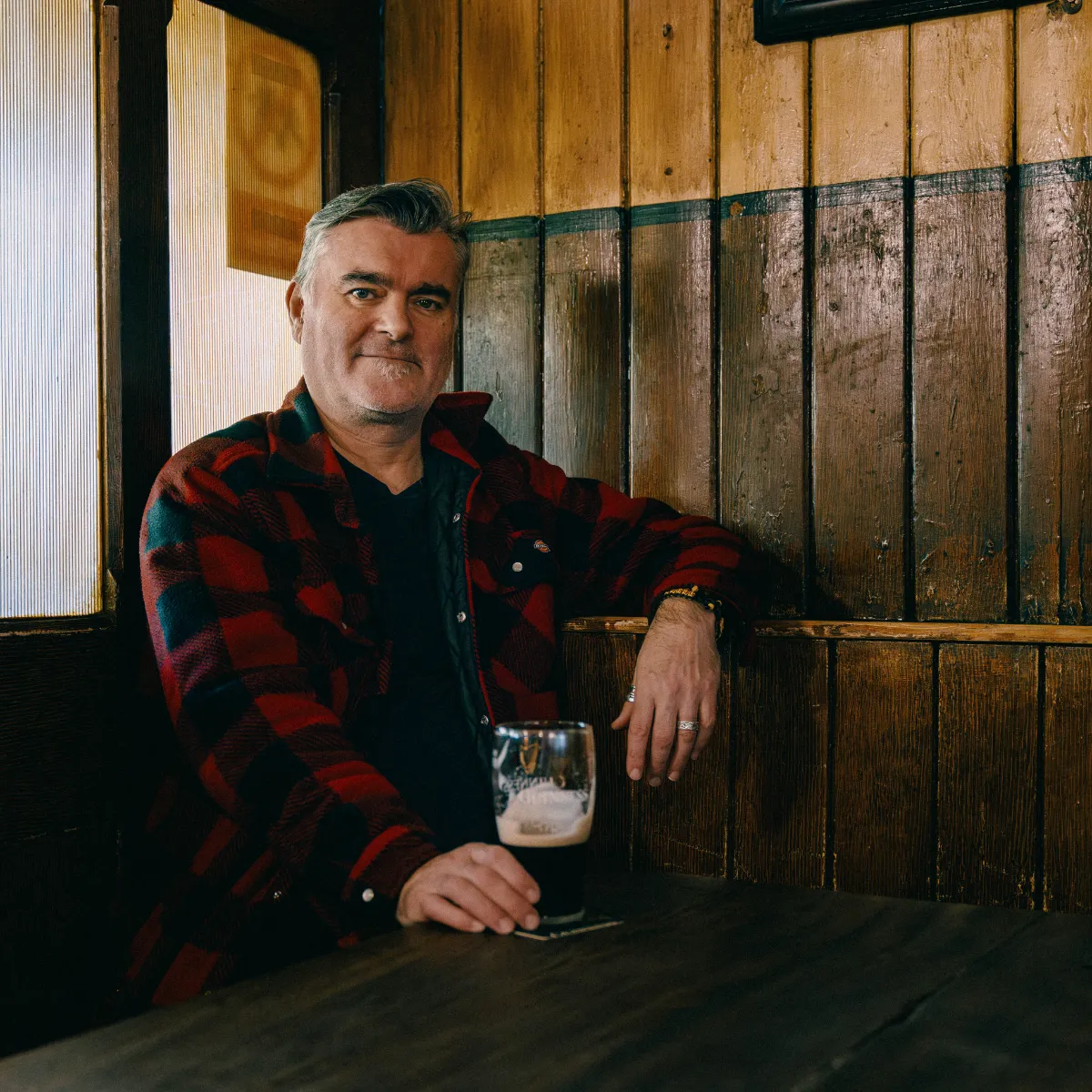
There are certain things Laura has noticed that are sticking points for people when it comes to reviews. “People like to see pints being drunk in properly branded Guinness glasses. They like to see an even, smooth head with no bubbles, and they like a glass that looks cold but not too cold.”
I now see the whole thing in a new light. Having talked to so many people about it, my journey towards understanding and appreciation of Guinness feels all the more expansive. A pilgrimage of the pint.
The most sincere and sage closing sentiments on the topic come to me somewhat unexpectedly. Not by way of industry expert, marketing department or influencer.
For me, what’s special is the fact that it’s one of the few things left in this world that involves both parties displaying patience. There’s reverence attached to it. You wouldn’t dare drink that unsettled. You can’t hurry the bartender. You can’t rush the pint. Everything else we consume these days is led by convenience.
I meet up with an old friend. Dave Ferriter, musician, writer and Corkonian prone to poeticism. He also happens to have a serious grá for the black stuff. After ordering our pints, I tell him that I’m actually in the middle of writing a piece about what makes the Guinness experience so special.
His face takes on a sombre expression, and his gaze shifts towards the swirling cloud of the settling pint, hues of sable and copper dropping and darkening in a blanket. I tell him about the conflicting research regarding the two-part pour, and his brow furrows.
“You know, for me, I think what’s special is the fact that it’s one of the few things left in this world that involves both parties displaying patience. There’s even reverence attached to it. You wouldn’t dare drink that unsettled. You can’t hurry the bartender. You can’t rush the pint. Everything else we consume these days is led by convenience. Down to bars serving ready-made cocktails,” he says.
As the barman tops off the pints, I offer my reply, caught off guard in that way that only Dave can get you. “I suppose you’re right there. And as is often the case, it’s worth the wait,” I say. Finally, the drinks fully settle, with perfect pillowy domes resting gleefully atop our shining black trophies.
We sip, tasting that first rush of malty sweet bitterness, parting the velvety ethereal mist to allow the thinner liquid beneath to fill our mouths. Sitting his pint down and looking out towards the door of the snug, Dave offers up one final thought.
“All it does is ask you for that moment. That brief, intangible happening hanging in the vastness of time. I’m not religious, but at mass when you’re asked to take a moment for quiet reflection during the service, it means something. That’s what we give the pint of plain. Or what it gives us.”
I nod.
“Absolutely. Let’s get some bacon fries.”
Photography by James Gabriel Martin.
Also Read