




By IMAGE
17th May 2013
17th May 2013
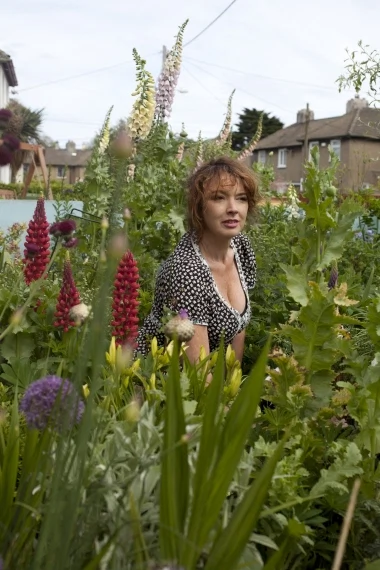
I was going to write another awful flowers are like people piece, but think I’ll skip the analogy lark and just get down to what is really on my mind. Today, I’m preoccupied with the death of youth, expectation and hope. Nothing major. I don’t know if I hung out with a particularly wild or doomed set but it seems that the past few years have been filled with funerals, many of them unbelievably poignant. Most of these premature departures have been men, and their downfall has been alcohol. This is somewhat surprising as narcs were their drug of choice originally, but in a contradiction of received wisdom, the drugs proved to be the gateway to a life devoted to the pursuit of alcohol- induced oblivion.
These boys were all, without exception beautiful, talented, clever and funny young men. Hugely sexually successful, popular with their peers and gifted it seemed to us back in the 70s and 80s that the world, in the words of the sage Hilda Ogden, was their lobster.
Their funerals all had one striking element in common: the mourners, apart from family, were composed of a core gang of friends who knew them when they were young and in their prime. There were no ‘new’ friends, work colleagues or acquaintances. Most of these friends had had no contact with the deceased for many years. It was as though their lives had crystalized at that point in their youth when they were at their peak, and that from then onwards, they had lived in a limbo – or purgatory even. – What was it that made these boys so particularly vulnerable? What led them to forgo careers, family life, and comfort for the rackety hand-to-mouth existence they led in the end? Did they feel the hopes and demands of their friends and family were impossible to live up to so deliberately opt out? Or does beauty and talent always come with a price?
A recent book Triumph of Experience: The Men of the Harvard Grant Study by George E. Vaillant (Harvard University Press) may have some answers. ?In 1938 a professor launched a study (which continues to this day) of Harvard sophomores (all male), selecting the best and brightest of the classes 1939-44 (Jack Kennedy was one of the subjects) to determine which early traits best predict a successful life. Suffice it to say, the richer and more privileged do better.
In this, and other studies, the strongest indicators of a long and happy life are the quality of personal relationships (happy childhoods, strong marriages) and education. The correlation with further education is especially strong – those who continue with post-graduate work tend to live even longer than their happily married well-educated peers. But perhaps not surprisingly, Valliant believes the greatest and most devastating factor on life expectancy and quality of life is alcohol. It’s the cause, not the consequence of unhappiness.
So why do Irish parents continue to push alcohol on their children? I know of one ‘sweet sixteen? birthday bash where there was a full free bar (I kid you not, the father told the hotelier it was for an 18 year old) which ended up in puke sodden mayhem. Beers are regularly handed out at home ?to make them comfortable and used to drinking? as if rather than creating a taste for booze, a little exposure to it will take away the mystique and lead to ‘sensible? drinking – pure baloney if I ever I heard it. For most Irish teenagers, getting totally insensible with drink to the point of blackout is regarded as a right of passage and doesn’t seem to be treated with the same level of hysteria as for example finding a ten spot of hash in a child’s trouser pocket. Some parents? enabling goes as far as facilitating the acquisition of a fake ID. Other normally sane adults frequently fall prey to gaggles of whippersnappers congregating outside the offie and will score them a six pack or two out of ?kindness?. Actually, to use a horticultural analogy after all, it’s like sowing a few bindweed seeds in your best bed to ?acclimatise it? to the weeds, which will ultimately strangle and suck the lifeblood out of your favourite plants.
Vandra Costello normally writes about gardening for IMAGE Interiors & Living and on her blog www.Hortusconclusis.wordpress.com She also just started tweeting 5 minutes ago @vandracarolyn.
Related Stories




Also Read