







If you have an older home, looking after its period details is key to preserving both its charm and its history. Emma Gilleece talks to the experts about how best to tackle everything from windows to plasterwork.
One thing you cannot replicate in a new build is the captivating character of an older property. In recent years, there seems to be an explosion on social media of homeowners pulling up carpets and stripping generations of paint to expose the history of their house. It may seem overwhelming to undertake the restoration or maintenance of original features, but think of the building as consisting of different parts, prioritising the ones that need the most attention. Reassuringly, there are experts and grants available for homeowners to assist in these home improvements.
Windows

An underappreciated feature of a property are the windows. The windows are essentially the eyes of your building; providing a view out or in and opening your rooms to sunlight and fresh breezes. They also provide a glimpse of the craftsmanship of carpentry from a bygone era. The frames surrounding the glass are very important not only to keep it in place, but also to maintain the proportions of the façade.
Sadly, many of the historic window frames in this country have been replaced in the last few decades with plastic uPVC windows. Yes, the heat retention is attractive, but in addition to often altering the frame proportion there is the misconception that they last longer than timber windows. Did you know the average lifespan of uPVC windows is 30 years? This is a relatively short time compared to timber sash windows.
It is natural to worry about timber rotting in our damp climate; however, sash window expert, Matt Steckys of Repairsashwindows.ie points out that some basic maintenance is all that’s required. “People should worry less about rotting if they choose a hardwood, and maintain windows through measures such as exterior painting every five to seven years. A hardwood, such as accoya, lasts for up for 50 years.” Matt’s philosophy is to try and retain as much of the original timber and historic glass as possible and only to replace if beyond repair, with a match to the existing windows.
Stained glass

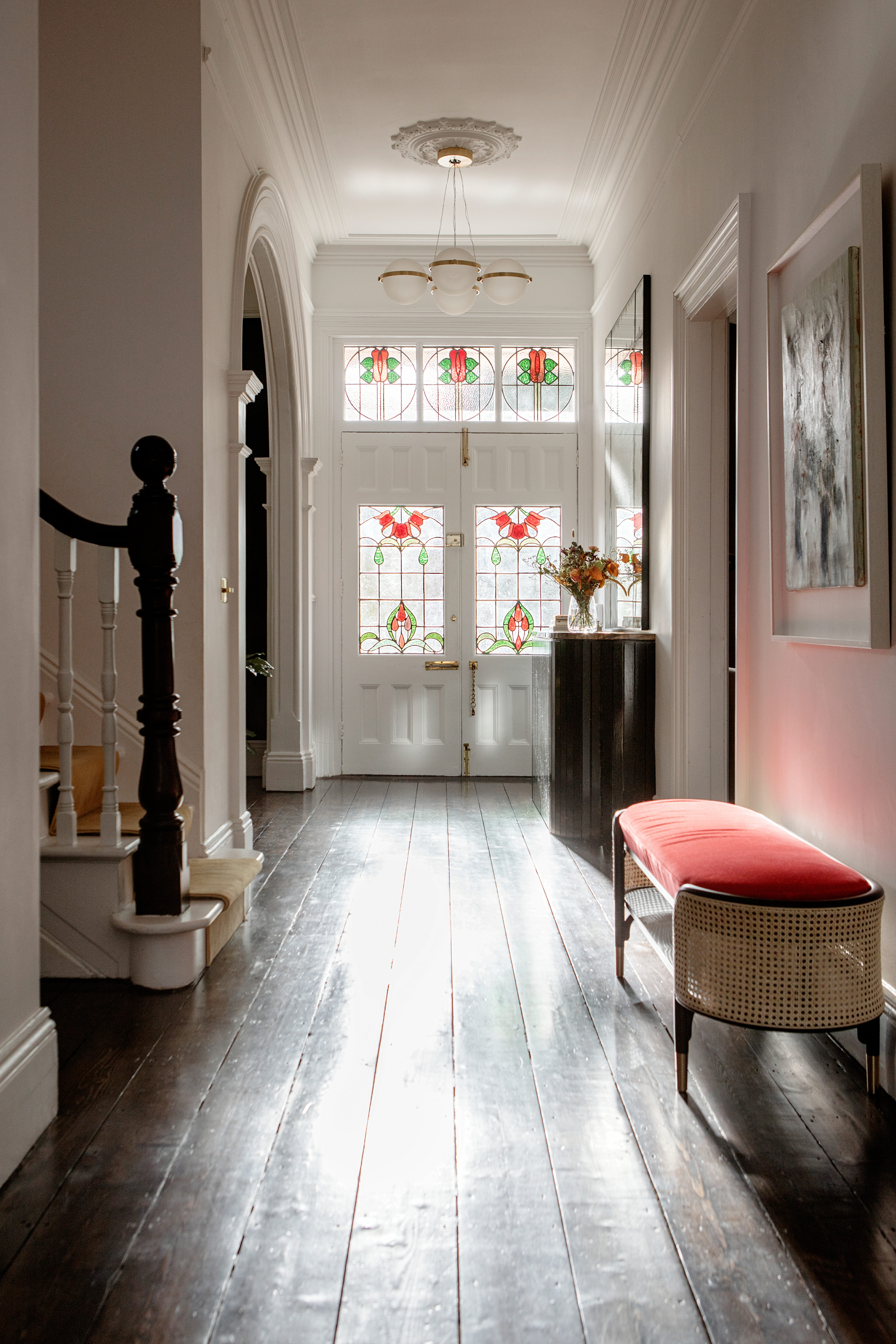
The “wow” factor can be achieved even before you open your front door by restoring the leaded glass you may be lucky to have over the door, known as the fanlight, or the glass within the door or down the side of the door called the sidelights. Liam McCorkell runs Glasshaus Studio with his brother Tomas, a small specialist company that designs, manufactures, and conserves stained and architectural glass.
Stained-glass windows are made up of coloured and painted glass pieces held together by lead strips. It enjoyed its heyday between the 12th and 16th centuries, and experienced a resurgence in the Victorian era, a harkening back to medieval motifs as part of the Gothic revival. Liam brilliantly describes his trade as, “a medieval craft that hasn’t changed much since then, except for the electric cutter”.
Plaster
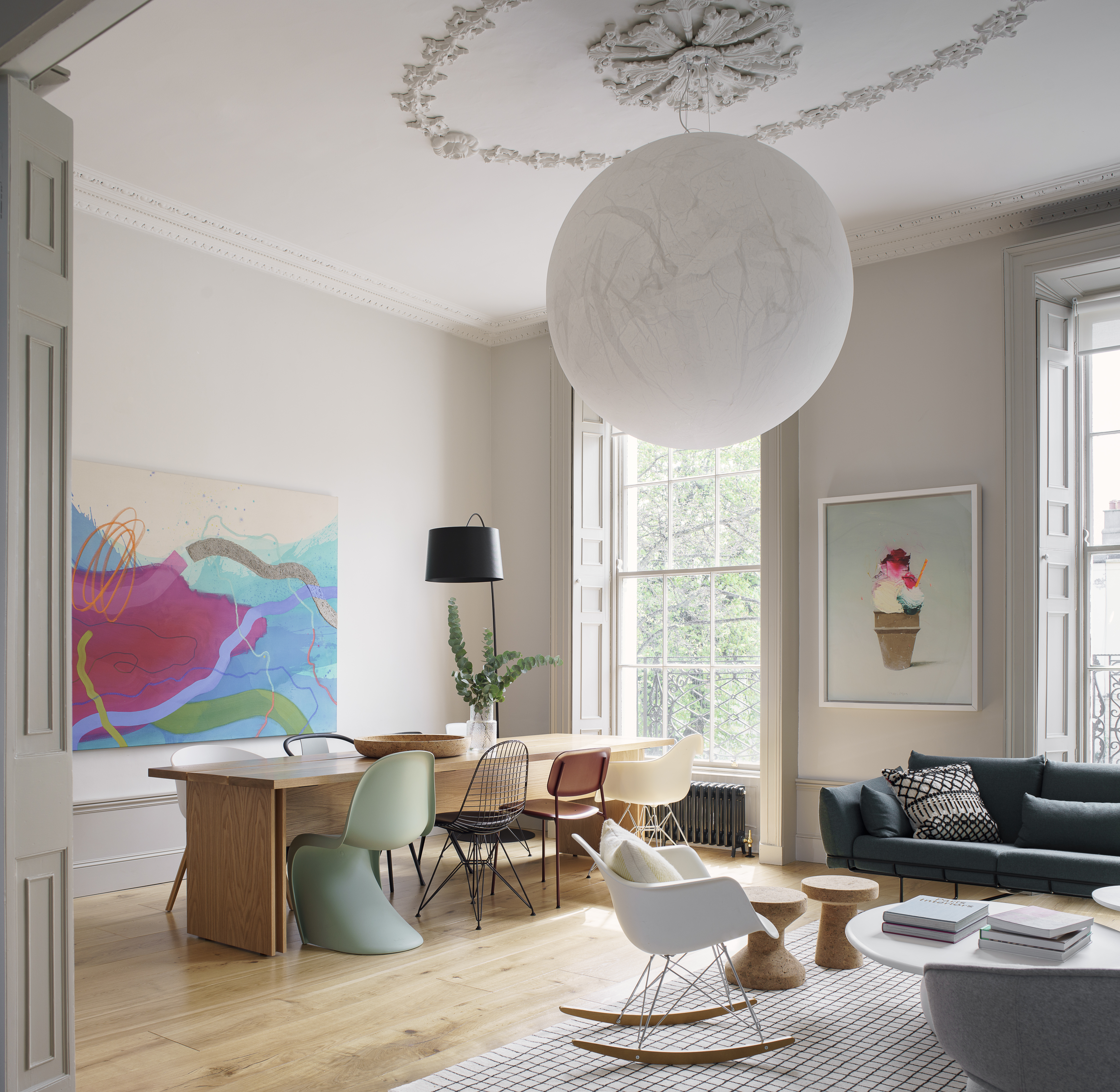
One of the wonderful things about older properties is how the different components work together. If your home is a period property, it will pre-date sand cement plaster. These buildings were built with solid wall construction with no cavity and these walls have to breathe. Putting contemporary plaster over these walls seals the wall, trapping the moisture in the wall, and a wet wall is a cold wall. What would have been traditionally used is lime plaster and this requires specialised application.
Paul Griffin, a third generation plasterer and director of Griffin Plastering explains, “There are very little foundations in period homes, which leads to some movement in the buildings. Lime plaster is flexible and moves with the buildings, whereas sand and cement is hard and rigid so when there is movement, it cracks. These cracks allow moisture in behind the plaster which causes more damp.” In addition to the smooth plastering on walls and ceilings are the decorative elements such as ceiling roses, cornicing and friezes, and arches in hallways. There is no need to worry if you only have remnants of plasterwork remaining, as experts like Griffin Plastering can not only restore it by carefully removing centuries of paint, but also match new plasterwork to existing.
Consultants can advise on styles and placement of installation of new plasterwork as you would generally want to match the style to the era of your home. A rule of thumb is that you have the most decorative plasterwork in the entrance hallway and reception room. This could be your front downstairs living room, or in a Georgian townhouse the piano nobile or first floor rooms for entertaining. This was to impress your guests, and then it would be increasingly less ornate as you move through the house.
Fireplaces
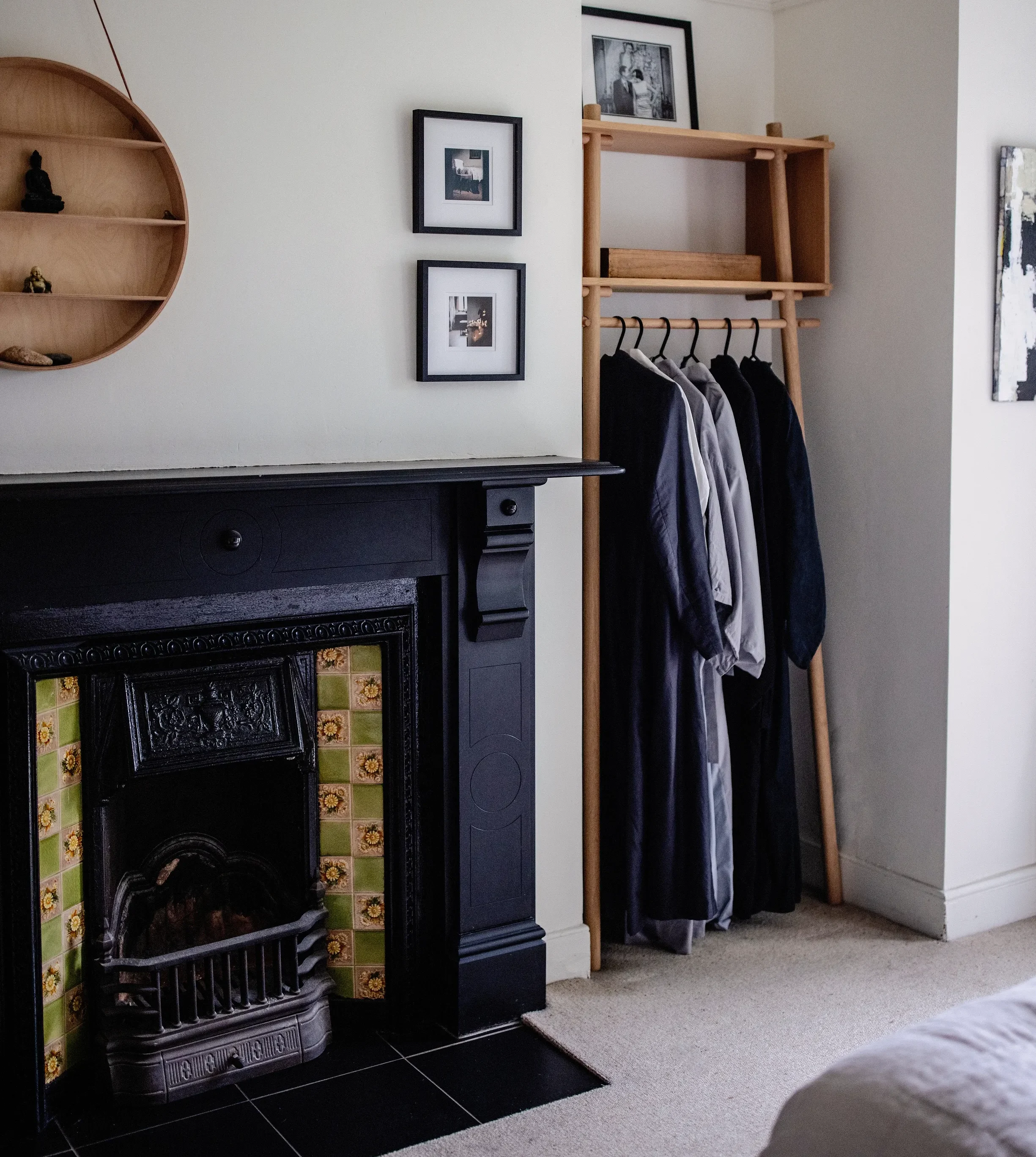
A fireplace is the focal point to a room, especially in period properties. It was a trend to block up open fireplaces in the middle of the last century for the convenience of a gas heater, but many people are bringing them back to use. David O’Reilly has been a fixture himself on Francis Street in Dublin for almost four decades with his antique fireplace restoration business. David knows all about the language of historic fireplace materials.
“Historically,” he explains, “white marble was used in living rooms and darker marble in dining rooms. The fireplace surround is in two parts: a marble mantel and a cast iron, brass or steel grate or insert, completed by a stone hearth. Additionally, Victorian and Edwardian marble fireplaces typically had tiled cast iron inserts.” Remember to check chimney pots that have been dormant for birds’ nests and get your chimney, flue and ventilation checked by a qualified service agent annually.
Appointing an architect

Two homeowners who have lovingly breathed life back into their historic Dublin property are Rosaleen and Doug, who just happen to be award-winning conservation architects. Carson & Crushell Architects mostly work with existing buildings. Rosaleen has a master’s in urban and building conservation, and the couple operate their studio from within their own, formerly derelict, 1840s townhouse that they have adapted for their young family.
On the role architects can play in restoring a house for contemporary living, Rosaleen explains, “Architects help clients assess their property, to repair and optimise what already exists, not just to build new. This is a necessary approach for protected structures, and an essential one during our climate emergency for all existing structures, whether they are currently considered worthy of protection, or not. Thankfully, there is a growing appreciation that there are values embodied in all existing buildings beyond the economic, whether that be their embodied carbon, the memory that people carry of those buildings, and the hope that is created when even a seemingly dull building can be transformed into something positive through care.”
Repairing historic structures is labour intensive, and often more costly than modern constructions. However, the conservation section of local authorities now offer conservation grants. One such grant is the Built Heritage Investment Scheme. It supports owners to follow best practice conservation principles. “We have benefitted from this grant in our own house,” Rosaleen says, “most recently by installing bespoke secondary glazing that we have designed for the original sash windows. The result is the retention of our original sash windows, while vastly improving our thermal comfort and eliminating condensation.”
If restoring period features, you can always contact the Conservation and Heritage Departments of your local authority for localised advice. With a little imagination and a smattering of bravery, you too could start the richly rewarding journey of restoring your period home and bringing out the unique character that is waiting to be revealed.
This feature originally appeared in the autumn/winter 2024 issue of IMAGE Interiors. Have you thought about becoming a subscriber? Find out more, and sign up here.
Also Read