


Would you get inked for Imbolc? Meet the tattoo artists of the Celtic revival
Out of the depths of winter, a new ritual is emerging. Aoife Murray speaks to the tattoo artists giving the Celtic revival a new level of permanence.
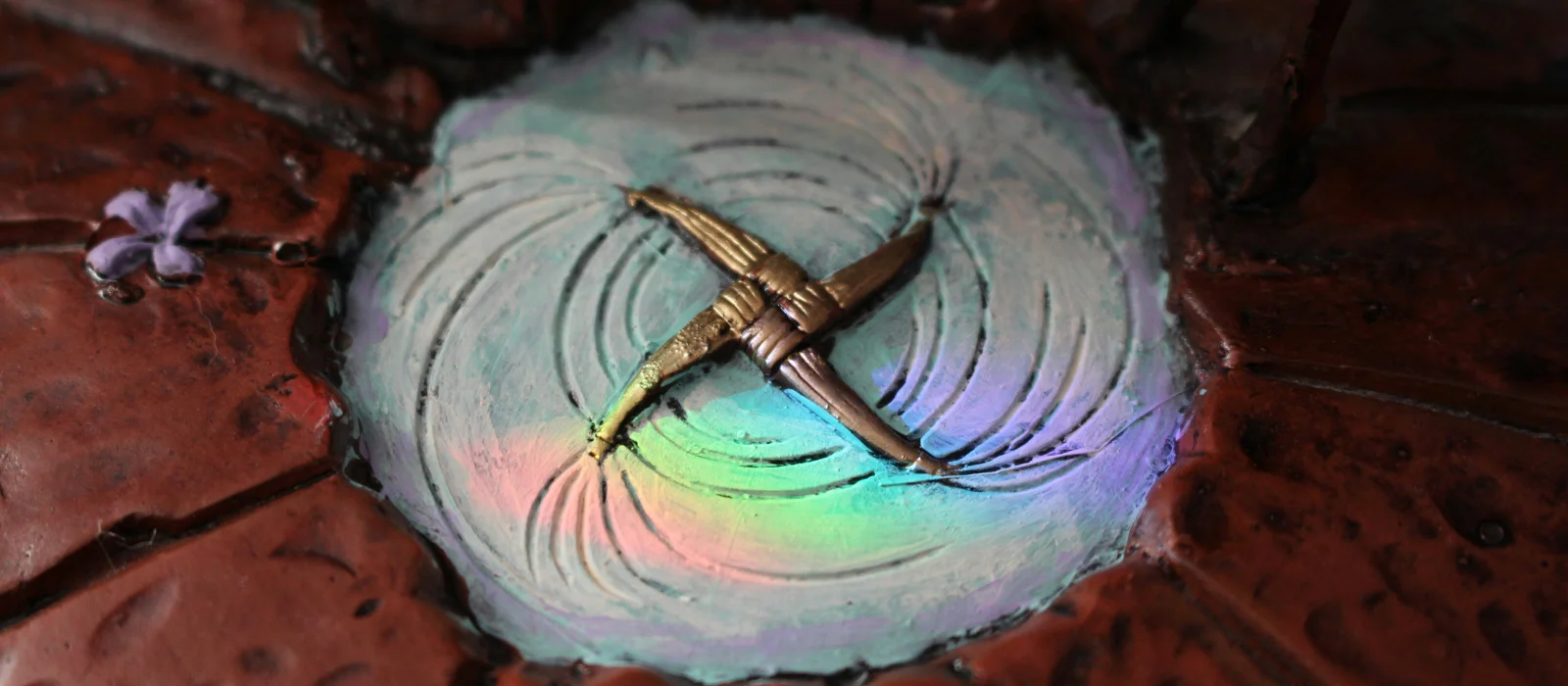
To mark Imbolc or St. Brigid’s day, the beginning of spring in the traditional Irish calendar, more and more people are marking their bodies with familiar Irish imagery. The ancient tri-spirals of Newgrange, the crowned heart of the Claddagh ring, St. Brigid’s crosses and the very symbol of Ireland itself, the harp, can all be found inked on people’s arms, legs and everything in between – part of a trend seeing ancient Irish artefacts given new life as delicate hand-drawn tattoos. What’s behind the popularity of this more permanent expression of the Celtic revival?
Leo Clarke, a Dublin-based tattoo artist, began offering St. Brigid’s crosses as tattoos four years ago, joining a friend who regularly spent Imbolc driving “all over Ireland” to give out handmade crosses to loved ones and strangers alike. “It was a special time,” Clarke remembers. “I knew I would have to keep celebrating Imbolc every year in a similar vein.”
While demand is strongest around Imbolc, a moment of rebirth and growth, Clarke now tattoos St. Brigid’s crosses year round. “I can’t tell you how many I’ve done at this stage, it must be near the triple digits by now,” he admits. Each cross and each client is different. “From celebrating this, I have tattooed all kinds of people from all ages,” Clarke says. “St. Brigid represents a lot of things and means something different for everyone.”
Whether you celebrate Ireland’s patron saint, Brigid of Kildare, or the pagan goddess, Bríd, Imbolc celebrates creativity, healing, and renewal. The bank holiday, introduced in 2023, strengthened the festivities across Ireland. This year, Clarke will spend February 1 at Flux Studios with Dublin Digital Radio, offering tattoos alongside other community activities.
It’s not just at home, either. Daisy Allen, a Belfast-born tattoo artist living in London for almost a decade, held her first Imbolc “flash day” – where clients choose from a curated sheet of small, pre-drawn designs – last year in east London’s Honey Studio. Spirals, stones, spring lambs and St. Brigid’s crosses were on offer.
Whether it's connecting to something ancient, finding new meaning in old traditions, signalling your community and culture, or simply enjoying the moment Irish culture is having right now, the new era of Celtic tattoos permanently marks the confidence in Irish culture that’s been growing over the last few years.
“I can remember feeling a little bit of self doubt about it at first,” she admits, “like, is it going to seem like only Irish people can come to this, or maybe a lot of people don’t even know what Imbolc is?” Her self-doubt was proved wrong. “Someone came all the way from Margate, which was really sweet, and they’re now a regular client. Everybody had a different story and it felt like a really special day.”
“I think there’s more sentimental attachment involved in St. Brigid’s day,” Allen says, in contrast to St. Patrick’s day, which “feels a bit more commercialised, touristy.” The sentimentality is especially relevant for Irish people living abroad. “If they were at home they might celebrate with their friends and family by making St. Brigid’s crosses. Getting a tattoo could be a nice little way of having your own celebration.”
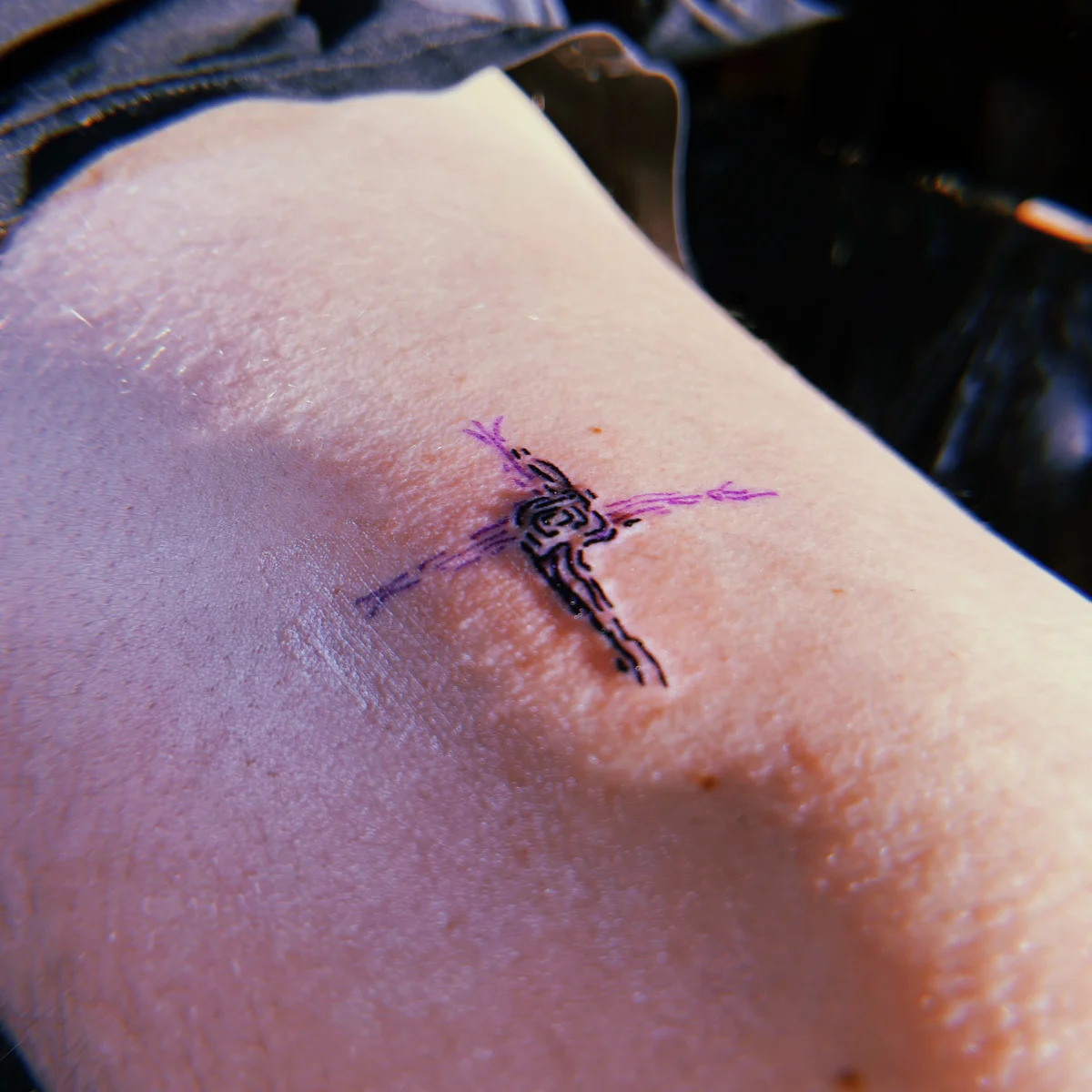
While modern Celtic tattoos have been popular for decades – think strong, complex ringed crosses and knots – the new style is more delicate, using finer lines and less shading. Allen also uses a hand poke technique rather than a machine, as “the whole process is just softer and slower and more present,” opening up space for her clients to share stories about things like grief, love, or just their interest in Irish folk culture. A recent client, Amber Henry, sought out Allen for a small tri-spiral tattoo on her wrist – while not Irish herself, Henry has long appreciated sites like Newgrange, and found more personal meaning in the symbol.
Eimear O’Reilly, a podcaster, tattoo artist and Gaeilgeoir, who is known for tattooing phrases like ‘grá mór’, also noticed this trend: “Everyone wants to have something to do with either the Irish language or Ireland on their body – and particularly people who don’t actually live here.” Many of her clients in Blackrock are the Irish diaspora looking for a reminder of home to take with them. “You’ll always remember where you were, what you felt like, who you were beside, or what you were going through in that moment.”
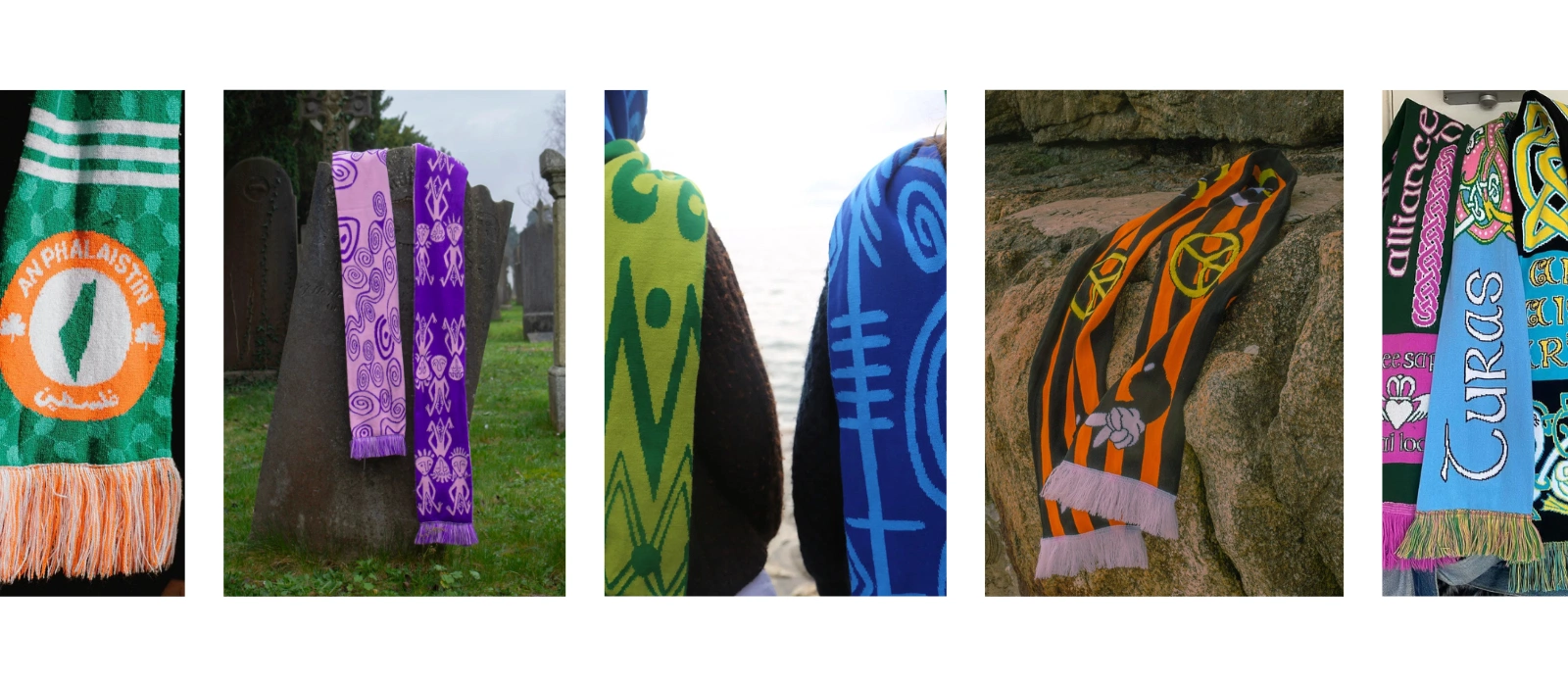
Familiar phrases and symbols like spirals, crowned hearts and crosses have endured centuries or millennia, carrying meaning and stories forged by our ancestors. It’s beautiful to see them renewed in such a permanent, joyful way that mixes shared cultural symbols with intimately personal meanings. But if it is a trend, does that mean it might fall out of fashion in the future? You can’t remove a Claddagh tattoo as easily as a Claddagh scarf, after all.
“It’s cool now to speak Irish and people admire you for it,” says O’Reilly, but she points out that in the past people would slag her for attending a Gaelscoil. “I grew up speaking Irish. It’s in my veins. So I think for me, it’s really important to keep that going, even if it’s not a trend anymore.”
For Allen, who similarly remembers a time when Irishness was not so celebrated, the process of choosing a tattoo means letting go of the need for certainty. “I really like to see tattooing as a reminder of how impermanent everything actually is,” she muses. “You have to be willing to accept that you might fall in and out of love with it throughout your life.”
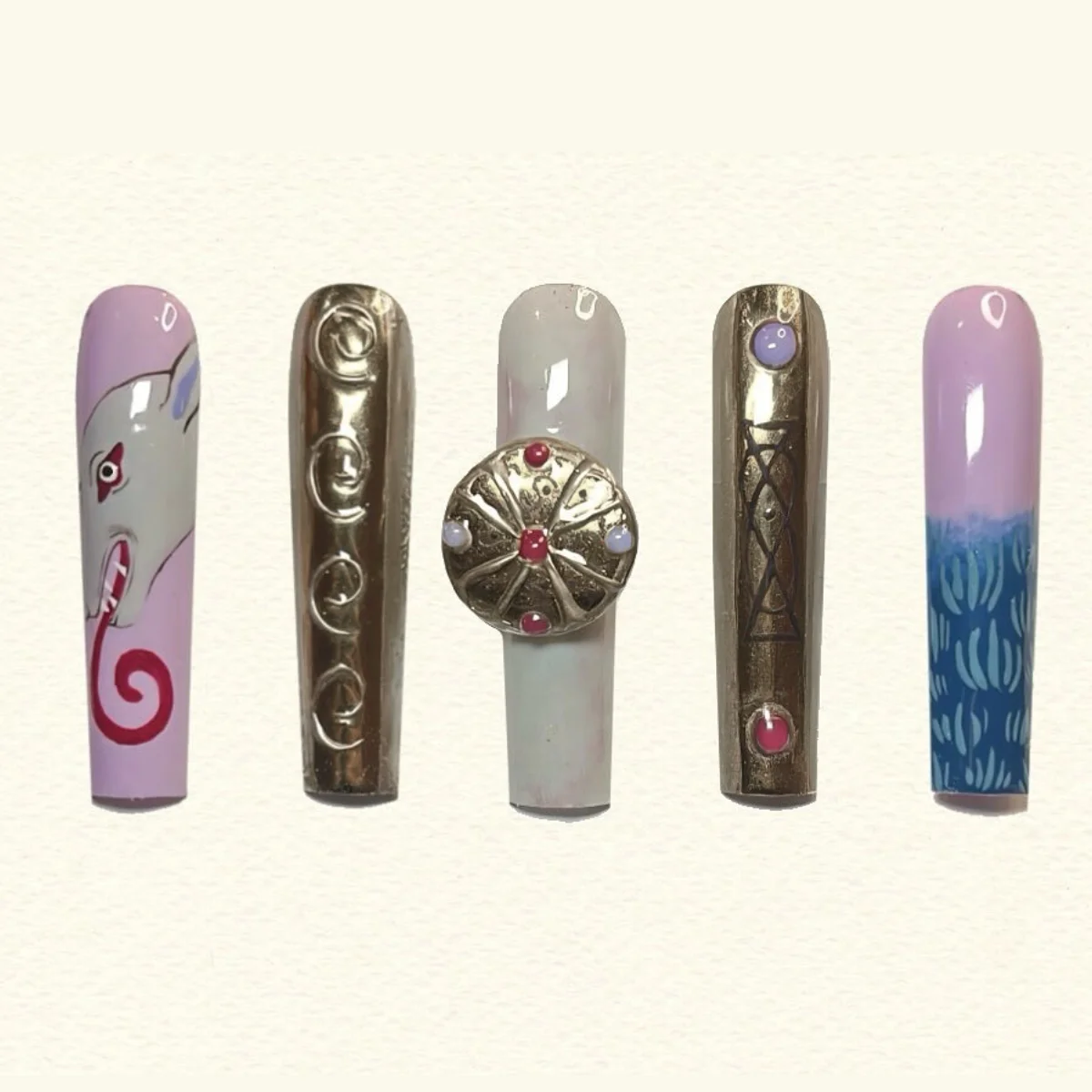
If you are looking for a more ephemeral expression of the Celtic revival, look to nail art. “I’ve definitely noticed a huge interest and increase of people wanting Celtic nails,” says Pearl Dutton, a Dublin nail artist who took part in last year’s Imbolc fair. “People used to only get them around St. Patrick’s day but now it’s a constant year-round demand.” The most popular requests are Claddagh hearts and harps, but Dutton has created incredibly detailed custom nail sets inspired by treasures like the Ardagh Chalice and St. Patrick’s Shrine, in collaboration with artist Bebhinn Eilish.
Whether it’s connecting to something ancient, finding new meaning in old traditions, signalling your community and culture, or simply enjoying the moment Irish culture is having right now, the new era of Celtic tattoos permanently marks the confidence in Irish culture that’s been growing over the last few years. As Allen points out, “I think the effects of these big moments in culture, and Irish talent being recognised, will be lasting – and, obviously, the tattoos are forever.”
Also Read