




Clever storage was key to making this Portobello cottage feel bright and welcoming
Working with a small space, an essential aspect of this project was making each room function well and flow with those around it.
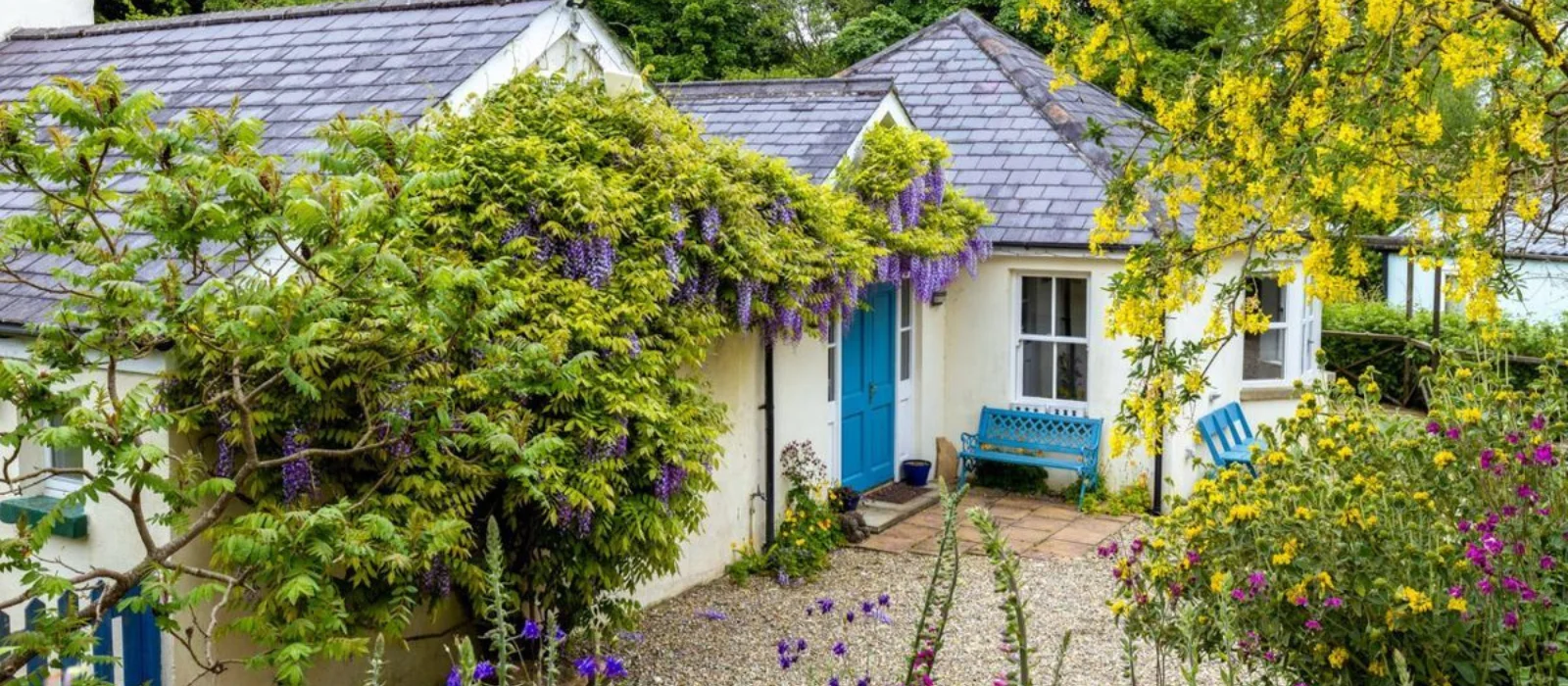
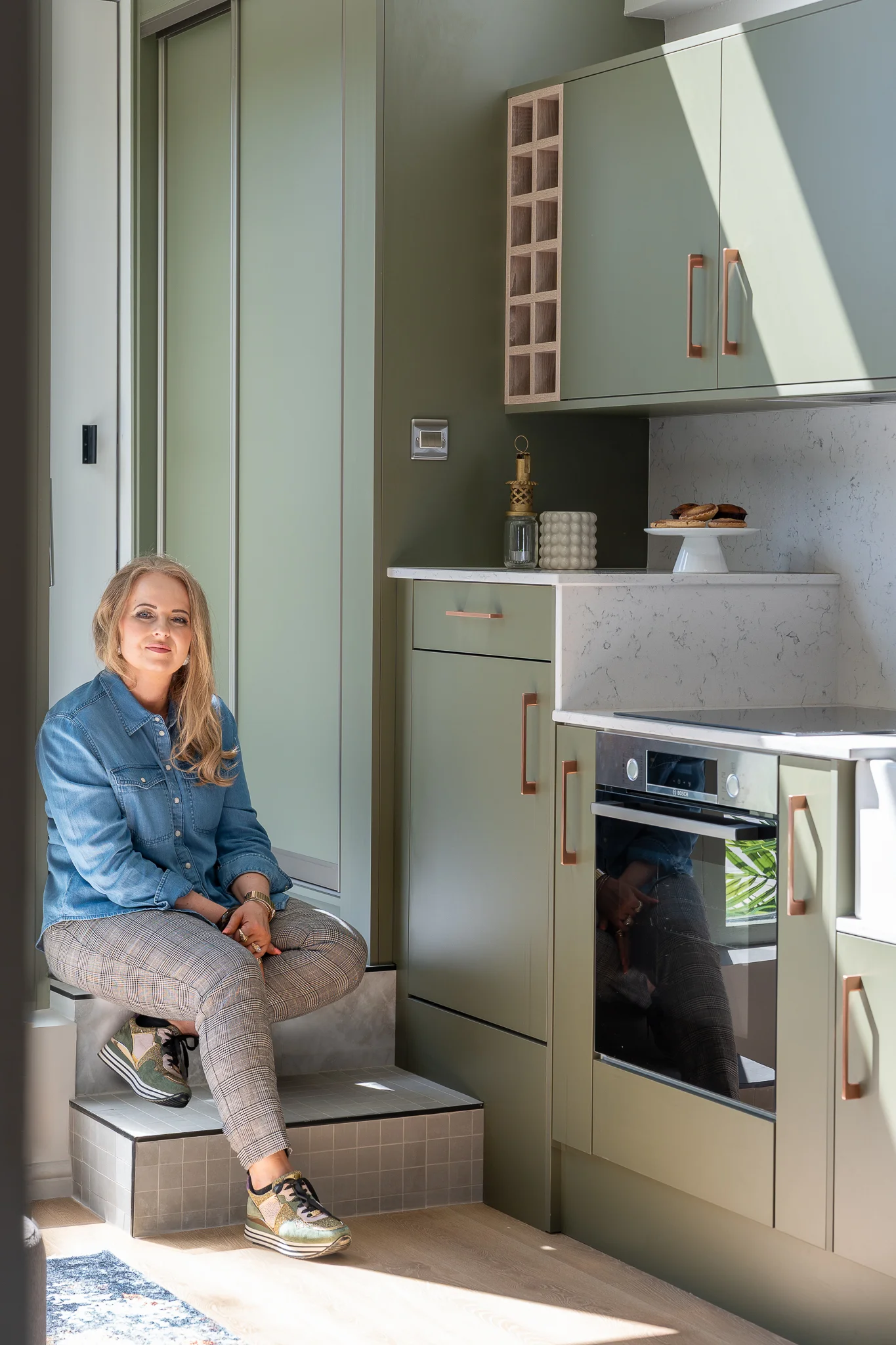
This Portobello home dates from 1890, and despite being previously extended it is still compact with limited space. Lana Dullaghan of Lana Dullaghan Designs shares how with a limited budget, they worked to create a practical, stylish space for their client.
“When we first saw the house, it was very exciting,” Lana explains. “We love working with homes that have history and character, and we were thrilled to work with Roy, our returning client, on this project again.”
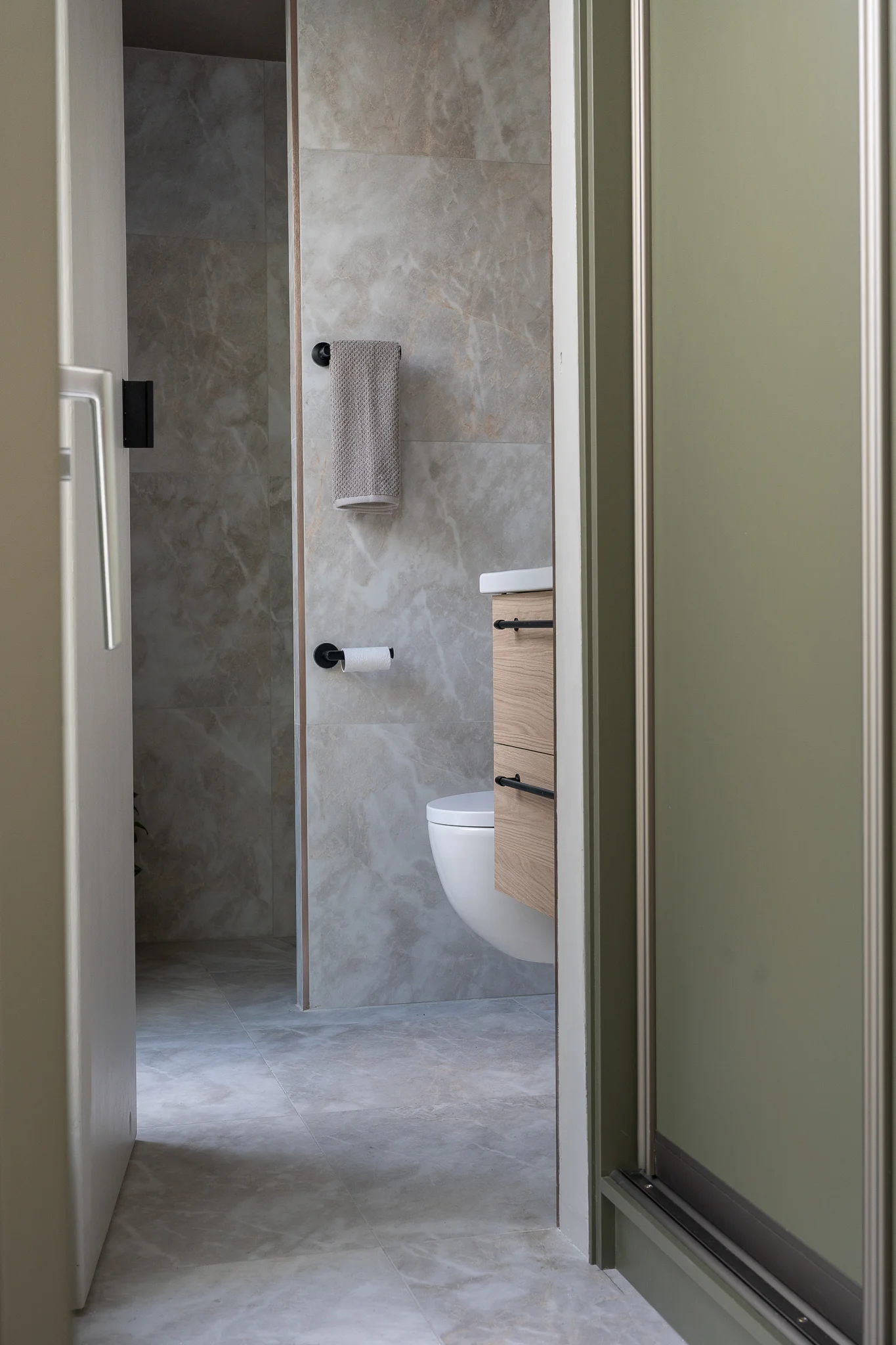
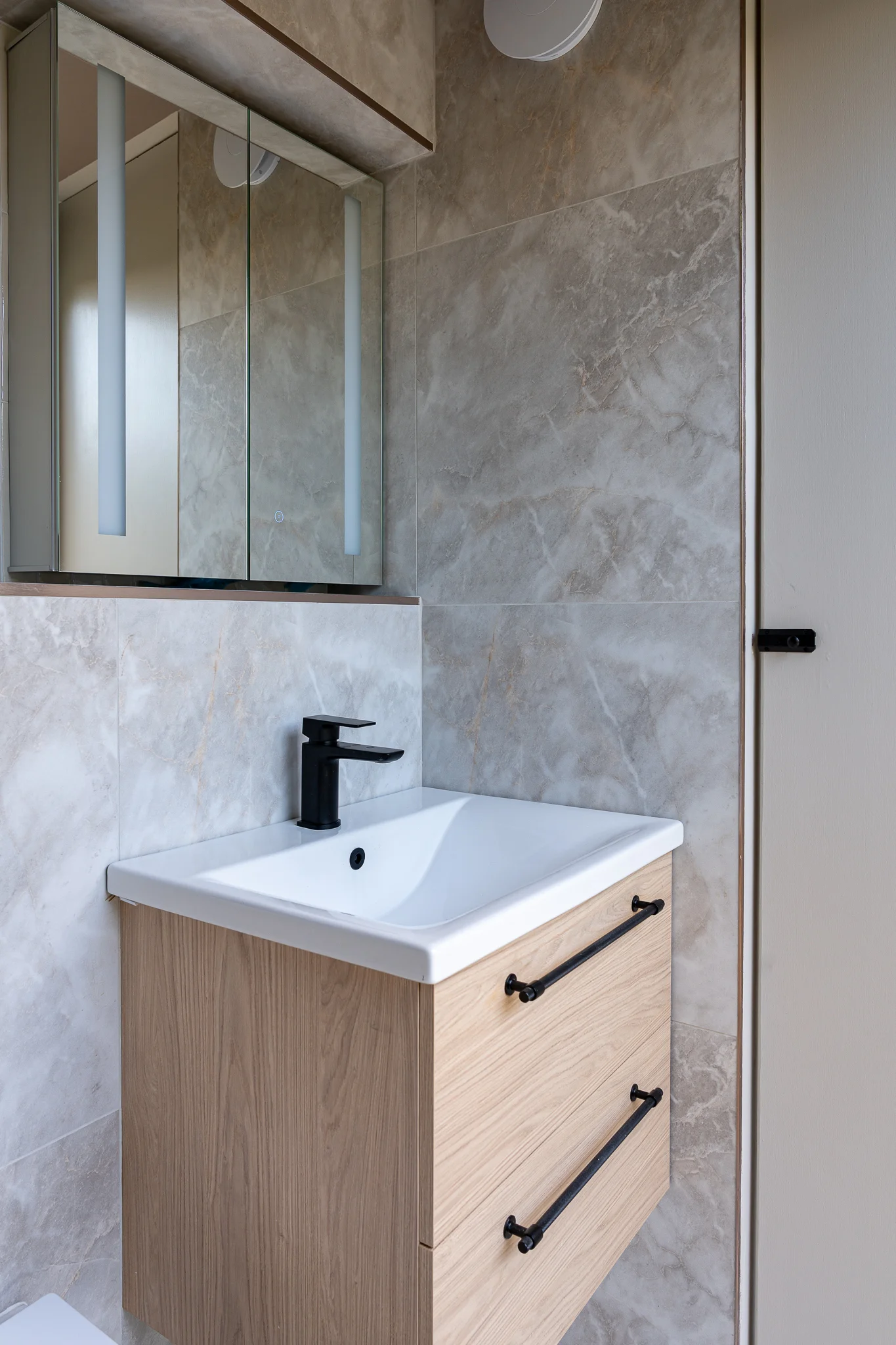
The original cottage had an extension added by the previous owner, which included a bathroom, utility room, and a bedroom above the open-plan living area. “However,” Lana says, “it wasn’t fully finished or functional. There were no good storage options, and there wasn’t a proper dining or sitting area, making it hard to live comfortably. The living and dining areas had only benches, with no sofa or dining table. The bright red floors and dark blue walls in the bathroom and utility room didn’t create a warm and inviting atmosphere.”
Key to the design was creating more storage, a better layout and making the space feel more welcoming and comfortable. In terms of style, the client wanted a home that felt contemporary with some vintage details. “Creating a cosy atmosphere was also important,” Lana points out. “Roy was open to new ideas and wanted to make the home personal. He planned to reuse some artwork and items from his previous home, along with sentimental pieces he collected during his travels.”
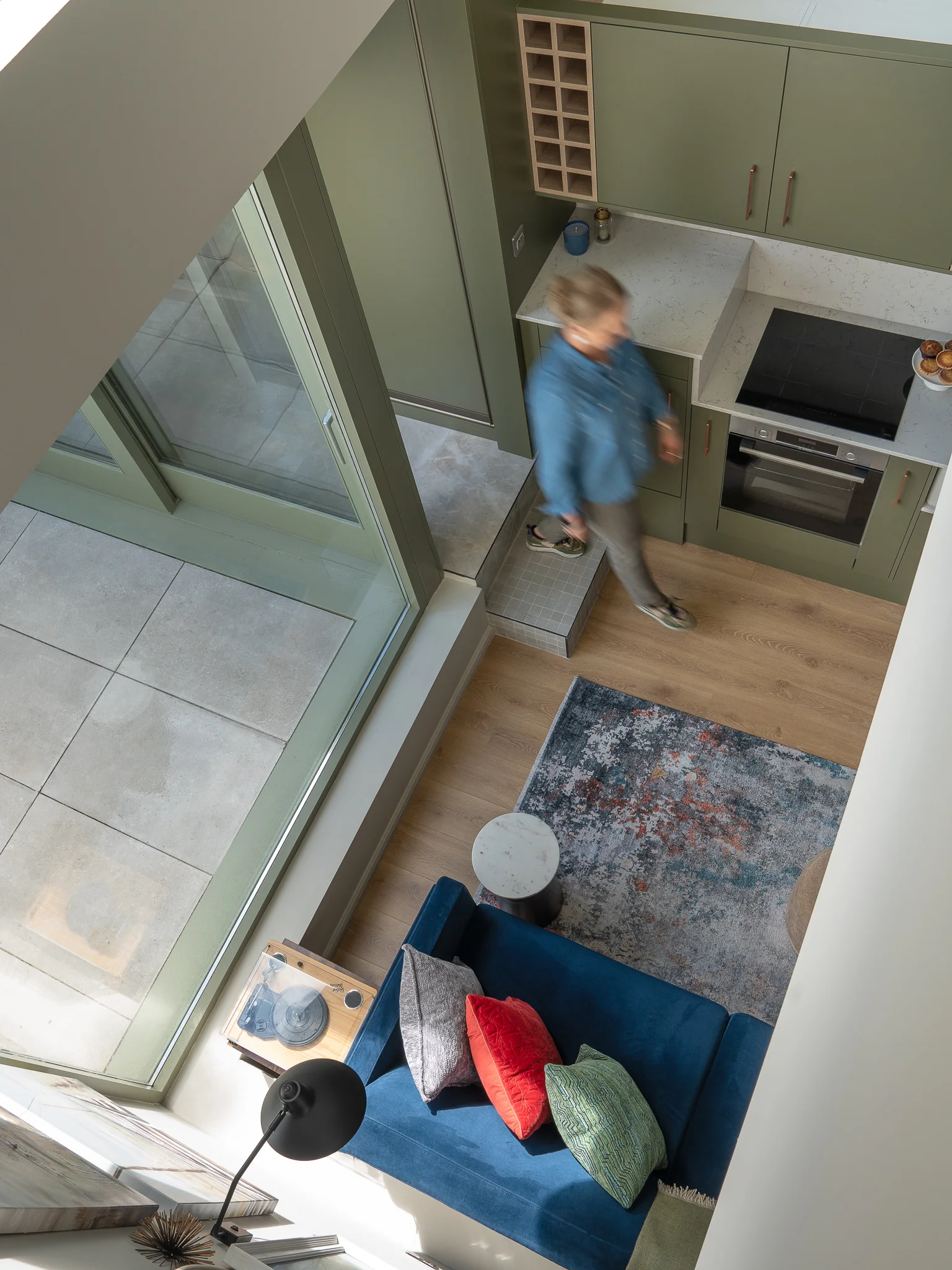
The design involved creating three separate zones in the open-plan living area: a kitchen, dining area, and sitting area, and using colour to ensure flow. Details such as a green ceiling above the dining area help to define spaces while still feeling connected to each other.
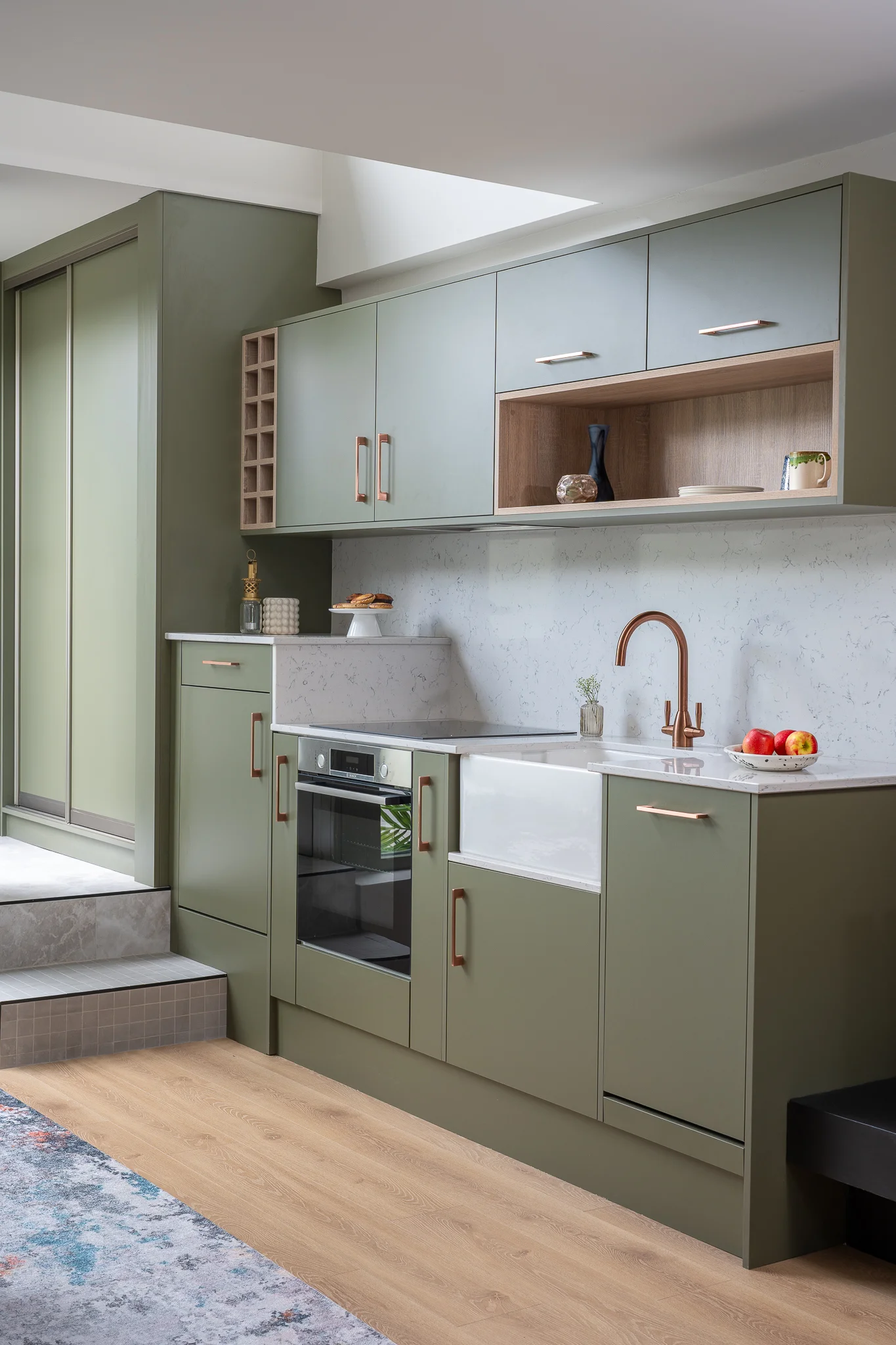
“While finalising the kitchen design, we discovered that the old benches were hiding a support structure beneath them, which complicated our plans. We had to redesign the sitting area and increase the kitchen worktop height to fit all the appliances and maximize storage,” Lana explains.
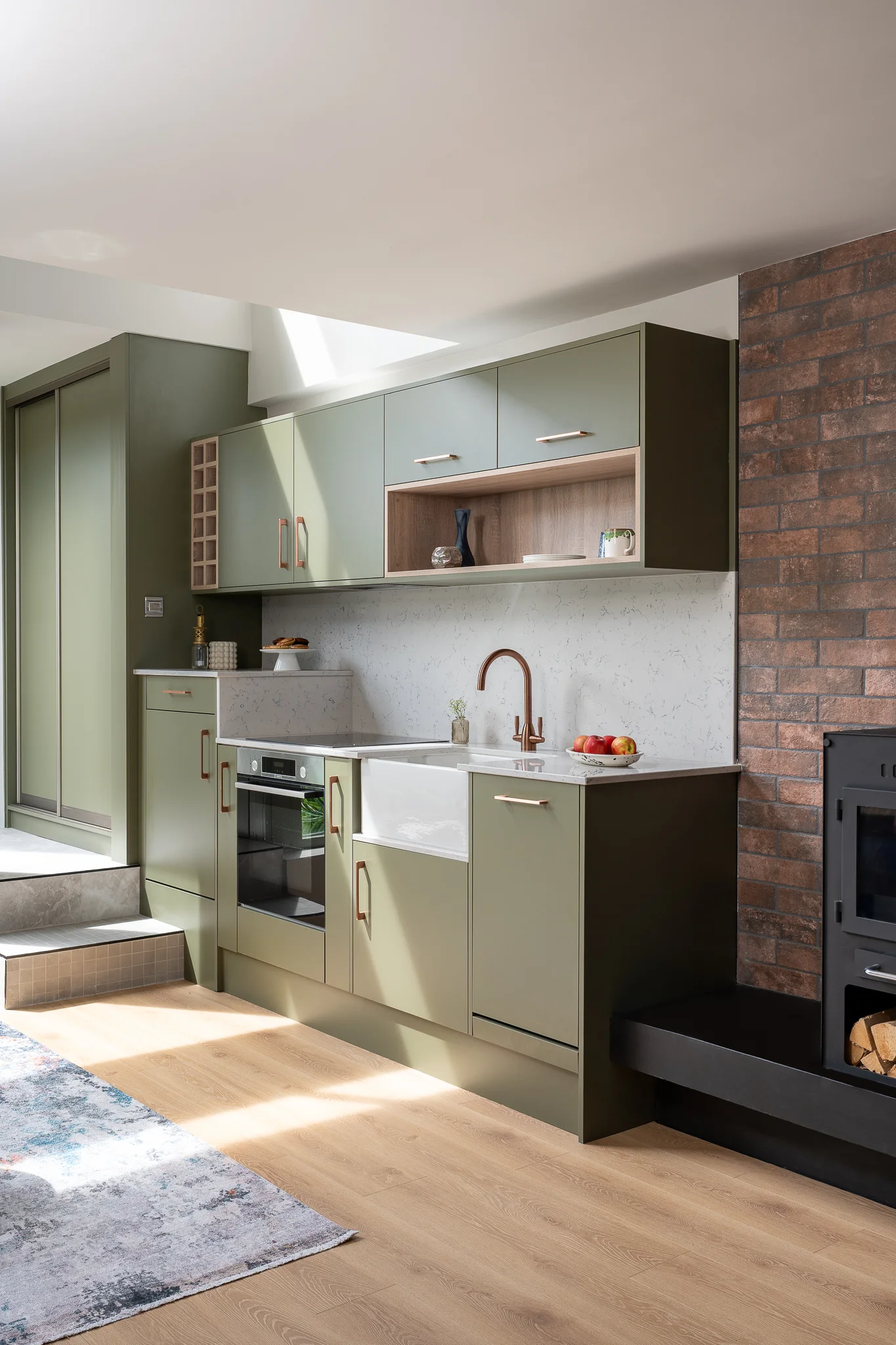
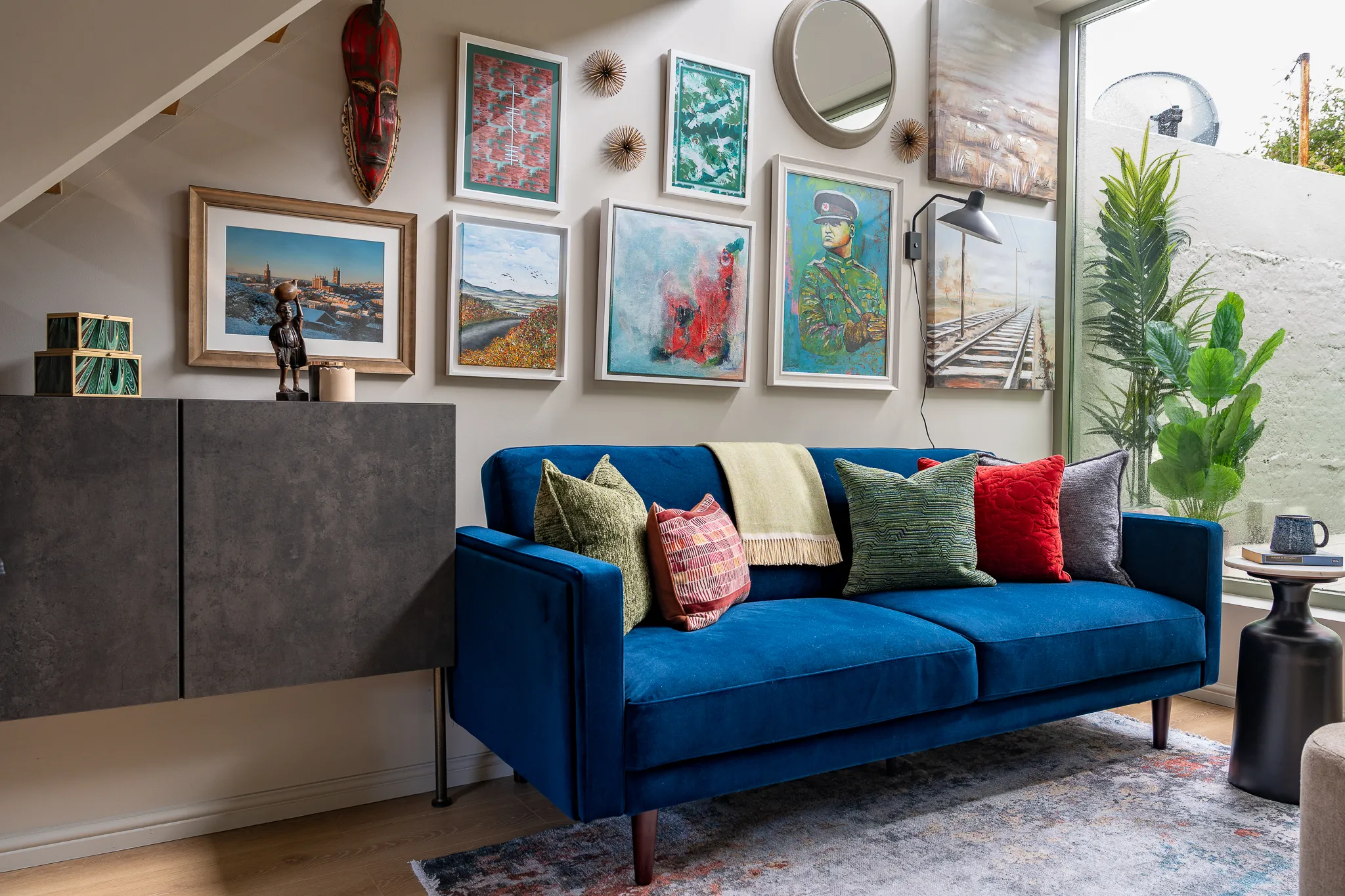
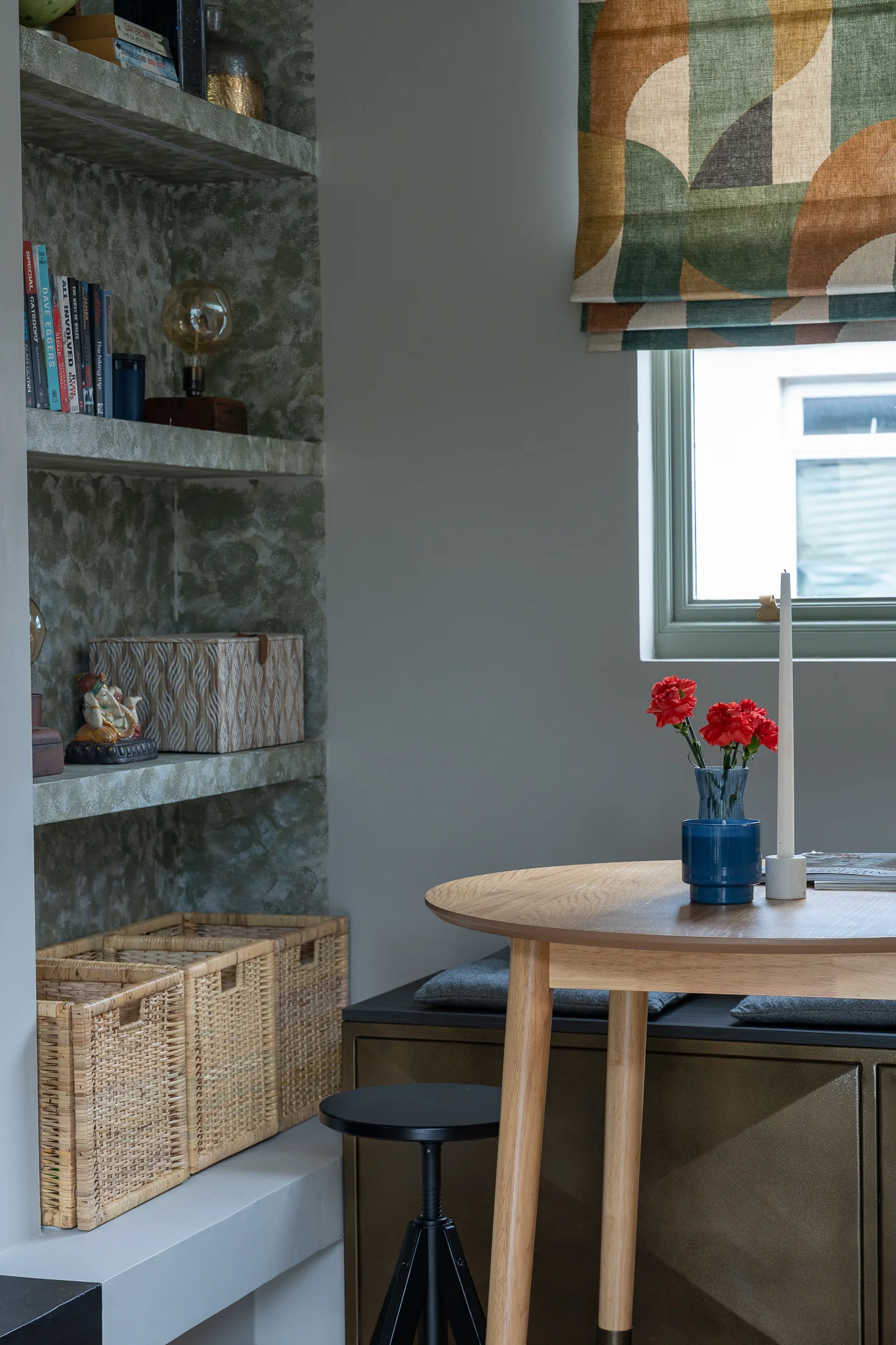
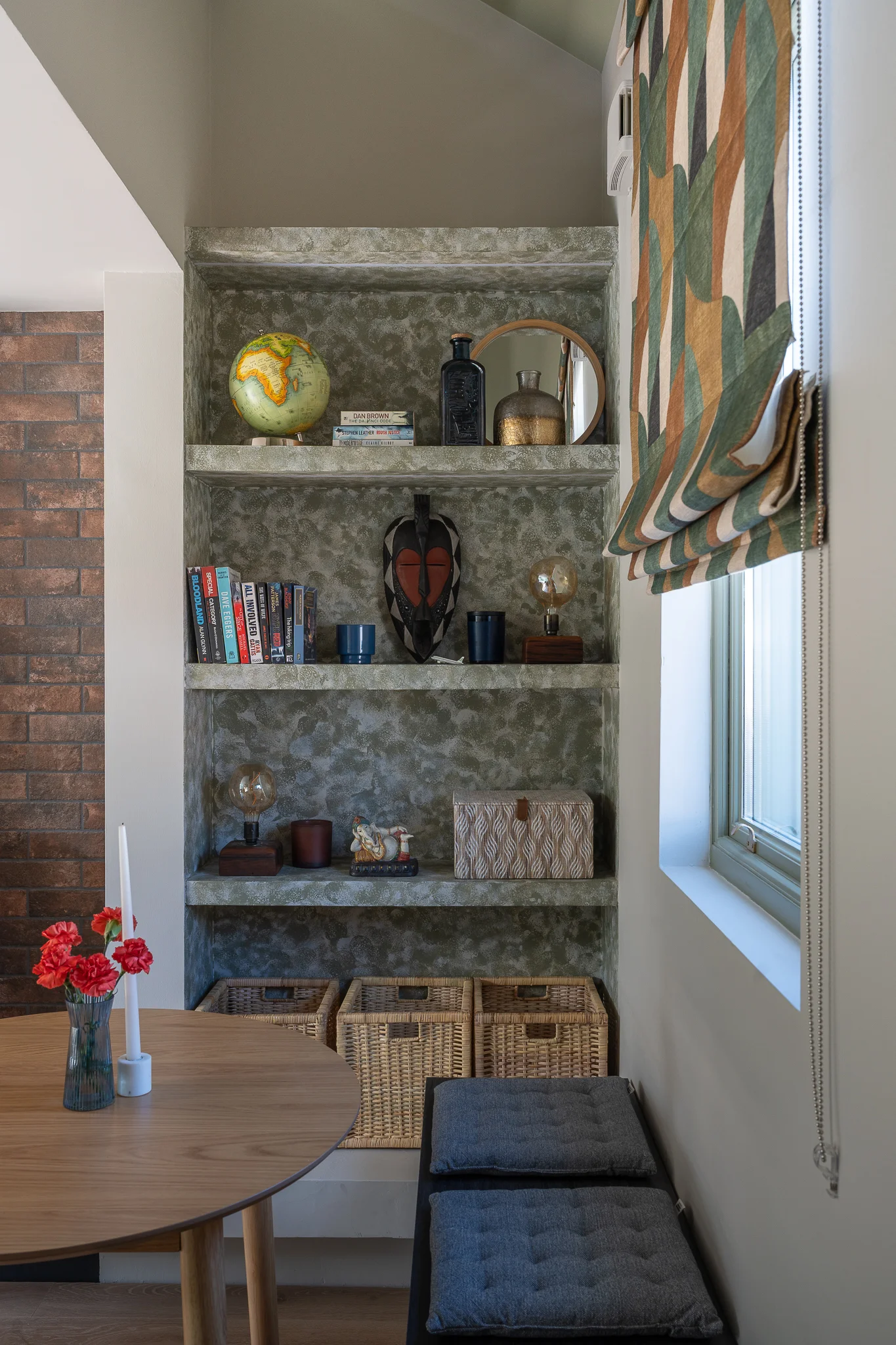
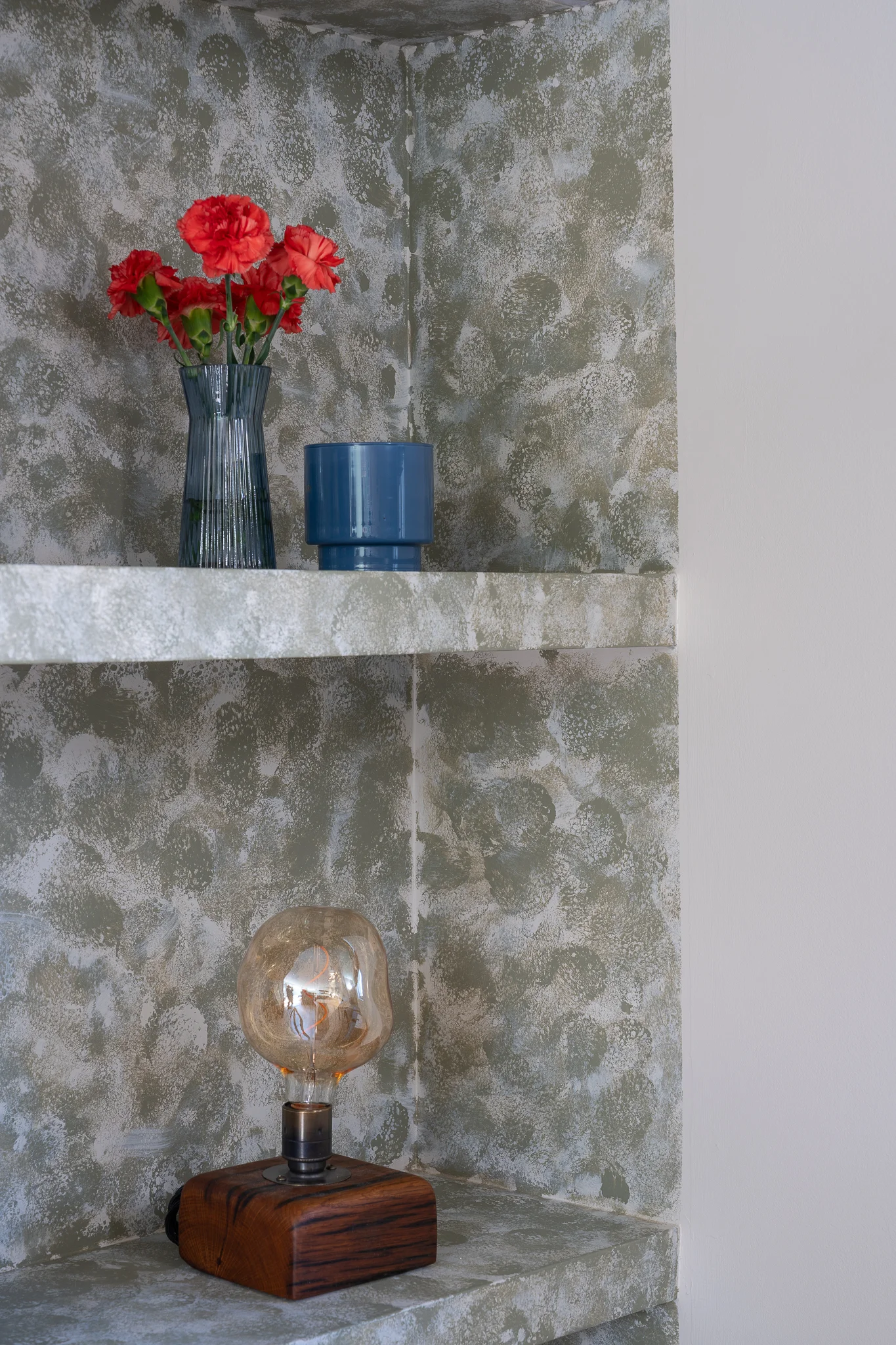
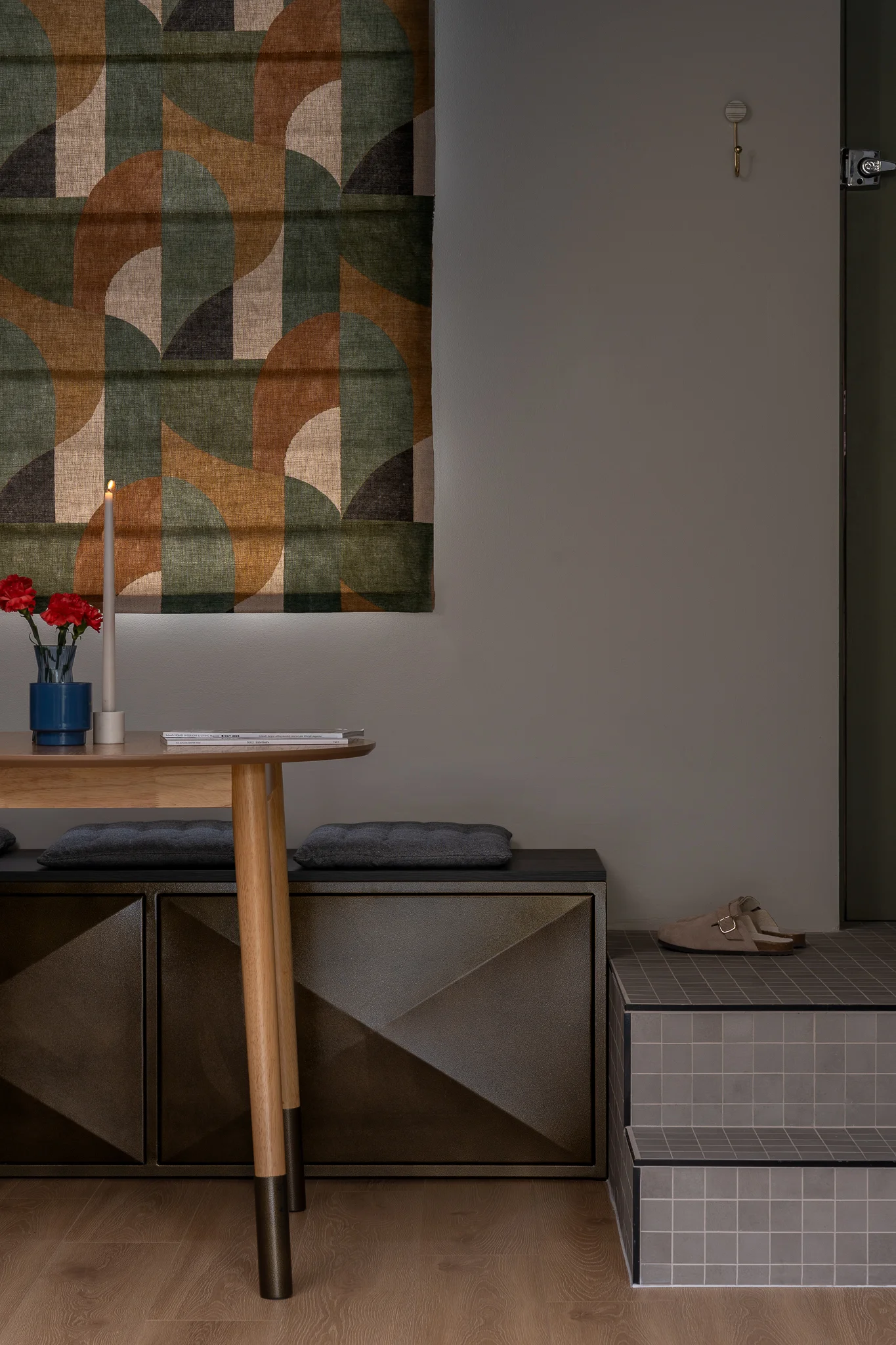
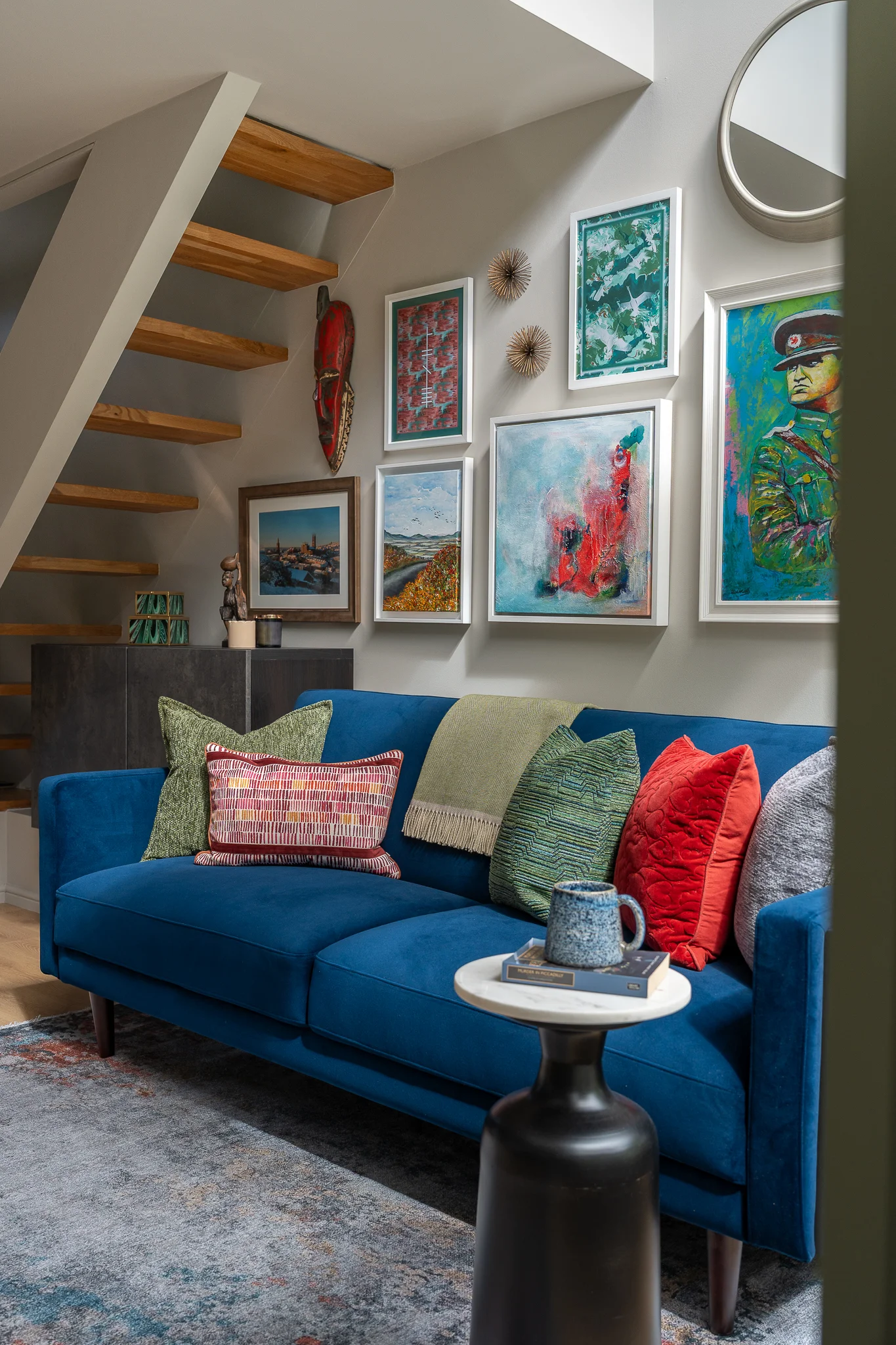
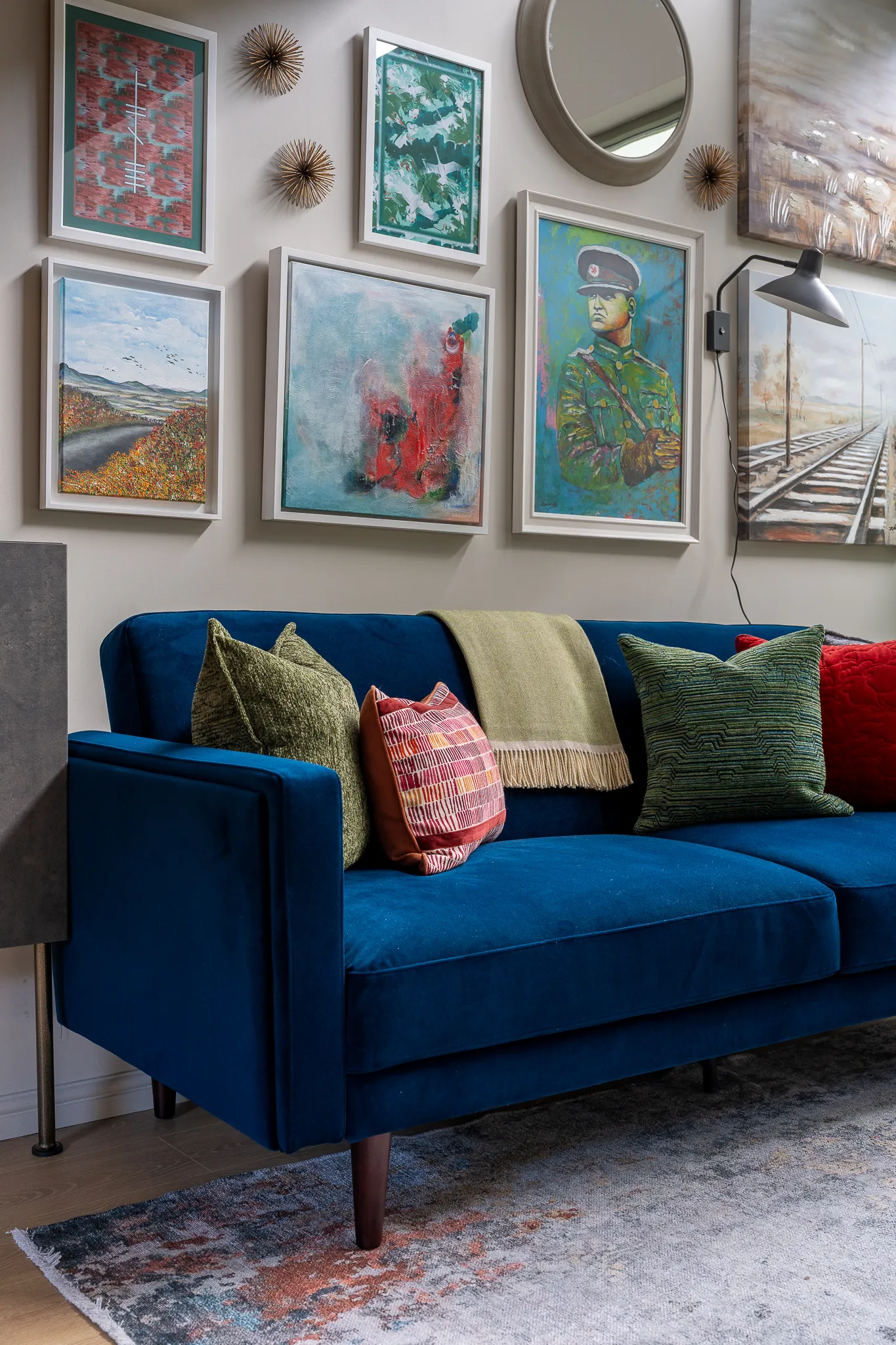
“To balance the dining area, we also raised the dining table and bench. In the dining area, we added a hand-painted mural to create interest and designed open shelves with LED lights for sentimental ornaments, books, and our client’s collection of items. Since there was only one bedroom, we included a sofa bed downstairs for guests that would also be comfortable for everyday use. The unit beside the sofa was wall-fixed for extra storage and positioned above the support structure we discovered to avoid pushing it too far forward.”
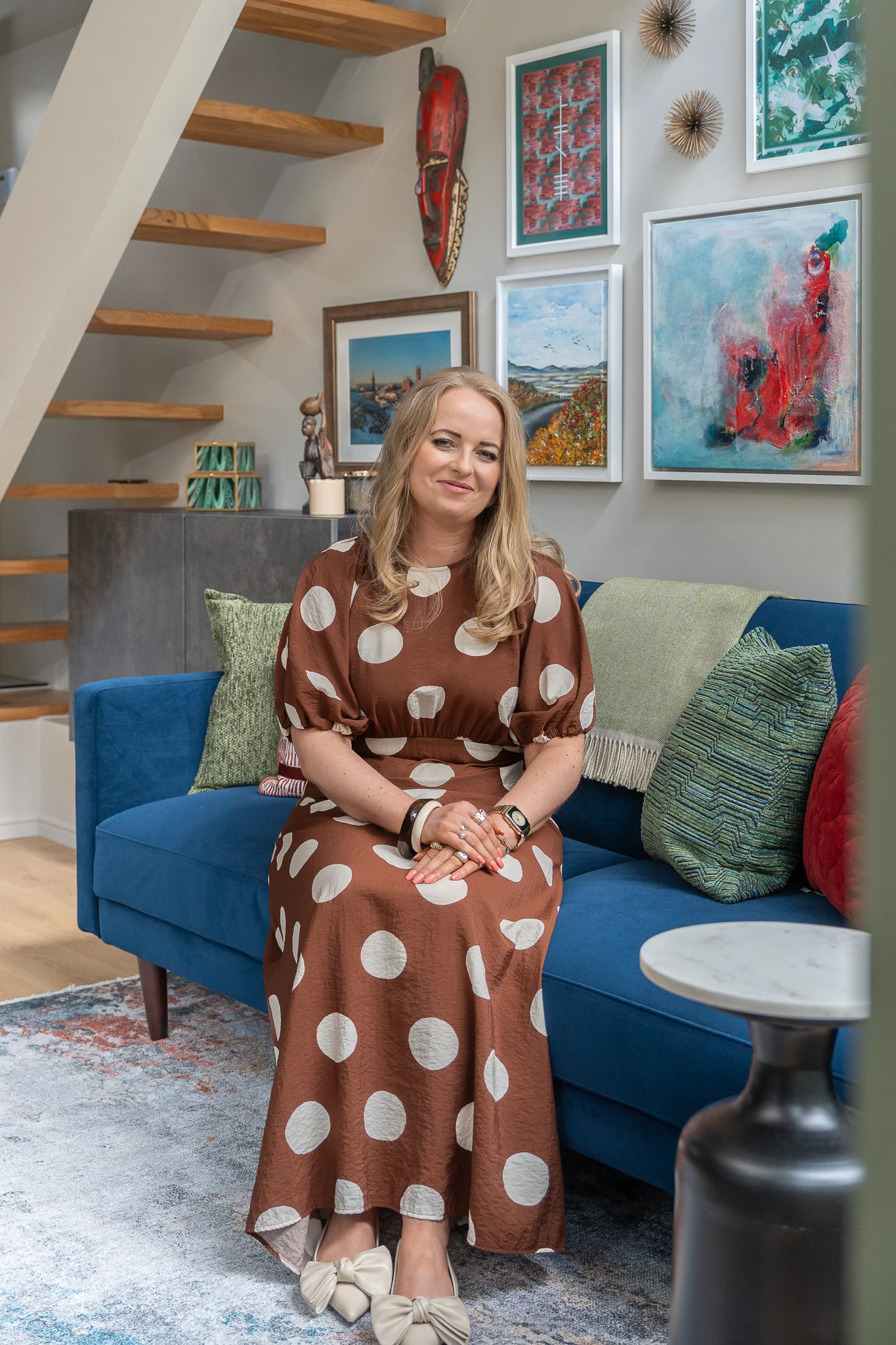
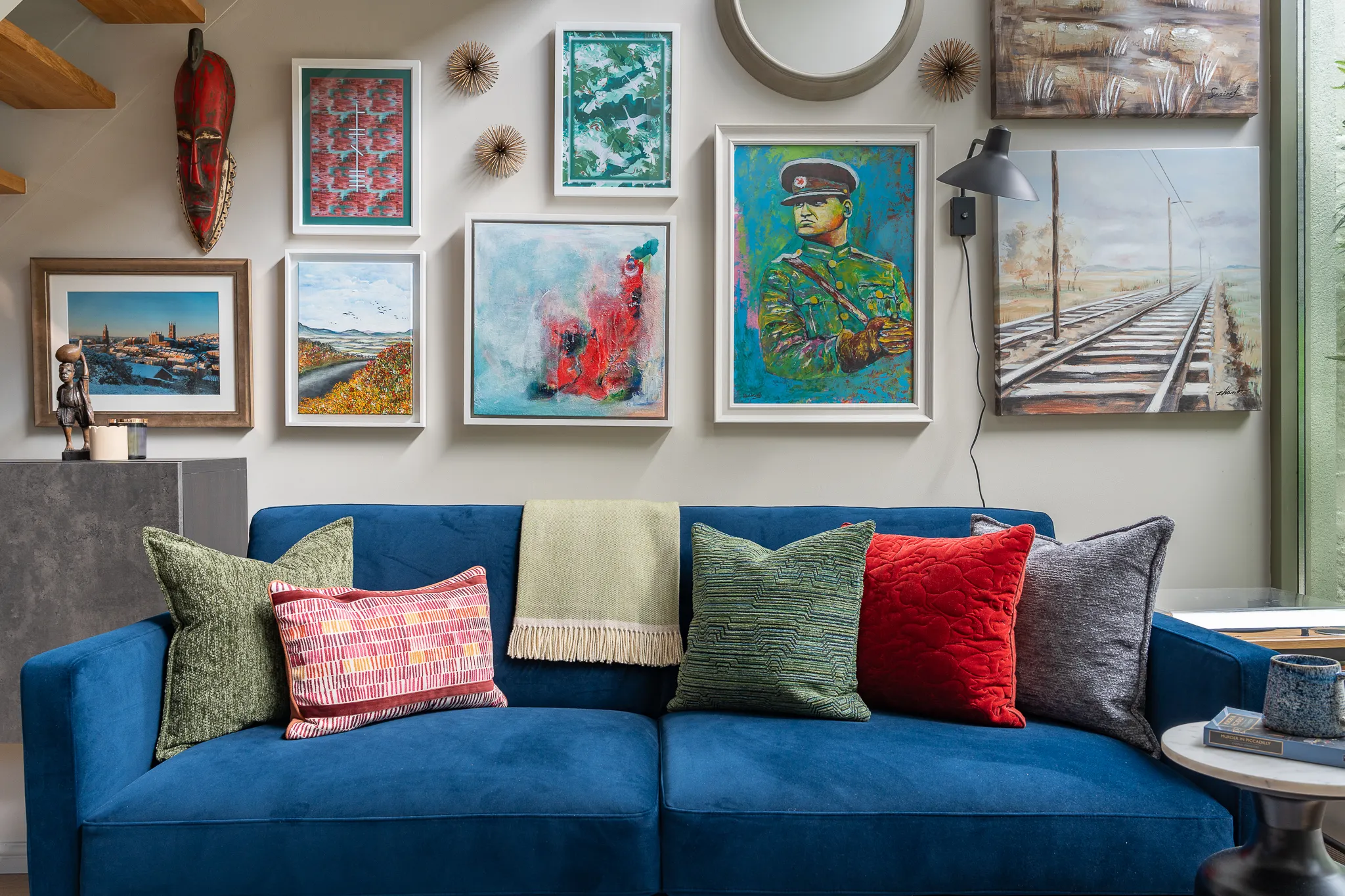
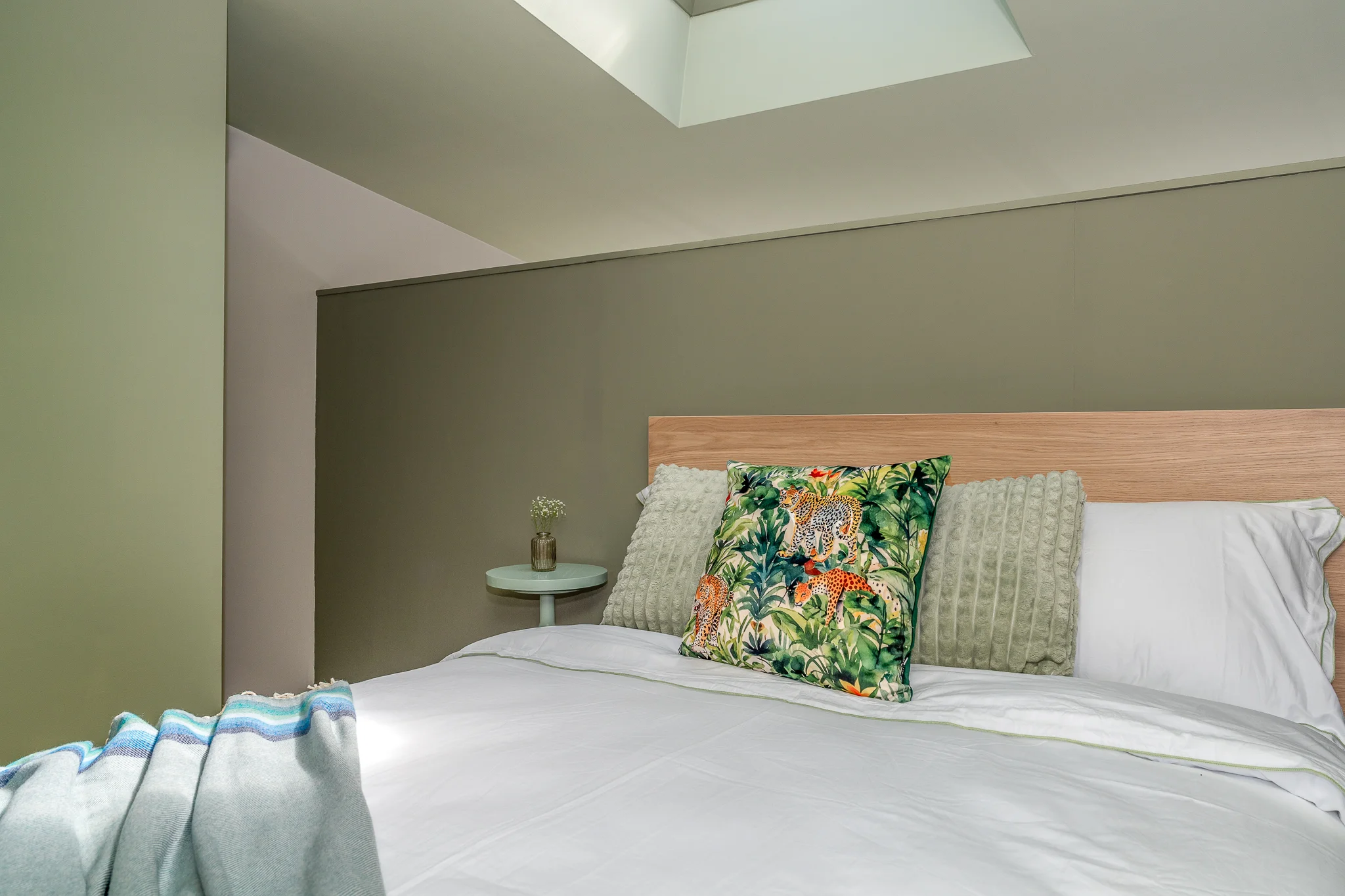
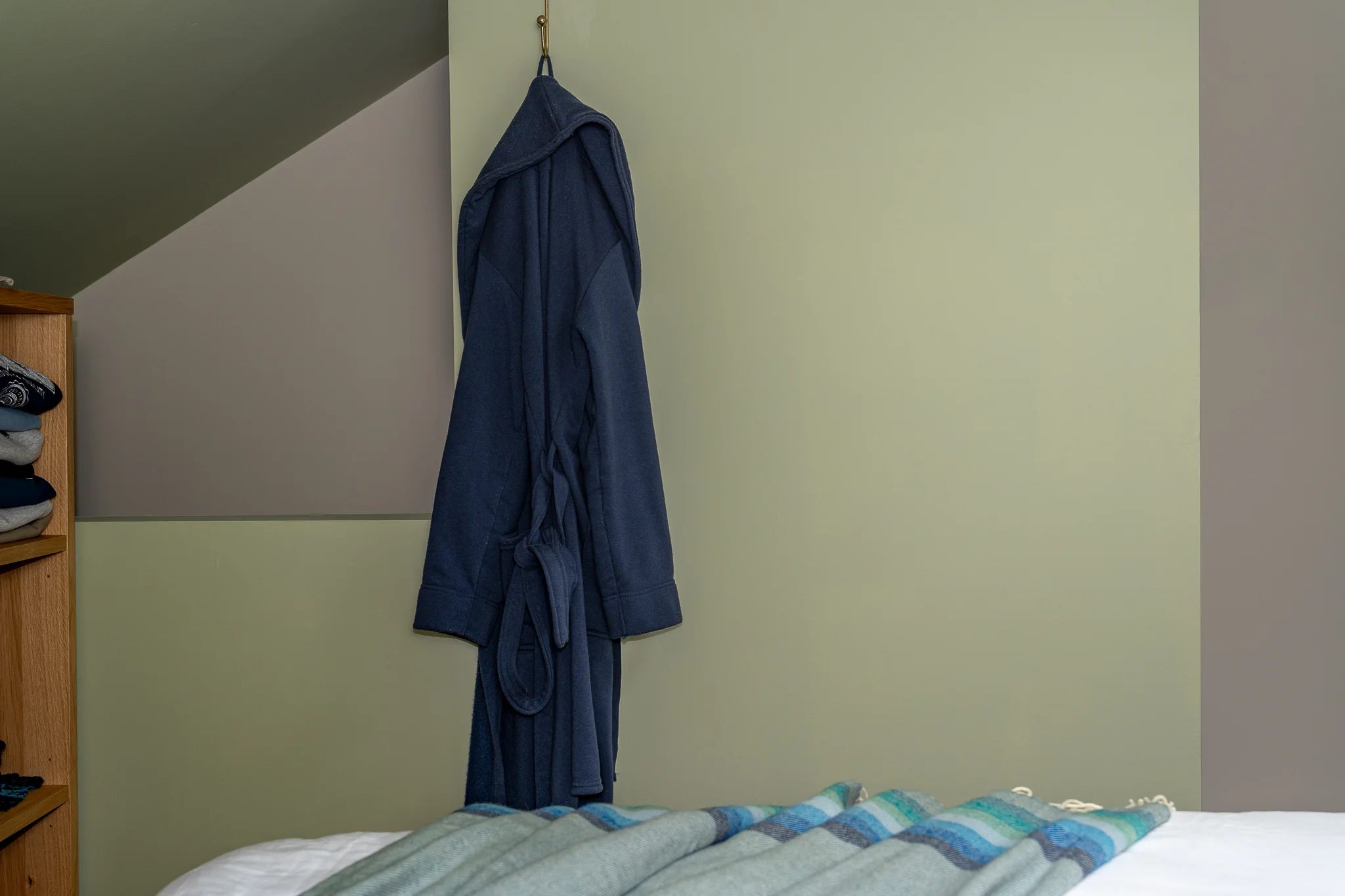
The bedroom layout was changed to create more storage space, and finishing touches such as a gallery wall in the living area add character. “We paid close attention to the finishing touches, as they are often overlooked during renovations. Without these details, even the most expensive changes can feel incomplete.”
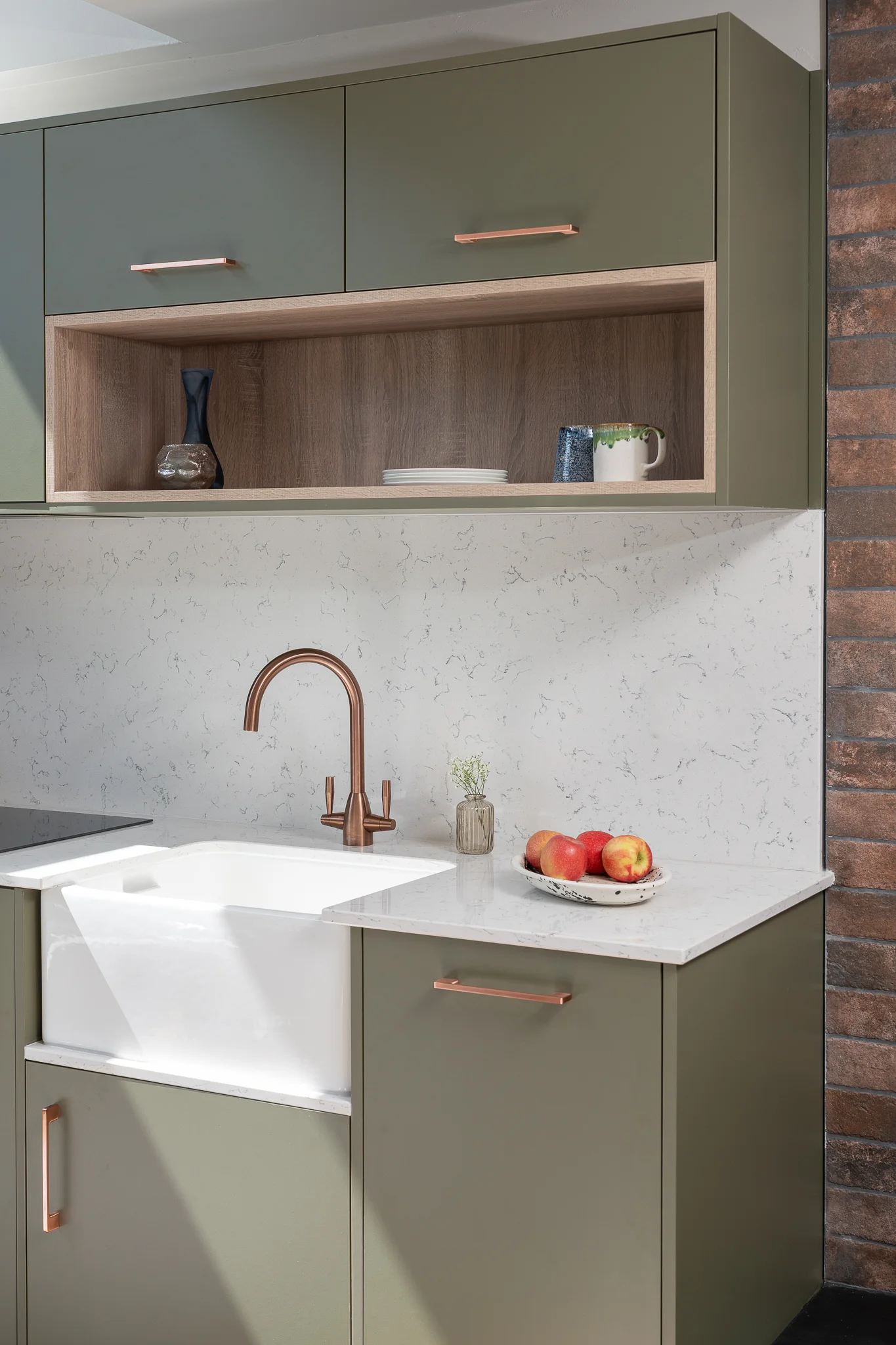
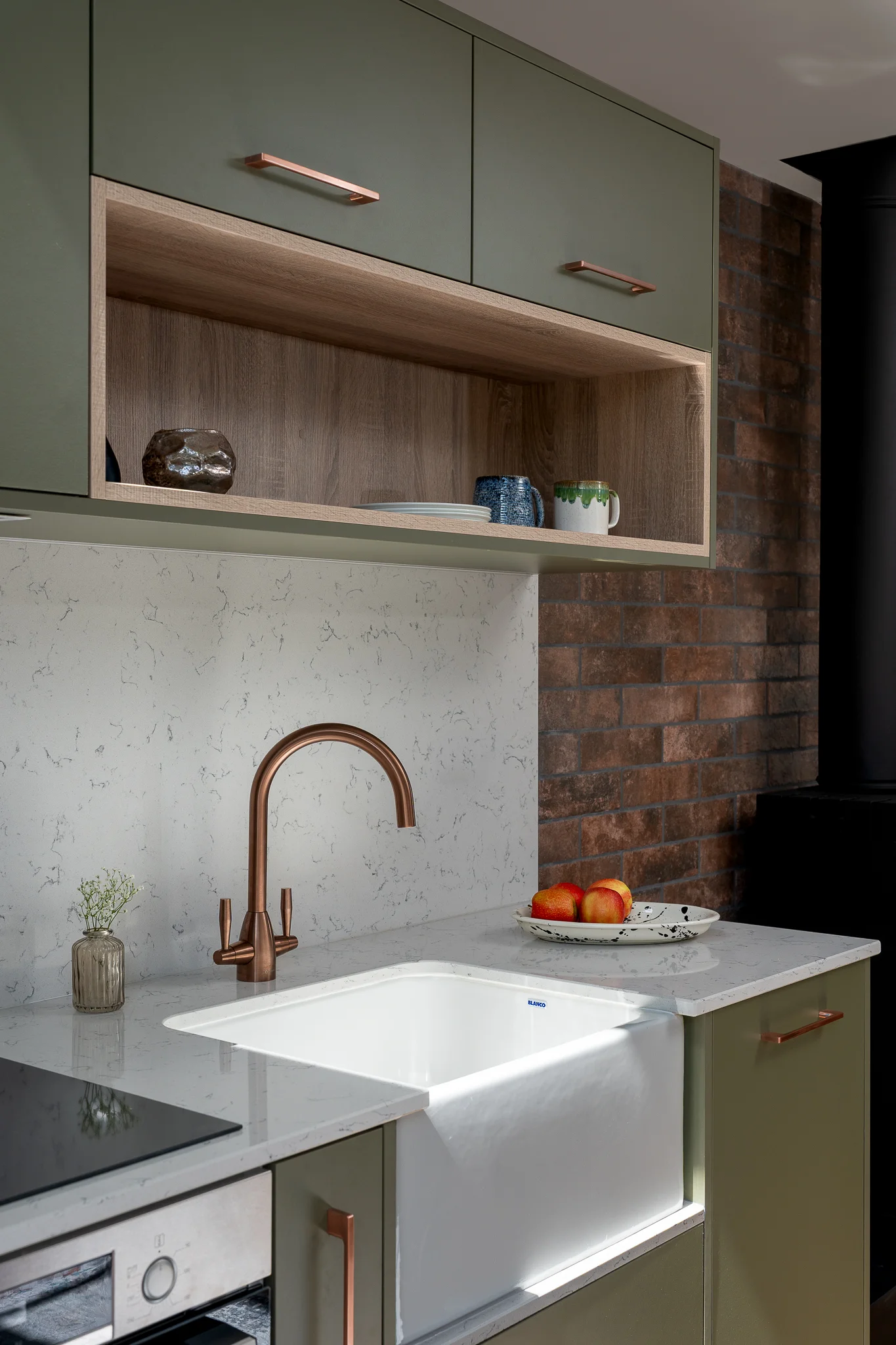
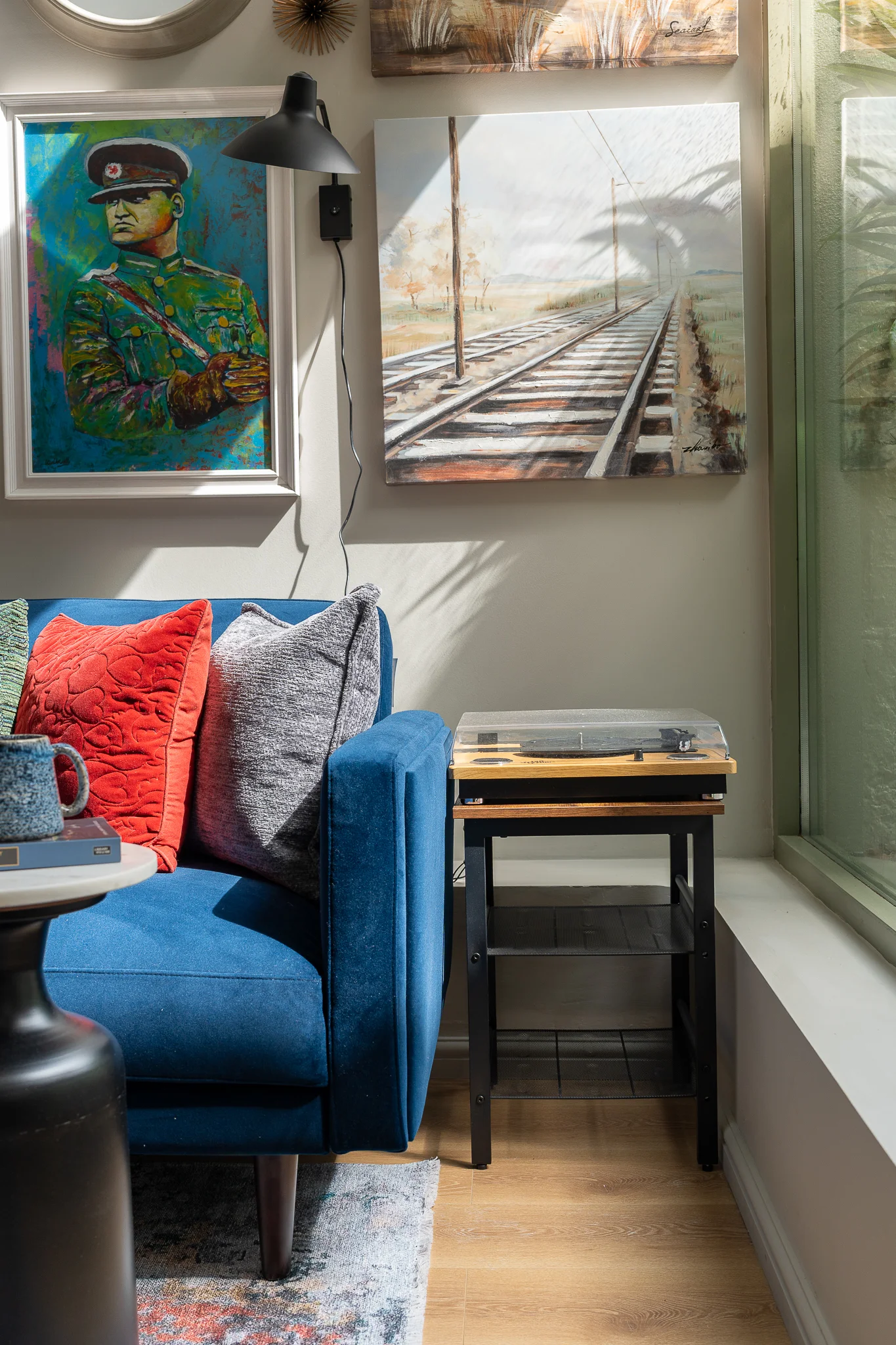
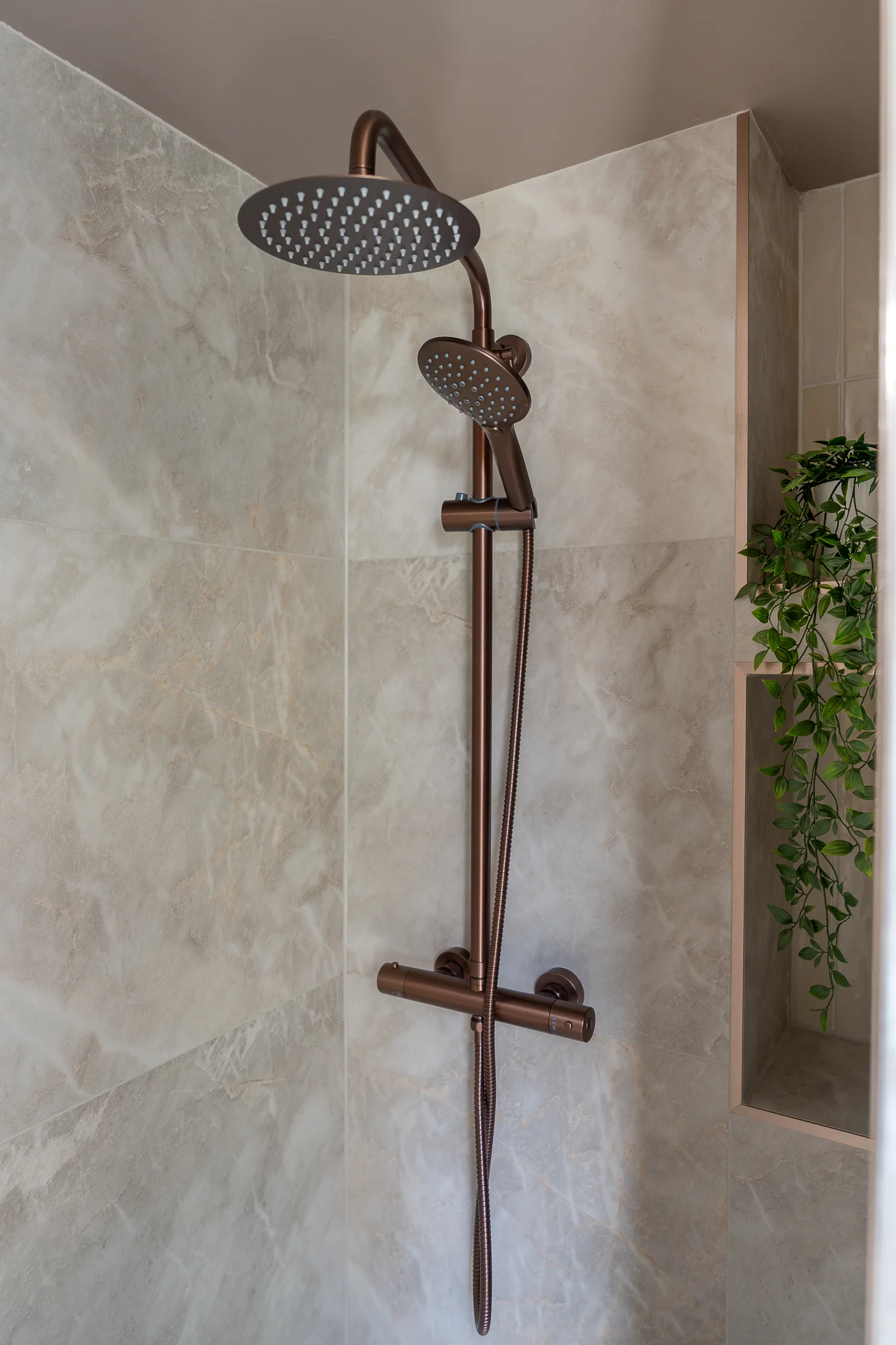
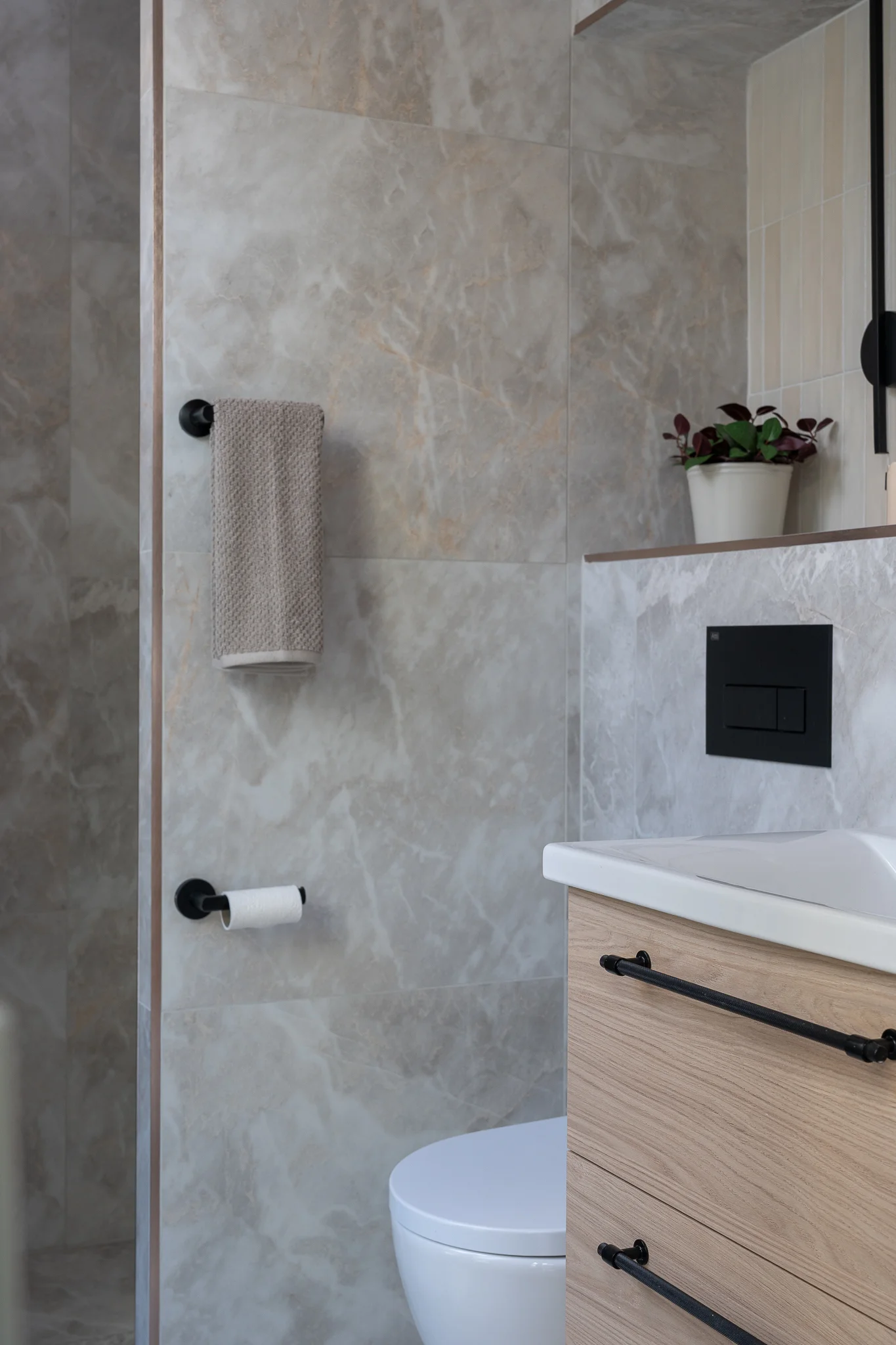
An important one was the colour and material palette. “We used warm tones, including green, copper, and bronze, along with a subtle blue to bring the outdoors in,” Lana says. “Textures played an important role, such as a brick effect that added depth to the spaces. Cushions, Irish wool throws, a velvet sofa, and fabric roman blinds, along with our gallery wall full of colours celebrating Irish culture and history, all contributed to a sense of cosiness and warmth. We connected the patterns, colours, and textures throughout the house to create extra interest, taking you on a creative journey where an Irish traditional home meets artistry.”
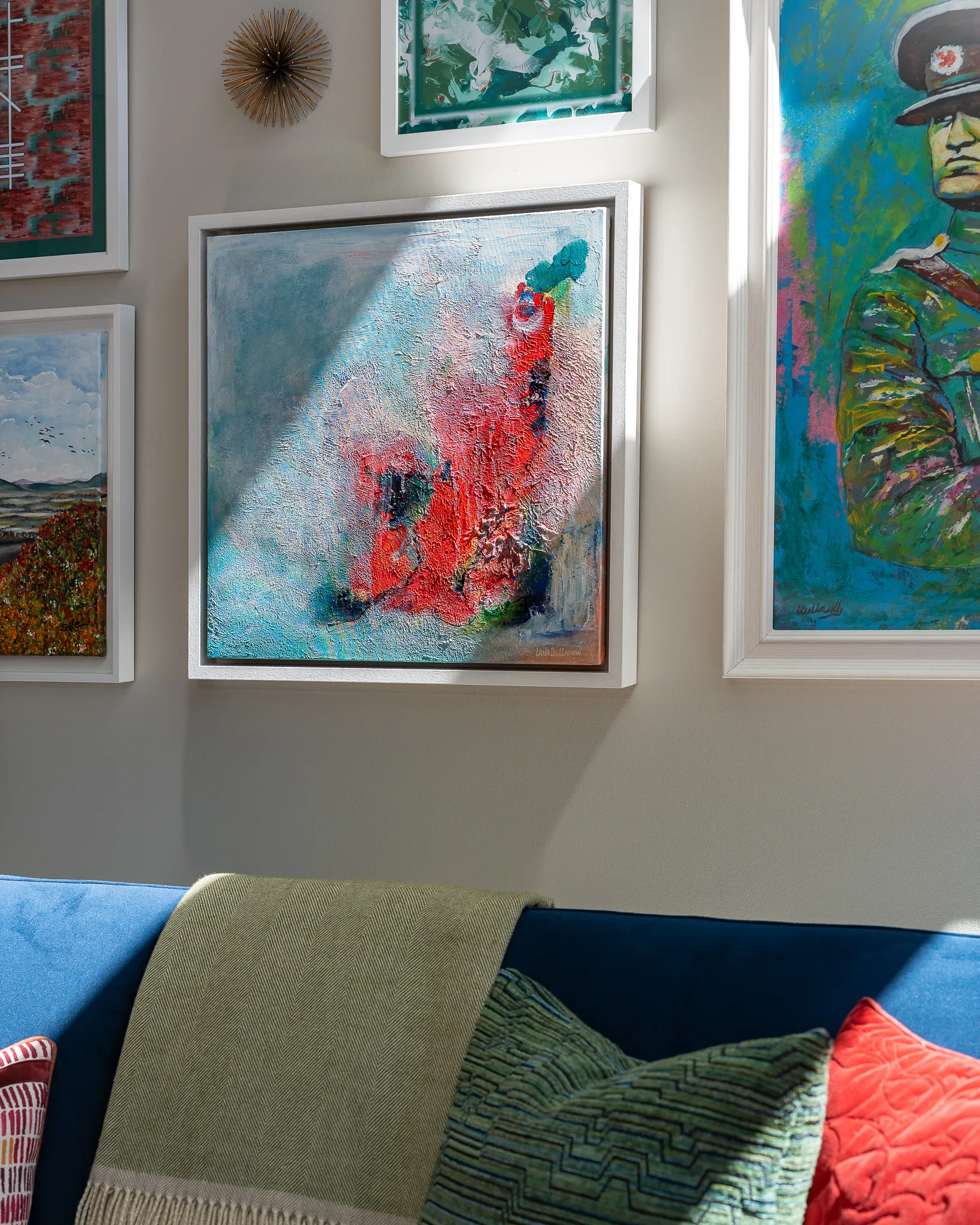
The gallery wall is a favourite detail of the homeowner’s. “This feature connects the client’s hometown of Cork with a collection of heritage artworks, including pieces of the Ogham language and the Children of Lir. We also included the client’s own artwork of Michael Collins to bring Irish history into the vintage home, along with other personal pieces from their previous home and travels. This mix of styles creates a vibrant focal point that catches the eye and invites conversation.”
Storage is also key to letting these decorative details shine, allowing the space to feel more spacious and clutter-free. “This blend of art and practical design truly brings the home to life, making it both beautiful and liveable,” Lana says.
Photography Annette Brock
Also Read