







By IMAGE
17th Mar 2019
17th Mar 2019

Armed with an arts degree, Nicole Flattery questioned what her future occupation would be. Should she pursue a steady job or opt for the life of a struggling artist? But it was a stint as a nightclub coat checker that solidified her life goal.
The first job I had when I finished college was working in the cloakroom of a nightclub. I had graduated with an arts degree and, at that time, had no specific ambitions.
I did it for the same reason I do many things, my own internal logic: I bet this will be funny.
One future was a secure financial, office route, the part of many of my friends; the other future was that of the struggling artist, which required energy, commitment and drive I didn’t possess.
However, in that tiny room off a dancefloor, I didn’t have a future. I didn’t care what the people who handed in their coats did or didn’t know about me, and that was, in its own strange way, a gift. The job had the effect of reminding me just how unimportant I was.
After four years of arts education, this was a small and useful thing. In that room, for a brief period, I opted out of all of it–artistic competitions, elitism, education. I was oblivious to the real world. Even the late hours I kept, usually until the early hours of the morning, made me feel like I existed outside of time itself.
There was the extra distancing of my particular role: nightclubs are primarily concerned with providing their patrons with a “good time”; they treat fun with absolute gravity. If you’re not having a good time, what exactly are you doing here? Mostly, in the space between hanging up the coats and handing them back, I read.
Every night, as I endured a horror soundtrack of pop hits while sitting in front of a tiny wooden desk that was supposed to function like barbed wire–either keeping people away from me, or me away from people, I was never sure which–I worked through a large number of books. I probably read more than I did in college, where, in a fit of contrariness, I had taken against reading since it was pushed so heavily upon us.
From my cubicle, I witnessed a lot of drunken heartbreak, which is useful for any writer. After my shift, I often found money on the floor. I paid the library fees I had to pay in order to graduate from university with money I found on the floor. The irony wasn’t lost on me. Most nights my boyfriend walked me home and asked, “What was it all about?” I hadn’t been conscripted it; it wasn’t army service. Why was I doing it?
The truth was I liked the noise, the warmth, the democracy of it–people were there to dance, idly abuse their health and make futile romantic endeavours. It was a microcosm of the human experience. It seemed uncomplicated and excitingly tawdry in comparison to what I saw as the disingenuous “sensitivity” of my degree.
Also, because I was young and stupid–I can’t stress this enough–incredibly stupid, I thought the job was sexy. My mistake.
By the end of my time there, I looked like an actor who had been dramatically aged up for a final scene in a film. The place had performed terrible CGI on me. It was time to go. I’m a writer now and I’ve a book, a solid object, to prove it. Whenever I go to a nightclub–and there is a cloakroom in nearly every nightclub, separated from club-goers, inevitably run by a woman, often young–I think of the time I spent in that small, cramped space: sitting, reading, waiting.
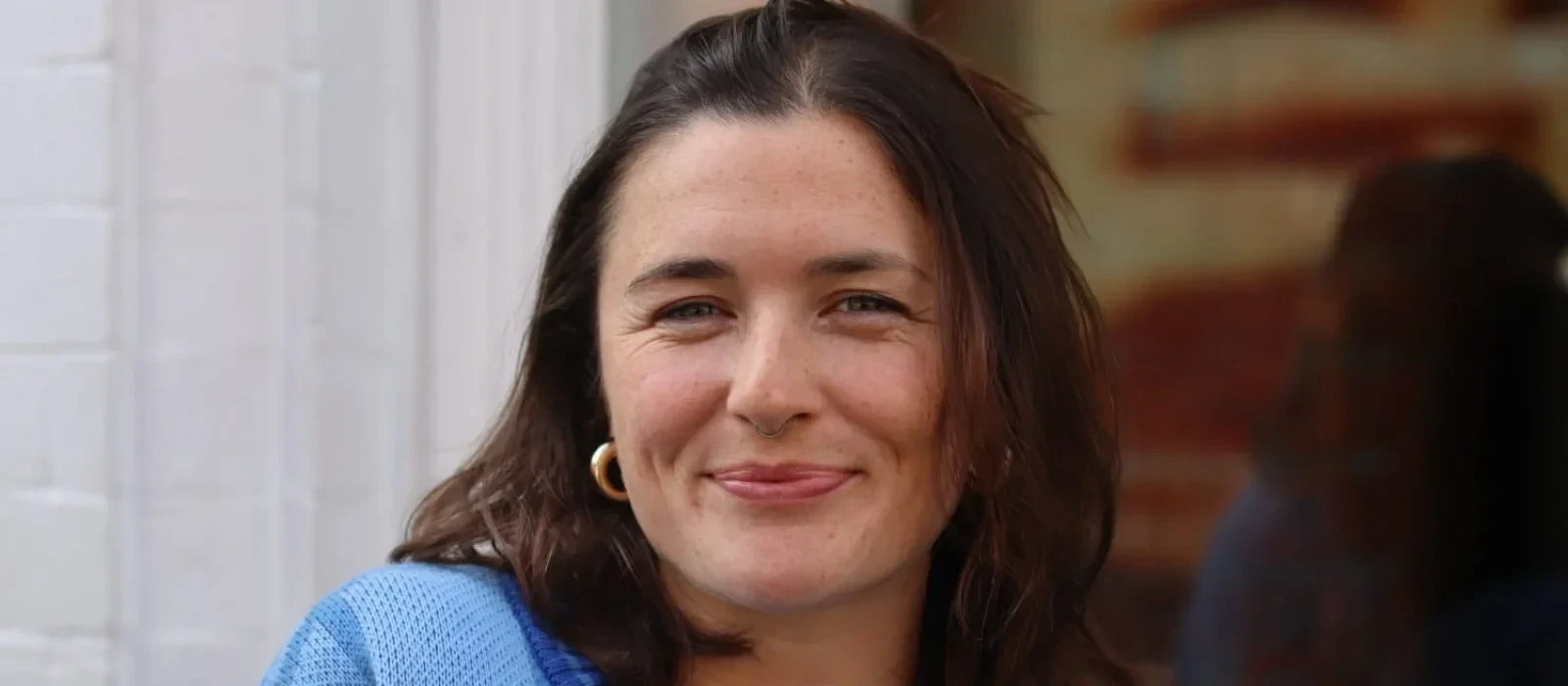
Nicole Flattery’s work has been published in the Stinging Fly, The White Review, The Dublin Review, The Irish Times, Winter Papers and the forthcoming Being Various: New Irish Short Stories edited by Lucy Caldwell (Faber & Faber, out May 2). Her story Track won the White Review Short Story Prize 2017. She lives in Galway and is currently working on her first novel. Twitter: @nicoleflattery

Also Read