







‘We have not heeded the warnings sufficiently’: The health emergency we’ve ignored while focusing on the pandemic
By Amanda Cassidy
04th Jul 2021
04th Jul 2021
The climate change debate has been going on for so long its become white noise. But this week, the effects have become a lot more tangible. Amanda Cassidy on the pending health emergency we refuse to take seriously
It’s a sign of how dangerous the climate crisis has become, and evidence of how much worse it will get.
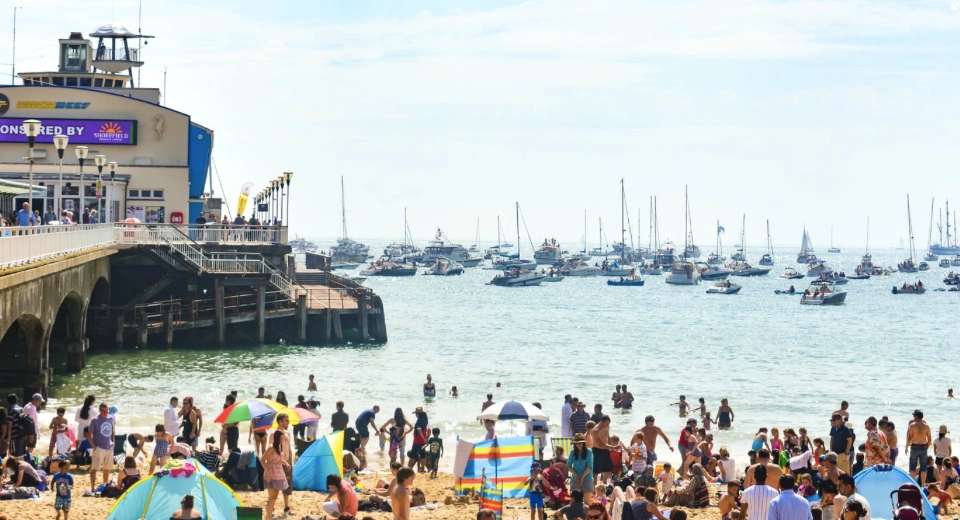
Record-breaking temperatures across Western Canada and the US have seen all kinds of hyperbole used to describe never-before-seen temperatures which hit 49.5 degrees celsius this week.
But the superlatives used can’t be scary enough to describe the frightening array of new climate catastrophes across the world in recent weeks. Huge blazes in Florida, tropical hurricanes, crops destroyed by drought, and punishing heat which saw patients lining up outside hospital emergency rooms.
Forecasters called it “historic” and “dangerous,” describing it as a harbinger of things to come.
Ominous? Yes. Predictable? Entirely.
Tricky
Of course, climate change is a tough one to wrap anyone’s head around. It’s a big topic, scary and information, while essential, isn’t always enough. It’s also relatively abstract to most of us, which raises the first challenge; caring.
Following these mind-boggling temperatures, researchers now say they are “virtually certain” that warming from human greenhouse gas emissions played an important role.
“I really wish we’d been wrong. But we weren’t”
The Washington Post ran with a thought-provoking piece at the weekend called Climate Change Has Gotten Deadly. It Will Get Worse. It described global warming as a global warning.
Emergency
In Portland, Oregon, the hospital was busier than at the height of the Covid-19 pandemic as doctors raced to provide fluids to patients who arrived dizzy, breathless with their body temperatures so high their central nervous systems were beginning to shut down.
In Seattle, Jeff Duchin, the chief public health officer spoke frankly to reporters. “Climate change is a health emergency,” he said. “And reducing greenhouse gas emissions is literally a matter of life and death.”
We have grown accustomed to stark warnings like this as we navigate year two of a deadly global pandemic. But, as we sheltered at home, from an invisible virus, that white noise we now associate with climate change has decided that now is the time to show some of its might.
As a society, as a species, we’re going to have to learn to adapt to this. And some things are not going to be adaptable
Nature
The intensity of recent weather extremes and the knowledge that there is worse to come has left scientists somber. When discussing the extreme heat, one scientist Dr Wehner described it as “very serious. As a society, as a species, we’re going to have to learn to adapt to this. And some things are not going to be adaptable.”
This isn’t just about hotter summers, this is about drought, blazes, displacement, floods, extreme weather events… deaths.
Studies of heatwaves found that even half a degree Celsius increase in summer can lead to a 150% increase in the number of heatwaves that kill 100 people or more.
This isn’t just about hotter summers, this is about drought, blazes, displacement, floods, extreme weather events… deaths.
Despite the Paris accord, most countries have not reached their climate targets. Wehner, speaking to the Washington Post says that the worst part is that this was entirely predictable.
Forecast
“It did not have to be this way. We’ve known enough to take action for 20 years. And if we’d taken action 20 years ago it would have been a lot easier. But there’s no ‘I told you so’. I just feel bad. Really bad. I really wish we’d been wrong. But we weren’t”
But there is still time. Just.
Scientists say that if we cut global greenhouse gas emissions by 7.6% per year we might avoid crossing the threshold. This would require an unprecedented transformation of human society. But look at what we achieved when Covid hit.
It is possible, even if challenging. We’ve seen how a global catastrophe can impact society as a whole as well as each individual. We’ve faced it down together, for the most part.
Now it’s time to foist this abstract and intangible subject into the realm of the everyday – make it feel solvable. We need to stop treating climate change as white noise.
Now’s the time to turn up the volume before it turns up a very different dial.


Also Read